
Choosing the right interface can make or break an audio network build, especially when you need reliable routing, low latency, and clean conversion.
This roundup of the best high-performance audio-over-IP interfaces for 2026 focuses on real-world use cases, from compact desktop setups to Dante and AES67 network deployments.
Best 10 High-Performance Audio-Over-IP Interfaces Picks for 2026
AVB-Ready Studio Hub
MOTU 16A 32x34 Thunderbolt 4/USB4 audio interface

- 32x34 interface with 16 analog I/O and optical expansion
- Built-in AVB networking with dual Gigabit ports
- 64-channel DSP mixer with effects and patchbay routing
Best For: Studios needing a high-channel-count interface with AVB networking
Dante Optical Bridge

- Converts 2-channel TOSLINK/SPDIF to Dante network audio
- AES67-ready for broader interoperability
- PoE or USB-C powered for flexible installation
Best For: Integrators needing a compact optical-to-Dante bridge
Premium Thunderbolt Channel
Universal Audio Apollo Twin X DUO Gen 2

- Unison preamps with classic hardware-style emulations
- 200+ UAD DSP and Native plug-ins included
- Monitor correction and bass management for mixing
Best For: Desktop studios wanting premium Thunderbolt recording and monitoring
USB Dante Gateway
ToVi Dante USB to Network Audio Adapter

- Bridges USB audio devices to Dante networks
- AES67 compliant for interoperable AoIP use
- Compact 2-channel adapter with mic input and speaker output
Best For: Small setups needing a simple USB-to-Dante bridge
Ultra-Low-Latency USB Hub
MOTU UltraLite-mk5 18x22 USB Audio Interface

- 18x22 USB interface with analog, S/PDIF, and optical I/O
- Ultra-low latency drivers with strong analog output quality
- DSP mixing plus onboard reverb, EQ, and dynamics
Best For: Users who need flexible routing and fast monitoring in a compact USB interface
Dante Network Endpoint
Dante Audio 4 Channel Analog Network Interface
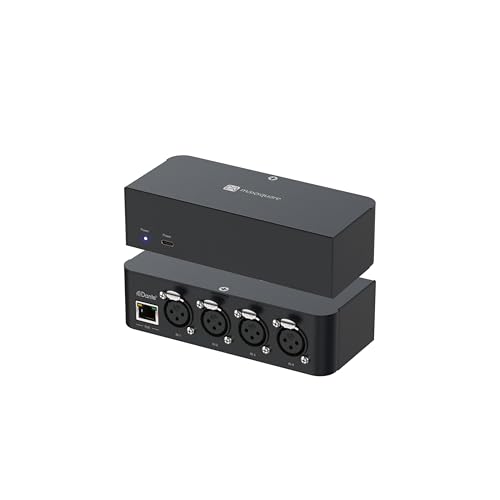
- Four XLR inputs with Dante and AES67 support
- PoE-powered aluminum box for easy installation
- Low-latency uncompressed network audio transmission
Best For: Installers needing a compact Dante endpoint for professional networked audio
Portable Synergy Core Studio
Antelope Audio Zen Quadro Interface

- Four preamps with up to 75 dB gain and two Hi-Z inputs
- 37 included Synergy Core effects with DSP/FPGA processing
- Dual USB-C, loopback, and expandable 14-in/10-out routing
Best For: Portable creators who want low-latency effects and flexible multi-device workflows
Dante Desktop I/O
RDL SF-BNC2 Bidirectional Stereo Network Interface

- Two-in/two-out stereo Dante bridge
- Front-panel RCA and 3.5 mm mini-jacks
- PoE-powered with 24-bit conversion
Best For: Integrating consumer stereo sources into a Dante network
USB-C Recording Hub
MOTU M4 4x4 USB-C Audio Interface

- 4-in/4-out USB-C interface
- Two mic preamps plus MIDI I/O
- LCD metering with loopback support
Best For: Recording, podcasting, and compact desktop production
Studio-Style USB Interface
Universal Audio Volt 2 USB Audio Interface
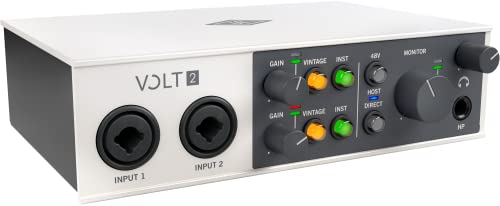
- UA 610-style Vintage mode preamp character
- Up to 24-bit/192 kHz conversion
- Compatible with Mac, Windows, iPad, and iPhone
Best For: Solo recording and portable songwriting sessions
AVB-Ready Studio Hub – MOTU 16A 32×34 Thunderbolt 4/USB4 audio interface
If you’re comparing high-performance audio-over-IP interfaces for a flexible studio, the MOTU 16A stands out with 32×34 Thunderbolt 4/USB4 connectivity plus built-in AVB networking. It combines large channel counts, low-latency performance, and hardware routing in a single rack unit, making it a strong fit for modern production rooms that need both computer I/O and networked expansion.
Best For: Studios that want a high-channel-count interface with AVB networking, DSP mixing, and cross-platform connectivity.
Pros:
- 32 inputs and 34 outputs with 16 analog TRS I/O and two banks of optical I/O
- AVB networking over dual Gigabit ports for daisy-chaining and multi-device audio streaming
- Low-latency Thunderbolt 4/USB4 operation with drivers rated as low as 1.8 ms RTL at 96 kHz
- 64-channel DSP mixing with EQ, compression, reverb, and patchbay routing
Cons:
- Best suited to users who will actually use its large routing and networking feature set
- More interface than a simple desktop recording setup may need
This is a serious centerpiece interface for studios that need both excellent conversion and networked audio flexibility. If your workflow depends on AVB and lots of simultaneous channels, it offers a very complete package.
Dante Optical Bridge – ToVi Dante Optical Encoder
ToVi Dante Optical Encoder – 2CH TOSLINK Network Encoder, AES67, PoE or USB-C Powered (DXA-Opt-TX)
Check Price On AmazonFor audio-over-IP installs that need to move optical digital audio onto a Dante network, this ToVi encoder is a focused and practical choice. It converts 2-channel TOSLINK/SPDIF into Dante/AES67-compatible audio, which makes it useful when you want to integrate optical sources into a professional networked system without adding a full interface.
Best For: Integrators and AV users who need a compact TOSLINK-to-Dante/AES67 bridge.
Pros:
- Converts 2-channel optical TOSLINK/SPDIF audio to Dante audio-over-IP
- AES67-ready for interoperability with supported third-party platforms
- Built on Dante Ultimo 2×2 technology for low-latency network transmission
- Supports PCM up to 192 kHz/24-bit input
Cons:
- Limited to 2-channel optical conversion rather than multi-channel routing
- Primarily a bridge device, not a full-featured recording interface
This encoder is most compelling when you need a simple way to bring optical sources into a Dante environment. It is purpose-built, compact, and clearly aimed at professional network audio workflows.
Premium Thunderbolt Channel – Universal Audio Apollo Twin X DUO Gen 2
Universal Audio Apollo Twin X DUO Gen 2 with UAD Analog Classics Thunderbolt 3 Audio Interface
Check Price On AmazonIf you want a high-performance audio-over-IP interface alternative for a desktop studio, the Apollo Twin X DUO Gen 2 focuses on premium recording and monitoring rather than network routing. Its Thunderbolt 3 connection, Unison preamps, and bundled UAD processing make it a strong choice for tracking and mixing with analog-style character and detailed headphone monitoring.
Best For: Desktop producers and engineers who want premium Thunderbolt recording, plug-in processing, and monitor correction.
Pros:
- Unison preamps for realtime tracking through emulations of classic hardware
- 200+ UAD DSP and Native plug-ins included in the ecosystem
- Monitor correction powered by Sonarworks for room and headphone listening
- Auto-Gain and bass management add convenience for recording and monitoring
Cons:
- Not an audio-over-IP network interface with Dante or AVB features
- Thunderbolt 3 desktop design may not suit users needing networked expansion
The Apollo Twin X DUO Gen 2 is best viewed as a high-end Thunderbolt interface for premium tracking and monitoring. It delivers polished studio tools, but it is less about network audio infrastructure than the other options here.
USB Dante Gateway – ToVi Dante USB to Network Audio Adapter
Among high-performance audio-over-IP interfaces, this ToVi adapter is a compact way to bridge USB audio into a Dante network. It behaves like an external USB sound card while adding AES67-compliant networking, which makes it useful for studios, broadcast setups, and live sound systems that need a simple two-channel gateway.
Best For: Users who need a small USB-to-Dante adapter for studio, broadcast, or live audio workflows.
Pros:
- Bridges USB audio devices with Dante networks for 2-channel operation
- AES67 compliant for audio-over-IP interoperability
- Supports 24-bit audio at 44.1 kHz and 48 kHz
- Includes analog mic input and speaker output support
Cons:
- Limited to 2 channels rather than a larger multi-channel interface
- Sample rate support is narrower than higher-end interface options
This is a practical network bridge when you want USB audio to live inside a Dante system without much setup complexity. It is not a full studio centerpiece, but it fits well where straightforward audio-over-IP conversion matters most.
Ultra-Low-Latency USB Hub – MOTU UltraLite-mk5 18×22 USB Audio Interface
MOTU UltraLite-mk5 18x22 USB Audio Interface 3 for Mac, Windows and iOS with mixing and effects
Check Price On AmazonIf you want high-performance audio-over-IP interfaces for a compact studio, the MOTU UltraLite-mk5 stands out for its low-latency USB design, 18×22 I/O, and flexible routing. It gives you enough analog, digital, and optical connectivity to handle recording, monitoring, and playback duties without feeling limited.
Best For: Producers and musicians who need a powerful USB interface with lots of routing, monitoring, and onboard processing.
Pros:
- 18×22 interface with 2 combo inputs, 6 analog ins, 10 analog outs, S/PDIF, and 8-channel optical I/O.
- Optimized drivers and ultra-low latency performance for dependable tracking.
- DSP monitor mixing with six separate mix busses and per-output mixes.
- Built-in reverb, parametric EQ, and dynamics processing for inputs and bus mixes.
Cons:
- Uses USB connectivity rather than a native Ethernet audio-over-IP protocol.
- Best suited to users who will take advantage of its deeper routing and DSP features.
Overall, this is a strong choice when you need broad I/O and fast, stable performance in a single interface. It is especially appealing if you want monitoring flexibility and onboard effects without adding extra hardware.
Dante Network Endpoint – Dante Audio 4 Channel Analog Network Interface
For high-performance audio-over-IP interfaces, this Dante audio network box is built around clean analog-to-network conversion and straightforward installation. With four XLR inputs, Dante and AES67 transport support, and PoE power, it fits well into professional networked audio systems where low-latency signal delivery matters.
Best For: Installers and system builders who need a simple 4-channel Dante endpoint for pro audio networks.
Pros:
- Four 3-pin XLR analog inputs for compact networked audio setups.
- Supports Dante audio over IP and AES67 RTP transport for uncompressed, low-latency transmission.
- PoE class 0 support simplifies power and installation.
- Rugged aluminum housing with CE/FCC/RoHS certification and TAA compliance.
Cons:
- Input-only design, so it is not a full interface for capturing and monitoring on its own.
- Limited to four channels, which may be too small for larger systems.
This is a practical network audio box when you need dependable Dante connectivity in a small, durable package. It is most compelling for fixed installs and professional environments that value simple integration and PoE convenience.
Portable Synergy Core Studio – Antelope Audio Zen Quadro Interface
The Antelope Audio Zen Quadro is a strong pick for high-performance audio-over-IP interfaces-style workflows when you want portable I/O, low-latency processing, and flexible connectivity in one compact unit. Its dual USB-C ports, DSP/FPGA effects, and expandable 14-in/10-out design make it well suited to recording, streaming, and mobile production.
Best For: Creators who want portable, low-latency recording with onboard effects and flexible multi-device connectivity.
Pros:
- Four Discrete preamps with up to 75 dB of gain for vocals, instruments, and small sessions.
- 37 included real-time Synergy Core effects with low-latency DSP and FPGA processing.
- Dual USB-C lets you connect to multiple devices and route audio between them.
- Expandable 14-in/10-out design with ADAT, S/PDIF, dual headphone outputs, and loopback.
Cons:
- Designed around compact setups, so users needing many built-in inputs may outgrow it quickly.
- Some expansion features depend on additional connected gear such as ADAT sources.
In practical use, this interface is about combining premium conversion, onboard processing, and modern connectivity in a travel-friendly form. It is a good fit if you want studio-grade sound and routing without moving to a larger rack system.
Dante Desktop I/O – RDL SF-BNC2 Bidirectional Stereo Network Interface
The RDL SF-BNC2 is a practical choice for high-performance audio-over-IP interfaces when you need simple stereo input/output bridging on a Dante network. It provides two audio inputs and two audio outputs, with front-panel RCA jacks and stereo 3.5 mm mini-jacks, making it easy to connect consumer audio gear without extra software.
Best For: Integrating consumer stereo sources and outputs into a Dante system with low-noise, low-distortion performance.
Pros:
- Two inputs and two outputs for bidirectional stereo routing
- Front-panel RCA and 3.5 mm mini-jack connections for flexible hookups
- Selectable Dante sample rates from 44.1 kHz to 96 kHz
- PoE-powered with LED status for power and network sync
Cons:
- Limited to stereo analog I/O rather than multi-channel expansion
- Designed around consumer audio connections, not pro XLR-style inputs
This is a straightforward Dante interface for installations that value convenience and clean analog performance over feature-heavy routing. If your priority is reliable stereo network audio with minimal setup, the SF-BNC2 fits that role well.
USB-C Recording Hub – MOTU M4 4×4 USB-C Audio Interface
The MOTU M4 is a strong all-around pick if you want a compact interface for recording, mixing, and podcasting rather than a dedicated audio-over-IP solution. It offers 4-in/4-out USB-C connectivity, two microphone preamps, MIDI I/O, and low-latency monitoring, plus a front LCD for clear level checking.
Best For: Desktop recording, podcasting, and small production setups that need fast USB-C I/O and monitoring tools.
Pros:
- 4-in/4-out USB-C connectivity with 8 total channels
- Two microphone preamps for simple multi-source recording
- Low-latency monitoring with hardware monitoring support
- LCD screen and loopback feature for production workflows
Cons:
- USB interface, not an audio-over-IP network device
- Limited to desktop-style connectivity rather than networked installations
For creators who are comparing high-performance audio-over-IP interfaces but may still need a direct computer interface, the M4 stands out for its practical recording tools. It is best when you want dependable local I/O, loopback, and monitoring in one compact box.
Studio-Style USB Interface – Universal Audio Volt 2 USB Audio Interface
The Universal Audio Volt 2 is aimed at musicians who want an easy USB recording interface with a classic studio flavor rather than a networked audio-over-IP setup. It features UA 610-style preamp character, up to 24-bit/192 kHz conversion, and support for Mac, Windows, iPad, and iPhone for flexible mobile or desktop use.
Best For: Solo recording, songwriting, and portable sessions where classic preamp tone matters.
Pros:
- Vintage mode inspired by UA’s classic 610 preamps
- Up to 24-bit/192 kHz recording quality
- Works with Mac, Windows, iPad, and iPhone
- Includes access to LUNA and UAD plug-ins and instruments
Cons:
- USB audio interface, not an audio-over-IP device
- Requires an external power supply
- Some mobile setups need an Apple Lightning to USB Camera Adapter
The Volt 2 is a sensible option if you want polished sound, simple operation, and broad device support in a compact interface. It is less about network integration and more about delivering a dependable studio-style recording experience.
How We Picked the Best High-Performance Audio-Over-IP Interfaces
We prioritized High-Performance Audio-Over-IP Interfaces that balance sound quality, network flexibility, driver stability, and workflow speed. We also weighed channel count, connectivity, powering options, and compatibility with common studio and installed-audio standards.
For this list, that means products suited to both traditional computer recording and networked audio systems, including Dante and AES67-oriented environments.
Quick Comparison
At a glance, the field breaks into three groups: compact USB interfaces for creators and mobile rigs, hybrid Thunderbolt models for demanding studio work, and network adapters or encoder boxes for integrating analog or digital sources into an audio-over-IP system.
If you need a straightforward recording interface, look toward smaller USB models. If you need more channels, lower-latency workflows, or expansion potential, Thunderbolt and networked units are usually the better fit.
Key Buying Factors for High-Performance Audio-Over-IP Interfaces
Network Format Support
Confirm whether the device supports Dante, AES67, or both. Dante is widely used in live sound and installed systems, while AES67 improves interoperability across compatible devices.
Channel Count and I/O Type
Match the interface to your source count now and in the near future. Analog XLR, line-level, digital optical, USB, and monitoring outputs all affect how easily the unit fits into your workflow.
Host Connection and Latency
USB-C/USB4 models are convenient and portable, while Thunderbolt models can offer stronger low-latency performance for larger sessions. Choose based on your computer, buffer needs, and tracking style.
Power and Installation
PoE, USB-C bus power, and external power each serve different setups. PoE can simplify rack and ceiling installations, while bus power is helpful for travel and minimal cabling.
Software and Routing
Look for dependable mixer control, flexible routing, and onboard DSP when you need cue mixes, monitor control, or effects without overloading the computer.
Who Should Buy Which High-Performance Audio-Over-IP Interfaces?
Home studios and singer-producers often do best with compact USB interfaces that are easy to connect and monitor. Engineers building larger recording rigs or hybrid studios should consider Thunderbolt models with more channels and stronger routing.
For broadcast, live production, and installed systems, High-Performance Audio-Over-IP Interfaces with Dante or AES67 support are the most practical choice. If you need to bridge existing gear into a networked setup, encoder boxes and adapter units are often the smartest buy.
