
When it comes to high-end NAS drives, the options in 2025 promise to elevate your storage solutions. You’ll find powerful models like the Seagate IronWolf Pro and Western Digital Red Plus series, catering to various needs. Each drive offers unique features designed for performance and reliability. But which one truly stands out for your purposes? Let’s explore the top contenders and help you make an informed choice.
Seagate IronWolf Pro 16TB NAS Internal HDD

If you’re looking for a reliable and high-capacity storage solution for your business or demanding home setup, the Seagate IronWolf Pro 16TB NAS Internal HDD stands out as a top choice in 2025. With its enterprise-grade CMR technology, this drive delivers consistent 24×7 performance. It’s optimized for NAS environments, featuring AgileArray technology that enhances RAID performance through dual-plane balancing and rotational vibration sensors. You can depend on its impressive workload rating of 550TB/year and 2.5M hours MTBF. Plus, enjoy peace of mind with a 5-year warranty and complimentary 3-year Rescue Data Recovery Services.
Best For: Businesses and power users seeking a high-capacity, reliable storage solution for NAS environments.
Pros:
- Optimized for NAS with AgileArray technology, improving RAID performance.
- High workload rating of 550TB/year ensures durability for intensive use.
- Comes with a 5-year limited warranty and complimentary 3-year data recovery services.
Cons:
- Designed specifically for NAS systems, may require compatible hardware and setup.
- Higher price point compared to standard HDDs may be a consideration for budget-conscious consumers.
- The 16TB capacity might be overkill for casual users or smaller home setups.
Seagate IronWolf 8TB NAS Internal Hard Drive (ST8000VNZ04/N004)

The Seagate IronWolf 8TB NAS Internal Hard Drive (ST8000VNZ04/N004) stands out as an exceptional choice for users in need of reliable, high-capacity storage for their multi-user NAS environments. With a 7200 RPM speed and 256MB cache, you’ll enjoy data transfer rates up to 180MB/s, ensuring seamless file sharing. Designed for RAID setups, this drive minimizes noise and vibration while reducing wear and tear. The integrated IronWolf Health Management system allows you to monitor performance easily, and with a five-year limited warranty, you can trust its long-term reliability. It’s a top pick for efficient and dependable storage solutions.
Best For: Users looking for reliable, high-capacity storage solutions for multi-user NAS environments and RAID configurations.
Pros:
- Optimized for NAS with enhanced file-sharing performance and high data transfer rates up to 180MB/s.
- Integrated IronWolf Health Management system for easy monitoring and maintenance.
- Long-term reliability with a five-year limited warranty and 1 million hours MTBF.
Cons:
- Higher initial cost compared to standard hard drives.
- May not be necessary for single-user or low-capacity storage needs.
- Performance may vary based on NAS configuration and usage patterns.
Seagate IronWolf 4TB NAS Internal Hard Drive
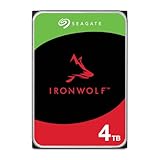
For those seeking a reliable storage solution in a multi-user environment, the Seagate IronWolf 4TB NAS Internal Hard Drive stands out with its NAS-optimized design, ensuring enhanced file-sharing performance and minimal downtime. This 3.5-inch SATA drive operates at 5400 RPM with a 64MB cache, making it perfect for up to 8-bay NAS setups. Designed specifically for NAS enclosures, it reduces wear and noise, providing a smooth experience. Plus, the integrated IronWolf Health Management system helps monitor drive health, ensuring longevity with an impressive 1 million hours MTBF. With a three-year warranty and data recovery services, you’re covered for the long haul.
Best For: Those seeking a reliable and efficient storage solution for multi-user NAS environments with enhanced file-sharing capabilities.
Pros:
- Optimized for NAS environments, supporting up to 8-bay setups.
- Integrated health management system for monitoring drive performance and longevity.
- Quiet operation with reduced wear and minimal vibration.
Cons:
- Operating at 5400 RPM may not provide the speed needed for high-demand applications.
- Limited to a maximum capacity of 16TB, which may not suffice for extensive data needs.
- Three-year warranty, while decent, may be shorter compared to some competitors.
Western Digital 8TB WD Red Plus NAS Internal Hard Drive

Designed specifically for small to medium-sized businesses and SOHO customers, the Western Digital 8TB WD Red Plus NAS Internal Hard Drive stands out with its robust performance and reliable compatibility. With a 5640 RPM speed and SATA 6 Gb/s interface, it efficiently handles demanding workloads, supporting up to 180 TB/year. This 3.5″ mechanical hard disk features 256 MB of cache and is designed for NAS systems with up to 8 bays, making it ideal for RAID configurations. Plus, it comes with a 3-year limited warranty, ensuring peace of mind for your data storage needs.
Best For: Small to medium-sized businesses and SOHO customers looking for reliable NAS storage solutions.
Pros:
- High capacity of 8TB, suitable for extensive data storage needs.
- Designed for NAS environments, supporting RAID configurations for data redundancy.
- 3-year limited warranty provides assurance for long-term use.
Cons:
- Mechanical hard disk may be slower compared to SSDs in terms of data access speed.
- Weight of 1.58 pounds may be heavier than some alternative drive options.
- Limited to SATA interface, which may not be suitable for all modern setups requiring faster data transfer rates.
Western Digital 10TB WD Red Plus NAS Internal Hard Drive

Offering a robust 10TB capacity, the Western Digital 10TB WD Red Plus NAS Internal Hard Drive is an excellent choice for small to medium businesses seeking reliable storage solutions. With a 7200 RPM speed and SATA 6 GB/s data transfer rate, it guarantees swift performance in a 24×7 environment. The NASware firmware enhances compatibility, making it perfect for NAS systems. You can confidently manage workloads of up to 180 TB/year, tailored for your data needs. Plus, it comes with a 3-year limited warranty, proving its reliability. This drive is designed specifically for NAS applications, guaranteeing ideal performance for your business.
Best For: Small to medium businesses requiring reliable and high-performance storage solutions for NAS applications.
Pros:
- Optimized for 24×7 operation, ensuring consistent performance and reliability.
- NASware firmware enhances compatibility with NAS systems for improved efficiency.
- Supports a high workload rate of up to 180 TB/year, making it suitable for data-intensive tasks.
Cons:
- Limited to a 3-year warranty, which may not be sufficient for some users.
- 7200 RPM speed may not match the performance of some higher-end drives.
- Higher price point compared to standard desktop drives may deter budget-conscious buyers.
Western Digital 4TB WD Red Plus NAS Internal Hard Drive

The Western Digital 4TB WD Red Plus NAS Internal Hard Drive stands out as an exceptional choice for small to medium-sized businesses seeking reliable storage solutions. With a 5400 RPM speed and a SATA 6 Gb/s interface, it offers efficient performance. This HDD features a generous 256 MB cache and supports up to 8 bays, making it perfect for NAS systems. Designed for 24/7 use, it boasts a 3-year warranty and a workload rate of up to 180 TB/year. Its NASware firmware guarantees compatibility, providing peace of mind for your data storage needs. It’s an investment you won’t regret.
Best For: Small to medium-sized businesses that require reliable and efficient storage solutions for their NAS systems.
Pros:
- Optimized for 24/7 operation, ensuring consistent performance for business applications.
- Supports NAS systems with up to 8 bays, providing scalability for growing data needs.
- NASware firmware enhances compatibility and reliability, minimizing data loss risks.
Cons:
- Limited to a 5400 RPM speed, which may not meet the demands of high-performance applications.
- The 3-year warranty may be shorter compared to some competing products in the market.
- Actual user capacity may vary depending on the operating environment, potentially affecting storage expectations.
Synology 2-Bay NAS DS223 (Diskless)

If you’re looking for a reliable solution to centralize, organize, and share your data seamlessly, the Synology 2-Bay NAS DS223 (Diskless) stands out as an ideal choice for both home and small business users. This entry-level NAS offers centralized storage with full data ownership and multi-platform access. You’ll appreciate its easy sharing and syncing features, keeping clients and collaborators updated. Plus, it supports simple data protection, allowing you to back up media libraries and business documents effortlessly. With intelligent surveillance tools, it also enhances your home security. Weighing just 2.82 pounds, it’s compact and versatile for any setup.
Best For: Individuals and small businesses seeking a reliable and user-friendly solution for centralized data storage and sharing.
Pros:
- Centralized storage ensures complete data ownership with easy access across multiple devices.
- Simple sharing and syncing features facilitate collaboration among clients and team members.
- Intelligent surveillance tools provide added security for home environments.
Cons:
- Diskless design means users need to purchase hard drives separately for operation.
- Entry-level specifications may not meet the needs of power users or large businesses requiring advanced features.
- Limited built-in apps compared to higher-end models may restrict functionality for some users.
Samsung 990 PRO SSD 4TB PCIe 4.0 Internal Solid State Hard Drive

For enthusiasts seeking top-tier performance in their NAS setups, the Samsung 990 PRO SSD 4TB PCIe 4.0 Internal Solid State Hard Drive stands out with its staggering sequential read speeds of up to 7,450 MB/s and write speeds reaching 6,900 MB/s. Weighing just 0.32 ounces and measuring 3.15 x 0.87 x 0.09 inches, this M.2 2280 drive packs a punch in a small form factor. With over 55% random performance improvement compared to its predecessor, you’ll enjoy enhanced efficiency and thermal management. Rated 4.7 out of 5 stars, it’s a top choice for gamers and heavy-duty workstations alike.
Best For: Enthusiasts and professionals seeking high-performance storage solutions for gaming, heavy-duty workstations, and NAS setups.
Pros:
- Exceptional sequential read speeds of up to 7,450 MB/s and write speeds of up to 6,900 MB/s.
- Significant random performance improvement of over 55% compared to the previous model.
- Compact design with effective thermal management for optimal performance.
Cons:
- Higher price point compared to standard SSDs.
- Limited availability in smaller capacities may not suit all users’ needs.
- Requires compatible hardware to fully utilize PCIe 4.0 speeds.
Toshiba N300 6TB NAS Internal Hard Drive

Designed specifically for small office and home office environments, the Toshiba N300 6TB NAS Internal Hard Drive stands out with its impressive 7200 RPM speed and robust 180TB/year workload rating. With a SATA 6 GB/s interface and a substantial 512 MB cache, it guarantees quick data access and smooth performance. Built for 24/7 operation, you can count on its reliability for continuous use. The integrated RV sensors help counteract rotational vibrations, enhancing stability and data integrity. This drive is perfect for those who need a high-performance, dependable storage solution that can handle demanding workloads effortlessly.
Best For: Users requiring high-performance and reliable storage solutions for continuous operation in small office and home office environments.
Pros:
- High speed with 7200 RPM for quick data access.
- Robust workload rating of up to 180TB/year, ensuring reliability for demanding tasks.
- Integrated RV sensors enhance stability and data integrity by compensating for rotational vibrations.
Cons:
- Limited capacity of 6TB may not be sufficient for larger data storage needs.
- 3.5-inch form factor may require specific NAS compatibility.
- Potentially higher power consumption compared to lower RPM drives, which may not be ideal for energy-conscious users.
BUFFALO LinkStation 210 4TB NAS Network Attached Storage

The BUFFALO LinkStation 210 4TB NAS Network Attached Storage stands out as an excellent choice for individuals seeking a reliable and user-friendly solution for centralized storage and backup. With a 4TB hard drive included, it serves as a home cloud or network storage device, making it easy to store and manage your videos, music, and photos without subscriptions. Its automated backup setup works seamlessly across multiple computers. You’ll appreciate the secure file sharing options with family and friends, plus 24/7 US-based support and a two-year warranty. Weighing only 2.43 pounds, this NAS is both compact and efficient.
Best For: Individuals and families looking for a cost-effective and user-friendly solution for centralized storage and backup of their digital media.
Pros:
- Subscription-free personal cloud for easy management of videos, music, and photos.
- Automated backup setup compatible with multiple computers and devices.
- Secure file sharing options and individual access restrictions for enhanced data privacy.
Cons:
- Limited to a single 4TB hard drive, which may not be sufficient for larger data needs.
- USB 2.0 port may offer slower data transfer speeds compared to newer standards.
- Requires basic technical knowledge for initial setup and network configuration.
Factors to Consider When Choosing High End Nas Drives
When you’re choosing a high-end NAS drive, consider your storage capacity needs first. You’ll also want to think about drive speed, reliability, and whether the NAS supports RAID options for added data protection. Don’t overlook cooling and noise levels, as these can impact your overall experience.
Storage Capacity Requirements
Selecting the right NAS drive hinges on understanding your storage capacity requirements. Start by determining the total storage you’ll need, which can vary from a few terabytes for personal use to multiple petabytes for businesses. Next, evaluate the number of bays in your NAS; systems typically support 1 to 8 drives, giving you scalable options. Consider your anticipated workload, as NAS drives have annual data transfer limits—such as 180 TB/year—that can guide your capacity needs. Think ahead about your data growth; opting for higher-capacity drives like 8TB or 16TB reduces the frequency of upgrades. Finally, factor in your RAID configuration, as different levels may require extra storage for redundancy, impacting your overall capacity needs.
Drive Speed Considerations
Drive speed plays an essential role in your NAS performance, impacting how quickly you can access and transfer data. Typically measured in RPM, drives at 7200 RPM deliver faster performance than those at 5400 RPM. The interface speed, like SATA 6 Gb/s, also affects the data transfer rate between the drive and your NAS, influencing overall system responsiveness. Additionally, a larger cache size, such as 256 MB, can enhance performance by allowing more data to be temporarily stored for quick access, reducing latency during operations. For high-demand applications, including RAID setups, choosing drives designed for higher workloads, like those rated for 550 TB/year, guarantees consistent performance in continuous operation while minimizing noise and vibration.
Reliability and Durability
While choosing high-end NAS drives, reliability and durability are essential factors that can greatly impact your data storage experience. Look for drives with a Mean Time Between Failures (MTBF) rating of over 1 million hours, ensuring long-term stability. Features like rotational vibration sensors help maintain performance in multi-drive setups, while enterprise-grade drives are built for continuous 24/7 operation, often handling over 180TB of data annually. Error recovery technologies, such as Time-Limited Error Recovery (TLER), prevent drive failures during RAID rebuilds, further enhancing durability. Finally, consider drives with extended warranties, typically up to five years, as they reflect the manufacturer’s confidence in their product’s reliability and durability, giving you peace of mind in your investment.
RAID Compatibility Options
When it comes to choosing high-end NAS drives, RAID compatibility plays an essential role in optimizing performance and data safety. You’ll want to take into account different RAID configurations based on your needs, like RAID 0 for speed or RAID 1 for redundancy. Drives designed for RAID setups often come with features like time-limited error recovery (TLER) and rotational vibration (RV) sensors, enhancing data integrity. Make sure your drives are of the same capacity and speed; mismatched drives can hurt performance and risk data loss. High-end NAS drives are typically rated for heavy workloads, supporting up to 550TB/year, making them ideal for continuous data access. Look for drives with firmware tailored for seamless RAID integration, guaranteeing stability across your multi-drive setup.
Cooling and Noise Levels
Selecting high-end NAS drives involves more than just RAID compatibility; cooling and noise levels are essential factors that can greatly impact your experience. High-performance drives often spin at higher RPMs, like 7200 RPM, generating more heat and requiring effective cooling solutions to maintain peak performance. Look for drives with built-in fans or heat sinks to guarantee proper heat dissipation, especially for 24/7 operation.
On the noise front, many NAS drives are engineered for quieter performance. Features such as lower rotational speeds (e.g., 5400 RPM) and vibration dampening technologies help minimize noise levels. Additionally, integrated rotational vibration sensors can enhance reliability by monitoring vibrations that lead to overheating. Check decibel ratings to find drives that match your noise tolerance preferences.
Data Protection Features
As you evaluate high-end NAS drives, data protection features should be a top priority, ensuring your valuable information remains safe and accessible. Look for integrated health management systems that monitor drive status and send alerts for potential issues. Many NAS drives also offer complementary data recovery services, helping you retrieve lost data in case of failure or corruption. Advanced drives include features like time-limited error recovery (TLER) and rotational vibration (RV) sensors, enhancing RAID performance and reliability. A robust warranty, typically three to five years, provides assurance against defects. Additionally, consider workload ratings, with some drives supporting high annual data transfer limits, ensuring they can handle intensive usage in your NAS environment.
Power Consumption Efficiency
Power consumption efficiency is essential for maintaining both your budget and the environment while using high-end NAS drives. Many models are designed with energy efficiency in mind, often consuming less than 10 watts during active use. If you’re energy-conscious, consider drives with lower rotational speeds, like 5400 RPM, since they typically use less power. Look for advanced features such as power-saving modes and idle states, which considerably reduce energy consumption when the drives aren’t in use. Drives equipped with NASware firmware can enhance power management, boosting performance per watt. Finally, pay attention to workload ratings; drives optimized for high workloads can efficiently handle demanding tasks without draining your energy resources.
Warranty and Support Terms
When investing in a high-end NAS drive, understanding warranty and support terms is essential to protect your purchase and guarantee peace of mind. Warranty periods typically range from 3 to 5 years, covering defects or failures. Some NAS drives also offer complimentary data recovery services for up to 3 years, adding extra value. You should consider the availability of manufacturer support, which often includes online resources and phone assistance for warranty claims. Additionally, check the return policy, as many allow refunds or exchanges within 30 days for defective products. Be mindful of any conditions or restocking fees associated with returns, as these can impact your overall warranty and support experience considerably.
