
As you step into the world of data science in 2026, choosing the right high-end desktop is essential for your success. The landscape is packed with powerful machines designed to handle complex tasks efficiently. From advanced GPUs to massive storage options, these desktops are built to meet the demands of today’s data-driven projects. Let’s explore the top contenders that could redefine your workflow and elevate your analytical capabilities.
NVIDIA DGX Spark™ Personal AI Desktop Supercomputer

If you’re a data scientist or AI developer looking for unparalleled performance in a compact design, the NVIDIA DGX Spark™ Personal AI Desktop Supercomputer stands out as your ideal choice. With the Grace Blackwell architecture, you’ll achieve up to 1 petaFLOP of AI performance, perfect for local model fine-tuning and analytics. Its 128GB of unified memory supports large models with up to 200 billion parameters. The NVIDIA DGX OS and seamless AI software integration make it easy to experiment and innovate. Compact yet powerful, its efficient design enhances productivity, ensuring you can rapidly test and validate your work without compromise.
Best For: Data scientists and AI developers seeking high-performance computing in a compact, energy-efficient desktop environment.
Pros:
- Exceptional AI performance with up to 1 petaFLOP, enabling efficient model fine-tuning and analytics.
- Large memory capacity of 128GB supports handling extensive models with up to 200 billion parameters.
- Seamless software integration allows for easy local development and deployment across multiple platforms.
Cons:
- High initial investment may not be feasible for smaller teams or individual developers.
- Limited warranty of only 1 year, which may be a concern for long-term use.
- Compact size may lead to thermal management concerns if not properly ventilated.
MSI Codex Z2 Gaming Desktop (A8NVP-436US)

The MSI Codex Z2 Gaming Desktop (A8NVP-436US) stands out as an excellent choice for data scientists seeking powerful performance and efficient multitasking. With an AMD Ryzen R7-8700F processor that reaches speeds up to 4.1 GHz and an NVIDIA GeForce RTX 5070 graphics card, you’re well-equipped for complex data analyses. The 32 GB DDR5 RAM allows for seamless multitasking, while the 2 TB m.2 NVMe SSD offers ample storage for your projects. Its impressive cooling system and customizable RGB design add style without sacrificing functionality. Plus, with multiple USB ports, connectivity is a breeze, making it perfect for your data science needs.
Best For: The MSI Codex Z2 Gaming Desktop is best for data scientists and gamers seeking high-performance computing for complex tasks and immersive gaming experiences.
Pros:
- Powerful AMD Ryzen R7-8700F processor and NVIDIA GeForce RTX 5070 graphics for excellent performance.
- Ample 32 GB DDR5 RAM and 2 TB m.2 NVMe SSD for efficient multitasking and extensive storage.
- Customizable RGB lighting and robust cooling system enhance both aesthetics and functionality.
Cons:
- Weighs 21.3 pounds, which may make it less portable.
- Recommended operating system for business use is Windows 11 Pro, which may require an upgrade.
- Limited to a maximum of 96 GB RAM, which may not meet the needs of some high-end users.
msi EdgeXpert AI Mini Desktop (DGX Spark Platform)
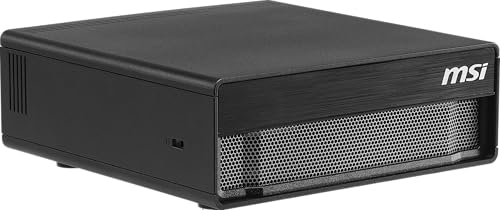
For developers and researchers looking to push the boundaries of AI and machine learning, the msi EdgeXpert AI Mini Desktop (DGX Spark Platform) stands out with its impressive 1000 TOPS of AI performance. Powered by the NVIDIA GB10 Grace Blackwell architecture, it handles generative AI and advanced edge computing with ease. With a 20-core Arm CPU and 128GB LPDDR5X memory, multitasking is seamless, supporting large-scale models up to 200 billion parameters. The 4TB PCIe Gen5 SSD guarantees rapid data access, while WiFi 7 and USB4 Type-C provide next-gen connectivity, making it perfect for high-demand AI applications.
Best For: The msi EdgeXpert AI Mini Desktop is best for developers, researchers, and enterprises seeking high-performance AI and machine learning solutions.
Pros:
- Exceptional AI performance with up to 1000 TOPS, ideal for generative AI and advanced edge computing workloads.
- Ample 128GB LPDDR5X memory supports large-scale AI models without performance bottlenecks.
- High-speed 4TB PCIe Gen5 SSD and next-gen connectivity options ensure rapid data access and seamless multitasking.
Cons:
- Higher price point compared to standard desktop solutions, which may not be suitable for all budgets.
- May require specialized knowledge to fully leverage the advanced features and capabilities.
- Limited availability of compatible software optimized for the specific architecture and operating system.
GIGABYTE AI TOP Atom Personal AI Supercomputer
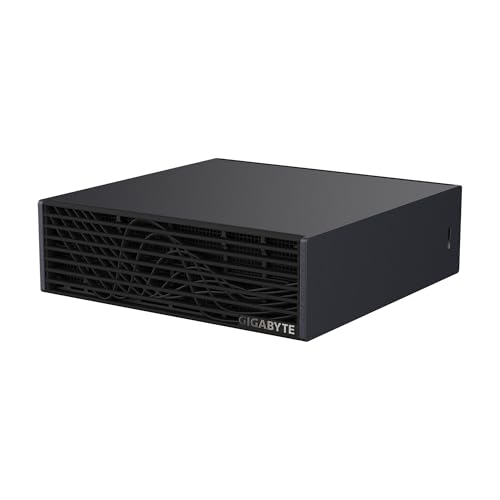
Designed for data scientists and AI researchers, the GIGABYTE AI TOP Atom Personal AI Supercomputer offers unparalleled performance with its capability to deliver 1 petaFLOP of AI processing power. Powered by the NVIDIA GB10 Grace Blackwell Superchip and a 20-Core Arm CPU, it features 128GB of LPDDR5X memory and a 4TB PCIe 5.0 NVMe SSD. This compact desktop revolutionizes AI training with real-time monitoring and advanced memory offloading. You can easily scale workloads using two AI TOP ATOMs via NVIDIA NVLink-C2C, accommodating models with up to 405 billion parameters, making it perfect for next-level data science projects.
Best For: Data scientists and AI researchers seeking high-performance computing for advanced AI training and model scalability.
Pros:
- Delivers 1 petaFLOP of AI performance with cutting-edge hardware.
- Supports real-time monitoring and advanced memory offloading for efficient AI training.
- Scalable architecture accommodates models with up to 405 billion parameters using NVIDIA NVLink-C2C.
Cons:
- High initial investment may not be feasible for smaller teams or individual researchers.
- Limited availability of specific components may affect upgrade options.
- Requires expertise in AI and data science to fully leverage its capabilities.
ASUS Ascent GX10 AI Supercomputer

With its impressive 1 petaFLOP of AI performance, the ASUS Ascent GX10 AI Supercomputer stands out as an exceptional choice for data scientists and AI researchers looking to push the boundaries of their projects. Its NVIDIA GB10 Grace Blackwell Superchip and 128GB LPDDR5x memory guarantee lightning-fast processing. The 2TB PCIe Gen4 NVMe SSD provides ample storage for your data. Plus, with features like dual system stacking and advanced thermal design, you’ll experience peak performance in a compact mini PC form factor. Connectivity options like Wi-Fi 7 and Bluetooth 5.4 keep you seamlessly connected, making it a powerful asset for your AI endeavors.
Best For: Data scientists and AI researchers seeking high-performance computing for advanced projects and model fine-tuning.
Pros:
- Exceptional AI Performance: Delivers 1 petaFLOP of AI performance, ideal for demanding workloads.
- Compact Design: Mini PC form factor with advanced thermal management allows for powerful computing in limited spaces.
- Versatile Connectivity: Equipped with Wi-Fi 7, Bluetooth 5.4, and multiple ports for easy integration and connectivity.
Cons:
- High Power Consumption: Requires 240 Watts, which may lead to increased energy costs.
- Limited Graphics: Integrated graphics may not meet the needs of users requiring extensive graphical capabilities.
- Weight and Size: While compact, the weight of 3.26 pounds may still be considered heavy for some portable applications.
ASUS V500 Home & Business Tower Desktop

Looking for a powerful desktop that can handle demanding data science tasks? The ASUS V500 Home & Business Tower Desktop is your go-to choice. With its Intel Core i7-13620H processor, featuring 10 cores and 16 threads, it delivers responsive multitasking performance. You’ll appreciate the 32GB DDR5 RAM and 1TB SSD, ensuring smooth operations and quick startups. Plus, with HDMI and DisplayPort outputs, connecting multiple monitors is a breeze. Running Windows 11 Pro, it offers advanced security features and productivity tools. The included ADATA 64GB USB Flash Drive adds extra storage, making this desktop a solid investment for your data science needs.
Best For: Data scientists and business professionals seeking a high-performance desktop for multitasking and demanding applications.
Pros:
- Responsive performance with Intel Core i7-13620H processor and 32GB DDR5 RAM for efficient multitasking.
- Ample storage capacity with a 1TB SSD, ensuring quick startups and smooth operations.
- Versatile connectivity options with HDMI and DisplayPort outputs for multiple monitor setups.
Cons:
- Higher price point may not be suitable for budget-conscious users.
- Limited upgrade options for components beyond RAM and storage.
- Weight and size may make it less portable compared to smaller desktop alternatives.
ASUS ROG Strix G700 Gaming PC

The ASUS ROG Strix G700 Gaming PC stands out as an exceptional choice for data scientists who demand top-tier performance. With an Intel Core Ultra 9 285K processor turbocharging up to 6.00GHz and a whopping 128 GB of DDR5 RAM, it handles intensive tasks effortlessly. You’ll appreciate its massive 24 TB storage, including a rapid 4 TB SSD and a 20 TB hard drive for extensive datasets. The NVIDIA GeForce RTX 4060 Ti with 16 GB of GDDR6 memory guarantees stunning graphics. Plus, with Wi-Fi 6E and multiple connectivity options, you’re set for seamless collaboration and data transfer.
Best For: The ASUS ROG Strix G700 Gaming PC is best for data scientists and gamers who require high performance and extensive storage for demanding applications and large datasets.
Pros:
- Exceptional processing power with Intel Core Ultra 9 285K and turbo speeds up to 6.00GHz.
- Massive storage capacity of 24 TB, combining fast SSD with ample hard drive space.
- High-quality graphics performance with NVIDIA GeForce RTX 4060 Ti and 16 GB GDDR6 memory.
Cons:
- High price point may not be suitable for casual users or those on a budget.
- Large size may not be ideal for users with limited desk space.
- Potentially overkill for users who do not require such high specifications for everyday tasks.
HP OmniDesk Desktop PC (M03-0060)
For data scientists who demand powerful performance, the HP OmniDesk Desktop PC (M03-0060) stands out with its Intel Core Ultra 7 processor, capable of reaching speeds up to 5.3 GHz. With 32 GB of DDR5 RAM and a massive 2 TB PCIe Gen4 NVMe M.2 SSD, multitasking and data handling become seamless. You’ll enjoy vivid visuals thanks to Intel Graphics, perfect for creative applications. Connectivity is exceptional with 10 USB ports and Wi-Fi 6. Plus, it’s eco-friendly, made from recycled materials. With a stylish dark wood finish, it’s as attractive as it is powerful, enhancing your workspace.
Best For: Data scientists and professionals who require high-performance computing for multitasking, data analysis, and creative applications.
Pros:
- Powerful Performance: Equipped with an Intel Core Ultra 7 processor and 32 GB of DDR5 RAM for seamless multitasking.
- Vivid Visuals: Intel Graphics provide stunning visuals, enhancing both creative work and gaming experiences.
- Eco-Friendly Design: Constructed with recycled materials and certified for energy efficiency, making it a sustainable choice.
Cons:
- Limited Graphics Card: Integrated Intel Graphics may not meet the needs of users requiring high-end gaming or graphic design capabilities.
- Weight and Size: The desktop may be bulkier compared to compact alternatives, which could be a consideration for smaller workspaces.
- Software Limitations: Windows 11 Home may lack some advanced features found in Windows Pro, which could be a drawback for business users.
Corsair AI Workstation 300 Desktop PC

Engineered for data scientists and AI developers, the Corsair AI Workstation 300 Desktop PC combines power and compact design in a sleek 4.4L form factor. With its AMD Ryzen AI Max 385 CPU and Radeon 8050S iGPU, you’ll experience exceptional performance for AI development and local LLMs. The 64GB LPDDR5X memory and 1TB M.2 SSD guarantee fast data access and ample storage. Plus, the RDNA 3.5 graphics technology delivers superior visuals. The CORSAIR AI Software Suite equips you with essential tools, while built-in security features safeguard your projects. This workstation is perfect for your demanding workflows and future-proofing your setup.
Best For: Data scientists and AI developers seeking a compact yet powerful desktop PC for demanding workflows.
Pros:
- AI-Optimized Performance: Designed specifically for local LLMs and creative workloads, ensuring efficient processing.
- Ample Memory and Storage: Equipped with 64GB LPDDR5X memory and a 1TB M.2 SSD for fast data access and sufficient storage capacity.
- Robust Security Features: Built-in layers of security technology provide chip-to-cloud protection against sophisticated attacks.
Cons:
- Limited Upgrade Options: Compact design may restrict future hardware upgrades or expansions.
- Higher Price Point: Premium features and performance may come at a higher cost compared to standard workstations.
- Potential Noise Levels: High-performance components may lead to increased noise during intensive tasks.
HP Mini Desktop PC Computer with Intel i7-12700T

With its powerful Intel i7-12700T processor and impressive 64GB of RAM, the HP Mini Desktop PC is an excellent choice for data scientists and professionals who need robust performance in a compact form. This mini powerhouse features a 1TB PCIe SSD that boots in seconds and supports three 4K displays simultaneously, perfect for multitasking. Weighing just 3.13 lbs and measuring 6.97 inches, it fits easily into tight spaces while operating under 30dB, ensuring a whisper-quiet environment. With seven USB ports and Windows 11 Pro, you’ll have everything you need for efficient data processing and analysis.
Best For: Data scientists and professionals seeking high-performance computing in a compact desktop form factor.
Pros:
- Exceptional performance with an Intel i7-12700T processor and 64GB of RAM.
- Supports three 4K displays simultaneously, enhancing multitasking capabilities.
- Compact and quiet design makes it suitable for various work environments.
Cons:
- Limited upgrade options due to its mini desktop form factor.
- May not be suitable for gaming due to integrated graphics.
- Higher price point compared to traditional desktops with similar specs.
Factors to Consider When Choosing High End Desktops for Data Science
When choosing a high-end desktop for data science, you need to focus on several key factors. Processing power, memory capacity, storage speed, and graphics capabilities all play vital roles in handling complex tasks efficiently. Additionally, consider the connectivity options to guarantee your setup meets all your project needs.
Processing Power Requirements
Choosing the right high-end desktop for data science isn’t just about looks; it hinges on understanding processing power requirements. You’ll want a multi-core processor with at least 8 to 20 cores to tackle parallel processing tasks efficiently. A clock speed of 3.5 GHz or higher is essential for optimal performance in data-intensive applications, ensuring quick computations. Ample RAM is vital; aim for at least 32GB of DDR4 or DDR5 memory to handle larger datasets without slowdowns. A powerful GPU with dedicated VRAM of 8GB or more will accelerate machine learning tasks. Finally, support for high-speed storage options like NVMe SSDs with 1TB or more can greatly enhance your workflow by reducing data loading times.
Memory Capacity Considerations
Memory capacity plays an essential role in the performance of high-end desktops for data science. You’ll want at least 32GB to efficiently handle large datasets and complex computations, allowing for smooth multitasking. If you’re diving into advanced machine learning or AI applications, consider systems with 128GB or more unified memory. This setup enables you to work with extensive models containing billions of parameters. Opt for high bandwidth memory like DDR5 or LPDDR5X to boost data throughput, critical for training large-scale models. Don’t overlook memory speed, measured in MT/s; faster memory reduces latency and enhances data access times. Finally, choose systems with expandable memory options to future-proof your workstation against evolving data science demands.
Storage Speed Importance
As you explore data science, the speed of your storage solutions becomes a critical factor that can dramatically impact your workflow. Fast storage, like PCIe NVMe SSDs, offers read/write speeds over 10,000 MB/s, making it essential for handling large datasets efficiently. When you work with terabytes of data, faster storage reduces latency, allowing quicker access to training data for machine learning models. This leads to swifter iterations during model development and testing. Additionally, high-speed storage handles numerous I/O operations seamlessly, preventing bottlenecks that can hinder your performance. Ultimately, investing in high-speed storage not only boosts your current projects but also supports scalability by accommodating larger datasets and integrating additional data sources without compromising efficiency.
Graphics Capabilities Necessity
When diving into data science, the graphics capabilities of your desktop play an important role in enhancing your overall performance. High-end desktops equipped with powerful GPUs can greatly accelerate machine learning tasks and data processing, enabling faster model training and inference. These graphics processing units can deliver up to 1 petaFLOP of AI performance, which is crucial for managing complex computations and large datasets. With dedicated graphics memory, such as 12 GB GDDR6, you can efficiently handle massive AI models containing billions of parameters. In addition, high-performance GPUs support parallel processing, allowing simultaneous computations necessary for deep learning and advanced analytics. As data science models grow in complexity, advanced GPUs become increasingly essential for real-time data visualization and quicker insights.
Connectivity Options Availability
Choosing the right connectivity options can make a significant difference in your data science workflow. Look for high-end desktops with multiple USB ports, including USB Type-C and USB 3.2, to guarantee fast data transfer and easy connections to various peripherals. High-speed networking options like Wi-Fi 6 or Wi-Fi 7 and robust Ethernet support are vital for efficient data handling and collaboration in cloud environments. Additionally, having display outputs such as HDMI and DisplayPort is important for connecting multiple monitors, boosting your productivity. Advanced features like Bluetooth 5.3 can help you integrate wireless devices seamlessly, reducing cable clutter. Finally, verify compatibility with next-gen standards like USB4 to future-proof your desktop for emerging technologies and enhance system performance.
