
When it comes to video editing, the right monitor can make all the difference in your workflow. You need a display that not only showcases vibrant colors but also offers precision and clarity. The ten HDR monitors highlighted here are tailored for professionals like you, ensuring your creative vision is accurately represented. But what specific features should you prioritize? Let’s explore the standout options and what they bring to the table.
ASUS ProArt Display 27” 4K HDR Professional Monitor (PA279CRV)

The ASUS ProArt Display 27” 4K HDR Professional Monitor (PA279CRV) is an outstanding choice for video editors who demand color accuracy and precision in their work. With its UHD resolution and Calman Verified color accuracy, you’ll experience colors that truly pop. The impressive 99% DCI-P3 and Adobe RGB coverage guarantees your edits remain vibrant and true to life. Plus, the IPS panel provides a wide 178° viewing angle, making collaboration easier. With multiple connectivity options, including USB-C with power delivery, you can streamline your workspace. Don’t forget the three-month complimentary Adobe Creative Cloud access, enhancing your creative toolkit even further!
Best For: Professionals in video editing and graphic design who require exceptional color accuracy and detail in their work.
Pros:
- Calman Verified color accuracy with factory pre-calibration to Delta E < 2 ensures precise color representation.
- Wide viewing angles of 178° allow for better collaboration and visibility from different positions.
- Multiple connectivity options, including USB-C with Power Delivery, streamline setup and reduce cable clutter.
Cons:
- At 18.25 pounds, the monitor may be heavier than some users prefer for portability.
- Limited to 27 inches, which may not satisfy users seeking larger screen real estate for multitasking.
- The price point may be higher compared to standard monitors, potentially limiting accessibility for casual users.
BenQ PD3205U 32″ 4K UHD Monitor
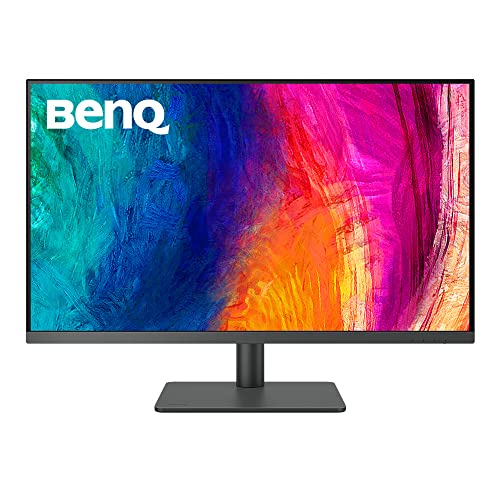
For video editors seeking unparalleled color accuracy and a seamless workflow, the BenQ PD3205U 32″ 4K UHD Monitor stands out as an exceptional choice. With a factory-calibrated IPS display covering 99% of the Rec.709 and sRGB color gamut, you’ll enjoy impressive color fidelity. Plus, its AQCOLOR Technology guarantees precise color reproduction, validated by CalMan and Pantone SkinTone. Connectivity is a breeze with USB-C, HDMI, and DisplayPort options, along with a KVM switch for multitasking. Ergonomically designed, it offers customizable adjustments for comfort. Built-in speakers enhance your experience, making it a perfect companion for your editing projects.
Best For: Video editors and graphic designers who require exceptional color accuracy and versatile connectivity options.
Pros:
- Factory calibrated for high color accuracy with a report included.
- Multiple connectivity options including USB-C, HDMI, and DisplayPort for easy integration.
- Ergonomic design with customizable adjustments ensuring comfort during long editing sessions.
Cons:
- Built-in speakers may not provide the best audio quality for professional use.
- The 32″ size may be too large for smaller workspaces.
- Higher price point compared to standard monitors without advanced color features.
Dell 27 Plus 4K Monitor (S2725QS)

With its stunning 27-inch 4K display and impressive 120Hz refresh rate, the Dell 27 Plus 4K Monitor (S2725QS) is perfect for video editors seeking vibrant visuals and smooth performance. The IPS panel offers 99% sRGB color coverage, ensuring your projects look true to life. Plus, with a rapid 0.03ms response time and AMD FreeSync Premium, you’ll enjoy a tear-free experience. The sleek, ultra-thin bezel and ash white finish enhance your workspace aesthetic. Integrated speakers and HDR readiness add further value. Rated 4.4 stars by customers, it’s a reliable choice for anyone serious about video editing.
Best For: Video editors and creative professionals seeking a high-quality 4K display for vibrant visuals and smooth performance.
Pros:
- Ultra-thin bezel design enhances modern workspace aesthetics.
- 99% sRGB color coverage ensures accurate and vibrant color representation.
- 120Hz refresh rate and ultra-low 0.03ms response time provide a smooth, tear-free experience.
Cons:
- Integrated speakers may not meet the audio quality expectations of audiophiles.
- Limited adjustability options for height and tilt compared to some competitors.
- The weight of 14.26 pounds may require sturdy mounting solutions.
ASUS ProArt 32” 4K HDR Monitor (PA329CV)

Ideal for professional video editors, the ASUS ProArt 32” 4K HDR Monitor (PA329CV) boasts remarkable color accuracy with 100% sRGB and 100% Rec. 709 coverage. Its 32-inch IPS display offers stunning 3840 x 2160 resolution and a 178° wide viewing angle, ensuring every detail’s visible. Factory calibrated with a Delta E < 2, this monitor delivers consistent performance, earning Calman Verification. Connectivity’s a breeze with USB-C Power Delivery, DisplayPort, HDMI, and a 4-port USB 3.1 hub. Plus, its adjustable height and included C-clamp enhance ergonomics. With a 4.3-star rating, it’s a solid choice for your editing needs.
Best For: Professional video editors and graphic designers seeking high color accuracy and 4K resolution for their projects.
Pros:
- Factory calibrated with a Delta E < 2 for exceptional color accuracy.
- Multiple connectivity options including USB-C Power Delivery and a 4-port USB 3.1 hub.
- Adjustable height and C-clamp included for improved ergonomics.
Cons:
- Heavier than some competitors, making it less portable.
- Limited warranty details; users may need to inquire for specifics.
- Higher price point may not fit all budgets.
Sceptre 4K IPS 27″ UHD Monitor (2021)

The Sceptre 4K IPS 27″ UHD Monitor (2021) stands out for its impressive 4K resolution, making it an excellent choice for video editors who demand sharp, vibrant visuals. With a 99% sRGB color gamut and IPS panel, you’ll enjoy consistent colors from any angle. Its 350 cd/m² brightness and 5ms response time enhance your editing experience, while the anti-flicker technology protects your eyes during long sessions. Multiple connectivity options, including DisplayPort and HDMI, keep your setup versatile. Plus, its sleek design and VESA compatibility mean it’ll fit seamlessly into your workspace, adding both style and functionality to your creative workflow.
Best For: Those seeking an affordable 4K monitor for video editing, gaming, and general productivity without compromising on image quality.
Pros:
- Excellent 4K resolution with 99% sRGB color gamut for vibrant visuals.
- IPS panel provides consistent color performance from multiple angles.
- Multiple connectivity options including DisplayPort and HDMI for versatile setups.
Cons:
- Lacks Picture-in-Picture (PiP) feature which may limit multitasking.
- May not support older devices requiring VGA to HDMI adapters.
- Some users noted it is thicker compared to slimmer monitor models.
ASUS ProArt Display 27” 5K HDR Professional Monitor (PA27JCV)
For video editors seeking exceptional color accuracy and detail, the ASUS ProArt Display 27” 5K HDR Professional Monitor (PA27JCV) stands out as a top choice. With a stunning 5K resolution (5120 x 2880) and 99% DCI-P3 coverage, it guarantees your visuals pop. The IPS panel offers a wide 178° viewing angle, while its Calman Verified calibration assures ΔE < 2 for precise color representation. You’ll appreciate the built-in Auto KVM for seamless device switching, and USB-C support for fast data transfer. Overall, this monitor enhances your editing experience, making it ideal for professional content creation.
Best For: Video editors and professional content creators seeking exceptional color accuracy and detail in their work.
Pros:
- Excellent color accuracy with 99% DCI-P3 and factory pre-calibration ensuring ΔE < 2.
- Wide viewing angle of 178° and impressive 5K resolution (5120 x 2880) for stunning visuals.
- Convenient Auto KVM functionality for seamless switching between multiple devices.
Cons:
- Some users report issues with KVM switching speed and input detection after sleep mode.
- Minor backlight bleed has been reported by a few users.
- Certain users experience eye strain at lower brightness settings.
LG 27US500-W Ultrafine 27-Inch 4K UHD Monitor
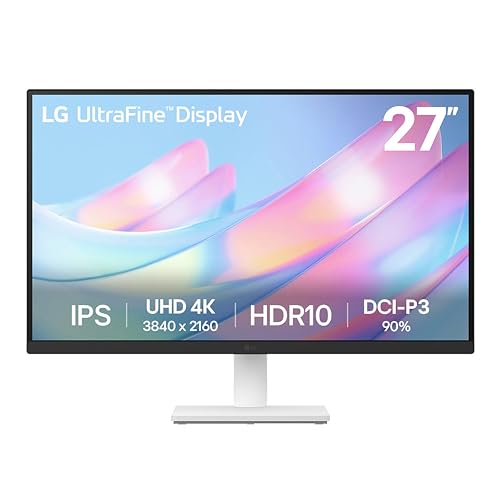
Creative professionals seeking high detail and color accuracy will find the LG 27US500-W Ultrafine 27-Inch 4K UHD Monitor to be an excellent choice. With a stunning 3840×2160 resolution and HDR10 support, it covers up to 90% of the DCI-P3 color gamut, ensuring vibrant visuals. The IPS borderless design enhances your viewing experience, while the ergonomic stand allows for flexible tilt adjustments. You’ll appreciate features like Reader Mode and Flicker Safe technology, which reduce eye strain during long editing sessions. Plus, the included HDMI cable and quick start guide make setup a breeze, perfect for your creative endeavors.
Best For: Creative professionals needing high detail and color accuracy in their work.
Pros:
- Stunning 4K UHD resolution (3840×2160) for vibrant visuals.
- Ergonomic stand allows for flexible tilt adjustments for comfortable use.
- Features like Reader Mode and Flicker Safe technology help reduce eye strain.
Cons:
- Limited connectivity options may not suit all users.
- Some users may find the stand lacks height adjustment.
- HDR performance may not be as impressive as higher-end models.
INNOCN 40 Inch 5K Ultrawide Monitor (40C1U)
Designed to elevate your video editing experience, the INNOCN 40 Inch 5K Ultrawide Monitor (40C1U) boasts a stunning resolution of 5120 x 2160 pixels, ensuring every detail is crystal clear. With a 21:9 aspect ratio and 100Hz refresh rate, you’ll enjoy smooth, immersive visuals. The IPS panel offers 135% sRGB and 106% DCI-P3 color gamut, giving you exceptional color accuracy. Plus, its ergonomic design with height, swivel, and tilt adjustments allows for comfortable long hours of editing. Connectivity options like USB-C and HDMI make it versatile for various devices, making it an excellent choice for creative professionals.
Best For: Creative professionals, designers, and researchers seeking an ultra-wide monitor for enhanced workflow efficiency and exceptional color accuracy.
Pros:
- Exceptional color accuracy with 135% sRGB and 106% DCI-P3 color gamut.
- Ergonomic design with height, swivel, and tilt adjustments for comfortable long-term use.
- Versatile connectivity options including USB-C, HDMI, and DisplayPort.
Cons:
- Some users report packaging issues and stains on the screen upon delivery.
- Occasional complaints of dead pixels and poor HDR performance.
- Limited support and documentation from the manufacturer.
BenQ SW321C Photo Video Editing Monitor 32″ 4K UHD

The BenQ SW321C Photo Video Editing Monitor is an exceptional choice for photographers and video editors who demand precise color accuracy in their work. With a 32″ 4K UHD resolution and IPS technology, you’ll enjoy stunning visuals and consistent colors. Factory calibrated, it boasts 100% sRGB, 95% P3, and 99% AdobeRGB coverage, ensuring every hue is spot on. Plus, the 14-bit 3D LUT enhances color blending for flawless results. USB-C connectivity simplifies setup, while the ergonomic design allows for comfortable adjustments. With a stellar 4.6-star rating, it’s clear this monitor elevates your editing experience to new heights.
Best For: Photographers and video editors seeking high color accuracy and detailed visuals for their creative work.
Pros:
- Factory calibrated for exceptional color accuracy with a low average Delta E ≤2.
- Wide color coverage with 100% sRGB, 95% P3, and 99% AdobeRGB for true-to-life representation.
- Ergonomic design allows for easy adjustments to enhance comfort during long editing sessions.
Cons:
- Relatively heavy at 26 pounds, which may make it cumbersome to move.
- Higher price point compared to standard monitors, which may not fit all budgets.
- Limited to 3 USB 3.0 ports, which might be insufficient for users with multiple devices.
Dell 27 Plus 4K USB-C Monitor (S2725QC)

For video editors seeking exceptional color accuracy and vibrant visuals, the Dell 27 Plus 4K USB-C Monitor (S2725QC) stands out with its 99% sRGB coverage and HDR readiness. Its 27-inch 4K display offers a sharp 3840 x 2160 resolution, while a 120Hz refresh rate guarantees smooth playback. You’ll appreciate the comfortable ergonomics, adjustable stand, and reduced eye strain from ComfortView Plus. With built-in speakers delivering impressive audio, this monitor enhances your editing experience. Connectivity’s a breeze with USB-C and HDMI options. Overall, it’s a well-rounded choice for productivity and casual gaming, making it perfect for your creative workflow.
Best For: Video editors and casual gamers who prioritize color accuracy, vibrant visuals, and ergonomic comfort in their monitor.
Pros:
- Exceptional color accuracy with 99% sRGB coverage and HDR readiness for vibrant visuals.
- Ergonomic design featuring an adjustable stand that reduces eye strain during extended use.
- Built-in speakers that deliver impressive audio quality, enhancing multimedia experiences.
Cons:
- Some users report ghosting in fast-paced games, making it less ideal for competitive gaming.
- There are mentions of slight pixel burn, which may affect long-term performance.
- Limited connectivity options with only a few ports available.
Factors to Consider When Choosing HDR Monitors for Video Editing
When choosing an HDR monitor for video editing, you’ll want to focus on several key factors. Color accuracy standards, resolution, and connectivity options can make a big difference in your editing experience. Additionally, ergonomic design and calibration performance are essential for long hours of work.
Color Accuracy Standards
Choosing an HDR monitor for video editing hinges considerably on color accuracy standards, as they directly impact how true-to-life your edits will appear. Look for monitors with a Delta E value below 2; this indicates minimal color difference from the original source, which is important for precise editing. Make sure your monitor covers common color gamuts like 99% sRGB, 99% Adobe RGB, or 99% DCI-P3 to represent a wide color range accurately. Check for calibration reports from manufacturers; factory calibration is essential for reliable performance. Also, consider monitors that support 10-bit color depth, allowing for over a billion colors, enhancing hue gradation. Technologies like AQCOLOR and Calman Verification guarantee that the monitor meets professional color accuracy standards, critical for important editing work.
Resolution and Display Size
Resolution and display size are essential factors that can dramatically enhance your video editing experience. A higher resolution, like 4K (3840 x 2160), provides four times the pixel density of 1080p, allowing for more precise editing and color grading. If you’re working on professional projects, consider a 5K (5120 x 2880) monitor for even greater detail and better scaling of high-resolution content.
Additionally, opting for a larger display, such as 27 inches or 32 inches, gives you more screen real estate for timelines and tools, minimizing the need to zoom in and out. Finally, choose an IPS panel for wide viewing angles to guarantee accurate color representation across different positions, essential for effective video editing and HDR content creation.
Connectivity Options Available
While selecting an HDR monitor for video editing, you’ll want to prioritize connectivity options that enhance your workflow. Look for USB-C connectivity, which provides seamless image, video, and data synchronization while charging your devices. HDMI and DisplayPort are essential as they support the high bandwidth necessary for 4K and HDR content, ensuring excellent color depth and refresh rates. Multiple USB 3.0 ports can streamline connections to external devices like cameras and storage drives, improving your editing efficiency. Additionally, consider monitors with KVM switch functionality to easily switch between multiple devices. Finally, check for daisy-chain capability through DisplayPort, allowing you to connect multiple monitors to a single output, maximizing your screen real estate for a more productive editing environment.
Ergonomic Design Features
When diving into the world of HDR monitors for video editing, ergonomic design features can make a significant difference in your comfort and productivity. Look for adjustable stands that let you customize height, tilt, pivot, and swivel to find the perfect viewing angle for those long editing sessions. Monitors with eye-care technologies, like flicker-free screens and low blue light emissions, help reduce eye strain and fatigue. Additionally, a full range of adjustments promotes better posture, lowering the risk of musculoskeletal disorders. Consider borderless or ultra-slim bezels for a more immersive multi-monitor setup, enhancing your workflow. Finally, cable management features can keep your workspace organized, minimizing distractions and helping you focus on your creative tasks.
Calibration and Performance
Choosing the right HDR monitor for video editing hinges on calibration and performance, as these factors directly impact your workflow and final output quality. Look for monitors with a Delta E value of less than 2 for high color accuracy. Many professional options come factory calibrated to specific color standards like 99% Adobe RGB or 100% sRGB, ensuring precise color reproduction. Monitors with Calman verification offer reliable color performance, making sure your screen’s colors match the final product. A wide color gamut, such as 99% DCI-P3, is essential for accurate color grading. Also, consider response times of 0.03 ms and refresh rates around 120 Hz for smoother playback and editing, enhancing your overall experience.
