
When it comes to 4K120 streaming, choosing the right HDMI capture card can make or break your broadcast. With so many options available, knowing which models stand out is essential for achieving high-quality results. From ultra-low latency to compatibility with popular software, these devices can elevate your streaming game. Curious about which capture cards top the list and why they’re worth considering? Let’s explore the best options available to enhance your streaming experience.
Elgato 4K X Capture Card for Gaming and Streaming

If you’re a serious gamer or content creator looking to elevate your streaming quality, the Elgato 4K X Capture Card is a top choice. It captures stunning 4K144 resolution and supports high frame rates up to 240fps in 1080p, ensuring crystal-clear visuals for your content. With HDMI 2.1 connectivity, it’s compatible with popular consoles like PS5, Xbox Series X, and even PC. You’ll love the ultra-low latency powered by USB 3.2 Gen 2, providing synchronized gameplay. Plus, its seamless integration with apps like OBS and Twitch makes broadcasting to platforms like YouTube and Facebook Gaming effortless and efficient.
Best For: Serious gamers and content creators looking to enhance their streaming quality with high-resolution and low-latency performance.
Pros:
- Supports stunning 4K144 resolution and high frame rates up to 240fps in 1080p for crystal-clear visuals.
- Compatible with a wide range of devices including PS5, Xbox Series X, PC, and Mac, ensuring versatility.
- Ultra-low latency powered by USB 3.2 Gen 2 provides synchronized gameplay for a seamless streaming experience.
Cons:
- Higher price point compared to standard capture cards, which may not be suitable for casual users.
- Requires a powerful PC or console for optimal performance, potentially limiting accessibility for some users.
- Setup may be complex for beginners unfamiliar with streaming technology and software integration.
Acer USB 3.0 Video Capture Card for Streaming

The Acer USB 3.0 Video Capture Card is an ideal choice for content creators seeking a reliable and versatile streaming solution. It captures video at 1080p and supports 4K input, ensuring high-quality output at 60Hz. With its plug-and-play design, you won’t need extra drivers, making setup a breeze. Plus, it’s compatible with various devices, including gaming consoles and DSLRs. The low latency feature minimizes delays, perfect for live commentary via the mic input. Lightweight and portable, you can take it anywhere. With a solid 4.4-star rating and a one-year warranty, it’s a smart investment for your streaming needs.
Best For: Content creators and gamers looking for a reliable and versatile streaming solution.
Pros:
- Easy plug-and-play setup without the need for extra drivers or external power.
- Supports a wide range of devices, including gaming consoles, DSLRs, and PCs.
- Low latency feature ensures minimal delay during video capture for live commentary.
Cons:
- Limited to 1080p output, which may not meet the needs of users seeking 4K streaming.
- Portability may come at the expense of build quality compared to larger capture cards.
- Some users may experience compatibility issues with specific streaming software.
Elgato 4K Pro Internal Capture Card

For gamers and content creators seeking top-tier performance, the Elgato 4K Pro Internal Capture Card stands out with its ability to capture gameplay at an impressive 8K60 resolution while recording in stunning 4K60 quality. Featuring HDMI 2.1 connectivity, it supports high frame rates up to 240fps at 1080p, ensuring smooth visuals. You can easily stream on popular platforms like Twitch and YouTube using software like OBS or Streamlabs. Plus, its ultra-low latency guarantees perfect synchronization between your broadcast and gameplay, making it an ideal choice for those looking to elevate their streaming experience without compromising quality.
Best For: Gamers and content creators who demand high-quality streaming and recording performance.
Pros:
- Supports 8K60 resolution capture and 4K60 recording for exceptional video quality.
- Seamless compatibility with popular streaming apps like OBS, Streamlabs, and Twitch.
- Ultra-low latency ensures perfect synchronization between gameplay and broadcast.
Cons:
- Requires a compatible PC with sufficient hardware for optimal performance.
- HDMI 2.1 cables may need to be purchased separately if not included.
- Higher price point compared to standard capture cards may not suit all budgets.
AVerMedia 4K60 Capture Card (GC553G2)

Gamers looking to elevate their streaming experience will find the AVerMedia 4K60 Capture Card (GC553G2) an excellent choice. With HDMI 2.1 support, you can capture and stream gameplay in stunning 4K60 resolution. It’s perfect for consoles like PS5 and Xbox, ensuring low latency for real-time gameplay. The 4K144 HDR/VRR pass-through enhances your gaming experience, while 5.1 multi-channel audio support keeps your party chats smooth. Plus, the customizable RGB lighting adds a personal touch to your setup. Weighing only 115 grams, it’s compact and easy to integrate into your streaming rig, making it a top contender in the market.
Best For: Streamers and gamers seeking to capture and broadcast high-quality gameplay in 4K resolution with low latency.
Pros:
- Supports 4K60 resolution capture and streaming, providing stunning visuals.
- Features low latency capture for real-time gameplay, ideal for competitive gaming.
- Customizable RGB lighting enhances the overall gaming setup ambiance.
Cons:
- Limited to Windows 10 x64 / 11 x64 or later, restricting compatibility with other operating systems.
- May require additional setup or configuration for optimal performance on certain platforms.
- Weighing only 115 grams, while compact, may feel less durable compared to heavier alternatives.
Elgato Cam Link 4K – External Capture Card for DSLR & Camcorder

If you’re looking to elevate your streaming game, the Elgato Cam Link 4K is an excellent choice for content creators using DSLRs or camcorders. This external capture card connects your camera to your computer, enabling high-quality streaming and recording in 4K up to 60 fps, provided your camera supports it. With ultra-low latency, your audio and video will stay perfectly synchronized. It’s compatible with PC, Mac, and iPad and works seamlessly with popular software like OBS and Zoom. Lightweight and compact, the Cam Link 4K enhances your setup without the bulk, making it a top pick for serious streamers.
Best For: Content creators and streamers looking for high-quality video capture from DSLRs or camcorders.
Pros:
- High-definition video capture supporting up to 4K at 60 fps for exceptional streaming quality.
- Ultra-low latency ensures synchronized audio and video for a seamless viewing experience.
- Lightweight and compact design makes it easy to integrate into any setup without added bulk.
Cons:
- Requires a compatible camera to utilize the full 4K capabilities.
- Limited to unencrypted HDMI input, which may restrict some camera options.
- USB 3.0 interface may necessitate specific ports on older computers or laptops.
Elgato HD60 X Game Capture Card for PS5, PS4, Xbox, and Nintendo Switch
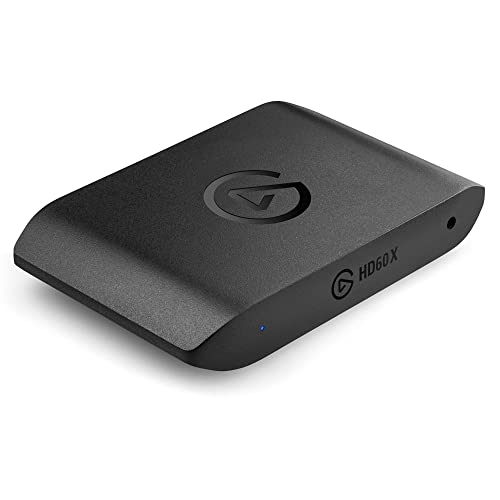
The Elgato HD60 X Game Capture Card stands out with its ability to capture and stream gameplay at 1080p60 HDR10 or 4K30, making it an ideal choice for console enthusiasts using PS5, PS4, Xbox Series X/S, and Nintendo Switch. With ultra-low latency and seamless integration into broadcasting applications like OBS and Streamlabs, you’ll enjoy smooth gameplay and high-quality streams. The HD60 X supports passthrough resolutions up to 4K60 HDR10, providing flexibility for all your gaming needs. Plus, its driverless setup means you can get started quickly, with zero watermarks or subscriptions. Join the 5,075 satisfied users rating it 4.5 stars!
Best For: Gamers and streamers using PS5, PS4, Xbox Series X/S, and Nintendo Switch who want high-quality capture and streaming capabilities.
Pros:
- High Capture Quality: Supports 1080p60 HDR10 and 4K30 for excellent video quality.
- Low Latency: Provides ultra-low latency for seamless audio and video syncing.
- Easy Setup: Driverless installation for both Windows and Mac, allowing for quick start-up.
Cons:
- System Requirements: Requires a relatively powerful PC setup to ensure optimal performance.
- Limited HDR on macOS: HDR capture is only available on Windows, which may limit users on macOS.
- Weight and Size: Some users might find the device to be slightly bulky compared to other capture cards.
Magewell Pro Capture Quad HDMI 4-Channel Capture Card

For professionals in video production and broadcasting, the Magewell Pro Capture Quad HDMI 4-Channel Capture Card stands out with its ability to handle four independent HDMI inputs simultaneously. Supporting input resolutions up to 2048×2160 and frame rates up to 144 fps, it guarantees high-quality capture. The card features low latency, on-board video processing, and up to 8-channel audio per input, making it versatile for any setup. With compatibility across Windows, macOS, and Linux, you can easily integrate it into your workflow. Its robust design is built for 24/7 operation, making it a reliable choice for serious creators.
Best For: Professionals in video production and broadcasting seeking a reliable and high-quality capture solution.
Pros:
- High Resolution and Frame Rate Support: Captures video at resolutions up to 2048×2160 and frame rates up to 144 fps.
- Versatile Audio and Video Processing: Offers advanced processing features such as cropping, scaling, and OSD composition, along with support for up to 8-channel audio.
- Robust and Reliable Design: Built for 24/7 operation, ensuring durability and consistent performance in professional environments.
Cons:
- Potential Bandwidth Limitations: Frame rate performance may depend on the system’s bandwidth, which could limit capabilities in certain setups.
- PCIe Slot Requirement: Requires a PCI Express x4 slot, which may not be available in all systems.
- Higher Initial Investment: As a professional-grade product, it may be more expensive compared to consumer-grade capture cards.
4K HDMI Capture Card USB 3.0 for Gaming & Streaming
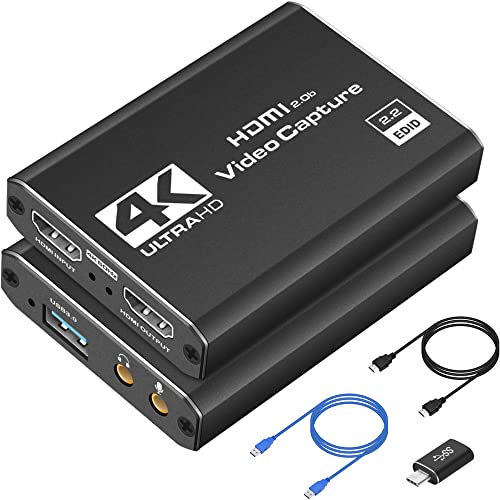
Engineered specifically for gamers and content creators, the 4K HDMI Capture Card USB 3.0 delivers exceptional video quality and performance. You’ll capture stunning 1080P 60FPS gameplay, perfect for Twitch streaming and YouTube recording. With low-latency performance, you won’t experience delays, making it essential for competitive gaming and live broadcasts. Its plug-and-play design means no drivers are needed, so you can start using it with your PC or laptop instantly. Compatible with major platforms like OBS Studio and XSplit, this compact and lightweight card is perfect for on-the-go creators, ensuring seamless passthrough for lag-free gameplay.
Best For: Gamers and content creators looking for high-quality video capture for streaming and recording.
Pros:
- Plug-and-play design allows for easy setup without the need for drivers.
- Low-latency performance ensures minimal delay during gameplay and broadcasts.
- Compact and lightweight design makes it portable for creators on the go.
Cons:
- Limited to 1080P 60FPS, which may not meet the needs of those seeking higher resolutions.
- May require additional software for optimal performance on certain platforms.
- Compatibility issues could arise with non-standard HDMI devices.
ASUS TUF Gaming Video Capture Card (CU4K30)

Gamers seeking high-quality livestream visuals will find the ASUS TUF Gaming Video Capture Card (CU4K30) an excellent choice. It captures video in stunning 4K at 30 fps, ensuring your streams look great. With passthrough support for 4K HDR at 60 Hz, you won’t experience lag during gameplay. The plug-and-play functionality via USB 3.2 Type-C means you can start streaming immediately—no extra drivers needed. Its durable alloy design enhances longevity, while controller and headset connections enable seamless audio sharing. Perfect for any skill level, this capture card makes streaming effortless and enjoyable. Get ready to elevate your gaming experience!
Best For: Gamers looking for high-quality livestream visuals and seamless streaming experiences.
Pros:
- Supports 4K HDR passthrough at 60 Hz, providing lag-free gameplay.
- Plug-and-play functionality with USB 3.2 Type-C for immediate setup without extra drivers.
- Durable alloy design ensures longevity while maintaining a slim profile.
Cons:
- Captures video at a maximum of 30 fps in 4K, which may not meet the needs of all streamers.
- Limited to USB 3.2 Type-C connectivity, which may require adapters for some setups.
- Performance may vary based on the user’s PC specifications and streaming setup.
Blackmagic Design DeckLink Quad HDMI PCIe Capture Card
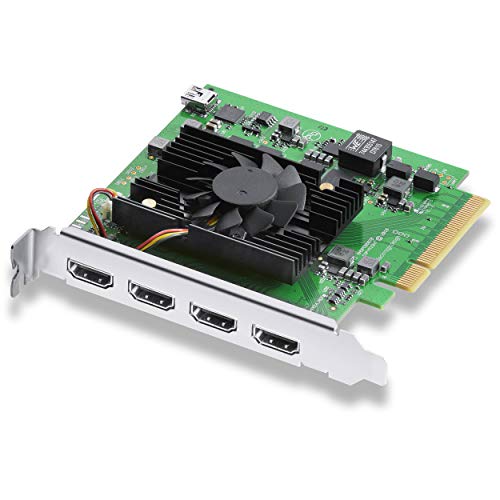
The Blackmagic Design DeckLink Quad HDMI PCIe Capture Card stands out for professionals needing to capture multiple high-quality video sources simultaneously. With four HDMI 2.0b inputs, it supports up to 4K60 resolution, allowing you to record 8, 10, and 12-bit RGB and YUV formats. Its high-speed PCIe interface guarantees compatibility with Mac OS, Windows, and Linux systems. You’ll appreciate the broad format support, including SD, HD, and 4K video standards, along with Deep Color and HDR capabilities. Plus, it offers 8 channels of embedded audio for enhanced quality, making it a robust choice for your streaming needs.
Best For: The Blackmagic Design DeckLink Quad HDMI PCIe Capture Card is best for video production professionals and content creators who require high-quality, multi-source video capture capabilities.
Pros:
- Supports up to 4K60 resolution with four HDMI 2.0b inputs for simultaneous capturing.
- High-speed PCIe interface ensures compatibility with various operating systems including Mac OS, Windows, and Linux.
- Offers 8 channels of embedded audio and wide format support including SD, HD, and 4K standards.
Cons:
- Cannot capture from copy-protected HDMI sources, limiting some potential input options.
- Requires a PCI Express 8 lane generation 3 slot, which may not be available on all systems.
- Primarily designed for professional use, which may make it less accessible for casual users or beginners.
Factors to Consider When Choosing HDMI Capture Cards 4K120
When you’re choosing an HDMI capture card for 4K120 streaming, you’ll want to contemplate several key factors. Think about the resolution and frame rate you need, as well as the connectivity options available. It’s also essential to guarantee compatibility with your devices, assess latency and performance, and check for software integration support.
Resolution and Frame Rate
Choosing the right HDMI capture card involves careful consideration of resolution and frame rate, as both play a significant role in achieving high-quality streaming. Look for capture cards that support a maximum resolution of 4K (up to 3840×2160), ensuring you capture stunning video quality. Frame rate is equally important; many cards deliver 60fps at 1080p, while advanced options can handle 30fps or 60fps in 4K. High refresh rates, like 120Hz or 240Hz at lower resolutions, enhance gameplay smoothness. Supporting HDR (High Dynamic Range) can provide richer colors, and it’s essential to choose a card that accommodates variable refresh rates (VRR) to prevent screen tearing during intense gaming. These factors are critical for an immersive streaming experience.
Connectivity Options Available
Understanding connectivity options is vital for maximizing the performance of your HDMI capture card, especially when aiming for 4K120 streaming. Look for HDMI 2.0 or HDMI 2.1 support, as these standards directly affect the maximum resolution and frame rates you can achieve. Many capture cards also offer USB 3.0 or USB 3.2 connections, which are essential for high data transfer rates, guaranteeing smooth video capture without lag. If you plan to use multiple devices, consider models with several HDMI inputs for versatile setups. Additionally, USB Type-C connections can provide faster and more reliable links, particularly in portable configurations. Always check compatibility with your gaming consoles or PCs to guarantee peak performance.
Compatibility With Devices
Compatibility with various devices is vital for any HDMI capture card, especially if you’re aiming for 4K120 streaming. You’ll want a capture card that supports a wide range of gaming consoles like the PS5, Xbox Series X/S, and Nintendo Switch to keep your gaming options versatile. Check for compatibility with operating systems such as Windows, macOS, and Linux to guarantee it works with your setup. It’s also essential that the card connects seamlessly with popular streaming applications like OBS and Streamlabs for smooth broadcasting. Verify the device connections, including USB 3.0 or HDMI 2.1, to maximize capture quality. Finally, assess its ability to handle various video formats and resolutions, making sure it meets your content creation needs.
Latency and Performance
When streaming at 4K120, latency and performance play a significant role in the quality of your content. You’ll want an HDMI capture card that guarantees minimal latency, ideally under 100ms, to keep your audio and video in sync. Look for high-performance models that support features like Variable Refresh Rate (VRR) passthrough, which can eliminate screen tearing and improve your gaming experience. Additionally, choose capture cards that can handle high frame rates, ideally supporting up to 240fps at 1080p for smooth gameplay. Remember, low-latency technology, such as USB 3.2 Gen 2, is essential for real-time capture and streaming, allowing you to engage with your audience without delay. Your choice directly impacts your streaming success.
Software Integration Support
For a smooth streaming experience, it’s essential to choose an HDMI capture card that integrates seamlessly with your preferred software. Confirm the card supports popular streaming applications like OBS, Streamlabs, and Twitch Studio, which will streamline your workflow. Compatibility with various operating systems—Windows, macOS, and Linux—maximizes usability across different setups. Additionally, check if the capture card can work with real-time communication platforms like Zoom and Teams, providing versatile content creation options. Verify that it allows for streaming on multiple platforms, such as YouTube and Facebook Gaming, enhancing your broadcasting flexibility. Finally, consider if the card supports plug-and-play functionality, which eliminates the need for additional drivers and simplifies installation.
Portability and Design
Portability and design are crucial elements to take into account when choosing an HDMI capture card for 4K120 streaming. A lightweight and compact design makes it easier for you to carry your capture card wherever you go. Look for plug-and-play options that allow quick setups without additional drivers, enhancing convenience. Durability is also important; an alloy outer shell can keep your device safe while maintaining a slim profile. Confirm your capture card has universal compatibility with HDMI-enabled devices, so you won’t be limited to specific setups. Additionally, consider design features like extra connectivity options for controllers or headsets, which facilitate audio sharing while keeping everything streamlined. Choosing wisely will boost your streaming experience greatly.
Warranty and Support Options
Warranty and support options can greatly impact your experience with an HDMI capture card for 4K120 streaming. When choosing, check the warranty period; longer warranties, like those up to three years on premium models, can offer peace of mind about durability. Most capture cards come with a 30-day return policy for defective or damaged products, so you can feel secure in your purchase. Don’t overlook customer support options, either. Some manufacturers provide dedicated assistance for setup and troubleshooting, which can enhance your overall experience. Finally, read customer feedback on after-sales support to verify the manufacturer is reliable and responsive when issues arise. This information can help you make a well-informed decision.
