
If you want to boost your PC’s data performance, investing in a hardware RAID controller could be your next best move. These controllers offer improved data management and redundancy, making your system faster and more reliable. With so many options available, from budget-friendly to high-end models, it’s important to know what fits your needs. Let’s explore the top contenders that can transform your storage experience.
Highpoint Technologies 2-Port M.2 NVMe Boot RAID Controller

If you’re looking for a reliable RAID solution for your virtualization needs, the Highpoint Technologies 2-Port M.2 NVMe Boot RAID Controller is an excellent choice. Designed specifically for VMware ESXi and virtualization systems, this driverless controller features a dual-channel setup that supports RAID 1, 0, and JBOD configurations. With PCIe 3.0 x8 host interface and compatibility across various operating systems, it offers versatility for your projects. You’ll appreciate the one-click RAID creation, integrated management options, and LED indicators that simplify setup and monitoring. Plus, with a solid warranty, it’s a dependable choice for enhancing your data performance.
Best For: Users seeking a reliable RAID solution for virtualization systems, particularly those using VMware ESXi.
Pros:
- Supports multiple RAID configurations (RAID 1, 0, JBOD) for versatile data management.
- Driverless installation simplifies setup and enhances compatibility with various operating systems.
- Integrated management options and LED indicators streamline monitoring and configuration.
Cons:
- Customer reviews indicate mixed satisfaction with an average rating of 3.0 out of 5 stars.
- Limited return policy with higher restocking fees for products damaged through misuse.
- Compatibility may be restricted for older operating systems, requiring updates for optimal performance.
LSI Broadcom SAS 9300-8i Host Bus Adapter

The LSI Broadcom SAS 9300-8i Host Bus Adapter stands out as an excellent choice for users seeking high-performance storage solutions in their PCs. With its 8-port design, it supports up to 12Gb/s SAS and 6Gb/s SATA connections, allowing you to connect up to 1024 devices. Its low-profile form factor fits perfectly in 1U/2U rack-mounted servers and workstations. Installation is seamless thanks to PCI Express 3.0 compatibility. Customers appreciate its reliability, giving it an impressive 4.6 out of 5 stars. Plus, with a solid warranty and return policy, you can buy with confidence and enhance your data performance today.
Best For: Users seeking high-performance storage solutions in rack-mounted servers and workstations that require extensive connectivity options.
Pros:
- High data transfer rates of up to 12Gb/s for SAS and 6Gb/s for SATA.
- Supports a large number of devices, up to 1024 SAS and SATA devices.
- Low-profile design ideal for space-constrained environments.
Cons:
- Limited to internal connections, may not suit setups needing external connectivity.
- Requires compatible hardware for optimal performance, which may increase overall system costs.
- Some users may find installation complex if they are not familiar with PCIe configurations.
Highpoint RocketRAID 640L Internal RAID Controller

For users seeking a reliable and versatile storage solution, the Highpoint RocketRAID 640L Internal RAID Controller stands out with its support for multiple RAID configurations, including RAID 0, 1, 5, and 10. With four SATA ports and a PCI-Express 2.0 x4 interface, it supports both SATA 6Gb/s and 3Gb/s HDDs/SSDs. You’ll appreciate the point-to-point connectivity, BIOS boot to RAID, and hot-swap capabilities. Initialization options like quick, background, or foreground give you flexibility, while online capacity expansion and RAID level migration enhance usability. Plus, it’s compatible with Windows and various Linux distributions, ensuring broad support for your system.
Best For: Users seeking a reliable and versatile storage solution with multiple RAID configurations for performance and data protection.
Pros:
- Supports multiple RAID configurations (RAID 0, 1, 5, 10, and JBOD) for varied data management needs.
- Hot-swap and hot-plug capabilities enable easy drive management without system downtime.
- Compatibility with multiple operating systems (Windows and various Linux distributions) ensures broad usability.
Cons:
- Limited to four SATA ports, which may not be sufficient for users with larger storage needs.
- Requires a PCI-Express 2.0 x4 slot, which may not be available on all motherboards.
- Performance may vary based on RAID configuration and the types of HDDs/SSDs used.
SAS HBA Card Compatible with LSI 9300-8i PCIe SATA Expansion Card

Designed for enthusiasts and professionals alike, the SAS HBA Card compatible with the LSI 9300-8i is a powerhouse for expanding your PC’s storage capabilities. With 8 ports supporting 12Gbps data transfer rates, this PCIe 3.0 card connects up to 8 drives directly and is expandable via an external SAS Expander. It features an LSI/Broadcom SAS3008 controller and works seamlessly with systems like ZFS, FreeNAS, and unRAID. Included are two SFF-8643 to SATA cables for easy setup. Rated #1 in RAID controllers, it’s a reliable choice for enhancing your data performance. Get ready to access your storage potential!
Best For: This product is best for tech enthusiasts and professionals looking to expand their storage capabilities in systems like ZFS, FreeNAS, and unRAID.
Pros:
- Supports up to 8 drives with 12Gbps data transfer rates for high performance.
- Compatible with various storage solutions, enhancing flexibility and scalability.
- Highly rated with a perfect customer review score, indicating reliability and satisfaction.
Cons:
- SAS drives require additional cables which are sold separately, increasing overall cost.
- No warranty details provided, which may concern some users regarding long-term reliability.
- Return policy conditions are strict, which may complicate returns for some customers.
HighPoint 4-Port M.2 NVMe RAID Controller

When speed is your top priority, the HighPoint 4-Port M.2 NVMe RAID Controller stands out as an exceptional choice for enthusiasts and professionals alike. This controller features a dedicated PCIe 3.0 x16 bus bandwidth, delivering over 8x the speed of standard Intel DMI 3.0 connections. With dedicated PCIe 3.0 x4 bandwidth for each NVMe M.2 SSD, you’ll experience incredible data transfer rates. It operates independently, making it a versatile solution compatible with Windows, Mac, and Linux systems. Plus, you can scale performance by adding multiple SSD7101A-1 controllers, ensuring your setup can grow with your needs.
Best For: Enthusiasts and professionals seeking high-speed data transfer solutions for their Windows, Mac, or Linux systems.
Pros:
- Exceptional speed with dedicated PCIe 3.0 x16 bus bandwidth.
- Independent operation allows for versatile use in various systems.
- Scalability with the ability to add multiple SSD7101A-1 controllers for enhanced performance.
Cons:
- Requires a compatible motherboard with a PCIe x16 slot.
- Higher cost compared to standard storage solutions.
- May have limited availability depending on the region.
HPE Smart Array E208i-p SR Gen10 Controller
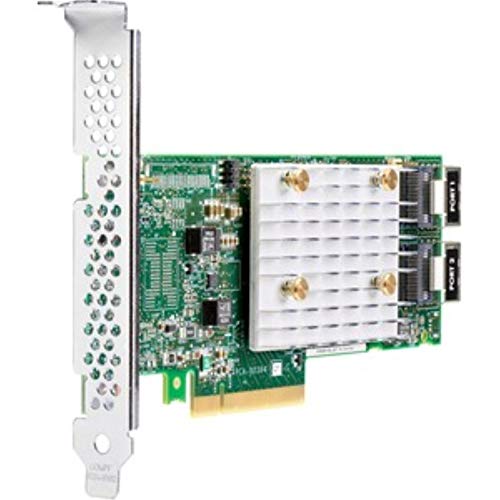
The HPE Smart Array E208i-p SR Gen10 Controller stands out with its robust support for multiple RAID levels, including 0, 1, 5, and 10, making it an excellent choice for users seeking reliability and performance in their data storage solutions. Featuring a PCI Express 3.0 x8 interface, this 12Gb/s SAS controller offers compatibility with Linux and PCs. With 2-8 internal SAS ports, it provides flexibility for your storage configurations. Weighing just 0.66 pounds, it’s lightweight yet powerful. Plus, with a solid customer rating of 4.1 out of 5 stars, you can trust its performance for your data needs.
Best For: Users seeking a reliable and high-performance RAID controller for data storage solutions in Linux and PC environments.
Pros:
- Supports multiple RAID levels (0, 1, 5, 10) for flexible data protection and performance.
- Lightweight design at only 0.66 pounds, making it easy to integrate into various systems.
- Solid customer rating of 4.1 out of 5 stars, indicating strong user satisfaction.
Cons:
- No built-in cache, which may limit performance for certain high-demand applications.
- Compatibility primarily limited to Linux and PC platforms, potentially excluding other operating systems.
- May incur restocking fees for returns if the product is misrepresented or damaged.
Intel® RAID Controller RT3EX020E – Storage Controller (RAID)

For those seeking reliability and performance in data storage, the Intel® RAID Controller RT3EX020E stands out as a top choice. This internal storage controller measures 11.89L x 8.7W x 3.74H inches and weighs just 0.88 pounds, making it easy to integrate into your system. With a solid 3-year warranty, you can rely on its durability. Ranked #806 among RAID controllers, it’s compatible with both laptops and personal computers. The removable media interface guarantees flexibility for your storage needs. Plus, Amazon’s return policy offers peace of mind for your purchase, allowing for a full refund under specific conditions.
Best For: Those seeking a reliable and high-performance RAID storage solution for their laptops or personal computers.
Pros:
- 3-year warranty provides assurance of durability and support.
- Compatible with multiple operating systems, ensuring versatility in different setups.
- Lightweight and compact dimensions make it easy to integrate into various systems.
Cons:
- Limited information on specific operating system compatibility may require further research for certain users.
- Best Sellers Rank of #806 indicates it may not be the top choice among RAID controllers on the market.
- Return policy restrictions may deter some customers, particularly with higher restocking fees for damaged returns.
HPE Smart Array E208e-p SR Gen10 Controller

With its support for multiple RAID levels, including 0, 1, 5, and 10, the HPE Smart Array E208e-p SR Gen10 Controller stands out as an ideal choice for those seeking to enhance data protection and performance in their servers or high-end workstations. This 12Gb/s SAS controller features a PCI Express 3.0 x8 interface, ensuring fast data transfer rates. With 2-8 external SAS ports, you can easily connect multiple devices. Weighing just one pound, its plug-in card form factor makes installation a breeze. Plus, it’s compatible with PC and Linux, making it versatile for various setups. Enjoy stellar performance with this reliable controller!
Best For: Those looking to enhance data protection and performance in their servers or high-end workstations with reliable RAID support.
Pros:
- Supports multiple RAID levels (0, 1, 5, 10) for flexible data management and protection.
- Fast data transfer rates with a 12Gb/s SAS interface and PCI Express 3.0 x8 connectivity.
- Easy installation with a lightweight plug-in card form factor and compatibility with PC and Linux.
Cons:
- Limited to external SAS ports, which may not suit all configurations.
- No built-in cache, potentially impacting performance for certain workloads.
- Might incur restocking fees for returns if not handled properly or if misrepresented.
Intel Raid Controller Rs3uc080j Singl

Designed for serious users, the Intel RAID Controller RS3UC080J excels in providing robust storage solutions for desktops, laptops, and servers alike. With a PCI Express 3.0 x8 host interface and support for 12Gb/s SAS RAID, it delivers exceptional performance. You can easily set up multiple RAID levels, including JBOD, ensuring flexibility for your storage needs. This controller is compatible with various operating systems like Windows, Linux, and VMware, making it versatile. Its limited warranty offers peace of mind, while its ranking as a best seller highlights its reliability. Upgrade your storage capabilities today with the RS3UC080J!
Best For: Serious users looking for robust storage solutions for desktops, laptops, and servers.
Pros:
- High performance: Supports 12Gb/s SAS RAID for exceptional data transfer speeds.
- Versatile compatibility: Works with multiple operating systems including Windows, Linux, and VMware.
- Flexible RAID options: Allows for various RAID configurations, including JBOD, to suit different storage needs.
Cons:
- Limited warranty: Offers only a limited warranty, which may not cover all potential issues.
- Requires technical knowledge: Setting up RAID configurations may be complex for inexperienced users.
- Potentially high cost: As a specialized product, it may be more expensive compared to basic storage solutions.
Intel RAID Expander Card (RES2SV240)

The Intel RAID Expander Card (RES2SV240) stands out as an ideal choice for those who need to scale their storage solutions efficiently, especially in compact server environments. With a PCI Express x4 host interface and data transfer rates up to 6 Gb/s per port, it supports up to 24 targets through its six Mini-SAS connectors. Its low-profile design fits perfectly in 1U or 2U systems, and you can even mount it in tight spaces. Compatible with Intel’s SAS-2 RAID products, it’s backed by a three-year warranty and has received an impressive 4.5-star rating from users.
Best For: The Intel RAID Expander Card (RES2SV240) is best for users needing an efficient and scalable storage solution in compact server environments.
Pros:
- High Data Transfer Rates: Supports up to 6 Gb/s per port for fast data access.
- Compact Design: Low-profile form factor fits easily in 1U or 2U systems, making it suitable for space-constrained setups.
- Versatile Compatibility: Works seamlessly with Intel’s SAS-2 RAID products and supports multiple operating systems.
Cons:
- Limited to Intel Products: Optimal performance may be restricted to Intel SAS-2 RAID products, limiting compatibility with other brands.
- Weight: At 1480 grams, it may be heavier than some users prefer for a plug-in card.
- Potentially Complex Installation: Requires careful installation in tight spaces, which may be challenging for less experienced users.
Factors to Consider When Choosing Hardware Raid Controllers for PCs
When choosing a hardware RAID controller for your PC, you need to contemplate several key factors. Think about compatibility with your operating system, the RAID levels supported, and the type and number of ports you’ll need. Performance specifications and the controller’s size can also greatly impact your setup, so make sure to evaluate those aspects carefully.
Compatibility With Operating Systems
Choosing the right hardware RAID controller hinges on its compatibility with your operating system. You’ll need to verify that the controller supports your specific OS version, whether it’s Windows, Linux, or VMware. For instance, some RAID controllers require a Linux kernel version of 3.10 or higher for peak performance. If you’re using newer operating systems like Windows 11 or Windows Server 2022, check for compatibility, as some controllers only support older versions, such as Windows 7 or Windows Server 2016. Additionally, if you’re working with virtualization platforms, make sure the RAID controller is designed for environments like VMware ESXi. Always consult the manufacturer’s specifications to avoid compatibility issues that could impact your system’s performance.
Supported RAID Levels
Compatibility with your operating system is just one aspect to evaluate; supported RAID levels are equally important in selecting the right hardware RAID controller for your PC. Different RAID levels determine how your data is stored and managed, with options like RAID 0, RAID 1, RAID 5, and RAID 10 available.
If you need high performance, RAID 0 might be your pick, but remember it offers no redundancy. On the other hand, RAID 1 provides full data redundancy at the cost of usable space. RAID 5 balances performance and fault tolerance, while RAID 10 combines the strengths of both striping and mirroring. Choose the RAID level that best fits your performance needs and data security requirements.
Port Availability and Types
Understanding port availability and types is essential for enhancing your hardware RAID setup, as the number and kind of ports directly influence how many drives you can connect and their performance. A RAID controller’s port count determines the number of drives you can use simultaneously, impacting your overall storage capacity. Different ports—like SATA, SAS, and M.2—offer varying data transfer rates and compatibility with storage devices. Controllers featuring mini-SAS connectors can simplify your setup by supporting multiple drives through a single port, reducing cable clutter. Additionally, consider port speeds; newer standards, such as 12Gb/s, greatly improve performance compared to older 6Gb/s connections. Always match your RAID controller’s port types with your drives for ideal compatibility.
Performance Specifications and Speed
When evaluating hardware RAID controllers, performance specifications and speed are essential factors that can greatly impact your system’s efficiency. Look for data transfer rates; many controllers support up to 12Gb/s for SAS and 6Gb/s for SATA connections. The interface type, like PCI Express 3.0 x8, determines the bandwidth available, affecting overall performance. Opt for controllers with dedicated PCIe lanes, such as x16 or x8 configurations, to prevent bandwidth bottlenecks and enable simultaneous drive operation. The supported RAID levels, including RAID 0, 1, 5, and 10, influence both redundancy and speed, with RAID 0 typically providing the fastest performance. Finally, consider the number of drive ports available, as more ports enhance scalability and greatly boost read/write speeds.
Form Factor and Size
Choosing the right form factor and size for your hardware RAID controller can considerably impact your system’s performance and fit. If you’re working with a 1U or 2U rack-mounted system, low-profile RAID controllers are often crucial to guarantee proper airflow and avoid space issues. The form factor also dictates compatibility with your server or workstation case, influencing your installation options. Pay attention to the port counts and layouts, as these affect how many drives you can connect and your overall data throughput. Additionally, verify the controller’s dimensions align with your motherboard and case specifications to prevent conflicts with other components. Understanding these factors is critical for maintaining ideal thermal management and performance in compact environments.
Installation and Setup Ease
While selecting a hardware RAID controller, installation and setup ease can make a significant difference in your overall experience. Look for RAID controllers that offer driverless installation to simplify setup and reduce compatibility issues with various operating systems. Controllers equipped with integrated RAID configuration tools—like UEFI, CLI, or WebGUI—streamline the process, making it user-friendly. Additionally, models featuring one-click RAID creation through hardware switches allow for quick configurations without needing extensive technical knowledge. Verify the controller supports hot-swap capabilities, so you can replace or add drives without shutting down your system, which makes maintenance easier. Finally, evaluate the form factor to confirm it fits within your PC case, especially if you have a low-profile or rack-mounted system.
Warranty and Support Options
Understanding warranty and support options is essential for ensuring your investment in a hardware RAID controller is protected. Typically, warranties range from 2 to 3 years, but some manufacturers offer longer periods for specific models. It’s vital to check the details, as some products may have limited or no warranty coverage. Additionally, return policies generally allow full refunds within 30 days for items that arrive damaged or dead on arrival; however, restocking fees could apply if the return is due to customer misuse. Customer feedback ratings can also provide valuable insight into the reliability of a manufacturer’s support and warranty services. Always research these factors before making your purchase to avoid potential issues later on.
