
As you consider the future of video AI processing, external GPU setups are set to revolutionize your workflow. In 2026, you’ll want to explore options that blend cutting-edge technology with portability and efficiency. Whether you’re a creative professional or a gaming enthusiast, the right GPU can greatly enhance your performance. But what should you look for in these setups? Let’s explore the top choices that could elevate your video processing capabilities.
Graphics Card Adapter Cable for Laptop Mini PCI-E to PCI-E X16 External GPU Extension

If you’re looking to enhance your laptop’s graphics performance without the hassle of internal modifications, the Graphics Card Adapter Cable for Laptop Mini PCI-E to PCI-E X16 is the ideal solution. This lightweight and portable cable lets you connect external PCI-E x16 GPUs, dramatically improving your gaming and multimedia experience. It’s compatible with various external GPU setups and offers seamless plug-and-play functionality, ensuring a stable connection for all your peripherals. With this adapter, you can easily upgrade your laptop’s capabilities, making it perfect for video AI processing tasks. Elevate your performance and enjoy enhanced graphics today!
Best For: Gamers and multimedia professionals seeking to enhance their laptop’s graphics performance without internal modifications.
Pros:
- Versatile Compatibility: Supports a variety of external GPU setups, making it suitable for different user needs.
- Plug-and-Play Functionality: Easy to set up without the need for complex installations, allowing for quick upgrades.
- Lightweight and Portable: Its compact design makes it convenient for users who are frequently on the go.
Cons:
- Limited to External GPUs: Only compatible with external PCI-E x16 GPUs, which may not suit all users’ preferences.
- Dependent on Laptop Specs: Performance enhancements are limited by the laptop’s hardware capabilities and specifications.
- Potential Stability Issues: Some users may experience connection stability issues depending on the external GPU used.
GT 730 4GB GDDR3 Graphics Card for Multi-Monitor Setup

The GT 730 4GB GDDR3 graphics card is a fantastic choice for those seeking a reliable multi-monitor setup without the hassle of multiple adapters. With four independent HDMI ports, you can easily connect and operate up to four displays simultaneously. This is perfect for trading, programming, or multitasking. Its 4GB DDR3 memory guarantees smooth performance for all your applications, from spreadsheets to multimedia playback. Plus, installation is a breeze with its plug-and-play design, fitting most desktop cases. You’ll also enjoy optimized power efficiency, drawing directly from the PCIe slot, making it a smart upgrade for your system.
Best For: Users needing a cost-effective solution for a multi-monitor setup for tasks like trading, programming, and general multitasking.
Pros:
- Four HDMI ports allow for easy connection of up to four displays simultaneously.
- 4GB DDR3 memory ensures smooth performance across various applications and tasks.
- Plug-and-play installation makes setup simple and compatible with most standard desktop cases.
Cons:
- Not suitable for small form factor (SFF) cases due to its standard-profile design.
- Limited to DDR3 memory, which may not meet the demands of high-end gaming or graphic-intensive applications.
- Lacks external power connectors, which may limit performance under heavy workloads compared to more powerful cards.
ASUS Dual NVIDIA GeForce RTX 3050 Gaming Graphics Card
For gamers and video AI enthusiasts seeking a powerful yet compact solution, the ASUS Dual NVIDIA GeForce RTX 3050 6GB OC Edition stands out as an ideal choice. With its NVIDIA Ampere architecture and 2nd generation RT Cores, it delivers impressive ray-tracing performance. The 6GB GDDR6 memory guarantees smooth gameplay, while the Axial-tech fan design keeps it cool and quiet. Weighing just 14.4 ounces and fitting easily in small chassis, this card maximizes compatibility without sacrificing performance. Plus, with a solid 4.7-star rating from over 1,000 reviews, you can trust its reliability for your gaming and AI processing needs.
Best For: Gamers and video AI enthusiasts looking for a compact yet powerful graphics card that delivers excellent performance.
Pros:
- High performance with NVIDIA Ampere architecture and 2nd generation RT Cores for advanced ray-tracing.
- Compact 2-slot design and lightweight build make it suitable for small chassis without compromising on cooling efficiency.
- Excellent customer rating of 4.7 out of 5 stars, indicating reliability and user satisfaction.
Cons:
- Limited to 6GB of GDDR6 memory, which may not be sufficient for extremely demanding gaming or AI applications.
- May require a compatible PSU to ensure optimal performance due to its power requirements.
- The 0dB technology, while great for low-load scenarios, may lead to higher fan noise under heavy loads compared to other cooling solutions.
HHCJ6 Dell NVIDIA Tesla K80 Server GPU Accelerator

Engineered for high-performance computing, the HHCJ6 Dell NVIDIA Tesla K80 Server GPU Accelerator stands out with its impressive 24GB GDDR5 memory and 4992 CUDA cores, making it an exceptional choice for researchers and engineers tackling complex video AI processing tasks. You’ll experience a remarkable 5-10x performance boost in key applications like STAC-A2, CAFFE, and GROMACS. This renewed PCI-E 3.0 GPU accelerator efficiently enhances the efficacy of your scientific and engineering work. With support for various powerful applications, the Tesla K80 guarantees you can push your video AI projects to new heights with speed and accuracy.
Best For: Researchers and engineers in need of high-performance computing solutions for complex video AI processing tasks.
Pros:
- Exceptional performance boost of 5-10x for key applications.
- 24GB GDDR5 memory provides ample capacity for large datasets.
- Supports a wide range of scientific and engineering applications.
Cons:
- High power consumption may require robust cooling solutions.
- Limited to PCI-E 3.0 interface, which might restrict compatibility with newer systems.
- As a renewed product, it may not come with the same warranty as a new GPU.
MOUGOL AMD Radeon R7 350 Low Profile Graphics Card

Compact professionals looking to enhance their video processing capabilities will find the MOUGOL AMD Radeon R7 350 Low Profile Graphics Card an ideal choice. Its space-saving design fits seamlessly into small form factor PCs, making it perfect for branded workstations like Dell OptiPlex and HP. With 4GB GDDR3 memory and 512 Stream Processors, you’ll experience crisp 1080P visuals. Dual HDMI ports allow for multitasking with two monitors, boosting your productivity. Plus, it’s powered directly by the PCIe slot, eliminating the need for external cables. Built with durable components, this card is a reliable upgrade for legacy systems or quiet office setups.
Best For: Compact professionals seeking an efficient and reliable graphics card for small form factor PCs and enhanced video processing.
Pros:
- Space-saving design makes it ideal for small form factor and slim desktop PCs.
- Dual HDMI ports support multitasking with two HD monitors for increased productivity.
- Quiet operation due to optimized cooling fan, perfect for home theater or quiet office environments.
Cons:
- Limited performance compared to higher-end graphics cards, may not support intensive gaming.
- Driver support for Windows 11 is lacking, requiring manual installation and potential compatibility issues.
- Only 4GB GDDR3 memory, which may be insufficient for more demanding applications or multitasking scenarios.
ANQ-L336 Mini eGPU Enclosure for Laptop

The ANQ-L336 Mini eGPU Enclosure is an excellent choice for creators and gamers looking to boost their laptop’s graphics performance without compromising portability. This compact PCIe external GPU dock connects via 40Gbps Thunderbolt 3/4 and USB4, ensuring compatibility with Windows, Linux, and macOS systems. With support for NVIDIA and AMD GPUs, you can tackle gaming, AI training, and 3D rendering with ease. Plus, its 85W power delivery allows for fast charging. Weighing just 365 grams, it’s easy to transport, making it a practical solution for those on the go. Enjoy improved performance wherever you are!
Best For: The ANQ-L336 Mini eGPU Enclosure is best for gamers and creators seeking enhanced graphics performance on their laptops while maintaining portability.
Pros:
- Versatile Compatibility: Works with a wide range of operating systems and supports both NVIDIA and AMD GPUs.
- Fast Data Transfer: Offers seamless 32Gbps data transfer with PCIe 4.0 x4 connections.
- Lightweight Design: Weighs only 365 grams, making it easy to carry for on-the-go use.
Cons:
- Limited GPU Support for NVIDIA: Compatibility for RTX 50-series GPUs is limited.
- Power Supply Not Included: Requires separate purchase of a compatible power supply.
- Mixed Customer Ratings: Holds a moderate customer rating of 3.6 out of 5 stars, indicating some dissatisfaction among users.
Fabater External Graphics Card Dock for Laptop Graphics Performance
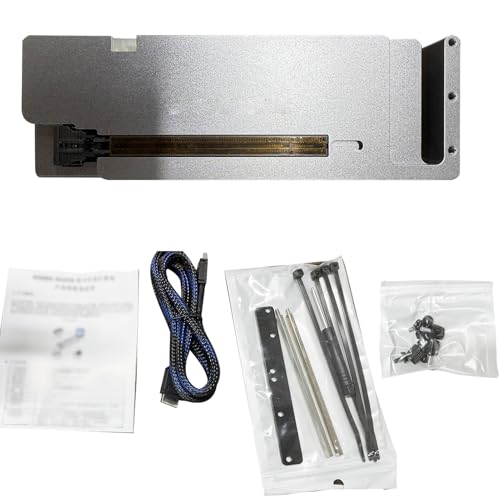
For creative professionals who demand top-tier graphics performance, the Fabater External Graphics Card Dock is an ideal choice. It transforms your laptop into a high-performance workstation, boosting graphics for demanding tasks like AI computing and video editing. With wide compatibility for various RTX series cards, it seamlessly integrates into your existing setup. The efficient cooling system prevents overheating, ensuring stable performance during intense sessions. Plus, you’ll enjoy fast data transfer speeds of up to 40Gbps, enhancing productivity. Setup is straightforward, so you can quickly elevate your laptop’s graphics performance for heavy workloads on both Windows and macOS systems.
Best For: Creative professionals seeking enhanced graphics performance for demanding tasks like AI computing and video editing.
Pros:
- Wide compatibility with various RTX series graphics cards, making it versatile for different setups.
- Efficient cooling system that prevents overheating during high-load operations, ensuring stable performance.
- Fast data transfer speeds of up to 40Gbps, minimizing latency and enhancing productivity.
Cons:
- Requires an appropriate power supply, which may add to the overall cost and complexity.
- Limited to compatibility with specific operating systems (Windows 10/11 64-bit or macOS).
- Potentially bulky setup compared to built-in laptop graphics solutions.
Fabater External Graphics Card Dock for Laptop
Elevate your laptop’s graphics capabilities with the Fabater External Graphics Card Dock, designed specifically for creative professionals who demand high performance in AI computing, video editing, and rendering. This dock supports a wide range of graphics cards, including the RTX series, ensuring compatibility with most CPUs. Experience lightning-fast data transfer speeds up to 40Gbps, minimizing latency during intensive tasks. The efficient cooling system keeps your setup stable, extending your laptop’s lifespan. With easy installation and all necessary components included, transforming your laptop into a high-performance workstation has never been simpler. Boost your productivity and release your creativity today!
Best For: Creative professionals and gamers seeking to enhance their laptop’s graphics performance for demanding tasks like AI computing, video editing, and rendering.
Pros:
- Supports a wide range of graphics cards, including the latest RTX series, ensuring versatility and compatibility.
- Achieves data transfer speeds up to 40Gbps, providing seamless connectivity and reduced latency for intensive applications.
- Built-in cooling system effectively manages heat, prolonging the lifespan of both the laptop and the external graphics card.
Cons:
- Requires appropriate power supply, which may add to the overall cost and complexity of setup.
- Limited compatibility with older laptop models, which may not support the necessary interfaces or power requirements.
- Size and weight may make it less portable compared to other external solutions, potentially impacting mobility for on-the-go professionals.
VisionTek Radeon HD 7750 2GB Graphics Card for Gaming PC
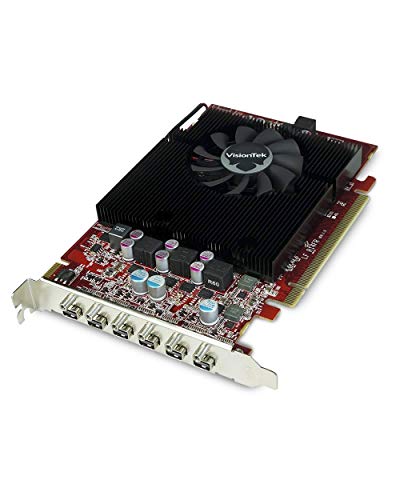
Offering robust performance, the VisionTek Radeon HD 7750 2GB graphics card is an excellent choice for gamers and professionals who demand high-quality visuals. This card supports 4K resolution, delivering stunning clarity at 60Hz. With AMD Eyefinity 2.0, you can connect up to six monitors, perfect for multi-monitor setups in fields like healthcare or marketing. It’s compatible with various operating systems, ensuring smooth integration into your system. Plus, the 7.1 Surround Sound support enhances your gaming and audio experience. Whether you’re gaming or working, the HD 7750 provides the versatility and power you need to excel in any task.
Best For: Gamers and professionals seeking high-quality visuals and multi-display capabilities for immersive experiences.
Pros:
- Supports 4K resolution at 60Hz, providing stunning clarity for gaming and professional work.
- AMD Eyefinity 2.0 allows connection of up to six monitors, ideal for extensive multi-monitor setups.
- Compatible with a variety of operating systems, ensuring smooth integration into different systems.
Cons:
- May not handle the latest AAA games at ultra settings due to its age and specifications.
- Limited to 2GB of VRAM, which may restrict performance in more demanding applications.
- Older technology may not support the latest graphics features found in newer graphics cards.
MOUGOL AMD Radeon RX 580 Gaming Graphics Card

The MOUGOL AMD Radeon RX 580 Gaming Graphics Card is an ideal choice for gamers and content creators who demand performance without breaking the bank. With 8GB of GDDR5 memory and a 256-bit bus width, it handles multitasking and popular titles like Fortnite and GTA V with ease. Its dual-fan cooling system guarantees peak temperatures, while intelligent fan control keeps it quiet during light tasks. You can connect multiple monitors via HDMI, DisplayPort, or DVI, enhancing productivity. Plus, it’s compatible with Windows 11/10/7, making it a versatile option for video editing and 3D rendering. Upgrade your setup effortlessly!
Best For: Gamers and content creators seeking a powerful yet affordable graphics card for multitasking and popular gaming titles.
Pros:
- High performance with 8GB GDDR5 memory and 2048 stream processors for smooth gaming experiences.
- Versatile connectivity options including HDMI, DisplayPort, and DVI, allowing for multiple monitor setups.
- Effective cooling system with dual fans and intelligent fan control, ensuring quiet operation during light tasks.
Cons:
- Older architecture compared to newer graphics cards, which may impact performance in the latest AAA titles.
- Power consumption may be higher than some modern alternatives, requiring adequate power supply.
- Limited ray tracing capabilities, making it less suitable for games that heavily utilize this feature.
Factors to Consider When Choosing External GPU Setups for Video AI Processing
When you’re choosing an external GPU setup for video AI processing, several key factors come into play. You’ll want to evaluate compatibility with your existing hardware, your performance needs, and effective cooling solutions. Don’t overlook power supply requirements and the available port options, as they can greatly impact your overall setup.
Compatibility With Hardware
How can you guarantee your external GPU setup is compatible with your hardware for seamless video AI processing? Start by checking if the GPU connects via your laptop’s interface, like Thunderbolt 3/4 or PCIe Mini. You’ll want to make sure your laptop can provide enough power through this connection or have an external power supply ready. Next, verify that the GPU has the necessary drivers for your operating system to function properly. It’s also essential to confirm that the GPU aligns with the software applications you plan to use, as some tools may favor specific architectures. Finally, assess the cooling capabilities of your setup, since effective thermal management is crucial during demanding video AI processing tasks.
Performance Requirements
Choosing the right external GPU setup for video AI processing hinges on several performance requirements that directly influence your workflow. First, look for GPUs with at least 8GB of memory to efficiently handle large datasets and complex algorithms. Newer architectures can greatly enhance your processing speed, offering better throughput and power efficiency for demanding tasks. It’s also essential to select GPUs with advanced features like tensor cores, which boost performance for AI inference by accelerating machine learning computations. Additionally, pay attention to the connection interface—opting for Thunderbolt 3 or 4 can provide higher data transfer rates, reducing latency and improving overall responsiveness during intensive video processing. These factors are key to optimizing your performance.
Cooling Solutions
Effective cooling solutions play an essential role in keeping your external GPU setup running smoothly during intense video AI processing tasks. You’ll want to look for enclosures with built-in cooling systems, like fans or heat sinks, to effectively dissipate heat. A dual-fan design can enhance airflow while reducing noise, guaranteeing a quieter work environment during long sessions. It’s important to choose a cooling solution compatible with your GPU’s TDP (Thermal Design Power) to handle its heat output efficiently. Additionally, regular maintenance is key; keep dust off fans and maintain unobstructed airflow to sustain peak performance and prevent overheating. By prioritizing effective cooling, you’ll make certain your external GPU operates at its best for all your video AI needs.
Power Supply Needs
When setting up an external GPU for video AI processing, power supply needs are essential to affirm peak performance. First, verify your power supply can meet the GPU’s wattage requirements, which often exceed 300 watts for high-performance models. A power delivery system supporting fast charging, like 85W Power Delivery, can improve laptop efficiency during intensive tasks. Also, consider compatibility between the power supply and the external GPU enclosure, as specific types like ATX or SFX may be necessary. Look for docks that allow direct power connection from the PCIe slot, simplifying your setup. Finally, assess thermal management since high power demands can generate heat, requiring effective cooling solutions for peak performance.
Port Options
Power supply considerations lay the groundwork for a powerful external GPU setup, but the choice of port options can greatly impact your video AI processing capabilities. Look for Thunderbolt 3/4 or USB4 ports, as they offer high data transfer rates vital for handling large video files. Additionally, consider PCIe 4.0 x16 interfaces to maximize bandwidth and minimize latency during intensive tasks like rendering and AI training. Confirm compatibility with your specific GPU, as some setups may require specialized connectors like Oculink for peak performance. The number of available ports on the eGPU enclosure can also affect your ability to run multi-GPU setups or multiple high-resolution displays. Finally, opt for enclosures with power delivery features to simplify your setup.
Budget Considerations
Budgeting for an external GPU setup requires careful thought, especially since prices can vary greatly based on the GPU model, enclosure, and any additional accessories you might need. Start by establishing a clear budget range, considering not just the initial purchase price but also the total cost of ownership, including power supply needs and cooling solutions. Don’t forget necessary peripherals like high-speed cables and docking stations, as they can markedly enhance performance. Evaluate the performance-to-cost ratio of different GPUs tailored for video AI processing to guarantee you’re making a smart investment. Finally, keep resale values or trade-in options for older components in mind; they can help offset your overall expenditure when upgrading to an external GPU.
Setup Complexity
Choosing an external GPU setup for video AI processing can be straightforward or complicated, depending on various factors that impact compatibility and installation. First, assess your laptop’s hardware and software specifications to guarantee the GPU will work seamlessly. Installation might require extra components like power supplies, adapters, and cooling systems, adding to the complexity. Pay attention to drivers and software compatibility; the right versions can simplify the process and enhance stability. You’ll also need to decide between plug-and-play solutions for easy setup or complex configurations that offer better performance. Finally, understanding data transfer interfaces—like Thunderbolt or PCIe—will impact the effectiveness of your video AI processing tasks. Choose wisely to streamline your experience.
