
The best ergonomic studio chairs support long recording, editing, and mixing sessions without overwhelming your workspace. The right choice depends on your posture, desk height, preferred materials, and need for features such as a headrest, footrest, or adjustable lumbar support.
Our roundup compares 10 options across mesh, faux leather, PU leather, drafting, and executive designs so you can match comfort and adjustability to your studio setup and budget.
Best 10 Ergonomic Studio Chairs Picks for 2026
Best Overall
Elgato Embrace Ergonomic Studio Chair
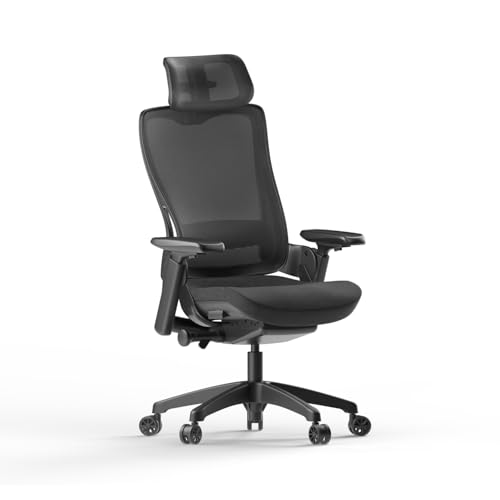
- Mesh back with waterfall-edge seat
- 4D armrests and five-step recline
- Quick assembly with four screws
Best For: Extended computer, gaming, and studio sessions
Best Tall-Desk Pick
Misolant Armless Drafting Chair

- Tall height range for elevated desks
- Padded seat and wraparound back
- Armless design with footrest ring
Best For: Standing desks, drafting tables, and counters
Best Compact Studio Option

- Curved back and padded seat
- Adjustable height with swivel base
- Compact, lightweight studio design
Best For: Recording rooms, mixing desks, and editing suites
Best Big-and-Tall Value

- Wide breathable mesh seat and back
- Headrest, lumbar support, and flip-up arms
- 90–120-degree tilt with 300-pound capacity
Best For: Roomy home-office and gaming setups
All-Day Support
Adjustable Lumbar Office Chair

- Highly adjustable lumbar support
- 3.2-inch high-density foam seat
- 400-pound weight capacity
Best For: Long desk sessions and users needing a wide, supportive seat
Executive Comfort

- Adjustable headrest and lumbar support
- 120-degree rocking mode
- Flip-up, space-saving armrests
Best For: Home offices needing head support and flexible seating
Studio Flexibility

- 21.5–29.5-inch adjustable seat height
- Integrated 9-inch footrest
- Curved walnut back support
Best For: Drafting tables, art studios, and elevated workstations
Most Versatile
ELABEST X100 Ergonomic Mesh Chair

- Adaptive 3D lumbar and 5D armrest adjustments
- Reclines with an extendable footrest
- BIFMA-certified support up to 300 pounds
Best For: Work, gaming, and relaxation in one chair
Best Adaptive Support
Newtral MagicH Chair with Laptop Tray

- Auto-tracking lumbar support follows movement
- Includes laptop tray and footrest
- Adjustable seat depth, back height, and 4D arms
Best For: Remote work, gaming, and flexible laptop use
Best Overall – Elgato Embrace Ergonomic Studio Chair
The Elgato Embrace is a strong all-around choice among ergonomic studio chairs for long computer, gaming, or office sessions. Its mesh back, waterfall-edge seat, adjustable 4D armrests, and five-step recline provide several ways to fine-tune your sitting position.
Best For: Users who want extensive adjustability and recline control for extended desk or studio sessions.
Pros:
- 4D armrests adjust in multiple directions.
- Waterfall-edge seat helps reduce pressure under the thighs.
- Five-step recline includes locking and adjustable tilt tension.
- Designed for relatively quick assembly with four screws.
Cons:
- Its 53-pound weight may make repositioning less convenient.
- The 275-pound weight recommendation is lower than some big-and-tall options.
- Its oversized dimensions may require more floor space.
This chair stands out when ergonomic customization matters most. The mesh back and broad adjustment range make it a practical premium pick, while the rolling base supports easy movement around a workstation.
Best Tall-Desk Pick – Misolant Armless Drafting Chair
The Misolant is a practical alternative to standard ergonomic studio chairs for standing desks, counters, and elevated work surfaces. Its adjustable height, padded wraparound back, armless design, and footrest ring are tailored to higher workstation setups.
Best For: Standing-desk, drafting-table, bar-height, and counter-height workspaces.
Pros:
- Height adjusts from 35 to 43.4 inches overall.
- Padded square seat and curved back support comfortable positioning.
- Armless design leaves more room around the desk.
- Rated to support up to 300 pounds.
Cons:
- It has only one listed reclining position.
- Faux leather may feel less breathable than mesh.
- The smaller 16.5-inch seat width may not suit every user.
Choose this model when seat height is the main requirement. It is less feature-rich than a conventional reclining task chair, but its tall adjustment range and footrest ring make it especially suitable for elevated desks.
Best Compact Studio Option – Homy Casa Carnation Chair
The Homy Casa Carnation keeps the ergonomic studio chairs category simple with a curved backrest, padded seat, adjustable height, and swivel base. Its compact footprint and lightweight construction suit recording rooms, editing suites, and mixing workspaces where easy movement matters.
Best For: Compact music-production rooms and users who want a lightweight, colorful studio chair.
Pros:
- Curved backrest and cushioned seat support longer sessions.
- Adjustable height and swivel movement improve workspace access.
- Reinforced metal base is designed for stability.
- Polyester upholstery is available in several color options, including mint green.
Cons:
- Its 250-pound weight recommendation is lower than several alternatives.
- Armless construction provides no arm support.
- The 15.2-inch seat depth may feel compact for some users.
This is a focused studio chair rather than a highly adjustable executive model. Its small dimensions, swivel function, and subdued upholstery make it a sensible fit for music workspaces where maneuverability and visual style are priorities.
Best Big-and-Tall Value – GABRYLLY High-Back Mesh Chair
The GABRYLLY combines a wide mesh seat, high back, headrest, lumbar support, and flip-up arms for users seeking ergonomic studio chairs with generous coverage. Its adjustable components and 90–120-degree tilt range make it suitable for long home-office, gaming, and shared-workspace sessions.
Best For: Users approximately 5 feet 2 inches to 6 feet 1 inch who want a broad, breathable chair rated for up to 300 pounds.
Pros:
- Wide mesh seat and breathable mesh back support airflow.
- Adjustable headrest, seat height, backrest, and flip-up arms.
- 90–120-degree tilt range supports upright and reclined positions.
- Silent wheels are intended for use on multiple floor surfaces.
Cons:
- The recommended user-height range may not suit shorter or taller users.
- Its wide 24.5-inch overall width can take substantial desk space.
- The many adjustment features may require more setup and fine-tuning.
For users who prioritize a roomy seat and head-to-hip support, this GABRYLLY model is one of the more accommodating choices in the group. Check your height and available floor space before buying to ensure the large frame is a good match.
All-Day Support – Adjustable Lumbar Office Chair
For shoppers comparing ergonomic studio chairs for long work sessions, this Nexthro office chair emphasizes lower-back adjustability, a thick foam cushion, and breathable mesh. Its broad seat and 400-pound capacity make it a sturdy option for home offices, workspaces, and gaming rooms.
Best For: Long desk sessions and users who want highly adjustable lumbar support with a wide seat.
Pros:
- Lumbar support adjusts 1 inch forward/backward and 3.15 inches vertically.
- Thick, high-density foam cushion is designed to resist sagging.
- Breathable mesh, flip-up armrests, and smooth-rolling casters add everyday practicality.
- Supports up to 400 pounds and suits users approximately 5’4″ to 6’3″.
Cons:
- Assembly is required, although instructions and an installation video are provided.
- The chair has one reclining position count, so it may offer less recline flexibility than some alternatives.
This is a strong ergonomic studio chairs pick when lumbar customization and weight capacity matter most. Consider its relatively straightforward feature set if you prefer extensive reclining or head support.
Executive Comfort – High-Back Mesh Chair
This DUMOS chair is one of the more feature-focused ergonomic studio chairs for users who want upper-body support and a relaxing setup. It combines an adjustable headrest, movable lumbar support, flip-up armrests, breathable mesh, and a 120-degree rocking mode.
Best For: Home-office users who want head, back, and arm support plus space-saving armrests.
Pros:
- Headrest adjusts in height and angle up to 42 degrees.
- Adjustable mesh lumbar support helps fit different users.
- Breathable mesh back and high-density sponge seat support all-day seating.
- Flip-up armrests save space, while multidirectional casters support smooth movement.
Cons:
- Its maximum weight capacity is 300 pounds, lower than some heavy-duty office chairs.
- The high-back design reaches 50.3 inches tall and may require more vertical space.
Choose this model if you value headrest adjustability and a rocking function alongside standard ergonomic features. Its 300-pound limit and taller profile are worth checking against your space and needs.
Studio Flexibility – Walnut-Back Drafting Chair
For drafting tables, art studios, and elevated work surfaces, this armless chair offers a different take on ergonomic studio chairs. Its curved walnut back support, thick foam cushion, broad height range, and integrated footrest are designed for both standard desks and taller workstations.
Best For: Artists, drafters, and studio users working at drafting tables, bars, or variable-height desks.
Pros:
- Seat height adjusts from 21.5 to 29.5 inches for elevated work surfaces.
- Integrated 9-inch footrest provides support at drafting-table height.
- Curved walnut backrest and thick high-density foam cushion support seated comfort.
- PU leather surface is designed to resist spills and daily wear.
Cons:
- Armless design provides no dedicated arm support.
- Its 300-pound capacity is lower than the 400-pound option in this roundup.
- The taller drafting-oriented height may be less suitable for a conventional desk without adjustment.
This chair stands out when you need drafting-stool versatility rather than a conventional executive setup. The footrest and height range are useful for studio work, while the armless design keeps the profile open around a work surface.
Most Versatile – ELABEST X100 Ergonomic Mesh Chair
For shoppers comparing ergonomic studio chairs, the ELABEST X100 stands out as a highly adjustable option for switching between focused work, gaming, and relaxation. Its breathable mesh, adaptive lumbar system, reclining function, and included footrest are designed for long sessions.
Best For: Users who want one chair for home-office work, gaming, and occasional reclining.
Pros:
- Dynamic 3D lumbar support tracks movement and offers depth, height, and rotation adjustments.
- 5D flip-up armrests provide extensive positioning and can tuck under a desk.
- Includes a reclining mechanism, extendable footrest, adjustable headrest, and breathable mesh.
- BIFMA-certified structure supports up to 300 pounds and comes with 5-year satisfaction care.
Cons:
- The extensive adjustment system may take time to configure.
- Its feature-rich design may be more than needed for a basic desk setup.
The X100 is a strong choice when adjustability and multipurpose use matter most. Consider it if you want a feature-packed ergonomic chair that can move from desk work to downtime.
Best Adaptive Support – Newtral MagicH Chair with Laptop Tray
The Newtral MagicH is a compelling pick among ergonomic studio chairs for users who want lumbar support that responds as they move. It combines auto-tracking lumbar adjustment with a high back, adjustable seat depth, 4D armrests, reclining, and a built-in laptop tray.
Best For: Remote workers and gamers who value adaptive lumbar support and a laptop-friendly setup.
Pros:
- Auto-tracking lumbar support is designed to follow the natural curve of the lower back.
- Adjustable seat depth and back height help accommodate different users.
- 4D armrests, adjustable headrest, 136-degree recline, footrest, and laptop tray add flexibility.
- KGS gas lift testing and a BIFMA-tested steel base support long-term use.
Cons:
- The 50-pound chair may be less convenient to move than lighter models.
- The large feature set can make setup and personalization more involved.
The Newtral is particularly appealing if lumbar movement and workspace flexibility are priorities. Its laptop tray and reclining features also make it practical for mixed work and leisure use.
Best Heavy-Duty Value – CAPOT 400-Lb Ergonomic Mesh Chair
The CAPOT is a practical contender among ergonomic studio chairs, especially for users who need a broad seat and high weight capacity. Its micro-adjustable lumbar support, cooling mesh seat, flip-up arms, and three-position backrest target comfort during extended desk work.
Best For: Taller or heavier users seeking a sturdy chair for long work, study, or gaming sessions.
Pros:
- Stainless steel base and gas lift support up to 400 pounds.
- Eight-level lumbar adjustment provides up to two inches of positioning.
- Large Aerovith Mesh seat is designed for cooling and reduced pelvic pressure.
- Flip-up arms, adjustable headrest, lockable backrest positions, and silent PU wheels improve flexibility.
Cons:
- Assembly typically takes about 30 minutes.
- Headrest and seat guidance is primarily aimed at users from 5’5″ to 6’2″.
The CAPOT makes the most sense when durability, capacity, and a roomy mesh seat outrank premium extras. Its 5-year warranty and complimentary parts support add reassurance for demanding daily use.
How We Picked These Ergonomic Studio Chairs
We focused on features that matter during extended creative work: lumbar support, seat cushioning, backrest design, armrest adjustability, tilt control, height range, and overall fit. We also considered studio-specific needs, including compatibility with standing desks, drafting-height workstations, compact rooms, and equipment-heavy production setups.
Because comfort is personal, we included several chair styles rather than treating one design as best for everyone. Mesh models generally prioritize airflow, while padded leather and faux-leather chairs can provide a softer, more structured feel. Footrests, flip-up arms, and armless frames may also be valuable when space or posture changes frequently.
Quick Comparison
- Best for breathable support: Choose a high-back mesh chair with adjustable lumbar support and a headrest.
- Best for standing desks: Consider a drafting chair with a taller height range and footrest ring.
- Best for compact studios: Armless or flip-up-arm designs make it easier to move close to a keyboard, mixer, or instrument.
- Best for larger users: Look for a clearly stated weight capacity, wide cushion, tall back, and reinforced base.
- Best for changing positions: Prioritize a reliable tilt mechanism, adjustable armrests, and a footrest.
Key Buying Factors for Ergonomic Studio Chairs
Adjustability and Posture Support
At minimum, look for adjustable seat height and dependable lumbar support. A seat should let your feet rest flat while your elbows remain near desk height. Adjustable lumbar systems are more useful than fixed pads because they can better match your lower-back curve.
Seat, Back, and Material
Mesh backs improve ventilation during long sessions, while thick foam and padded upholstery may feel more supportive for users who prefer a firmer, cushioned seat. Check seat depth and width, not just the chair’s headline weight rating. A seat that is too deep can encourage slouching.
Armrests, Headrests, and Tilt
Adjustable or flip-up arms are useful for keyboard work, guitar, MIDI controllers, and close desk access. A headrest can reduce neck fatigue, but only if its height and angle fit your posture. Tilt-lock ranges should allow both focused upright work and relaxed listening.
Workspace Fit and Durability
Measure desk clearance, chair height, caster space, and room for reclining before buying. Studio flooring may also influence whether you need soft casters or a protective mat. Review the warranty, assembly requirements, return policy, and replacement-part availability.
Who Should Buy Which Ergonomic Studio Chairs?
Choose a mesh high-back model if you work for hours in a warm room and want airflow with extensive adjustment. Choose a drafting chair if your desk or console is unusually tall, especially when a foot ring helps support your legs. Choose an armless design if you need maximum access to instruments or a narrow workstation.
Choose a chair with a footrest if you switch between upright editing and reclined listening. Choose a wide, high-capacity executive-style chair if you need more seat room and a taller back. For most buyers, the best option is the model that lets you maintain a neutral posture, move freely, and stay comfortable throughout a complete studio session.
