
A lost flash drive should not mean lost control of your files. Encrypted USB drives add a barrier against unauthorized access, but the right choice depends on more than an encryption claim.
These 10 picks span keypad-unlocked drives, password-protected models, and capacities from 4GB to 256GB. Use the guide below to narrow your options by security requirements and everyday workflow.
Best 10 Encrypted USB Drives for Data Security Picks for 2026
High-Capacity All-Rounder
Kingston IronKey Locker+ 50 G2 256GB
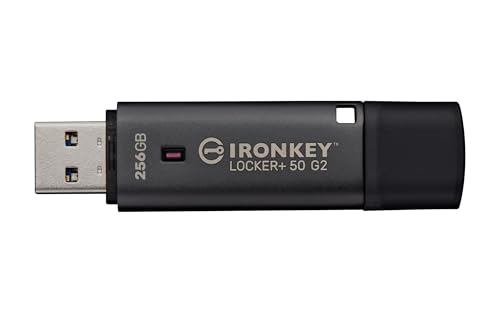
- 256GB encrypted storage
- FIPS 197-certified XTS-AES 256-bit
- Admin/User password options
Best For: Large sensitive file collections with flexible password access
Keypad Access Pick
Kingston IronKey Keypad 200 16GB
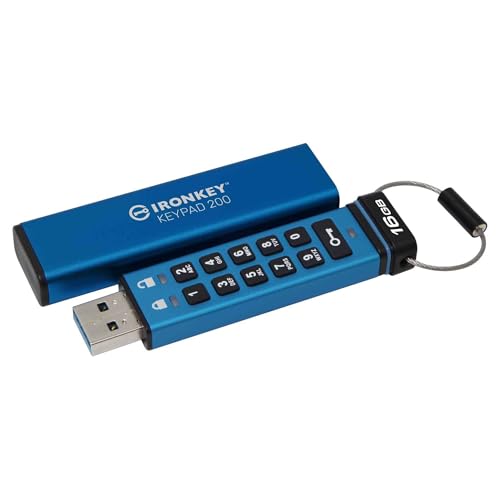
- On-drive alphanumeric keypad
- Admin/User PIN option
- FIPS 140-3 Level 3 listed as pending
Best For: Keypad-based access across multiple operating systems
Auto-Lock Option
Dohaeris Encrypted USB Drive 64GB

- 64GB with AES-256 chip
- Locks after unplugging
- Wipes after ten failed attempts
Best For: Portable storage with automatic locking
Write-Protection Pick
Kingston IronKey Vault Privacy 50 256GB

- 256GB hardware-encrypted storage
- Dual read-only settings
- Up to 230MB/s listed read/write
Best For: Business files that may need write protection
Best for Managed Access
Apricorn Aegis Secure Key 30GB

- 30GB USB 3.0 storage
- FIPS 140-2 Level 3 validated
- Admin/user modes and recovery PINs
Best For: Teams managing access to sensitive portable files
Best for Small Sensitive Files

- 4GB portable storage
- FIPS 140-2 Level 3 certified
- IP57 dust and water resistance
Best For: Small sensitive files used across multiple platforms
Best for Read-Only Options
Apricorn Aegis Secure Key 3 NX 8GB

- 8GB USB 3.0 storage
- FIPS 140-2 Level 3 validated
- Two read-only modes
Best For: Controlled access to a small set of files
Compact Security Pick

- 4GB USB-A storage
- AES 256-bit hardware encryption
- Erases data after six failed attempts
Best For: A few sensitive documents on PC or Mac
High-Capacity Keypad Pick
Kingston IronKey Keypad 200 512GB

- 512GB encrypted storage
- Separate Admin and User PINs
- FIPS 140-3 Level 3 pending
Best For: Larger sensitive file collections with keypad access
Rugged Everyday Pick
- 16GB USB-A storage
- FIPS 197 certified
- Auto-lock and six-attempt data erasure
Best For: Modest sensitive file collections on PC or Mac
High-Capacity All-Rounder – Kingston IronKey Locker+ 50 G2 256GB
Among encrypted usb drives for data security, the Kingston IronKey Locker+ 50 G2 pairs 256GB of storage with FIPS 197-certified XTS-AES 256-bit hardware encryption. It is a practical pick when you need room for larger collections of sensitive files and flexible password access.
Best For: Buyers who want substantial encrypted capacity with separate Admin and User password options.
Pros:
- 256GB capacity with FIPS 197-certified hardware encryption.
- Admin and User passwords support complex-password or passphrase modes.
- Rated for up to 145MB/s reads and 115MB/s writes.
Cons:
- USB Type-A connection may require an adapter on devices without a matching port.
- Its stated write speed is lower than its stated read speed.
The five-year warranty adds reassurance; choose this model when capacity and straightforward multi-password security matter more than a built-in keypad.
If you prefer entering a PIN on the drive itself, the IronKey Keypad 200 stands out among encrypted usb drives for data security. Its alphanumeric keypad and XTS-AES 256-bit hardware encryption make it useful across systems that support USB mass storage.
Best For: People who want keypad-based access across different operating systems and can work within 16GB.
Pros:
- Built-in alphanumeric keypad with optional Admin and User PINs.
- XTS-AES 256-bit hardware encryption plus listed brute-force and BadUSB protection.
- Designed for use with Windows, macOS, Linux, Chrome OS, Android, and other USB mass-storage hosts.
Cons:
- 16GB offers less room than the higher-capacity drives in this roundup.
- Supplied notes describe FIPS 140-3 Level 3 status as pending; verify certification if required for compliance.
This is the clearest fit here for device-independent PIN entry. Its modest capacity and certification-status ambiguity are the main points to check before buying.
For shoppers comparing encrypted usb drives for data security, this 64GB Dohaeris model emphasizes automatic locking and a built-in AES-256 encryption chip. Its key-based unlocking design suits buyers who want a portable drive with a defined response to repeated incorrect entries.
Best For: Users seeking a 64GB encrypted drive with automatic locking and a ten-attempt wipe feature.
Pros:
- Built-in chip uses AES-256 encryption.
- Locks when unplugged or when left unconnected for 30 seconds after unlocking.
- Resets and erases data after ten incorrect unlock attempts.
Cons:
- Ten failed entries erase the data, so maintaining a separate backup is important.
- Listed compatibility is limited to specified Windows, CentOS, Red Hat, and Windows Server versions.
Its auto-lock behavior is the practical draw, but confirm that your computer is supported and keep another copy of irreplaceable files.
The Kingston IronKey Vault Privacy 50 is a strong choice among encrypted usb drives for data security when you also need controls against unwanted file changes. It combines 256GB of storage, FIPS 197-listed XTS-AES 256-bit hardware encryption, and two read-only settings.
Best For: Business users who need encrypted capacity and optional write protection for sensitive files.
Pros:
- 256GB capacity with stated read and write speeds of 230MB/s.
- Two read-only settings can help prevent changes or deletion.
- Multi-password complex/passphrase options, digitally signed firmware, and listed brute-force and BadUSB protection.
- Listed as TAA compliant for relevant procurement needs.
Cons:
- USB Type-A connectivity may call for an adapter on computers without that port.
- Read-only settings must be disabled when you need to edit files on the drive.
This model offers the broadest set of listed file-handling controls in the group; the write-protect options are especially useful when files should remain unchanged.
Best for Managed Access – Apricorn Aegis Secure Key 30GB
Among encrypted usb drives for data security, the 30GB Aegis Secure Key stands out when multiple people need controlled access. Its keypad unlocks hardware-encrypted storage without installing software.
Best For: Teams that need separate admin and user modes, recovery PINs, and portable 30GB storage.
Pros:
- FIPS 140-2 Level 3 validated with 256-bit AES-XTS full-disk hardware encryption.
- Separate admin and user modes, recovery PINs, and a read-only mode.
- IP58 dust and water resistance; works with Windows, Mac, Linux, and embedded systems without software.
Cons:
- Requires entering a 7–16-character PIN on the keypad before use.
- 30GB capacity may be limiting for large backups.
The combination of access controls and software-free operation makes this a practical choice for moving sensitive files between different systems.
Best for Small Sensitive Files – iStorage datAshur PRO 4GB
If you need encrypted usb drives for data security but carry only a few important files, the 4GB datAshur PRO is a compact option. Enter a 7–15-digit PIN to unlock it, with no software installation required.
Best For: Carrying a small set of sensitive personal or company documents across different USB-equipped systems.
Pros:
- FIPS 140-2 Level 3 certified with real-time AES-XTS 256-bit hardware encryption.
- IP57-certified dust and water resistance.
- Software-free use across Windows, macOS, Linux, Chrome, Android, and other listed platforms.
Cons:
- 4GB capacity is restrictive for larger file collections.
- Keypad PIN entry adds a step each time you unlock the drive.
Its broad platform support and rugged design suit frequent transfers, provided your files fit within the modest capacity.
Best for Read-Only Options – Apricorn Aegis Secure Key 3 NX 8GB
For shoppers comparing encrypted usb drives for data security, the 8GB Aegis Secure Key 3 NX offers an access-control-focused option. It pairs 256-bit encryption with FIPS 140-2 Level 3 validation and two read-only modes.
Best For: Users who want an 8GB encrypted drive with separate admin and user modes and read-only options.
Pros:
- FIPS 140-2 Level 3 validated with 256-bit encryption.
- Separate admin and user modes, plus data recovery PINs.
- Two read-only modes and Aegis Configurator compatibility.
Cons:
- 8GB capacity may not accommodate large media libraries or backups.
- Listed read and write speeds are 77 MB/s and 72 MB/s, respectively.
Choose this model when its access-management features matter more to you than high capacity.
Compact Security Pick – Integral 4GB Crypto-197
For buyers comparing encrypted usb drives for data security, this 4GB Integral drive offers AES 256-bit hardware encryption in a compact USB-A design. It suits a small set of confidential files rather than a large archive.
Best For: Carrying a few sensitive documents between a PC and Mac.
Pros:
- FIPS 197 certified, with an 8–16-character password requirement.
- Erases data and resets after six unsuccessful access attempts.
- Automatically locks when removed or when the host computer locks; double-layer waterproof design adds physical protection.
Cons:
- 4GB capacity limits how much you can carry.
- USB-A connection requires a compatible port or adapter.
Choose this one when secure access and ruggedness matter more than storage space. No software installation or subscription is required.
High-Capacity Keypad Pick – Kingston IronKey Keypad 200 512GB
If you need more room among encrypted usb drives for data security, the 512GB Kingston IronKey Keypad 200 pairs XTS-AES 256-bit hardware encryption with a built-in keypad. Its OS-independent design makes it useful across supported devices.
Best For: Storing larger collections of sensitive files with keypad-based access.
Pros:
- 512GB capacity, with listed read speeds up to 280 MB/s and write speeds up to 150 MB/s.
- Supports separate Admin and User PINs.
- Offers global or session read-only options and is listed as dustproof and water-resistant.
Cons:
- FIPS 140-3 Level 3 certification is pending, not completed.
- The listed hardware connector is USB-A, so USB-C-only devices may need an adapter despite the stated mass-storage compatibility.
This is the capacity-focused choice here. Check the certification status if an approved FIPS 140-3 Level 3 device is mandatory for your organization.
Rugged Everyday Pick – Integral 16GB Crypto-197
For encrypted usb drives for data security with modest everyday capacity, this 16GB Integral Crypto-197 combines AES 256-bit hardware encryption with a double-layer waterproof design. It works with PC and Mac without a software installation.
Best For: Moving a modest collection of sensitive files between PC and Mac.
Pros:
- FIPS 197 certified, with an 8–16-character alphanumeric password.
- Destroys data and the encryption key after six failed access attempts.
- Locks automatically when removed or when the host locks; listed speeds are 130 MB/s read and 100 MB/s write.
Cons:
- 16GB is limited for large backups or media collections.
- USB-A connection may require an adapter on devices without that port.
Compared with the 4GB Crypto-197, this model gives you more space while retaining the stated password, auto-lock, and rugged-design features.
How We Picked the Best Encrypted USB Drives for Data Security
We compared the listed encryption and certification claims, unlock methods, capacities, and practical features such as brute-force protection and environmental resistance. We also considered whether a drive suits occasional file transfer or a more controlled workflow. A product listing is not proof of current certification, so verify the exact model number and status with the manufacturer or relevant validation database before buying for a regulated environment.
Quick Comparison: Which Type Fits?
For larger working files, the 256GB Kingston IronKey Locker+ 50 G2 and Vault Privacy 50 offer substantially more room than the smaller-capacity picks. If you want to unlock a drive using its own keypad, compare the Kingston IronKey Keypad 200 listings with the Apricorn Aegis Secure Key and iStorage datAshur PRO models. The Integral Crypto-197 drives cover 4GB and 16GB needs where compact capacity is enough. Treat the generic 64GB drive’s AES-256 claim as a starting point for verification, not a substitute for documented validation.
Key Buying Factors for Encrypted USB Drives for Data Security
Certification and Encryption
FIPS 197 identifies an approved encryption algorithm; it is not the same as FIPS 140 module validation. If your policy requires FIPS 140-2 or 140-3, check the required level, certificate, exact model, and current status. Pay particular attention to listings marked “pending”: pending is not certified. AES-256 and XTS-AES describe cryptographic details, but implementation and key management matter too.
Unlock Method and Recovery
A built-in keypad can be useful when you move between computers or cannot install software. Host-entered passwords may feel simpler on your regular machine, but check operating-system support and any software requirements. Compare PIN or password length rules, attempt limits, reset behavior, and whether an administrator can provision or recover access. A secure drive may permanently erase its data after too many incorrect attempts, so keep a separate backup.
Capacity and Daily Use
Choose capacity based on the files you actually carry, with room for growth; 4GB is very different from 256GB for video or large project folders. Confirm the USB connector fits your devices, since a Type-A drive may need an adapter for USB-C-only laptops. Advertised USB 3.0 or 3.2 support does not guarantee a particular real-world transfer speed. Check physical size, durability claims, and whether your organization requires centralized management.
Who Should Buy Which Encrypted USB Drives for Data Security?
Choose a keypad model if device-independent unlocking is the priority. Start with a 256GB Kingston option if you need room for large collections of files, then check its access and policy requirements. Consider the smaller Apricorn, iStorage, or Integral options for limited sets of sensitive documents, selecting by required validation rather than capacity alone. For regulated purchases, resolve any difference between a listing’s certification claim and official documentation before ordering. Whatever you choose, Encrypted USB Drives for Data Security work best alongside backups and a clear process for handling lost devices.
