
Electronic percussion controllers can turn a compact setup into a flexible performance and production rig. Whether you need pad triggering, sample playback, or hands-on MIDI control, the right model makes a big difference.
This roundup focuses on standout options for drummers, producers, and live players who want responsive pads, reliable connectivity, and practical control in one device.
Best 10 Electronic Percussion Controllers Picks for 2026
Portable Pad Controller
Akai MPD218 USB MIDI Pad Controller

- 16 MPC velocity-sensitive pads
- 48 assignable pads across 3 banks
- 18 assignable knobs plus note repeat
Best For: Portable beat making and pad-triggered sample control
Compact Beat Instrument
Native Instruments Maschine Mikro Mk3

- 16 pads with drum, chord, keyboard, and step modes
- Works as a plug-in in major DAWs
- Includes MASCHINE Factory Selection sounds
Best For: DAW-based beatmakers who want a compact workflow
Live Hand Percussion
Roland HPD-20 Digital Hand Percussion

- 850 onboard sounds for performance and production
- Import up to 500 WAV sounds via USB
- 13 silicone pads with expressive response
Best For: Expressive hand percussion and live electronic performance
Multi-Pad Sound Hub

- 1,061 drum, percussion, and effects sounds
- Sequencer, preset loops, and user-sample memory
- Trigger inputs for five external pads
Best For: Sound-packed triggering and hybrid percussion setups
Editor’s Pick
Akai MPD226 RGB Pad Controller

- 16 RGB velocity- and pressure-sensitive MPC pads
- 64-pad bank access with 36 assignable controls
- MPC Note Repeat, Swing, 16 Level, and Tap Tempo
Best For: Portable beatmakers who want expressive pads and deep MIDI control
Budget-Friendly Module
Kat KTMP1 Percussion Pad Module

- Four velocity-sensitive pads in a compact unit
- 50 built-in drum and percussion sounds
- USB/MIDI plus extra hi-hat and bass drum inputs
Best For: Beginners and players who need a simple, affordable drum module
Performance Powerhouse
Alesis Strike Multipad Sampler

- 9 RGB velocity-sensitive pads with a 4.3-inch display
- Built-in looper, effects, and USB sample loading
- 32GB storage with 6GB+ of sounds and content
Best For: Live performers who want sampling, looping, and onboard sounds
Best with Extra Features
LEKATO PD705 9-Pad Sample Drum Controller

- 9 dual-zone, velocity-sensitive pads
- 592+ sounds with 30 preset kits
- MIDI I/O, USB-B, and trigger expansion
Best For: Drummers and producers needing a flexible pad controller
Performance Favorite
Alesis SamplePad Pro with 8 Pads
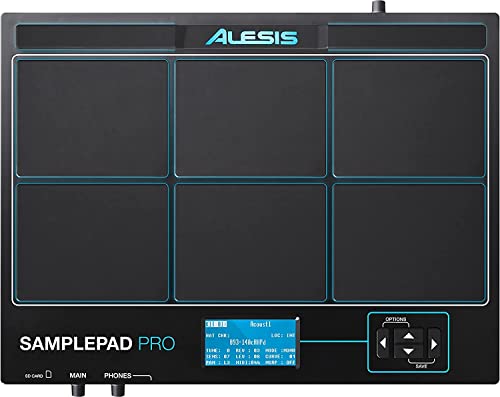
- 8 isolated rubber pads with LED lighting
- 200+ built-in sounds in 10 kits
- MIDI, USB, and SD-card sample loading
Best For: Live players who want a simple, expandable pad controller
Value Expandable
PD705 Multipad with Custom Sampling

- 9 dual-zone velocity-sensitive pads
- 592 sounds plus 30 preset kits
- Loop recording and MIDI/USB connectivity
Best For: Performers wanting a portable multipad with expansion and recording
Portable Pad Controller – Akai MPD218 USB MIDI Pad Controller
If you want a compact option among electronic percussion controllers, the Akai Professional MPD218 focuses on straightforward pad-based beat making. Its 16 velocity-sensitive MPC pads, USB power, and three pad banks make it easy to trigger drums, samples, and effects without a complicated setup.
Best For: Beat makers, DJs, and producers who want a portable USB pad controller for drums and samples.
Pros:
- 16 thick, velocity-sensitive MPC pads for expressive triggering.
- Three pad banks expand control to 48 assignable pads.
- 18 fully assignable knobs give hands-on control of DAW and plugin parameters.
- Includes MPC note repeat and full level features for performance use.
Cons:
- No built-in sounds; it is a controller rather than a standalone percussion instrument.
- Best suited to pad performance and production, not multi-part hardware sequencing.
The MPD218 is a practical pick if you want an affordable-feeling, mobile pad controller with familiar MPC-style workflow and software included to get started quickly.
Compact Beat Instrument – Native Instruments Maschine Mikro Mk3
Among electronic percussion controllers, the Maschine Mikro Mk3 stands out as a compact music production instrument that blends tactile hardware with software integration. Its 16 pads support drum mode, melody playing, chord progressions, and step sequencing, making it flexible for sketching ideas and building complete beats.
Best For: Producers who want a compact controller for beat-making, sequencing, and software-driven production.
Pros:
- 16 pads offer four ways to input sound: drum, keyboard, chord, and step-sequencer modes.
- Works on its own or as a plug-in in major DAWs including Ableton Live, Pro Tools, Logic Pro, and FL Studio.
- Includes MASCHINE Factory Selection with samples, kits, loops, and presets.
- USB 2.0 powered for simple connection and portability.
Cons:
- Requires compatible software and system resources to use the full workflow.
- Smaller footprint may feel limited if you prefer larger pad surfaces.
The Mikro Mk3 is a strong choice if you want a portable controller that doubles as a serious production tool, especially when your workflow lives inside a DAW.
Live Hand Percussion – Roland HPD-20 Digital Hand Percussion
The Roland HPD-20 is a performance-focused choice in electronic percussion controllers, built for players who want expressive hand-played control. With 13 silicone pads, a large onboard library, and the ability to import your own WAV sounds, it works well for both live setups and studio production.
Best For: Hand percussion players and performers who want an expressive pad instrument with deep onboard sounds.
Pros:
- 850 ready-to-play sounds cover percussion, drums, tones, and melodic instruments.
- Import up to 500 WAV sounds through USB flash memory.
- SuperNATURAL sound engine with editing, layering, effects, ambience, and EQ.
- 13 silicone rubber pads provide sensitive, comfortable playability.
Cons:
- Larger sound set and performance features may be more than a basic controller user needs.
- Designed as a dedicated percussion instrument, not a simple USB pad controller.
If you want a more self-contained percussion instrument rather than a bare MIDI controller, the HPD-20 offers a much broader sound palette and a more performance-oriented feel.
Multi-Pad Sound Hub – Yamaha DTX Multi Pad
The Yamaha DTX Multi Pad is a versatile option in electronic percussion controllers if you want a pad instrument with lots of internal sounds and sample support. It includes 1,061 drum, percussion, and effects sounds, plus keyboard sounds, a sequencer, preset loops, and user-sample memory.
Best For: Players who want a sound-packed multi-pad for triggering drums, loops, and custom samples.
Pros:
- 1,061 drum, percussion, and effects sounds plus 216 keyboard sounds.
- Sequencer and preset loops add built-in performance and composition tools.
- 64MB flash-ROM supports user samples.
- Includes trigger inputs for five external pads, plus foot switch and hi-hat controller jacks.
Cons:
- Bulkier hardware than a compact USB pad controller.
- Not aimed at the simplest plug-and-play controller-only workflow.
This is a smart choice if you want a feature-rich multi-pad with its own sounds and expansion options, especially for live triggering and hybrid percussion setups.
Editor’s Pick – Akai MPD226 RGB Pad Controller
The Akai Professional MPD226 is a compact choice for electronic percussion controllers when you want a pad surface built for beat programming and hands-on performance. Its 16 RGB MPC pads, assignable controls, and support for multiple pad banks make it a flexible option for producing in Ableton Live, on PC/Mac, or with iOS devices.
Best For: Producers and performers who want a portable, pad-focused controller with deep assignability.
Pros:
- 16 thick, velocity- and pressure-sensitive RGB MPC pads
- Expandable to 64 assignable pads across 4 banks
- 36 assignable controls with faders, Q-Link knobs, and buttons
- Includes classic MPC features like Note Repeat, Swing, 16 Level, Full Level, and Tap Tempo
Cons:
- No built-in sounds; it works as a controller rather than a standalone drum machine
- Does not include an onboard display for editing
Overall, the MPD226 stands out if you want a controller that prioritizes expressive pads and broad MIDI control. It is a practical pick for beatmakers who value assignability and familiar MPC-style workflow.
Budget-Friendly Module – Kat KTMP1 Percussion Pad Module
The Kat Percussion KTMP1 is a straightforward option in electronic percussion controllers for players who want an affordable, compact drum and percussion module. With four velocity-sensitive pads, USB/MIDI connectivity, and support for extra hi-hat and bass drum inputs, it covers basic practice and performance needs without extra complexity.
Best For: Drummers and beginners looking for a compact, affordable percussion pad module.
Pros:
- Compact and affordable design
- Four velocity-sensitive pads
- 50 drum and percussion sounds included
- USB/MIDI connectivity plus two additional trigger/controller inputs
Cons:
- Only four pads, so it is less expansive than larger pad controllers
- Sound library is limited compared with sample-based performance units
If you need a simple electronic percussion controller for core drum parts and basic triggering, the KTMP1 keeps the setup small and accessible. It is best suited to players who value practicality over advanced performance features.
Performance Powerhouse – Alesis Strike Multipad Sampler
The Alesis Strike Multipad is a feature-rich option for electronic percussion controllers if you want pads that handle samples, loops, and live performance tasks in one unit. Its nine RGB-lit velocity-sensitive pads, built-in looper, large storage, and sample loading support make it especially useful for players who want more than a basic trigger surface.
Best For: Live performers and sample-based players who want an all-in-one pad instrument.
Pros:
- 9 velocity-sensitive RGB pads for expressive playing
- Built-in looper for recording pad performances or external audio
- 32GB storage with over 6GB of included content
- USB sample loading, 5 built-in effects processors, and two A-LINK knobs
Cons:
- Fewer pads than some controller-only alternatives
- More complex than a basic pad controller for simple triggering needs
For musicians who want a self-contained pad instrument with sampling and looping tools, the Strike Multipad is the most production-focused choice here. It offers a strong balance of performance control and onboard content for live use.
Best with Extra Features – LEKATO PD705 9-Pad Sample Drum Controller
If you want electronic percussion controllers that feel flexible in both practice and production, the LEKATO PD705 is built around a 9-pad, velocity-sensitive layout with a deep preset library. It works as a compact drum pad, a MIDI controller, and a sample trigger box, with enough I/O to fit into a studio or live setup.
Best For: Drummers and producers who want one pad controller for triggering samples, kits, and DAW gear.
Pros:
- 9 dual-zone velocity-sensitive pads cover snare, toms, bass, hi-hat, and cymbals.
- 592+ preset sounds and 30 drum kits give it broad style coverage.
- MIDI I/O, USB-B, trigger inputs, and footswitch support make it easy to expand.
- Save custom kits and import samples via SD card or USB memory drive.
Cons:
- The feature set may be more than casual users need.
- Using custom sounds means managing files with WaveManager or external storage.
Overall, the PD705 stands out as a versatile option for players who want a single percussion controller that can handle live triggering, custom kits, and computer integration.
Performance Favorite – Alesis SamplePad Pro with 8 Pads
The Alesis SamplePad Pro is a practical choice in electronic percussion controllers if you want a straightforward pad unit for live playing and sample loading. Its 8 isolated rubber pads, built-in sound library, and expansion inputs make it a capable fit for gigs, rehearsals, and basic studio triggering.
Best For: Players who want a reliable pad controller with simple live-performance features and sample expansion.
Pros:
- 8 isolated rubber pads with blue LED illumination help keep performance clear.
- 2 extra pad inputs plus kick and hi-hat pedal inputs add expansion options.
- 200+ built-in drum, cymbal, and percussion sounds come in 10 ready-to-play kits.
- SD card loading lets you add sounds and save up to 512 sounds and 20 kits per 32GB card.
Cons:
- SD card is not included.
- Compared with larger multipads, the onboard sound count is more limited.
For players who want a dependable sample pad with a clean layout and useful connectivity, the SamplePad Pro covers the essentials without adding unnecessary complexity.
Value Expandable – PD705 Multipad with Custom Sampling
This PD705 percussion multipad is aimed at players who want electronic percussion controllers that can double as a performance hub. It combines 9 dual-zone velocity-sensitive pads, loop recording, effects, and broad connectivity, so it can work in rehearsal spaces, studio rigs, or stage setups.
Best For: Drummers and performers who want a portable multipad with recording, effects, and expansion support.
Pros:
- 9 dual-zone velocity-sensitive pads offer full drum-set style playability.
- 592 sounds and 30 preset kits provide a wide built-in palette.
- Recording, EQ, limiter, and reverb add useful sound-shaping tools.
- 5-pin MIDI I/O, USB-B, and trigger inputs support DAW use and external expansion.
Cons:
- Custom sample management requires USB stick storage and onboard memory planning.
- Players who only need a basic practice pad may not use the extra features.
As a portable multipad, this model offers a strong mix of playability and integration features for musicians who want more than just onboard sounds.
How We Picked the Best Electronic Percussion Controllers
We focused on pad feel, trigger accuracy, connectivity, portability, and how well each unit fits common use cases like beat production, sample launching, practice, and live performance. We also looked for models that offer dependable MIDI or USB integration, since that matters most when Electronic Percussion Controllers are used with DAWs, drum software, or external sound modules.
Quick Comparison
Some picks lean toward compact finger drumming and desktop production, while others are better suited to full performance rigs or hybrid drum setups. In general, smaller pad controllers are easier to travel with, while multipads and hand percussion instruments tend to offer broader sound control and more performance features.
Key Buying Factors for Electronic Percussion Controllers
Pad Response and Sensitivity
Look for velocity sensitivity, good rebound, and consistent triggering across soft and hard hits. If you play dynamic grooves or finger-drumming patterns, pad feel is one of the most important factors.
Connectivity and Workflow
USB-MIDI is ideal for studio use, while traditional MIDI out can be useful for hardware rigs. Some players also need assignable controls, onboard sounds, or software integration to keep their workflow fast.
Portability Vs. Performance Depth
Compact controllers are easier to carry and set up, but larger multipads may provide more pads, more assignable functions, and better live control. Choose based on whether you prioritize travel convenience or stage flexibility.
Sound Sources and Expansion
Some Electronic Percussion Controllers are pure control surfaces, while others include built-in sounds or sample playback. If you want a self-contained setup, choose a model with onboard voices or module-style features.
Who Should Buy Which Electronic Percussion Controllers?
Producers and beatmakers usually want a compact pad controller with tight MIDI control and software compatibility. Drummers often benefit from multipads or sample pads that can supplement an acoustic kit. Live performers may prefer a more feature-rich model with multiple outputs, onboard sounds, and assignment options.
If you are unsure where to start, match the controller to your main job: finger drumming, sample triggering, hybrid drumming, or live percussion performance. That simple filter will usually point you to the best long-term choice.
