
A standing desk can clear space for a healthier work routine, but dangling monitor and power cords can make every height change a hassle. Cable management matters most when it keeps wires tidy without pulling them taut as the desktop rises.
These five desks cover compact work areas, deeper desktops, and wider setups. Use the guide below to match their listed features to your gear and available space.
Best 5 Electric Standing Desks with Cable Management Picks for 2026
Best Equipped
60 x 30 Flip-Top Standing Desk

- Flip-top access and two storage baskets
- Clamp power strip and desk pad included
- 60 x 30-inch top; 250 lb capacity
Best For: Organized multi-monitor setups
Best Curved Desktop

- 30-inch-deep curved top
- Dedicated cable storage box
- Width specifications conflict; verify fit
Best For: Deep home-office work surfaces
Best Compact Cable Routing

- Pegboard and magnetic cable track
- 48 x 24-inch compact surface
- Three presets; 28.3–46.5-inch range
Best For: Small setups with routed cables
Compact Pick
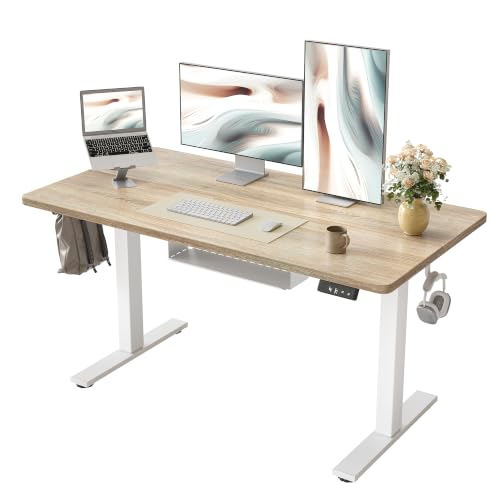
- Cable tray and headphone hook
- 28.3–45.6-inch height range
- Two memory presets
Best For: Smaller workspaces needing basic cable organization
Spacious Pick

- 63-by-24-inch desktop
- Cable tray and accessory hooks
- Three presets and child lock
Best For: Wider workstations with multiple devices and cables
Best Equipped – 60 x 30 Flip-Top Standing Desk
Among electric standing desks with cable management, this 60 x 30-inch model stands out for its flip-top rear panel: open it to reach cords and the power strip, then close it to conceal them. Two storage baskets add space for accessories off the work surface.
Best For: Multi-monitor workstations that need generous desktop space and easy access to hidden cables.
Pros:
- Flip-top cable access, adjustable panel gap, and two storage baskets provide several ways to manage cords.
- Includes a clamp power strip with three AC outlets and two USB ports, plus a full-size desk pad.
- Dual-beam steel frame supports up to 250 lb; three presets cover a 27.7- to 45.5-inch height range.
Cons:
- The 60 x 30-inch footprint needs more room than a compact desk.
- The 45.5-inch maximum height may be limiting for some taller users.
The included power strip makes the flip-top compartment useful from day one. If you can accommodate its size, this is a well-equipped option for keeping a larger setup organized.
Best Curved Desktop – TIQLAB Maple Standing Desk
If you prefer a curved front edge, this TIQLAB is one of the electric standing desks with cable management worth considering. Its 30-inch-deep top gives your monitors and keyboard room, while a dedicated cable box keeps power and data cords together.
Best For: Home-office users who want a deep work surface, a curved front edge, and a separate place to collect cables.
Pros:
- Curved desktop edge offers a closer, more natural position for your arms and hands.
- Dedicated cable storage box helps clear loose wires from the workspace.
- Adjusts from 28.3 to 45.6 inches, with two height presets.
Cons:
- Only two height presets, rather than three.
- The supplied listing conflicts on width: the title says 55 inches, while the dimensions list 47 inches and the size field says 50 inches.
The deep top and cable box are appealing, but confirm the exact width before ordering if fit is tight; the supplied specifications do not agree.
Best Compact Cable Routing – FEZIBO 48 x 24 Standing Desk
For smaller rooms, this 48 x 24-inch FEZIBO offers a compact take on electric standing desks with cable management. A pegboard built into its L-shaped crossbar works with a magnetic cable track to route wires below the desktop.
Best For: Compact home-office or gaming setups that need organized cable routing without a large desktop.
Pros:
- Pegboard and magnetic cable track provide dedicated places to organize wires.
- L-shaped crossbar is designed to reduce wobble at standing height.
- Three memory presets adjust the desk from 28.3 to 46.5 inches.
Cons:
- The 48 x 24-inch surface leaves less room for equipment than the larger desks here.
- Its cable system routes wires, but the notes do not describe an enclosed compartment for hiding a power strip.
Choose this model if under-desk routing and a smaller footprint matter more than maximum surface area. The partially preassembled design also makes it a practical option for a quicker setup.
Compact Pick – TIQLAB 47-Inch Standing Desk
For shoppers comparing electric standing desks with cable management, this TIQLAB model pairs a cable tray with a roughly 47-by-24-inch desktop that fits a smaller workspace. Its maple finish and headphone hook offer a practical setup for home-office or study use.
Best For: A compact workstation that needs basic cable organization and saved sitting and standing heights.
Pros:
- Cable management tray and included headphone hook help keep accessories organized.
- Adjusts from 28.3 to 45.6 inches, with two memory presets.
- Rated to lift up to 176 pounds; the motor is specified at under 45 dB.
Cons:
- The desktop offers less room than a 63-inch desk.
- Two presets may be limiting if several people share the desk.
The TIQLAB is a sensible choice when floor space matters more than a broad work surface. Check its height range against your preferred sitting and standing positions before buying.
Spacious Pick – SIAGO 63-Inch Standing Desk
If you need more room among electric standing desks with cable management, the SIAGO provides a 63-by-24-inch desktop with an integrated cable tray. Hooks for headphones or bags give frequently used accessories a place off the work surface.
Best For: A wider office or gaming setup with multiple devices and cables to organize.
Pros:
- 63-inch-wide desktop provides space for office or gaming equipment.
- Integrated cable tray and accessory hooks support a tidier setup.
- Adjusts from 27.95 to 45.67 inches, with three memory presets and a child lock.
- Rated for up to 200 pounds, with a motor specified at under 45 dB.
Cons:
- Its 63-inch width requires more room than a compact desk.
- The supplied details do not list a drawer for built-in storage.
Choose the SIAGO if desktop area and an organized cable path are priorities. Measure your available space first, particularly if the desk will sit in a narrow room.
How We Picked the Best Electric Standing Desks with Cable Management
We focused on the five selected electric desks and compared their listed desktop dimensions and cable-management features. A tray, cart, or flip-top access point can help organize wires, but each solves a different part of the problem. We also considered how much surface space each desk offers for monitors, a laptop, and everyday accessories. This is a feature-based comparison, not a hands-on test of motor noise, stability, or assembly.
Quick Comparison: Size and Cable Access
The 60 x 30-inch model pairs a roomy work surface with flip-top cable access. The TIQLAB 55 x 30-inch desk offers the same listed depth and a cable-management cart in a slightly narrower footprint. The FEZIBO 48 x 24-inch desk lists a cable-management system and an L-shaped crossbar. The TIQLAB 47.2 x 23.6-inch model is the most compact here and includes a cable tray. The SIAGO 63 x 24-inch desk is the widest, with cable management and three memory presets. Treat these as starting points: check each listing for the exact routing components included.
Key Buying Factors for Electric Standing Desks with Cable Management
Plan for the Full Height Range
Measure the route from your outlets and computer to monitors, lamps, and chargers while imagining the desk at its highest position. Cords need enough slack to rise without tension, but not so much that loops snag beneath the desktop. A mounted power strip can reduce the number of cords that must travel toward the floor; check what the desk actually includes before planning around one.
Match the Desktop to Your Equipment
A 30-inch-deep surface gives you more room to position monitors behind a keyboard than a roughly 24-inch-deep top. Width matters if you use two screens or want separate work zones. Measure the available floor space as well as the desktop: allow clearance for the chair, nearby drawers, and any wall-mounted outlets you need to reach.
Check Features Beyond the Cable Organizer
Confirm the listed height range suits your seated and standing positions, especially if you’re unusually tall or short. Check the weight rating against your complete setup, and look at the warranty and assembly requirements. Memory presets may be useful for frequent height changes, but a good cable layout still depends on where your devices plug in.
Who Should Buy Which Electric Standing Desks with Cable Management?
Choose the 60 x 30-inch desk if you want a deeper surface and prefer flip-top cable access. Consider the TIQLAB 55 x 30-inch model if depth is a priority but 60 inches is too wide. The FEZIBO 48 x 24-inch and TIQLAB 47.2 x 23.6-inch desks suit smaller spaces; compare their listed cable components before choosing. Pick the SIAGO 63 x 24-inch desk if width and three memory presets matter more to you than extra depth. Whichever you choose, map your cable runs before assembly so outlets and routing points end up where you need them.
