
Choosing a CUDA workstation PC for machine learning labs means balancing GPU capability, CPU headroom, memory capacity, and reliability—not just raw specs. The best systems help teams train models faster, move data smoothly, and avoid bottlenecks during experimentation.
This roundup highlights ten options suited to different lab needs, from compact desktop builds to high-memory tower workstations and rackmount setups. Whether you are outfitting a shared research space or a focused AI development desk, the goal is the same: stable performance that supports real-world machine learning workflows.
Best 10 Cuda Workstation PC for Machine Learning Labs Picks for 2026
Best for Heavy CUDA Workloads
NOVATECH AI Workstation Desktop PC

- RTX PRO 6000 with 96GB VRAM for CUDA and deep learning
- 192GB DDR5 RAM plus 10TB NVMe storage
- Liquid cooling, 1000W PSU, and USA assembly with support
Best For: ML labs and AI teams that need a high-VRAM CUDA workstation for large models and data-heavy jobs.
Best Compact AI Workstation

- 4.4L chassis fits tight lab desks and shared workspaces
- 64GB unified LPDDR5X memory for local AI workflows
- Ryzen AI platform with 1TB SSD for fast prototyping
Best For: Researchers and developers who need a compact, ready-to-run AI workstation for local models and lab use.
Best Budget
- 96GB RTX PRO 6000 VRAM for large CUDA jobs
- 192GB RAM and 10TB NVMe for big datasets
- Strong Ryzen 9 CPU for preprocessing and simulation
Best For: AI labs and power users running large CUDA training, simulation, and data-heavy workflows.
Best for Multi-Display Labs

- Core i9-13900HK handles heavy multitasking well
- 32GB DDR5 + 1TB SSD are solid for lab workflows
- Lots of USB, display, and COM connectivity
Best For: Lab users who need a compact, well-connected workstation for development, monitoring, and data prep.
Best RTX 5090 Workstation
- RTX 5090 with 32GB VRAM for CUDA-heavy AI work
- 96GB DDR5 RAM plus 5TB NVMe for large projects
- Ryzen 9 9950X3D for fast preprocessing and multitasking
Best For: Researchers and lab teams needing top-tier CUDA performance with lots of RAM and storage.
Best Rackmount Pick
Quiet Rackmount Ryzen 7 5700G Workstation

- 2U rackmount chassis fits organized lab and server-style setups
- Ryzen 7 5700G, 32GB RAM, and 1TB NVMe deliver responsive performance
- Good base system for adding an NVIDIA GPU for CUDA workflows
Best For: Lab teams and admins who want a quiet, rack-friendly workstation base for CUDA development and expansion.
Best CUDA Lab Workhorse
NOVATECH AI Workstation Desktop PC
- RTX 5080 with 16GB VRAM for CUDA-accelerated AI work
- 64GB DDR5 RAM plus 2TB NVMe SSD for data-heavy workflows
- Liquid cooling and 850W PSU for sustained performance
Best For: ML labs and researchers who need a prebuilt CUDA workstation for training, analytics, and heavy multitasking.
Best for Heavy CUDA Training
Sentinel RTX PRO 6000 Workstation
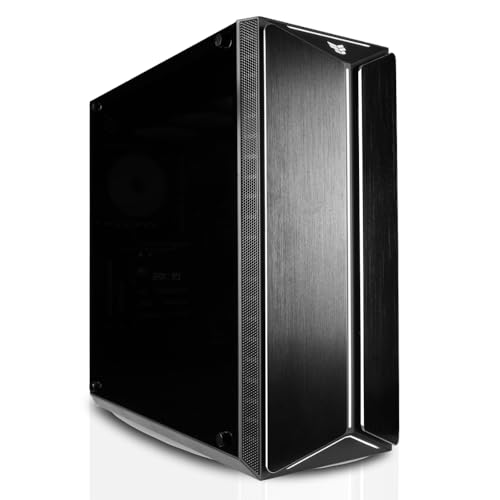
- 96GB RTX PRO 6000 GPU for large CUDA workloads
- 16-core Ryzen 9 9950X with 128GB DDR5 RAM
- 2x4TB Gen4 NVMe SSDs plus Windows 11 Pro
Best For: Research labs and ML teams that need a high-VRAM CUDA workstation for serious local training.
Best High-Performance CUDA Pick
NOVATECH Apex AI Workstation & Gaming PC
- RTX 5080 for CUDA-accelerated AI workloads
- 64GB RAM for larger datasets and multitasking
- 2TB SSD plus Ryzen 9 for fast, balanced performance
Best For: Research labs, advanced students, and creators who need a fast CUDA-capable desktop.
Best Dual-CPU Value
Dual Xeon RTX 5060 Workstation

- 36 cores / 72 threads for parallel preprocessing
- RTX 5060 provides CUDA acceleration
- 128GB RAM with 1TB SSD + 4TB HDD
Best For: Researchers and lab users who need a CUDA-capable workstation with lots of RAM and CPU threads.
Best for Heavy CUDA Workloads – NOVATECH AI Workstation Desktop PC
If you need a cuda workstation pc for machine learning labs, this NOVATECH tower is built around serious compute headroom: an Intel Core i9-14900K, RTX PRO 6000 graphics, 192GB of RAM, and 10TB of NVMe storage. It’s aimed at teams and researchers running large models, dense datasets, or multi-app workflows where stability and throughput matter more than raw gaming value.
Best For: ML labs, AI research benches, and CUDA-heavy workflows that need a high-VRAM professional GPU plus lots of memory.
Pros:
- RTX PRO 6000 with 96GB VRAM for demanding CUDA and deep learning jobs
- 192GB DDR5 RAM and 10TB NVMe storage for large datasets and fast iteration
- Liquid cooling and 1000W 80+ Gold PSU help sustain heavy workloads
- Assembled in the USA with lifetime technical support and a 3-year hardware warranty
Cons:
- Far more machine than most casual creators or small office users need
- Premium configuration likely puts it well above entry-level workstation budgets
- Desktop tower design is powerful, but not especially portable
For buyers prioritizing a cuda workstation pc for machine learning labs, this configuration stands out for its unusually high VRAM, huge system memory, and professional-grade stability. It makes the most sense when your workflow is constrained by compute and capacity rather than price.
Best Compact AI Workstation – Corsair AI Workstation 300
If you want a compact cuda workstation pc for machine learning labs without building a tower from scratch, the Corsair AI Workstation 300 is a strong fit. Its small 4.4L chassis, fast LPDDR5X memory, and Ryzen AI platform are aimed at local AI development, LLM experimentation, and creative workloads where space and efficiency matter.
Best For: Researchers, students, and developers who need a small, ready-to-run AI workstation for local models and lab demos.
Pros:
- Ultra-compact 4.4L design saves desk space in crowded labs
- Unified 64GB LPDDR5X memory supports local AI workflows and multitasking
- Built for AI acceleration with Ryzen AI processing and Radeon graphics
- Includes 1TB SSD for datasets, tools, and project files
Cons:
- Not a traditional NVIDIA CUDA build, so CUDA-specific apps may be limited
- Integrated graphics architecture is less upgradeable than a desktop GPU workstation
- Compact format may not suit users who want maximum expansion headroom
For buyers comparing a cuda workstation pc for machine learning labs, this Corsair model stands out for portability, memory bandwidth, and AI-focused design rather than raw CUDA compatibility. It makes the most sense for local model work, prototyping, and compact lab setups where a small footprint is a priority.
Best Budget – NOVATECH Apex AI Workstation
If you need a cuda workstation pc for machine learning labs that can handle large models, fast iteration, and serious multitasking, the NOVATECH Apex is built for that role. The Ryzen 9 9950X3D, RTX PRO 6000 with 96GB VRAM, and 192GB of DDR5 memory give it the headroom to train, fine-tune, and run demanding research workflows without constantly hitting resource limits.
Best For: AI teams, lab benches, and power users who need high-VRAM CUDA performance for training, simulation, and data-heavy workloads.
Pros:
- RTX PRO 6000 with 96GB VRAM is excellent for large CUDA workloads and model training.
- 192GB DDR5 RAM plus 10TB of NVMe storage suits big datasets and multi-app workflows.
- Ryzen 9 9950X3D adds strong CPU performance for preprocessing, simulation, and editing.
- USA assembly, stress testing, lifetime support, and a 3-year hardware warranty add peace of mind.
Cons:
- Very expensive compared with mainstream workstation PCs.
- Overkill if you only need light inference or entry-level development.
This is a serious cuda workstation pc for machine learning labs that need maximum VRAM, lots of memory, and dependable professional-class hardware. It makes the most sense when GPU capacity matters more than price.
Best for Multi-Display Labs – GMKtec K10 i9-13900HK Mini PC
If you need a compact cuda workstation pc for machine learning labs, the GMKtec K10 is a practical option for CPU-heavy preprocessing, model orchestration, and multi-monitor workflows. It pairs a Core i9-13900HK, 32GB of DDR5 memory, and a 1TB NVMe SSD with a wide set of ports, making it easy to build a tidy bench machine for development and testing.
Best For: Lab users who want a small, highly connected workstation for data prep, scripting, dashboards, and multi-screen productivity.
Pros:
- Fast Core i9-13900HK processor with 14 cores and 20 threads for demanding multitasking
- 32GB DDR5 RAM and 1TB NVMe SSD provide a strong out-of-box foundation
- Multiple display outputs plus 8 USB ports make it easy to wire up lab peripherals
- Includes a COM port for industrial, embedded, or serial-device workflows
Cons:
- No discrete NVIDIA GPU, so it is not a true CUDA-accelerated training rig by itself
- Mini PC thermals and upgrade limits make it better for light-to-moderate lab workloads than large-scale training
For a cuda workstation pc for machine learning labs, this GMKtec model makes sense when you value compact size, strong CPU performance, and lots of connectivity over raw GPU compute. It is best treated as a capable control-and-development station unless you plan to pair it with external GPU or remote CUDA resources.
Best RTX 5090 Workstation – NOVATECH Apex AI Workstation
If you want a cuda workstation pc for machine learning labs that also handles serious creative work, the NOVATECH Apex stands out with a Ryzen 9 9950X3D, RTX 5090, and 96GB of DDR5 memory. It is built for demanding training runs, large datasets, and GPU-accelerated workflows, while still giving you plenty of headroom for rendering, editing, and simulation.
Best For: Researchers, lab teams, and power users who need top-tier CUDA performance plus extra RAM and fast NVMe storage.
Pros:
- RTX 5090 with 32GB VRAM is well suited to heavy CUDA and AI workloads
- 96GB DDR5 RAM and 5TB total NVMe storage support large projects and datasets
- Fast Ryzen 9 CPU helps with preprocessing, multitasking, and mixed workloads
- Liquid cooling and U.S. assembly add confidence for sustained use
Cons:
- Very expensive compared with mainstream workstation builds
- Overkill if you only need basic inference or light model development
- Large, high-powered system may be more than smaller labs need
For a cuda workstation pc for machine learning labs, this is a no-compromise choice when you need maximum GPU capability and ample memory in one ready-to-run tower. It is strongest for users who value speed, stability, and expansion room over budget efficiency.
Best Rackmount Pick – Quiet Rackmount Ryzen 7 5700G Workstation
If you need a practical cuda workstation pc for machine learning labs, this 2U rackmount system is a sensible fit for teams that want a compact, quiet box with solid CPU headroom, fast storage, and Windows 11 Pro. It is not a GPU-heavy training rig out of the box, but it works well as a lab workstation, code development node, data prep machine, or inference server when paired with the right accelerators.
Best For: Lab buyers, IT admins, and creators who want a rack-friendly workstation for CUDA development, testing, and everyday productivity.
Pros:
- 8-core Ryzen 7 5700G provides strong multitasking performance for development and lab workflows
- 32GB DDR4 RAM and 1TB NVMe SSD support fast launches, large projects, and responsive local storage
- 2U rackmount design with multiple drive bays and expansion slots suits organized lab setups
- Windows 11 Pro and U.S. assembly add convenience for business and institutional use
Cons:
- Integrated graphics only, so CUDA work will require adding a compatible NVIDIA GPU
- Not ideal if you want a turnkey deep-learning training system with a discrete GPU included
- Rackmount form factor is less convenient than a normal desktop for home users
For buyers comparing a cuda workstation pc for machine learning labs, this model stands out as a flexible base system rather than a finished AI box. It is strongest when you need a dependable, rack-ready platform that can be expanded around your own NVIDIA hardware and lab requirements.
Best CUDA Lab Workhorse – NOVATECH AI Workstation Desktop PC
If you need a cuda workstation pc for machine learning labs, this NOVATECH build is aimed at users running GPU-accelerated training, data prep, and multitasking workflows. The Intel Core i9-14900K, RTX 5080 with 16GB VRAM, 64GB DDR5 memory, and 2TB NVMe storage give it the headroom to handle demanding model development and large datasets without feeling underpowered.
Best For: ML lab teams, researchers, and power users who want a fast, ready-to-run CUDA workstation for deep learning, analytics, and content-heavy workloads.
Pros:
- RTX 5080 CUDA performance with 16GB VRAM for modern AI and training workloads
- 64GB DDR5 RAM and 2TB NVMe SSD for smooth multitasking and fast dataset access
- Liquid cooling and an 850W Gold PSU support sustained heavy use
- Assembled in the USA with lifetime technical support and a 3-year warranty
Cons:
- High-end spec sheet puts it well above entry-level budgets
- Desktop tower design is less portable than compact lab systems
For buyers comparing a cuda workstation pc for machine learning labs, this model stands out because it combines strong CUDA-capable graphics, ample RAM, and practical storage in a prebuilt system. It is a sensible choice if you want to spend less time assembling parts and more time training models, running experiments, or rendering results.
Best for Heavy CUDA Training – Sentinel RTX PRO 6000 Workstation
This Sentinel tower is a strong pick if you want a cuda workstation pc for machine learning labs that can handle large models, fast local storage, and long training sessions without feeling under-specced. The Ryzen 9 9950X, 128GB of DDR5, and dual Gen4 NVMe drives give it a high-throughput foundation, while the RTX PRO 6000 adds the VRAM headroom many lab workflows need.
Best For: Research labs, ML teams, and advanced creators who need a serious local CUDA workstation with lots of memory and pro-level GPU capacity.
Pros:
- RTX PRO 6000 with 96GB VRAM is ideal for larger models and memory-hungry CUDA workloads
- 16-core Ryzen 9 9950X and 128GB RAM support heavy multitasking and preprocessing
- 2x4TB Gen4 NVMe SSDs provide plenty of fast local scratch and project storage
- Windows 11 Pro, Wi-Fi 7, and a 3-year warranty make it ready for lab deployment
Cons:
- Very expensive compared with mainstream AI-ready desktops
- Overkill if you only run light inference or small training jobs
- Non-RGB styling is practical, but not the most premium-looking chassis
For buyers evaluating a cuda workstation pc for machine learning labs, this model stands out for its unusually large GPU memory, high RAM ceiling, and generous fast storage. It is a better fit for serious local experimentation and model work than for casual desktop use.
Best High-Performance CUDA Pick – NOVATECH Apex AI Workstation & Gaming PC
If you want a cuda workstation pc for machine learning labs that can also handle heavy creative workloads, this NOVATECH Apex build is aimed at serious performance. The Ryzen 9 9950X3D, RTX 5080, 64GB of RAM, and 2TB of storage give it the kind of headroom you want for model training, large datasets, 3D work, and simulation.
Best For: Research labs, advanced students, and creators who need a fast CUDA-capable desktop that can juggle machine learning, rendering, and editing without feeling cramped.
Pros:
- RTX 5080 provides strong CUDA acceleration for AI and ML workflows
- 64GB RAM is well suited to multitasking and larger local projects
- 2TB SSD gives you ample fast storage for datasets and active work files
- High-end Ryzen 9 CPU adds strong general-purpose compute performance
Cons:
- Premium specs mean a high upfront cost
- Likely more power and cooling than casual users need
- Overkill if your machine learning work is mostly lightweight experimentation
Overall, this is a strong fit if you need a cuda workstation pc for machine learning labs and want enough GPU and memory overhead to stay productive as projects scale. It is a practical choice when you need one system that can cover AI development, content creation, and demanding lab work.
Best Dual-CPU Value – Dual Xeon RTX 5060 Workstation
If you want a cuda workstation pc for machine learning labs that prioritizes core count and memory capacity over cutting-edge platform features, this dual-CPU tower is a strong fit. With 36 cores, 72 threads, 128GB of RAM, and an RTX 5060, it gives labs a practical mix of CPU throughput, NVIDIA CUDA acceleration, and ample room for larger datasets and multitasking.
Best For: Students, researchers, and lab teams that need a budget-conscious CUDA-capable workstation for training, experimentation, and heavy multitasking.
Pros:
- Dual Xeon setup delivers high parallel CPU capacity for preprocessing and multitasking
- RTX 5060 adds CUDA support for ML workloads and GPU-accelerated workflows
- 128GB DDR4 RAM is useful for larger projects, VMs, and data-heavy lab work
- 1TB SSD plus 4TB HDD provides a balanced mix of speed and storage volume
Cons:
- Older Xeon platform is less efficient than newer workstation CPUs
- Not ideal if you want the newest platform features or maximum upgrade headroom
- Single-GPU setup may be limiting for larger deep learning builds
This is a practical cuda workstation pc for machine learning labs when your priority is getting lots of RAM, solid CUDA support, and heavy multitasking capacity without moving into a much higher price tier.
How We Picked the Best Cuda Workstation PC for Machine Learning Labs
We prioritized systems that make sense for a Cuda Workstation PC for Machine Learning Labs: strong CPU performance for preprocessing and multitasking, ample RAM for datasets and notebooks, fast NVMe storage for large project files, and expansion potential for future upgrades. We also considered workstation-oriented cooling, professional stability, and form factors that fit lab environments.
Because lab users often run mixed workloads, we looked for machines that can handle training, inference, data engineering, and visualization without turning into a single-purpose box. In practice, that means a balanced build is often more useful than a flashy one.
Quick Comparison
High-core desktop towers are usually the best fit for serious local development and heavier preprocessing. Mini PCs and compact desktops work well for lightweight inference, admin tasks, and edge-style lab stations. Rackmount and dual-CPU systems are better when space planning, shared access, or legacy compute density matters. If your workflows rely heavily on CUDA acceleration, confirm GPU support, VRAM capacity, and chassis cooling before buying.
Key Buying Factors for Cuda Workstation PC for Machine Learning Labs
GPU and CUDA Support
For machine learning, the GPU matters most. Look for an NVIDIA-based configuration if CUDA is required, and pay attention to VRAM. More VRAM helps with larger models, bigger batch sizes, and higher-resolution datasets.
Memory and Storage
16GB RAM is often too limited for a lab workstation. Aim for 32GB minimum, with 64GB or 128GB preferred for serious experimentation. NVMe SSDs improve dataset loading, environment setup, and checkpoint saves.
CPU and Cooling
A fast CPU helps with data preprocessing, feature engineering, container orchestration, and general responsiveness. Sustained workloads also demand strong cooling, especially in dense lab rooms where systems may run for long periods.
Upgrade Path and Connectivity
Labs change quickly, so choose a system with room for more RAM, storage, and possibly a better GPU later. Extra USB ports, display outputs, and reliable networking are useful when multiple devices and peripherals are involved.
Who Should Buy Which Cuda Workstation PC for Machine Learning Labs?
If you need a primary development box for training and experimentation, choose a high-end tower with strong CPU, lots of RAM, and the best GPU you can justify. If your lab needs a compact support machine, a mini PC or smaller desktop may be enough for notebooks, data prep, and remote access. For shared or infrastructure-oriented deployments, rackmount options make more sense. Budget-conscious buyers can consider older dual-CPU builds, but only if the CUDA GPU and overall platform still match current workload demands.
In short, the best Cuda Workstation PC for Machine Learning Labs is the one that matches your dataset size, model complexity, and upgrade plan—not just the highest spec sheet on paper.
