
A compact USB audio interface is one of the easiest upgrades for clearer vocals, cleaner guitar recordings, and better livestream audio.
This roundup focuses on small, practical interfaces that suit home studios, creators, podcasters, and musicians who need reliable sound without taking up desk space.
Best 10 Compact USB Audio Interface Picks for 2026
Compact Recording Pick
Focusrite Scarlett Solo 3rd Gen

- 1 XLR mic preamp and 1 Hi-Z input
- Up to 24-bit/192kHz recording
- Includes Pro Tools Intro+ and Ableton Live Lite
Best For: Guitarists, vocalists, and podcasters
Best Budget Portable
PreSonus AudioBox 96 25th Anniversary
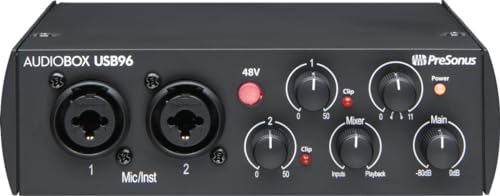
- Two Class-A mic preamps
- USB bus-powered with MIDI I/O
- Includes Studio One Artist and Ableton Live Lite
Best For: Budget users needing portable 2-channel recording
Premium Solo Upgrade
Focusrite Scarlett Solo 4th Gen

- 120dB dynamic range for cleaner recordings
- Improved Air mode for vocals and guitars
- Includes major recording software and plugins
Best For: Solo artists wanting upgraded sound quality
Vintage Sound Choice
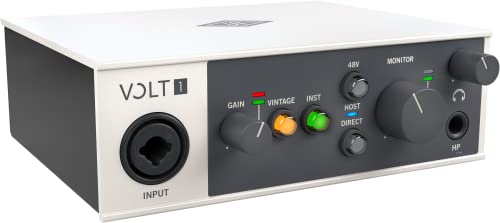
- Vintage mode adds UA 610-style color
- Up to 24-bit/192kHz recording
- Supports Mac, Windows, iPad, and iPhone
Best For: Creators wanting vintage tone in a small interface
Budget-Friendly Dual-Input Starter
M-AUDIO M-Track Duo USB Audio Interface
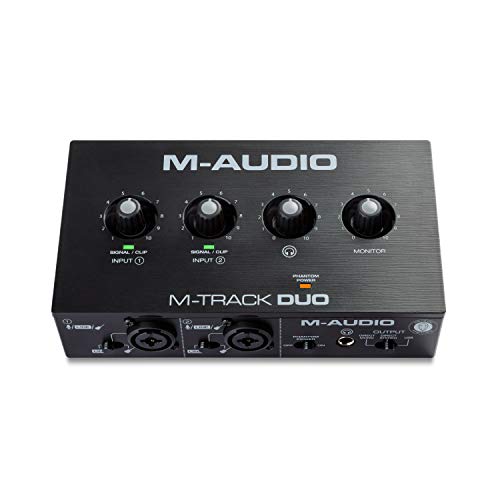
- Two combo XLR/line/instrument inputs
- 48kHz recording with direct monitoring
- Includes MPC Beats software
Best For: Beginners who want a portable 2-input interface for vocals and guitar
Ultra-Low-Latency Budget Pick
XTUGA Q-12 USB Audio Interface

- Dual XLR and 3.5mm mic inputs
- Switchable 48V phantom power
- USB plug-and-play for PC
Best For: PC beginners who want a simple 2-channel interface with phantom power
Ultra-Compact Single-Input Choice
M-AUDIO M-Track Solo USB Audio Interface
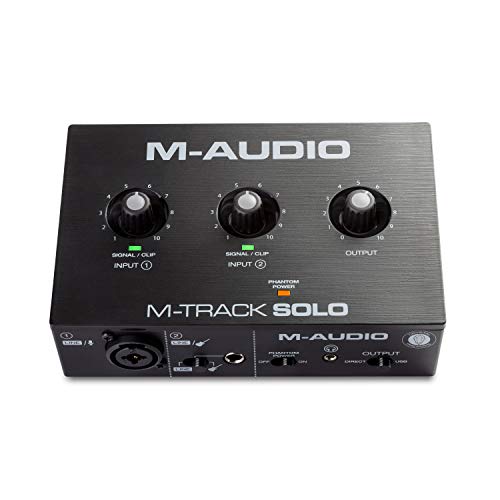
- One combo XLR/line input with phantom power
- Separate line/instrument input
- USB/Direct monitoring and MPC Beats included
Best For: Solo creators who want a very compact interface with basic input flexibility
Creator-Focused Pick
Compact USB audio interface for streaming and guitar

- 24-bit/192kHz recording with 106dB dynamic range
- XLR mic support with 56 dB preamp and 48V phantom power
- Loopback, routing software, and instrument input for creators
Best For: Creators who need a small interface for vocals, guitar, and live streaming
Portable I/O Pick
Compact USB audio interface with 5-in-1 audio hub

- Converts one USB port into multiple audio jacks
- Supports multi-track recording with separate device names
- Bus-powered, portable design for on-the-go use
Best For: Users who want a tiny interface with flexible USB-to-3.5mm connections
Mobile Recording Pick
Compact USB audio interface for recording and streaming

- 24-bit/48kHz audio with a low-latency chip
- Three monitoring modes for recording, mix, or USB playback
- USB-C design with XLR, line input, and 48V phantom power
Best For: Mobile creators who want a lightweight interface with easy monitoring
Compact Recording Pick – Focusrite Scarlett Solo 3rd Gen
If you want a compact usb audio interface for simple, high-quality recording, the Scarlett Solo 3rd Gen keeps the setup focused on vocals and guitar. It offers one XLR mic preamp, one Hi-Z instrument input, and up to 24-bit/192kHz recording, so it suits creators who want a straightforward path to studio-style results.
Best For: Guitarists, vocalists, and podcasters who want a compact two-input interface with strong included software.
Pros:
- 1 XLR mic preamp and 1 Hi-Z instrument input keep the layout simple and practical.
- Air mode adds extra clarity for acoustic instruments and vocals.
- 24-bit/192kHz converters support studio-quality recording and playback.
- Includes Pro Tools Intro+, Ableton Live Lite, Cubase LE, and Hitmaker Expansion software.
Cons:
- Only two channels, so it is not built for larger multi-mic sessions.
- Designed around a focused recording workflow rather than expanded I/O.
This is a strong fit if you value simplicity, clean monitoring, and a compact footprint over extra inputs. It gives you the basics done well, with software included to help you start recording right away.
Best Budget Portable – PreSonus AudioBox 96 25th Anniversary
The PreSonus AudioBox 96 is a compact usb audio interface aimed at portable, value-focused recording. With two Class-A mic preamps, two high-headroom instrument inputs, MIDI I/O, and bus-powered operation, it covers the essentials for a small home or mobile setup.
Best For: Budget-conscious users who want a portable 2-channel interface with MIDI and bundled software.
Pros:
- Two Class-A mic preamps provide a solid base for simple recording sessions.
- Two instrument inputs plus MIDI I/O add flexibility for gear-heavy setups.
- USB bus power makes it easy to use on the go without an extra power supply.
- Includes Studio One Artist, Ableton Live Lite, and Studio Magic Plug-In Suite.
Cons:
- Limited to 24-bit/96kHz recording and playback instead of higher sample rates.
- Best suited to small setups rather than more advanced multi-input recording.
For a portable interface that stretches your budget, this model delivers a practical feature set and a strong software bundle. It is especially appealing if you need MIDI and simple zero-latency monitoring in a small footprint.
Premium Solo Upgrade – Focusrite Scarlett Solo 4th Gen
If you are shopping for a compact usb audio interface with a more refined recording path, the Scarlett Solo 4th Gen stands out. It keeps the same simple mic-and-guitar layout, but adds a huge 120dB dynamic range, improved Air mode, and the same converters used in Focusrite’s flagship interfaces.
Best For: Solo artists who want a simple interface with higher dynamic range and upgraded sound quality.
Pros:
- 120dB dynamic range is a major upgrade for clean, detailed recording.
- Improved Air mode adds presence and harmonic drive to vocals and guitars.
- Uses the same converters as Focusrite’s flagship interfaces.
- Includes Pro Tools Intro+, Ableton Live Lite, Cubase LE, and Hitmaker Expansion.
Cons:
- Still a 2-channel interface, so it remains focused on small setups.
- Only one audio input is listed in the supplied details, limiting expansion.
This is the best choice here if you want the simplest setup but care about a more polished recording result. It keeps the Solo formula intact while improving headroom, clarity, and overall studio feel.
Vintage Sound Choice – Universal Audio Volt 1
The Universal Audio Volt 1 is a compact usb audio interface built for users who want a classic tonal flavor in a small desktop format. Its Vintage mode emulates UA’s 610 preamp sound, while up to 24-bit/192kHz recording and crystal clear converters keep the capture side modern.
Best For: Creators who want a small interface with vintage-style coloration and mobile compatibility.
Pros:
- Vintage mode delivers the rich, full sound of UA’s classic 610 preamps.
- Up to 24-bit/192kHz quality supports detailed recording and playback.
- Works with MacOS, Windows, iPad, and iPhone for flexible use.
- Includes access to LUNA DAW and UAD plug-ins/instruments.
Cons:
- Requires an external Volt power supply.
- iPad use needs an Apple Lightning to USB Camera Adapter on most models.
Volt 1 is a compelling pick if you want more character than a plain clean interface can offer. It blends classic-inspired tone, modern resolution, and broad device support in a compact package.
Budget-Friendly Dual-Input Starter – M-AUDIO M-Track Duo USB Audio Interface
If you want a compact usb audio interface that can handle recording, podcasting, and streaming without a lot of setup, the M-Audio M-Track Duo is built around that simple use case. It offers two combo XLR/line/instrument inputs, 48kHz recording, and direct monitoring, making it a practical choice for small home setups.
Best For: Beginners and creators who need a portable 2-input interface for vocals, guitar, and streaming.
Pros:
- Two combo XLR/Line/Instrument inputs with phantom power.
- 48kHz audio resolution for recording and streaming.
- USB/Direct switch supports zero-latency monitoring.
- Includes MPC Beats software for getting started fast.
Cons:
- Only two channels, so it is not ideal for larger recording sessions.
- Headphone output is 1/4″, which may require the right headphones or adapter.
- Designed for basic workflow rather than advanced routing.
The M-Track Duo focuses on affordability and straightforward operation, which is exactly what many first-time buyers need. If your priority is a compact interface with flexible inputs and simple monitoring, it fits the brief well.
Ultra-Low-Latency Budget Pick – XTUGA Q-12 USB Audio Interface
The XTUGA Q-12 is a compact usb audio interface aimed at basic home recording, karaoke, and streaming on a PC. It keeps the setup simple with USB plug-and-play operation, dual inputs, 48-bit/48kHz resolution, and switchable 48V phantom power for condenser mics.
Best For: PC users and beginners looking for a simple, low-cost 2-channel interface with phantom power.
Pros:
- Dual XLR and 3.5mm microphone inputs for basic recording needs.
- Switchable 48V phantom power supports condenser microphones.
- USB plug-and-play design needs no external adapter.
- Upgraded chip is described as delivering stable, low-latency monitoring.
Cons:
- Compatible devices are listed for personal computer use only.
- Input options are narrower than interfaces with combo jacks.
- Best suited to starter setups rather than more advanced studio workflows.
The Q-12 keeps the feature set focused on ease of use and everyday recording. If you need a compact interface for a simple PC studio or karaoke setup, it delivers the essentials without adding complexity.
Ultra-Compact Single-Input Choice – M-AUDIO M-Track Solo USB Audio Interface
For buyers who want a compact usb audio interface with the simplest possible footprint, the M-Audio M-Track Solo is designed around one combo XLR/line input and one separate line/instrument input. It supports 48kHz recording, direct monitoring, and a small set of outputs, which makes it a practical pick for solo creators.
Best For: Solo podcasters, streamers, and musicians who need a very compact interface with basic input flexibility.
Pros:
- One combo XLR/Line input with phantom power.
- Separate line/instrument input for guitar or other sources.
- USB/Direct switch supports zero-latency monitoring.
- Includes MPC Beats software for recording and production.
Cons:
- Only one main mic input, so it is less flexible than dual-input models.
- Uses 1/8″ headphone output and RCA outputs instead of larger pro-style connections.
- Better suited to simple solo work than multi-source sessions.
The M-Track Solo keeps the layout compact while still covering the essentials for recording and streaming. If you do not need two full mic channels, it is an easy way to save desk space without losing core functionality.
Creator-Focused Pick – Compact USB audio interface for streaming and guitar
If you want a compact USB audio interface that can handle vocals, guitar, and streaming, the MAONO PS22 Lite is built around flexibility. It offers 24-bit/192kHz recording, a low-noise preamp, loopback support, ASIO driver compatibility, and routing software for creators who need one small device to cover several workflows.
Best For: Streamers, podcasters, voice actors, and home-studio users who want a small interface with guitar and vocal support.
Pros:
- 24-bit/192kHz recording with a 106dB dynamic range for detailed capture
- XLR input with up to 56 dB of preamp gain and 48V phantom power
- Dedicated instrument input plus routing software and loopback for streaming
- Compact, plug-and-play design with direct monitoring and Mac, Windows, and iPad support
Cons:
- Needs the MAONO (ASIO) driver selected in supported software
- Feature set may be more than basic recorders need
This is a strong fit if you want a compact USB audio interface that leans toward creator flexibility rather than bare-bones simplicity. The PS22 Lite combines solid recording specs with streaming-friendly tools, making it a practical all-in-one pick for mixed-use setups.
Portable I/O Pick – Compact USB audio interface with 5-in-1 audio hub
The Cubilux CB5 is a compact USB audio interface built for users who want lots of connection options in a tiny footprint. It turns one USB port into multiple audio jacks, supports multi-track recording with separate device names, and stays portable because it does not need an external power source.
Best For: Recording, podcasting, and mobile setups that need flexible USB-to-3.5mm audio connections.
Pros:
- 5-in-1 design with stereo mic jacks, line-in, line-out, and headphone jack
- Supports multi-track recording through independent device names
- Up to 96kHz/24-bit recording quality
- Portable, bus-powered build with no external power needed
Cons:
- Line-out jack and audio output jack cannot be used at the same time
- Best suited to users who want simple I/O rather than a full-featured studio controller
For buyers who value connectivity over complexity, the CB5 is a practical compact USB audio interface. Its small size, multi-jack layout, and bus-powered design make it easy to carry and use for recording or streaming on the go.
Mobile Recording Pick – Compact USB audio interface for recording and streaming
The Synido USB C audio interface is a compact USB audio interface for recording, streaming, and podcasting when you want straightforward controls and flexible monitoring. It supports 24-bit/48kHz audio, 48V phantom power, and a set of monitoring modes that make it easier to switch between recording, live broadcast, and computer playback.
Best For: Creators who want a lightweight USB-C interface with simple monitoring options and mic support.
Pros:
- 24-bit/48kHz recording with a low-latency independent audio chip
- Three monitoring modes for stereo recording, mix monitoring, or USB playback only
- XLR and 6.35mm mic support plus 48V phantom power
- Lightweight, portable build with USB-C to USB-A cable and 3.5mm to 6.35mm adapter included
Cons:
- Maximum sample rate is 48kHz, which is lower than some competing interfaces
- Compatibility note recommends a third-party universal ASIO driver for best performance
If you want a compact USB audio interface that is easy to carry and simple to operate, the Synido keeps the feature set focused. Its monitoring modes and mic support make it a useful choice for creators who split time between recording, streaming, and editing.
How We Picked the Best Compact USB Audio Interface
We focused on Compact USB Audio Interfaces that balance size, sound quality, and ease of use. Priority went to models with solid driver support, low-noise preamps, and the right input options for common creator setups.
We also considered phantom power for condenser mics, direct monitoring for latency-free tracking, loopback for streaming, and bundled software that adds value for beginners.
Quick Comparison
If you want the simplest setup, a single-input interface is usually best for solo vocals, guitar, or voiceover work. If you need to record a microphone plus an instrument at the same time, look for a two-channel model with separate gain control. For streaming or content creation, loopback and stable drivers can matter as much as raw audio specs.
Key Buying Factors for a Compact USB Audio Interface
Inputs and Use Case
Match the interface to what you record most often. Solo creators can usually get by with one XLR input, while musicians and interviewers may prefer two inputs or a dedicated line/DI option for instruments.
Sound Quality and Preamps
Look for clean preamps, enough gain for dynamic microphones, and at least 24-bit recording. Higher sample rates are nice, but consistent performance and low noise usually matter more in real-world use.
Monitoring and Streaming Features
Direct monitoring helps you hear yourself without delay. If you stream or create content, loopback can be a major advantage because it lets you route computer audio into your broadcast or recording.
Connection and Compatibility
Most Compact USB Audio Interface models connect through USB-A or USB-C, but device compatibility is worth checking before you buy. Make sure the interface works cleanly with your operating system, recording app, and any mobile gear you plan to use.
Build, Portability, and Power
Smaller interfaces are easier to carry, but the best ones still feel sturdy on a desk or in a bag. Bus-powered designs are convenient for mobile use, while some users may prefer more robust desktop units for permanent setups.
Who Should Buy Which Compact USB Audio Interface?
If you are a singer-songwriter or guitarist, choose a simple one- or two-input model with strong preamps and direct monitoring. Podcasters and streamers should prioritize low-latency monitoring, loopback, and easy routing. If you are just starting out, a beginner-friendly interface with bundled software can save time and money. For more flexible home studios, a two-channel Compact USB Audio Interface offers the best long-term versatility without adding much desk clutter.
