
Compact thermal imaging cameras can reveal overheating components, electrical resistance, cooling-system problems, and hidden heat patterns that are difficult to spot with a standard inspection. The best models combine useful infrared resolution with a genuinely portable design.
We compare 10 options for automotive diagnostics, from pocket-sized phone attachments to standalone cameras and thermal tools with extra testing features. Use the guide below to match image quality, battery life, connectivity, and measurement tools to your vehicle work.
Best 10 Compact Thermal Imaging Cameras for Cars Picks for 2026
Best Pocket-Friendly Pick

- 240×240 TISR-enhanced imaging
- 15-hour runtime and 8,000-photo storage
- IP54, 2-meter drop-resistant design
Best For: Portable automotive and electrical checks
Best Phone-Connected Option

- 320×240 QuadIR-enhanced imaging
- USB-C support for iOS, Android, and Windows
- App includes fusion, graphs, and analysis tools
Best For: Mobile automotive diagnostics and reporting
Best Standalone Inspection Tool

- Built-in 320×240 display with TISR enhancement
- Stores over 20,000 images and videos
- Laser, LED light, alarms, and IP54 protection
Best For: Detailed standalone engine and mechanical inspections
Best High-Resolution Dual-Lens Pick
TT27D Dual-Lens WiFi Thermal Camera

- 640×480 UIRA-IR-enhanced thermal output
- 2MP visual camera with five fusion modes
- Wi-Fi app control and 3.5-inch touchscreen
Best For: Wireless dual-lens automotive inspections
Smart Scene Scout
HP96 Touchscreen Thermal Camera
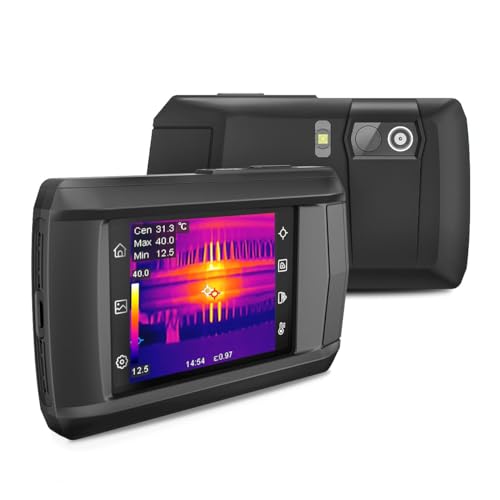
- 3.5-inch touchscreen with intuitive controls
- Dual cameras and five imaging modes
- Temperature alarms plus Live Super Resolution
Best For: Feature-focused vehicle inspections
Long-Range Workhorse

- TISR-enhanced 240×240 thermal clarity
- Up to 24 hours of continuous battery life
- IP65-rated and tested against a 6.56-foot drop
Best For: Long, rugged inspection sessions
Connected Diagnostic Pick
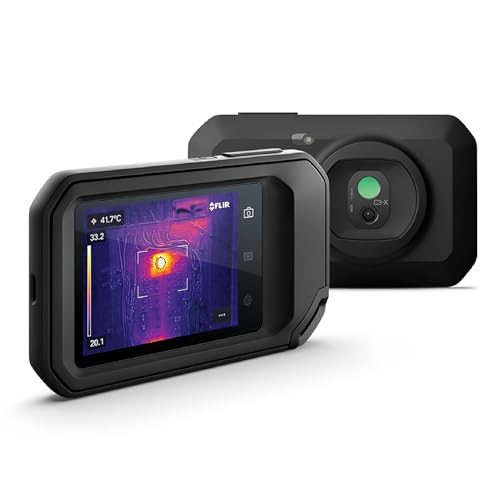
- Lightweight 6.72-ounce handheld design
- MSX overlays visible details on thermal images
- Wi-Fi and Ignite cloud reporting support
Best For: Portable inspections with easy sharing
Best for Road Awareness

- 656-foot thermal hazard detection
- AI alerts for vehicles, people, and animals
- Vehicle mounting with iOS and Android app support
Best For: Night driving and forward road-hazard awareness
Best for Workshop Diagnostics

- 240×240 thermal resolution and 25Hz imaging
- Built-in multimeter for electrical testing
- Temperature range from -4°F to 1022°F
Best For: Automotive repair and electrical troubleshooting
Best Pocket Option
GOYOJO Smartphone Thermal Imager

- Pocket-sized 0.48-ounce USB-C design
- 192×192 resolution with a 50° field of view
- -4°F to 752°F range with ±2% accuracy
Best For: Portable smartphone-based vehicle inspections
Best Pocket-Friendly Pick – TOPDON TC004 Mini
The TOPDON TC004 Mini is a practical choice among compact thermal imaging cameras for cars when you want a standalone, pocket-friendly tool for checking automotive components and other systems. Its TISR-enhanced imaging, 25Hz refresh rate, temperature alerts, and long battery runtime support routine inspections without frequent charging.
Best For: Portable automotive, electrical, and mechanical checks where long runtime and onboard photo storage are useful.
Pros:
- TISR enhances 128×128 thermal imaging to 240×240 resolution.
- Measures from -4°F to 842°F and automatically identifies high, low, and center temperatures.
- Stores up to 8,000 photos and provides up to 15 hours of runtime.
- Compact design includes 2-meter drop resistance and IP54 protection.
Cons:
- Charging cable is included, but no charging head is supplied.
- Its temperature range is narrower than some alternatives in this roundup.
The TC004 Mini balances useful diagnostic features with a durable, portable design. It is especially appealing for DIYers and technicians who prefer a dedicated camera with alerts and internal storage.
Best Phone-Connected Option – RISION Magic Thermal Camera
The RISION Magic stands out among compact thermal imaging cameras for cars for users who want phone-based analysis. Its USB-C connection works with iOS, Android, and Windows devices, while the app combines thermal and visible-light imagery to help pinpoint hot components, wires, screws, or terminals.
Best For: Smartphone-equipped users who need detailed automotive diagnostics, live analysis, and flexible reporting tools.
Pros:
- QuadIR upscales native 160×120 imagery to 320×240 resolution.
- Offers 25Hz imaging, a wide 52°×39° view, and 40mK thermal sensitivity.
- Measures from -4°F to 1112°F with adjustable emissivity control.
- App includes spot, line, area, threshold, graph, photo, and video tools without registration.
Cons:
- Mac devices are not supported.
- It relies on a compatible connected device rather than operating as a standalone handheld camera.
For automotive troubleshooting that benefits from visual-thermal fusion and software analysis, the RISION Magic offers a feature-rich mobile workflow. Confirm device compatibility before buying, particularly if you use macOS.
Best Standalone Inspection Tool – FOXWELL RT280 Thermal Camera
The FOXWELL RT280 is a strong standalone pick among compact thermal imaging cameras for cars, combining a built-in display with automotive inspection features. TISR enhancement, automatic temperature-point detection, a laser pointer, LED light, and high-capacity storage make it well suited to engine and mechanical checks.
Best For: Technicians and serious DIY users who want a dedicated screen, onboard storage, and PC-based reporting.
Pros:
- 2.8-inch 320×240 display and TISR enhancement to 240×180 effective resolution.
- Measures from -4°F to 1022°F with high/low alarms and automatic hot-spot detection.
- 8GB eMMC stores more than 20,000 images and videos.
- Includes laser targeting, LED illumination, 9 palettes, 6.6-foot drop resistance, and IP54 protection.
Cons:
- Included PC analysis software is compatible with Windows but not Mac.
- Advanced analysis requires transferring files to a Windows PC.
The RT280 is designed for organized, repeatable inspections rather than quick phone snapshots. Its built-in display and substantial storage are valuable when documenting multiple automotive or mechanical issues in the field.
Best High-Resolution Dual-Lens Pick – TT27D Dual-Lens WiFi Thermal Camera
The TT27D brings advanced imaging to compact thermal imaging cameras for cars with UIRA-IR enhancement, a 2MP visual camera, and multiple fusion modes. Wi-Fi app connectivity, a touchscreen, dual capture, and temperature alarms make it a versatile option for users who want both thermal detail and conventional visual context.
Best For: Professionals who want dual-lens imaging, wireless monitoring, and multiple ways to review automotive or equipment faults.
Pros:
- AI-enhanced thermal output reaches 640×480 and works with five visual/thermal modes.
- 25Hz imaging, under-40mK NETD, and temperature measurement from -4°F to 932°F.
- Wi-Fi streaming and remote control work through the AccuHeat app.
- Includes a 3.5-inch touchscreen, LED light, high/low alarms, and three-point measurement.
Cons:
- Its 4GB storage is specified for over 5,500 files, less than the RT280’s stated capacity.
- Wireless app features add setup and connectivity requirements.
The TT27D is the most feature-dense choice here for comparing thermal findings with a visible image. Its dual-lens modes and wireless workflow can reduce guesswork, while the compact body remains suitable for mobile inspections.
Smart Scene Scout – HP96 Touchscreen Thermal Camera
For shoppers comparing compact thermal imaging cameras for cars, the HP96 stands out with a 3.5-inch touchscreen, dual cameras, and automated scene recognition. Its 96×96 infrared sensor, 50° field of view, temperature alarms, and five imaging modes make it suitable for scanning vehicle components and spotting unusual heat patterns.
Best For: Car owners and technicians who want a feature-rich handheld camera with guided inspection tools and a large touchscreen.
Pros:
- IntellFault scene recognition can help identify water leaks and insulation gaps.
- Dual infrared and visible-light cameras support Thermal, Visual, Fusion, PIP, and Blending modes.
- Live Super Resolution enhances the viewed and captured image from 96×96 to 240×240.
- Tracks maximum, minimum, and center temperatures with configurable visual or audible alerts.
Cons:
- The supplied notes specify that it does not provide moisture readings.
- Its infrared sensor resolution is lower than some newer 128×128 models.
The HP96 is a versatile choice when usability and inspection flexibility matter. Its compact design, flashlight, recording support, and adjustable emissivity make it practical for locating heat anomalies around a vehicle, though buyers specifically seeking moisture measurement will need another tool.
Long-Range Workhorse – AMPBANK H128 Thermal Camera
The AMPBANK H128 is a practical option among compact thermal imaging cameras for cars, especially for extended inspection sessions. It combines 128×128 infrared imaging enhanced to 240×240 through TISR, 40 mK sensitivity, temperature alarms, and a claimed 24-hour continuous battery life.
Best For: Mechanics, inspectors, and users who prioritize long runtime and a rugged enclosure for repeated vehicle checks.
Pros:
- TISR enhances thermal clarity from 128×128 to 240×240, with a smooth 25 Hz frame rate.
- Built-in rechargeable battery offers up to 24 hours of continuous working time.
- IP65 protection and resistance to a 6.56-foot drop support demanding work environments.
- Temperature alarm and automatic max/min/center tracking help flag abnormal heat quickly.
Cons:
- At 1.03 pounds, it is heavier than the supplied FLIR C3-X option.
- The supplied notes do not mention a visible-light camera, Wi-Fi, or cloud reporting.
The H128 is built around endurance and durability rather than connected reporting. Its long battery life, tripod mount, and anomaly alerts make it well suited to comprehensive automotive troubleshooting where charging interruptions and rough handling are concerns.
Connected Diagnostic Pick – FLIR C3-X Thermal Camera
The FLIR C3-X is a lightweight choice for shoppers seeking compact thermal imaging cameras for cars with straightforward documentation and sharing. It provides 128×96 true thermal imaging, FLIR’s MSX detail overlay, Wi-Fi connectivity, and a -20 to 300°C measurement range in a 6.72-ounce handheld body.
Best For: Automotive users who want a very portable camera with visual-enhanced images and convenient cloud-based reporting.
Pros:
- MSX overlays visual details on thermal images for easier interpretation.
- Wi-Fi and FLIR Ignite support direct image uploads and professional reports.
- Measures temperatures from -20 to 300°C (-4 to 572°F).
- Includes infrared, visual, MSX, and picture-in-picture shooting modes.
Cons:
- Its 128×96 thermal resolution is lower than the supplied H128’s enhanced 240×240 output.
- The fixed-focus design offers less focusing flexibility.
The C3-X makes sense when portability and report sharing are more important than maximum thermal resolution or extended battery claims. Its MSX processing can make automotive heat sources easier to understand, while Ignite connectivity simplifies documentation for customers or service records.
Best for Road Awareness – InsightDrive Thermal Dashcam
For drivers comparing compact thermal imaging cameras for cars, the Robofinity InsightDrive is designed specifically for forward-facing road awareness. It combines thermal imaging, a 720p display, AI target recognition, and app-based customization in a vehicle-mounted system.
Best For: Night driving, off-road travel, and drivers who want thermal alerts for vehicles, pedestrians, and animals.
Pros:
- Detects road hazards up to 656 feet away.
- Designed to work in darkness, rain, snow, fog, and glare.
- AI recognition identifies vehicles, pedestrians, and animals with real-time alerts.
- Plug-and-play installation takes about 5 minutes and supports iOS and Android customization.
Cons:
- At 1.65 kg, it is less pocketable than smartphone-connected thermal cameras.
- Its 40-degree field of view is focused on forward vehicle coverage rather than general inspection.
- Requires mounting at the hood or front grille center.
The InsightDrive is the most vehicle-focused option here, making it a practical choice when the priority is spotting potential road hazards rather than diagnosing mechanical or electrical faults.
Best for Workshop Diagnostics – Goldeep Thermal Multimeter
Among compact thermal imaging cameras for cars, the Goldeep Ti-1 stands out as a diagnostic instrument rather than a driving camera. Its thermal imager is combined with a full digital multimeter, making it useful for checking heat patterns and electrical readings during automotive work.
Best For: Automotive technicians, electrical troubleshooting, HVAC work, and users who want thermal imaging plus multimeter functions in one device.
Pros:
- Provides 240×240 thermal resolution with a 50° field of view and 25Hz refresh rate.
- Measures temperatures from -4°F to 1022°F.
- Includes voltage, current, resistance, continuity, and diode testing with auto-ranging.
- Offers eight color palettes, temperature alerts, and storage for up to 8,000 images.
Cons:
- Its multimeter-oriented design may be more capability than casual users need.
- The supplied notes do not specify dimensions, weight, or battery details.
- It is better suited to stationary inspection than monitoring the road while driving.
The Ti-1 is a strong fit when automotive thermal inspection and electrical testing frequently overlap. It can help locate heat anomalies while also supporting conventional circuit measurements.
Best Pocket Option – GOYOJO Smartphone Thermal Imager
If portability matters when shopping for compact thermal imaging cameras for cars, the GOYOJO GW192A is a particularly small USB-C imager that works with compatible smartphones. It is suited to checking engines, electrical components, and other tight spaces without carrying a dedicated handheld camera.
Best For: Smartphone-based automotive inspections, DIY troubleshooting, and users who need a lightweight thermal camera for confined areas.
Pros:
- Compact 1.77 × 0.43 × 1.34-inch design weighs 0.48 ounces.
- Offers 192×192 infrared resolution and a wide 50° field of view.
- Measures temperatures from -4°F to 752°F with stated ±2% accuracy.
- USB-C plug-and-play operation requires no battery or pairing.
Cons:
- Compatibility is specified for Android and iPhone 15, 16, and 17 series devices, so phone support should be checked first.
- It depends on a compatible smartphone for operation and viewing.
- Its maximum temperature range is lower than the Goldeep Ti-1’s.
The GOYOJO is the easiest option to keep in a tool bag or pocket. Its small size and 50-degree view make it convenient for scanning vehicle engines, fuse boxes, and other hard-to-reach areas.
How We Picked the Best Compact Thermal Imaging Cameras for Cars
We focused on cameras that are practical to carry around a vehicle and capable of showing meaningful temperature differences. Our comparison considered infrared resolution, image-enhancement technology, temperature measurement features, display usability, battery performance, wireless connectivity, durability, and overall value.
For automotive use, resolution is only part of the picture. A camera also needs a suitable field of view, fast startup, reliable hot- and cold-spot tracking, and controls that are easy to use near an engine bay or under a dashboard. Models with features such as Wi-Fi, image storage, scene modes, or an integrated multimeter received additional consideration when those features support real diagnostic work.
Quick Comparison
- Best all-around resolution: Look for 320 × 240 or higher infrared output, especially when inspecting small connectors, fuses, and circuit-board components.
- Best portability: Mini standalone cameras and phone-connected units are convenient for glove-box storage and quick checks.
- Best documentation: Wi-Fi, app support, and built-in storage make it easier to save images for repair records or customer reports.
- Best multifunction value: A thermal camera paired with a multimeter can reduce the number of tools needed for electrical troubleshooting.
Key Buying Factors for Compact Thermal Imaging Cameras for Cars
Resolution and Thermal Sensitivity
Higher resolution helps you distinguish nearby heat sources, while thermal sensitivity affects how clearly small temperature differences appear. For general vehicle inspections, 192 × 192 can be workable; 240 × 240 and 320 × 240 provide more detail for connectors, relays, hoses, and electronics.
Temperature Range and Measurement Tools
Check the stated temperature range before buying. You will want accurate spot measurements, hot- and cold-spot indicators, emissivity adjustment, and, ideally, adjustable measurement areas. These features matter when comparing brake temperatures, identifying a restricted radiator passage, or locating an abnormal electrical connection.
Screen, Focus, and Image Modes
A built-in screen is useful when you do not want to handle a phone in a cramped engine bay. MSX-style overlays, visible-light cameras, and multiple color palettes can make edges and components easier to identify. Fixed-focus designs are simpler, while adjustable focus can help with close-up electrical work.
Battery Life and Connectivity
Choose a model with enough runtime for a full diagnostic session and charging that fits your workflow. Wi-Fi or USB connectivity is valuable for transferring evidence, but a standalone camera may be more dependable when phone compatibility or app setup is a concern.
Who Should Buy Which Compact Thermal Imaging Cameras for Cars?
Choose a mini or phone-connected camera if you want the lightest option for occasional checks, roadside use, or keeping in a vehicle. Choose a standalone 240 × 240 or 320 × 240 camera if you regularly inspect engines, HVAC systems, brakes, and electrical components and want a dedicated display.
Choose a higher-resolution or dual-lens model when you need clearer images for small targets, documentation, or broader scene context. Choose a multifunction thermal camera with electrical testing if you diagnose charging systems, wiring, and circuits and want to consolidate tools. For continuous night driving or recording, a thermal dashcam-style product is a specialized choice rather than a replacement for a general diagnostic camera.
