
Compact pen display monitors make it easier to sketch, annotate, and create anywhere without giving up screen quality or portability. The best models balance usable display size, color accuracy, touch support, and simple connectivity.
Below, we focus on compact options that suit artists, note-takers, and mobile workstation users who want a practical second screen or pen-enabled display for 2026.
Best 10 Compact Pen Display Monitors Picks for 2026
Touch-Friendly Travel Pick
cocopar 15.6" Touch Portable Monitor
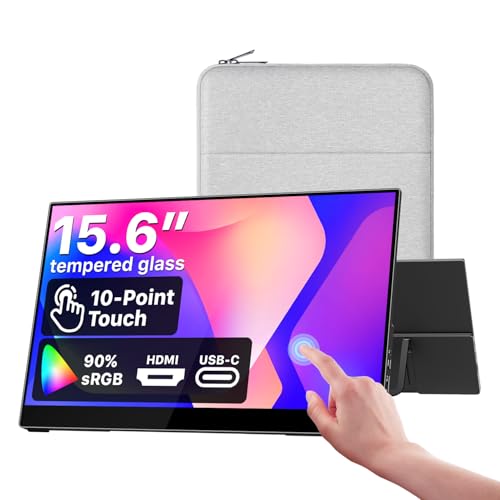
- 15.6-inch FHD IPS display with 90% sRGB
- Native touch gestures on macOS and Windows
- USB-C, HDMI, metal frame, and kickstand included
Best For: Travel users who want a touchscreen portable monitor for productivity
Mini Pi Dashboard Pick

- 7-inch non-touch HDMI display for compact setups
- Driver-free plug-and-play setup with USB power
- Adjustable bracket and tempered glass build
Best For: Raspberry Pi and DIY users needing a tiny secondary display
Ultra-Slim Mobile Work Pick

- 15.6-inch FHD IPS display with anti-glare finish
- 11.8mm thin and 0.78kg for easy travel
- USB-C, kickstand, tripod socket, and auto-rotate support
Best For: Travelers and remote workers who want a slim portable second screen
Budget Travel Display Pick

- 16-inch FHD IPS screen for work and entertainment
- Lightweight 1.5-pound design with smart cover
- Dual USB-C and Mini HDMI for wide compatibility
Best For: People wanting a simple, portable second screen for everyday use
Compact Raspberry Pi Display

- 7-inch IPS screen with 800x480 resolution
- Plug-and-play HDMI and USB setup
- Frameless design with mount-friendly bracket
Best For: Raspberry Pi projects and DIY secondary-display builds
Touch-Friendly Compact Monitor

- 10.1-inch IPS panel with 1280x800 resolution
- 10-point touch on Windows, single-point on several Linux systems
- HDMI video plus USB power with mounting holes
Best For: DIY projects and Raspberry Pi setups that need touchscreen control
Ultra-Portable Workhorse
ViewSonic VA1653 16 Inch Portable Monitor

- 16-inch 1080p IPS display
- 0.7-inch thin and 1.5 lbs
- USB-C, Mini-HDMI, stand, sleeve
Best For: mobile productivity and easy travel setups
Mini DIY Display
VIEWMEI 5 Inch HDMI Mini Monitor

- 5-inch 1280x720 IPS screen
- HDMI input with USB power
- Includes cables and metal holder
Best For: Raspberry Pi, DIY builds, and tiny secondary displays
Multi-Input Mini Screen
JniTyOpt 7 Inch Portable Monitor

- 7-inch IPS panel with 178° viewing
- HDMI, VGA, AV, and BNC inputs
- Runs from DC or Micro USB power
Best For: multi-device projects and camera or Raspberry Pi monitoring
Touch-Friendly Travel Pick – cocopar 15.6" Touch Portable Monitor
If you want compact pen display monitors for a portable workstation, this cocopar 15.6-inch screen stands out for its touch support, USB-C simplicity, and solid 1080p image quality. It works best as a travel-friendly second screen when you need quick interaction, clean setup, and a display that can handle both office tasks and casual use.
Best For: Users who want a compact touchscreen external monitor with easy single-cable connectivity for laptops, MacBook, Windows PCs, and mixed work setups.
Pros:
- Native touchscreen gestures work on both macOS and Windows, including slide, pinch-to-zoom, and drag-and-drop.
- Tempered glass surface offers a smoother feel and better scratch resistance than plastic-film screens.
- Single USB-C connection can handle power, video, and touch on supported devices.
- Includes a metal frame, adjustable kickstand, sleeve, and cables for a ready-to-use package.
Cons:
- Single-cable use requires Thunderbolt 3/4/5 or USB-C DP Alt Mode support.
- At 60Hz, it is not aimed at high-refresh gaming use.
- Touch functionality is not listed for gaming console use.
This is a practical pick if your priority is an external touchscreen that stays easy to carry and simple to set up. The 15.6-inch FHD IPS panel, 90% sRGB coverage, and included accessories make it a versatile option for everyday productivity on the go.
Mini Pi Dashboard Pick – HAMTYSAN 7" HDMI Monitor
For compact pen display monitors in tiny builds and maker projects, this HAMTYSAN 7-inch HDMI screen is more of a small utility display than a full-size productivity monitor. Its driver-free setup, adjustable bracket, and broad Raspberry Pi support make it a practical choice when space is tight and you need a simple always-on panel.
Best For: Raspberry Pi users, makers, and small-device setups that need a tiny plug-and-play HDMI display.
Pros:
- 7-inch size is easy to fit into cramped workspaces, DIY builds, and portable setups.
- Driver-free HDMI and USB power connection keeps installation straightforward.
- Tempered glass and full lamination are designed to improve clarity and help reduce dust buildup.
- Adjustable bracket adds stable positioning for desktop or bench use.
Cons:
- 800×480 resolution is far lower than full-HD portable monitors.
- It is non-touch, so it is not suited for interactive pen-style use.
- Not compatible with PS5 according to the notes.
This monitor makes sense when size and simplicity matter more than image quality. It is best treated as a compact auxiliary display for Pi projects, dashboards, or light HDMI use rather than a main screen.
Ultra-Slim Mobile Work Pick – ASUS ZenScreen MB169CK
If you are comparing compact pen display monitors for travel work, the ASUS ZenScreen MB169CK is built around portability and clean USB-C connectivity. It delivers a 15.6-inch FHD IPS image, anti-glare finish, and a lightweight body that slips easily into a bag for mobile productivity.
Best For: Remote workers and travelers who want a slim, dependable portable monitor for office tasks, reading, and multi-device use.
Pros:
- 15.6-inch FHD IPS panel with anti-glare coating helps reduce reflections in bright spaces.
- Single USB-C connection keeps setup simple and cable clutter low.
- Very slim 11.8mm profile and 0.78kg weight support easy carry.
- 360 kickstand and tripod socket give flexible viewing-angle options.
Cons:
- No touchscreen is listed in the supplied notes.
- At 60Hz, it is aimed at productivity rather than fast gaming.
- Best fit is for laptops and mobile work, not specialty pen-input workflows.
This model is a strong choice if you want a polished portable display rather than a gimmick. The combination of slim build, automatic rotation support, and eye-care features makes it especially appealing for long work sessions away from home.
Budget Travel Display Pick – AOC 16T20 Portable Monitor
Among compact pen display monitors, the AOC 16T20 is a straightforward portable screen for people who want a bigger second display without a complicated setup. It offers a 16-inch FHD IPS panel, dual USB-C plus Mini HDMI connectivity, and a lightweight design that is easy to carry for work, study, or entertainment.
Best For: Users who want a simple, lightweight portable monitor for multitasking, media, and general travel use.
Pros:
- 16-inch Full HD IPS display delivers sharp detail for spreadsheets, calls, streaming, and gaming.
- Dual USB-C ports and Mini HDMI improve compatibility with laptops, consoles, and mobile devices.
- Lightweight 1.5-pound build and included smart cover make it travel-friendly.
- 170-degree viewing angles help keep colors and brightness stable from the side.
Cons:
- No touchscreen capability is listed in the supplied notes.
- 60Hz refresh rate and 20ms response time keep it in productivity-friendly territory.
- The glossy screen may be less ideal in very bright environments than matte alternatives.
This AOC model is a sensible all-purpose portable display when you want good compatibility and easy transport. It is not built for advanced pen-input workflows, but it does cover the basics well for a compact second-screen setup.
Compact Raspberry Pi Display – 7" IPS HDMI Mini Monitor
If you want one of the more compact pen display monitors for a Raspberry Pi build, this 7-inch HDMI screen is a simple, lightweight option. It focuses on practical basics: plug-and-play setup, a 178° IPS viewing angle, and a frameless design that makes it easy to integrate into DIY projects, a desktop setup, or even a case-mounted install.
Best For: Raspberry Pi users, tinkerers, and DIY builders who need a small external display for general use or project integration.
Pros:
- 7-inch IPS panel with 800×480 resolution and 178° viewing angle
- Plug-and-play HDMI and USB connection with no driver installation
- Frameless, lightweight design with adjustable bracket and rear mounting holes
- Compatible with many Raspberry Pi versions plus select consoles and PCs
Cons:
- 800×480 resolution is modest for detailed desktop work
- Non-touch display, so it is not ideal for interactive controls
- No rear cover, which may matter for finished-looking builds
This is a straightforward compact monitor for projects where size, compatibility, and easy setup matter more than high resolution. It fits best as a secondary screen for maker builds rather than a primary productivity display.
Premium Dual-Screen Portable – ZenScreen Duo OLED Dual 14-inch
Among compact pen display monitors, this ASUS portable monitor stands out for users who need serious screen quality in a highly flexible form factor. Its dual 14-inch OLED panels create a large 21-inch workspace while still folding down into a travel-friendly package, making it a strong fit for mobile productivity and creative work.
Best For: Travelers, creatives, and professionals who want a premium dual-screen portable setup with excellent color and contrast.
Pros:
- Dual 14-inch OLED panels with 1920×1200 resolution and 16:10 aspect ratio
- 100% DCI-P3 color gamut, Delta-E <2 accuracy, and DisplayHDR 400 True Black
- 360° hinge, fold-out kickstand, and tripod mount for flexible positioning
- Lightweight 1.07 kg design with USB-C and mini-HDMI connectivity
Cons:
- Premium feature set will likely put it above basic portable monitors in price
- Dual-panel design may be more than you need for simple second-screen tasks
- Requires more space than a single small monitor when fully opened
This is the strongest pick here if display quality and versatility matter most. It is built for users who want a portable dual-screen setup that still feels polished enough for work, editing, and entertainment.
Touch-Friendly Compact Monitor – 10.1" USB-C IPS Touchscreen
If you are comparing compact pen display monitors for hands-on control, this 10.1-inch touchscreen is the most interaction-focused option in the group. It combines a 1280×800 IPS panel with touch support, HDMI video input, and USB power, which makes it well suited to maker projects, SBC builds, and portable utility setups.
Best For: Makers, Raspberry Pi users, and anyone who wants a small touchscreen monitor for DIY or console use.
Pros:
- 10.1-inch IPS display with 1280×800 resolution
- Supports 10-point touch on Windows and single-point touch on several Linux-based systems
- Plug-and-play HDMI video with USB power connection
- Rear mounting holes make it easy to integrate into projects
Cons:
- Touch support varies by operating system and is more limited on Raspberry Pi OS
- ABS plastic shell is functional but not as premium as metal builds
- Still small enough that it is better for utility than full desktop replacement
This model is a practical choice when touch input is part of the job. It offers a balanced mix of portability, resolution, and project-friendly mounting for small systems and DIY setups.
Ultra-Portable Workhorse – ViewSonic VA1653 16 Inch Portable Monitor
If you’re shopping for compact pen display monitors for travel or a flexible second screen, the ViewSonic VA1653 is built around portability first. Its 16-inch Full HD IPS panel gives you useful screen space in a slim 0.7-inch, 1.5 lb design, and the USB-C setup keeps desk clutter to a minimum for mobile work.
Best For: Remote workers, students, and travelers who want a lightweight portable monitor with simple USB-C setup.
Pros:
- 16-inch 1080p IPS panel provides a clear Full HD workspace.
- Very slim and light at 0.7 inches thick and 1.5 lbs.
- USB-C single-cable connection supports data and video.
- Includes a protective sleeve and foldable stand for portrait or landscape use.
Cons:
- Not a pen display or drawing tablet.
- Mini-HDMI connection may be less convenient than USB-C for some setups.
This is a practical pick if you want a highly portable external screen rather than a specialized creative display. The 3-year warranty and versatile connectivity make it a strong everyday travel monitor.
Mini DIY Display – VIEWMEI 5 Inch HDMI Mini Monitor
VIEWMEI 5 inch IPS Small Hdmi Monitor 1280 * 720 Mini LCD Screen Portable Display Monitor
Check Price On AmazonFor buyers comparing compact pen display monitors with tiny utility screens, this 5-inch VIEWMEI monitor is a very small HDMI display focused on versatility. It offers 1280×720 resolution, IPS viewing, and a compact size that works well when space is limited or when you need a simple auxiliary screen.
Best For: Raspberry Pi projects, inside-PC builds, and other space-constrained monitor setups.
Pros:
- Very compact 5-inch form factor for tight spaces.
- 720p IPS panel with a 178° wide viewing angle.
- HDMI and USB power make it broadly compatible.
- Includes cables and a metal holder in the box.
Cons:
- Small 5-inch screen is not ideal for general desktop use.
- Lower 1280×720 resolution than larger portable monitors.
- Best suited to niche projects rather than everyday productivity.
Overall, this is a specialized mini display rather than a mainstream portable monitor. If you need a tiny screen for DIY, Raspberry Pi, CCTV, or an internal PC case build, its size and included accessories are the main advantages.
Multi-Input Mini Screen – JniTyOpt 7 Inch Portable Monitor
If you need compact pen display monitors alternatives for small system dashboards or project screens, this 7-inch JniTyOpt monitor focuses on flexibility more than size. It combines HDMI, VGA, AV, and BNC inputs with an IPS panel, making it a practical little display for mixed-device environments.
Best For: Raspberry Pi users, camera systems, and multi-input small display setups.
Pros:
- Supports HDMI, VGA, AV, and BNC inputs for broad compatibility.
- 7-inch IPS screen with 178° viewing angle.
- Lightweight aluminum shell adds durability.
- Can be powered by DC or Micro USB, including power banks.
Cons:
- Native resolution is 1024×600, which is modest for the size.
- Built-in speakers only, with no extra audio output.
- BNC input is limited to CVBS cameras.
This monitor makes sense when input variety matters more than desktop-class image quality. It is especially useful for monitoring, camera feeds, and small project installations where portability and connector flexibility are the priority.
How We Picked These Compact Pen Display Monitors
We looked for portable displays that offer a strong mix of size, resolution, panel quality, connectivity, and real-world usability. For Compact Pen Display Monitors, that means more than just a small footprint: the screen has to be comfortable to use for drawing, responsive for touch or stylus workflows when supported, and easy to power from common devices.
We also favored models with reliable USB-C or HDMI connections, good brightness for indoor use, and slim designs that are easy to pack. Where possible, we prioritized better color coverage and sharper FHD-class resolution for clearer lines and interface text.
Quick Comparison
For most buyers, 15.6-inch portable displays hit the sweet spot between portability and usable workspace. Smaller 7- to 10-inch options are better for embedded projects, compact desk setups, and travel-friendly monitoring, while dual-screen or premium foldable designs serve users who need maximum multitasking.
If you want the simplest all-around choice, look for a USB-C portable monitor with full HD resolution and IPS viewing angles. If you need touch input, verify that your device supports it properly, since not every laptop, tablet, or console handles touch the same way.
Key Buying Factors for Compact Pen Display Monitors
Screen Size and Resolution
Size determines comfort, but resolution determines clarity. A 15.6-inch 1080p panel is usually the most practical balance for sketching and general use. Smaller screens can still work well, but lower resolutions may feel cramped or less precise.
Panel Type and Color Quality
IPS panels are a strong default because they offer wide viewing angles and consistent colors. Creators should pay attention to color gamut claims such as sRGB or DCI-P3 if accurate color matters for editing or illustration.
Connectivity and Power
USB-C with video and power support is the most convenient setup. HDMI plus USB power is still common, especially on smaller or budget displays. Check whether the monitor needs an external power adapter, and confirm compatibility with laptops, Macs, gaming consoles, and single-board computers before buying.
Touch and Stylus Support
If you want pen-like interaction, confirm that the model actually supports touch or pen input and that your operating system recognizes it correctly. Some compact displays are touch-enabled, while others are strictly for viewing.
Who Should Buy Which Compact Pen Display Monitors?
Traveling professionals and students should lean toward slim 15.6-inch USB-C models for the best everyday balance. Makers and Raspberry Pi users may prefer smaller HDMI displays that fit embedded projects or desktop test rigs. Buyers who want premium creative performance should look at higher-end color-focused options, while budget shoppers can still find solid compact displays if they prioritize resolution and connectivity over extras.
In short, the right choice depends on how you plan to use the display: drawing, portable productivity, console use, or embedded computing. Matching size, ports, and panel quality to that job will matter more than chasing the longest feature list.
