
Choosing the right microscope camera can make PCB inspection, soldering, and component rework faster and less frustrating. The best compact models combine a sharp live view with a stable stand, practical working distance, and controls you can reach while working.
This roundup compares 10 options ranging from small C-clamp microscopes to 4K HDMI systems with adjustable arms, larger displays, autofocus, and interchangeable lenses.
Best 10 Compact Microscope Soldering Cameras Picks for 2026
Best Compact Pick

- Hands-free C-clamp and flexible arm
- Built-in IPS display plus PC camera mode
- Manual focus; Micro SD card required for storage
Best For: PCB repair in compact workspaces
Best Versatile Kit
Andonstar AD246S-M 3-Lens Microscope

- Three interchangeable lenses
- 2160P video with HDMI output
- Includes 32GB card and adjustable boom arm
Best For: Soldering, coins, and biological slides
Best Autofocus Option

- AI autofocus with TOF distance sensing
- 4K video and 52MP imaging
- Includes 16GB card and rechargeable battery
Best For: Fast refocusing during soldering and inspection
Best Complete Station
Andonstar AD249S-M Plus Soldering Station

- Three lenses with 2160P HDMI output
- Includes helping hands and tool holder
- Extension base, mat, storage, and 32GB card included
Best For: A dedicated, fully equipped soldering bench
Best for Coin Collectors
TOMLOV DM9 7-inch Digital Microscope

- Large 7-inch screen for comfortable viewing
- Stable metal stand for inspection and light soldering
- 12MP capture, 1080P video, and 16GB storage
Best For: Coin collectors and hobby electronics users needing a large display
Most Complete Soldering Setup

- Three lenses for soldering and varied inspection
- 2160P HDMI output with 7-inch monitor
- Includes helping hands, tools, mat, and 32GB card
Best For: Electronics repairers wanting a versatile soldering workstation
Best Compact Clamp Option
4.3-inch Digital Soldering Microscope

- C-clamp setup keeps both hands free
- 4.3-inch screen works without a computer
- Manual focus, adjustable LEDs, and up to 1000X magnification
Best For: PCB repairers needing a space-saving inspection camera
Versatile All-Purpose Pick

- 10.1-inch IPS monitor with 1080p video and 12MP photos
- Adjustable 1cm-to-26cm working distance
- Top, side, and bottom LED lighting with slide kit
Best For: Electronics repair, coin collecting, and occasional slide viewing
4K Flexible-Arm Upgrade
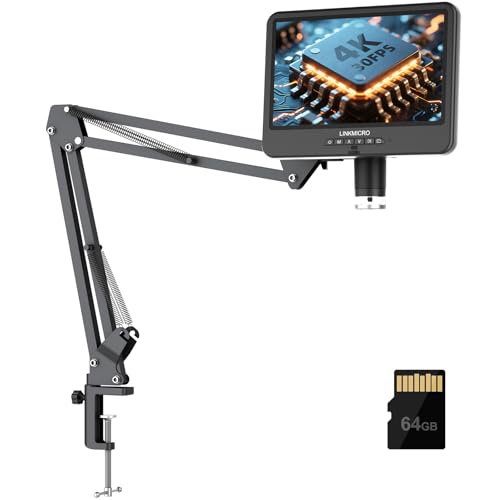
- Real-time 4K 30FPS output via screen and HDMI
- 70cm reach with up to 60cm working height
- HDMI and USB connectivity plus microphone recording
Best For: High-resolution PCB repair, demonstrations, and large workpieces
Best Compact Pick – 5" LCD Soldering Microscope
For shoppers comparing compact microscope soldering cameras, this 5-inch Aikokkl model prioritizes a small, hands-free setup. Its C-clamp, flexible arm, built-in display, and computer camera mode make it practical for PCB checks without requiring a separate monitor.
Best For: Electronics repair and soldering work in compact workspaces.
Pros:
- 5-inch IPS screen can be used without a computer.
- C-clamp and flexible gooseneck arm help keep both hands available.
- Plug-and-play PC viewing works through Windows Camera or Mac Photo Booth.
- Up to 1000x digital magnification and LED lighting support detailed inspection.
Cons:
- It is not autofocus; focus requires adjusting working distance and the focus wheel.
- A Micro SD card, supporting up to 32GB, is required for saving videos and larger batches of photos and is not included.
- The design is intended for micro-details rather than full-screen views of large objects.
This is a straightforward choice when desk space and ease of setup matter more than advanced imaging. Keep its manual focusing and separate storage-card requirement in mind before buying.
Best Versatile Kit – Andonstar AD246S-M 3-Lens Microscope
The Andonstar AD246S-M stands out among compact microscope soldering cameras for buyers who want one system for soldering, general inspection, and slides. Its interchangeable lenses, HDMI output, boom arm, and included accessories give it a broad range of uses.
Best For: Users who want soldering capability alongside coin and biological-sample viewing.
Pros:
- Three lenses cover soldering, general objects, and biological slides.
- 2160P video, HDMI output, and a supplied 32GB Micro SD card support viewing and recording.
- Adjustable metal boom arm provides a larger work envelope for repair tasks.
- Eight LED brightness levels and a wireless remote add control flexibility.
Cons:
- Changing lenses and focusing are manual operations.
- Its multi-purpose stand and accessory kit may be more equipment than a dedicated soldering setup requires.
- Measurement software requires a Windows PC.
Choose this model if versatility is central to your buying decision. It offers a substantial kit and high-resolution output, but its broader configuration is less minimal than a basic soldering-only camera.
Best Autofocus Option – Elikliv EM4K-AF 4K Microscope
For buyers seeking compact microscope soldering cameras with less manual adjustment, the Elikliv EM4K-AF adds autofocus to a large-screen digital setup. Its AI-assisted focusing, TOF sensor, 4K video, and built-in storage target detailed electronics and inspection work.
Best For: Soldering, watchmaking, and inspection tasks where quick refocusing is useful.
Pros:
- Autofocus uses AI algorithms and a TOF sensor to adjust focus quickly.
- 4K video, 52MP imaging, and an 8-inch IPS screen provide a detailed viewing setup.
- HDMI and USB outputs support larger displays.
- Includes a 16GB Micro SD card, controller, rechargeable battery, and broad-base stand.
Cons:
- The 8-inch screen and 10-inch stand make it less minimal than the smallest compact setups.
- Its 2000x magnification and imaging features may exceed the needs of basic PCB inspection.
- Autofocus performance is a feature claim; users who prefer hands-on focusing may want a simpler model.
This is the strongest fit for shoppers who value autofocus and image detail over the smallest footprint. The included storage and battery add convenience, while the larger stand should be considered when bench space is limited.
Best Complete Station – Andonstar AD249S-M Plus Soldering Station
The Andonstar AD249S-M Plus is a full soldering-station solution rather than just a camera. Among compact microscope soldering cameras, it combines 2160P imaging and interchangeable lenses with helping hands, a tool holder, extension base, soldering mat, and component storage.
Best For: Dedicated electronics benches that need integrated soldering accessories and a broad work area.
Pros:
- Lens L is intended for soldering, while Lens A and Lens D support other inspection uses.
- Includes rotatable helping hands, tool holder, extension base, storage boxes, and anti-static mat.
- 2160P recording, HDMI output, remote control, and eight LED intensity levels support detailed work.
- Supplied 32GB Micro SD card enables photo and video storage.
Cons:
- The 10.1-inch monitor and expanded stand require more bench space than a basic compact camera.
- Lens changes, focusing, and object-distance adjustments are manual.
- Professional measurement software is intended for Windows PC use.
This is the most workstation-oriented option in the group. It makes sense for frequent soldering where built-in organization and helping hands justify the larger footprint, but it is not the choice for a highly portable setup.
Best for Coin Collectors – TOMLOV DM9 7-inch Digital Microscope
The TOMLOV DM9 is a practical option among compact microscope soldering cameras for hobbyists who want a generous built-in display alongside basic electronics inspection. Its adjustable metal stand, 7-inch screen, 12MP camera, and 1080P video support make it useful for viewing solder joints, small components, coins, and other detailed subjects.
Best For: Coin collectors, hobby electronics users, and makers who want a stable stand and large screen for close-up inspection.
Pros:
- 7-inch LCD provides a comfortable direct viewing experience.
- Solid metal base and adjustable 8.5-inch stand help reduce shaking.
- 12MP photos, 1080P video, 16GB card, and PC connectivity support documentation and sharing.
- Adjustable LEDs and flexible gooseneck lights help illuminate work from different angles.
Cons:
- Its stated 1200X magnification and coin-focused design may be more than needed for simple PCB checks.
- The supplied notes describe it as supporting light soldering tasks rather than a dedicated soldering station.
The DM9 is a versatile choice when display comfort and collection documentation matter as much as circuit inspection. Buyers seeking an integrated soldering workspace may prefer a model with dedicated accessories.
Most Complete Soldering Setup – Andonstar AD246S-M Plus
The Andonstar AD246S-M Plus is a full-featured choice among compact microscope soldering cameras, combining a 7-inch monitor with three interchangeable lenses and a dedicated soldering station layout. Its 2160P output, helping hands, tool holder, extension base, and anti-static mat are aimed at users who want more than a basic microscope.
Best For: Electronics repairers and makers who want an all-purpose microscope station for soldering, coin viewing, and additional inspection tasks.
Pros:
- Three lenses cover soldering, general inspection, and biological slide viewing.
- 2160P video and HDMI support enable high-resolution viewing on larger displays.
- Includes helping hands, tool holder, extension base, soldering mat, clips, and a 32GB SD card.
- Windows software supports measurement, photos, and video capture.
Cons:
- The many components and interchangeable lenses make it less streamlined than a simple compact camera.
- Its full station setup may require more bench space than a clamp-style microscope.
- Some of the highest magnification figures depend on the selected lens, digital zoom, and viewing output.
The AD246S-M Plus stands out for buyers who want an expandable workstation rather than only a camera and screen. It is especially compelling for varied projects, although its extensive package may be unnecessary for occasional inspection.
Best Compact Clamp Option – 4.3-inch Digital Soldering Microscope
This 4.3-inch model is a compact microscope soldering camera designed to keep a workbench clear during PCB repair. Its C-clamp-style setup holds the microscope above the project, while the built-in screen lets you inspect solder joints and SMD components without connecting a computer.
Best For: PCB repairers and electronics hobbyists who need a small, hands-free inspection setup for close work.
Pros:
- Compact clamp arrangement leaves room for tools, boards, and soldering equipment.
- 4.3-inch screen works without a computer for immediate close-up viewing.
- Manual focus and 50X-1000X magnification support detailed inspection.
- Adjustable eight-LED lighting helps improve visibility and reduce glare.
Cons:
- It uses manual focus, so positioning and focus adjustments require hands-on setup.
- Phone viewing, Wi-Fi, and HDMI are not supported.
- A Micro SD card up to 32GB is required for saving photos or videos and is not included.
This is a sensible pick when bench space and simplicity are priorities. Its smaller screen and limited connectivity make it better suited to direct PCB inspection than large-group viewing or advanced recording workflows.
Flexible-Arm Workbench Pick – Andonstar AD109
The Andonstar AD109 is a practical choice among compact microscope soldering cameras when you need plenty of room around a PCB or want to inspect coins from different angles. Its 10.1-inch IPS display, adjustable boom arm, and separate ring light support detailed bench work without forcing tools into a cramped viewing area.
Best For: Soldering large PCBs, electronics repair, coin inspection, and users who need flexible positioning.
Pros:
- Long 27.56-inch boom arm rotates 360 degrees and tilts through 170 degrees.
- 10.1-inch IPS screen supports 1080p video and 12MP photos.
- Dual lighting includes built-in LEDs and a 56-LED adjustable ring light.
- USB-C connectivity works with Windows and Mac computers, and a 32GB card is included.
Cons:
- The long boom-arm footprint may require more bench space than a traditional compact stand.
- The listed maximum magnification is 260x, lower than some specialized digital microscopes.
- The remote requires batteries, which are not included.
Choose the AD109 if positioning freedom matters more than having the smallest possible base. Its extended arm and flexible height adjustment make it especially useful for hands-on soldering and full-size coin viewing.
Versatile All-Purpose Pick – Andonstar AD210
The Andonstar AD210 stands out among compact microscope soldering cameras for buyers who want one setup for electronics, coins, and prepared slides. Its 10.1-inch IPS monitor, adjustable metal stand, multiple lighting options, and included slide kit make it a flexible bench microscope rather than a soldering-only tool.
Best For: Electronics repair, coin collecting, and users who also want to examine biological slides.
Pros:
- 10.1-inch IPS display offers a 178-degree viewing angle with 1080p video and 12MP photos.
- Adjustable 1cm-to-26cm working distance supports both close repairs and larger objects.
- Top, side, and bottom LED illumination accommodate soldering, coins, and slides.
- Includes a 32GB card, card reader, remote, bottom light stage, and prepared slide kit.
Cons:
- The larger metal base and column may be less convenient for very small workspaces.
- Its broad-purpose design may be more equipment than buyers seeking soldering-only inspection need.
The AD210 is a strong fit when versatility is the priority. Its sturdy stand and wide working-distance range help with electronics and coin work, while the bottom light stage adds useful capability for slide observation.
4K Flexible-Arm Upgrade – LINKMICRO LM208S-A
The LINKMICRO LM208S-A is a strong option for buyers comparing compact microscope soldering cameras who want higher-resolution output and generous working clearance. It combines a 10.1-inch IPS screen with real-time 4K 30FPS HDMI output, a foldable 70cm flexible arm, and USB connectivity for computer viewing.
Best For: Detailed PCB repair, larger soldering projects, demonstrations, recording, and high-resolution coin inspection.
Pros:
- Provides real-time 4K 30FPS output on the built-in display and external HDMI monitors.
- Flexible arm reaches up to 70cm with up to 60cm of working height and folds for storage.
- HDMI and USB outputs support external displays and Windows or Mac computer use.
- Includes a microphone, 64GB card, wireless remote, HDMI cable, and USB cable.
Cons:
- The flexible-arm setup may need substantial workspace despite its foldable design.
- Its advanced 4K and HDMI features may be unnecessary for basic soldering inspection.
- The supplied notes do not specify a warranty duration.
Consider the LM208S-A if image resolution, external display support, and working clearance are central to your buying decision. It is particularly well suited to repair demonstrations and larger boards where a short stand can get in the way.
How We Picked These Compact Microscope Soldering Cameras
We focused on features that matter at a soldering bench: image resolution, low-latency viewing, magnification control, working distance, focus precision, stand stability, lighting, and screen usability. We also considered whether each camera supports HDMI output, recording, or flexible positioning. A high magnification number alone does not guarantee a useful soldering image, so practical control and a clear view received more weight than headline specifications.
Because these products cover different budgets and workspaces, the selection includes compact C-clamp designs, LCD-equipped microscopes, and larger systems intended for detailed electronics repair or inspection.
Quick Comparison
| Best for | Look for | Most useful advantage |
|---|---|---|
| Small desks | 4.3- or 5-inch display, C-clamp | Minimal footprint and simple setup |
| General PCB repair | 1080P or 2160P output, adjustable stand | Clear live viewing with flexible positioning |
| Fine inspection | 4K imaging, autofocus, precise focus | Better detail for small components and joints |
| Shared or teaching workspaces | 7- to 10.1-inch screen, HDMI output | Easier viewing from a comfortable distance |
Key Buying Factors for Compact Microscope Soldering Cameras
Image Quality and Latency
Choose the highest practical resolution your display and workspace support. 1080P can be sufficient for routine soldering, while 2160P or 4K provides more detail for inspection. Low latency is equally important because delayed video makes it harder to guide a soldering iron accurately.
Working Distance and Magnification
Excessive magnification can reduce your visible area and leave too little room for tools. Prioritize a usable working distance and smooth magnification adjustment. A camera that lets you see the entire repair area is often more useful than one with a dramatic maximum zoom.
Stand Stability and Reach
Look for a rigid base, clamp, or flex arm that keeps the camera steady when you touch the board. Check the arm’s reach and height range against your bench. A compact mount saves space, but it may offer less adjustment than a full-size stand.
Display, Output, and Lighting
A larger built-in screen improves comfort during long repairs, while HDMI output can connect the camera to a monitor or recording setup. Adjustable LED lighting helps reveal solder joints, but diffused or controllable illumination is preferable to harsh glare on reflective components.
Who Should Buy Which Compact Microscope Soldering Cameras?
Choose a small 4.3- or 5-inch C-clamp model if you need an affordable camera for occasional repairs or have very limited desk space. A 7-inch system is a practical middle ground for hobbyists who want a more comfortable view without a large footprint.
For frequent PCB repair, consider a 2160P or 4K model with a stable adjustable stand and a generous working distance. Autofocus can be convenient when inspecting objects at varying heights, while manual precision focusing may be preferable for consistent soldering work. Choose a 10.1-inch HDMI model if screen comfort, demonstrations, or connection to a larger monitor matters most.
