
The best compact heart rate monitors make it easier to track intensity without adding much bulk to your workout. This roundup compares chest straps, optical armbands, and a portable single-lead ECG device for different training and health-monitoring needs.
Consider how you exercise, which apps or devices you use, and whether you prioritize maximum responsiveness, all-day comfort, long battery life, or ECG functionality before choosing.
Best 10 Compact Heart Rate Monitors Picks for 2026
Best Dual-Connectivity Pick

- Bluetooth and ANT+ support
- Tracks heart rate, calories, and time
- Up to 35-hour battery life
Best For: Training apps, phones, and GPS devices
Best Long-Battery Chest Strap

- Up to one year of battery life
- Tracks heart rate and HRV
- Machine-washable strap
Best For: Garmin training ecosystems and frequent workouts
Best Auto-Wearing Armband

- Auto wear detection
- Connects to three Bluetooth devices
- Up to 38 hours per charge
Best For: Bluetooth-focused sports and multi-device workouts
Best Personal EKG Option

- 30-second rhythm results
- Works with most smartphones
- No subscription or wireless pairing required
Best For: Personal heart-rhythm checks at home or on the go
Reliable Chest-Strap Pick
- Accurate chest-strap tracking
- Works with HRM-compatible equipment
- Up to 400 hours of battery life
Best For: Everyday training with phones, apps, and fitness equipment
Budget Connectivity Choice
COOSPO H808S Heart Rate Monitor
- Bluetooth and ANT+ connectivity
- Up to 300 hours of battery life
- Compatible with major training apps
Best For: Connected cycling, running, and indoor training
Screen-Free Armband Option

- Lightweight optical armband design
- Dual Bluetooth and ANT+ support
- Includes a swimming goggle clip
Best For: Comfort-focused training and swimming
Best with Extra Features

- 1,000-hour stated battery life
- ANT+ and Bluetooth dual connectivity
- IP67-rated for rain and sweat
Best For: Frequent training with multiple connected devices
LED Zone Armband

- Optical tracking rated to ±1 BPM
- Color LEDs show heart-rate zones
- Bluetooth 5.0 and ANT+ support
Best For: App workouts and visual zone tracking
Value Chest Strap
- Stated ±1 BPM exercise data
- Bluetooth and ANT+ transmission
- 300-hour replaceable-battery life
Best For: Cross-device cycling and indoor training
Best Dual-Connectivity Pick – Wahoo TICKR FIT
For athletes comparing compact heart rate monitors, the Wahoo TICKR FIT is a lightweight armband with both Bluetooth Smart and ANT+ connectivity. It tracks heart rate, calories, and workout duration in real time, with two adjustable bands included for fit flexibility.
Best For: Connecting heart-rate data to smartphones, GPS devices, and compatible training apps.
Pros:
- Supports both Bluetooth Smart and ANT+ connections.
- Tracks heart rate, calorie burn, and workout duration.
- Offers up to 35 hours of battery life.
- Includes small and large adjustable bands.
Cons:
- Requires charging rather than a replaceable battery.
- Designed for arm wear rather than a chest-strap setup.
The TICKR FIT stands out when broad device compatibility matters. Its visible connection LED and comfortable strap make it a practical training companion, while the rechargeable battery is best suited to regular workout use.
Best Long-Battery Chest Strap – Garmin HRM 200
The Garmin HRM 200 is a compact heart rate monitor for users who want real-time heart rate and heart rate variability data across compatible Garmin devices, fitness equipment, and apps. Its user-replaceable battery lasts up to a year, reducing charging interruptions.
Best For: Garmin users seeking long battery life, a washable strap, and dependable workout data.
Pros:
- Transmits heart rate and heart rate variability data.
- Offers up to one year of battery life.
- Uses a user-replaceable CR2032 battery.
- Has a machine-washable strap and 3 ATM water rating.
Cons:
- Compatibility is centered on compatible devices, apps, and equipment.
- The listed option is the XS–S size.
Choose the HRM 200 if low maintenance is a priority. Its replaceable battery and washable strap are especially useful for frequent training, while Garmin integration makes it a natural fit within that ecosystem.
Best Auto-Wearing Armband – COROS Heart Rate Monitor
The COROS Heart Rate Monitor is a compact heart rate monitor designed for sports and activities, with automatic wear detection and a soft, breathable armband. It connects through Bluetooth to up to three devices at once and provides up to 38 hours of operation per charge.
Best For: Athletes who want a comfortable Bluetooth armband that automatically connects when workouts begin.
Pros:
- Automatically powers on and off when worn.
- Can connect to up to three Bluetooth devices simultaneously.
- Provides up to 38 hours of operation or 80 days of standby.
- Soft, breathable band is quick to clean after sensor removal.
Cons:
- Bluetooth only; it does not support ANT+.
- Intended for sports and activities, not daily heart-rate tracking.
- USB charging cable is included without a Type-C adapter.
The COROS model is a strong option for multi-device Bluetooth users who prefer an armband over a chest strap. Its auto-wear feature simplifies workout starts, but ANT+ users should choose a different monitor.
Best Personal EKG Option – KardiaMobile 1-Lead EKG
While most compact heart rate monitors are built for exercise, KardiaMobile is a pocket-sized personal EKG device for checking heart rhythm. Place your fingers or thumbs on its sensors near a smartphone to receive results in about 30 seconds, without a subscription, Bluetooth, Wi-Fi, cords, or a PC.
Best For: Smartphone users who want a compact, FDA-cleared personal heart-rhythm monitor for quick checks.
Pros:
- Provides results in approximately 30 seconds.
- Works with most smartphones.
- Requires no subscription, Bluetooth, Wi-Fi, cords, or PC.
- Designed to detect normal rhythm, AFib, and arrhythmias.
Cons:
- It is a one-lead EKG device rather than a continuous workout monitor.
- Requires a compatible smartphone for use.
- Battery life is listed at 12 months.
KardiaMobile is better suited to occasional rhythm checks than exercise tracking. Its tiny form factor and simple finger-contact operation make it convenient for personal monitoring, while its medical-focused design separates it from fitness armbands and chest straps.
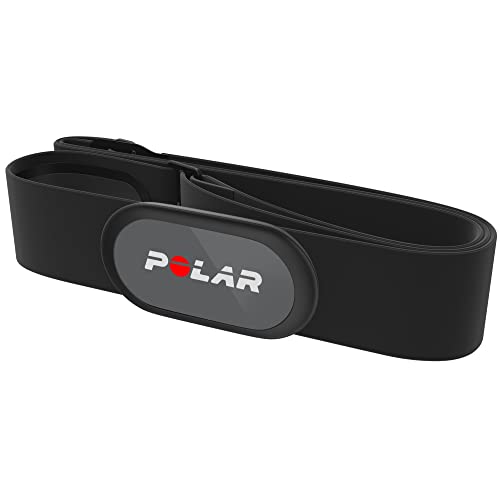
Reliable Chest-Strap Pick – Polar H9 Heart Rate Sensor
Polar H9 Heart Rate Sensor – ANT + / Bluetooth - Waterproof HR Monitor with Soft Chest Strap, M-XXL
Check Price On AmazonFor shoppers comparing compact heart rate monitors, the Polar H9 is a straightforward chest-strap sensor built around accurate heart-rate tracking and broad equipment compatibility. It connects with smartphones and popular apps, making it practical for everyday workouts and training.
Best For: Everyday exercisers who want a trusted chest-strap monitor with wide device compatibility.
Pros:
- High-accuracy heart-rate sensors based on Polar’s established tracking technology.
- Works with HRM-compatible equipment, smartphones, tablets, laptops, and desktops.
- Offers up to 400 hours of battery life with the included CR2025 battery.
- Includes a soft strap and a two-year manufacturer warranty.
Cons:
- Chest-strap design may be less convenient than an armband for some users.
- The listed medium-to-XXL strap range is 26 to 36 inches, so sizing should be checked before purchase.
The H9 emphasizes dependable tracking and compatibility rather than extra display features. It is a sensible choice when you want a compact sensor for connecting to existing fitness equipment or phone apps.
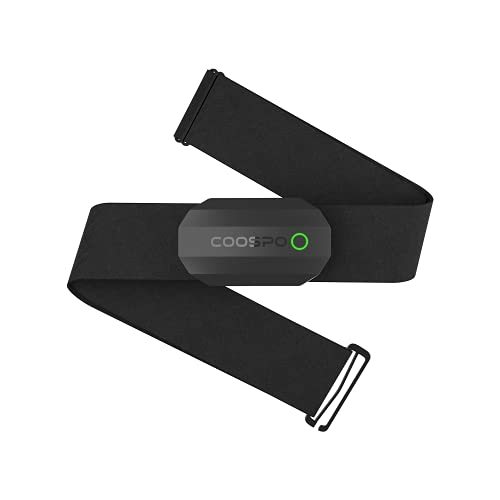
Budget Connectivity Choice – COOSPO H808S Heart Rate Monitor
The COOSPO H808S is one of the more versatile compact heart rate monitors for users who need wireless connectivity across training devices. Its chest strap supports both Bluetooth 4.0 and ANT+, while the IP67 waterproof rating suits exercise-focused use.
Best For: Multisport users connecting a chest strap to phones, watches, bike computers, or training apps.
Pros:
- Supports dual-mode Bluetooth 4.0 and ANT+ transmission.
- Advertises accuracy of plus or minus 1 BPM for real-time exercise tracking.
- Compatible with platforms and devices including Peloton, Strava, Wahoo Fitness, Polar Beat, and Zwift.
- Provides up to 300 hours of battery life and uses a replaceable CR2032 battery.
Cons:
- The electrode zones should be moistened before use.
- The manufacturer recommends replacing the strap after six months or 300 washes.
- Users should connect through the app rather than the phone’s general Bluetooth settings.
With broad app support and two wireless standards, the H808S is a practical option for connected workouts. Its maintenance instructions are worth noting, especially for frequent users who wash the strap regularly.
Screen-Free Armband Option – Polar Verity Sense
Polar Verity Sense - Optical Heart Rate Monitor Armband - ANT+, Dual Bluetooth, Black, S-L
Check Price On AmazonThe Polar Verity Sense offers a comfortable alternative to chest straps and watches for shoppers seeking compact heart rate monitors. Its optical sensor can be worn on the upper or lower arm, clipped to swimming goggles, or used under fitted clothing.
Best For: Athletes who prefer a lightweight, screen-free armband with flexible placement and strong wireless connectivity.
Pros:
- Compact design is only 3 cm wide and less than 1 cm thick.
- Supports two simultaneous Bluetooth channels and unlimited ANT+ connections.
- Can broadcast live heart rate or record a session for later transfer to a phone.
- Includes an armband, swimming goggle clip, charging unit, pouch, and two-year warranty.
Cons:
- Optical tracking requires snug placement against the skin for accurate readings.
- It does not provide an on-device display for viewing heart rate directly.
- The listed size is S-L, so fit should be confirmed before buying.
The Verity Sense stands out for comfort and placement flexibility, particularly during swimming or activities where a wrist device is inconvenient. Choose it when wireless broadcasting and a low-profile fit matter more than having a built-in screen.
Best with Extra Features – Magene H64
The Magene H64 is a compact heart rate monitor for cyclists, indoor trainers, and fitness users who want a chest strap with broad ANT+ and Bluetooth compatibility. Its long battery life and dual-connection support make it practical for frequent training.
Best For: Multi-device training setups and users who prioritize long battery life.
Pros:
- Up to 1,000 hours of stated battery life.
- Supports ANT+ and Bluetooth connections simultaneously.
- IP67 dustproof and waterproof design for everyday training conditions.
- Works with many apps, bike computers, sports watches, and fitness machines.
Cons:
- Requires wetting the electrode area and wearing the strap correctly for reliable detection.
- Phone users must pair through the fitness app rather than the phone’s Bluetooth settings.
The H64 stands out among compact heart rate monitors for its exceptionally long stated battery life and flexible connectivity. It is a strong fit for athletes who want to record one workout across compatible devices without frequent battery changes.
LED Zone Armband – COOSPO HW807
The COOSPO HW807 is a compact heart rate monitor armband with an optical sensor, Bluetooth 5.0, ANT+, and color LED heart-rate-zone indicators. It offers a convenient alternative to a chest strap for app-based workouts and gym equipment.
Best For: Users who want an easy-to-view armband for app workouts and heart-rate-zone training.
Pros:
- Optical monitoring rated at up to ±1 BPM during exercise.
- Color LED indicators provide a quick view of training zones.
- Compatible with Bluetooth and ANT+ devices, including many apps and gym machines.
- Rechargeable battery provides up to 20 hours of use, with IP67 protection.
Cons:
- Its 20-hour battery life is much shorter than some replaceable-battery chest straps.
- Not recommended for swimming.
The HW807 is a practical pick if you prefer an armband and want visible zone feedback without checking your phone constantly. Its broad compatibility suits indoor cycling, running apps, bike computers, and sports watches.
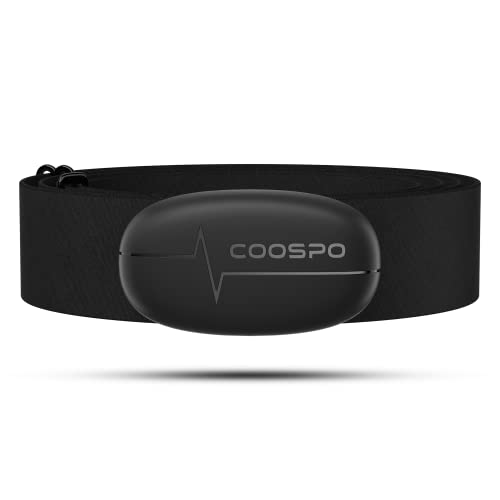
Value Chest Strap – COOSPO H6
The COOSPO H6 is a compact heart rate monitor built around a chest strap and dual Bluetooth/ANT+ transmission. It is designed to provide real-time training data across fitness apps, bike computers, sports watches, and compatible gym equipment.
Best For: Budget-conscious cyclists and indoor-training users who need wide device compatibility.
Pros:
- Provides stated ±1 BPM real-time heart-rate data during exercise.
- Supports both Bluetooth and ANT+ for connection flexibility.
- Works with numerous fitness apps, GPS bike computers, sports watches, and gym machines.
- Offers up to 300 hours of battery life with a replaceable CR2032 battery.
Cons:
- Electrode areas need to be moistened before use for stable transmission.
- Should not be used for swimming or soaked in water.
- Requires separating the sensor and strap after workouts.
The H6 is a straightforward choice among compact heart rate monitors for users who want chest-strap accuracy and broad compatibility without relying on a rechargeable battery. Its replaceable battery is convenient for extended training schedules.
How We Picked These Compact Heart Rate Monitors
We selected models that offer a practical balance of heart-rate accuracy, portability, compatibility, comfort, and value. The list includes chest straps for responsive workout data, optical armbands for easier wear, and the KardiaMobile 1-Lead EKG Monitor for users seeking on-demand rhythm readings rather than continuous training data.
We also considered connection standards such as Bluetooth and ANT+, water resistance, battery expectations, app support, and compatibility with common watches, cycling computers, gym equipment, and fitness platforms. Product specifications can vary by generation, so confirm the current details before buying.
Quick Comparison
| Type | Best For | Main Advantage | Potential Limitation |
|---|---|---|---|
| Chest strap | Serious training and cycling | Fast, consistent readings during intense movement | Requires skin contact and a snug fit |
| Optical armband | Comfort and convenience | Easy to put on and generally less restrictive | May respond differently during intervals or strength work |
| Single-lead ECG monitor | On-demand rhythm checks | Designed for portable ECG recordings | Not a substitute for continuous workout monitoring or medical care |
Key Buying Factors for Compact Heart Rate Monitors
Chest Strap Vs. Optical Armband
Chest straps typically detect electrical signals close to the heart and are a strong choice for interval training, racing, and cycling. Optical armbands use light-based sensors and can be more comfortable for users who dislike chest straps. Fit, skin contact, movement, and workout type all affect real-world performance.
Connectivity and Compatibility
Bluetooth is useful for phones, tablets, smartwatches, and many gym machines, while ANT+ is valuable for bike computers and multisport devices. If you plan to connect to more than one device, look for dual-protocol support and check whether simultaneous connections are supported.
Fit, Water Resistance, and Battery Life
A secure fit matters more than a long feature list. Look for adjustable straps, washable sensor areas, and water resistance appropriate for your training environment. Rechargeable armbands can be convenient, while replaceable-battery chest straps may reduce charging interruptions.
ECG Features and Health Use
An ECG-focused device serves a different purpose from a fitness heart-rate sensor. It may help record a rhythm strip for review, but readings should not be used to diagnose a condition or replace professional medical advice. Seek urgent care for serious or concerning symptoms.
Who Should Buy Which Compact Heart Rate Monitors?
- For high-intensity training: Choose a chest strap such as the Garmin HRM 200, Polar H9, Magene H64, or one of the COOSPO chest models.
- For comfortable everyday workouts: Consider an optical armband such as the Wahoo TICKR FIT, Polar Verity Sense, COROS Heart Rate Monitor, or COOSPO HW807.
- For cycling and multi-device setups: Prioritize ANT+ and Bluetooth support, especially if you use both a phone and a bike computer.
- For portable rhythm recordings: Choose KardiaMobile only if on-demand ECG functionality matches your needs; it is not a direct replacement for a training sensor.
- For budget-conscious buyers: Compare the included strap, battery type, water resistance, app requirements, and warranty rather than choosing by purchase price alone.
