
Compact electronic wind instruments make it easier to practice quietly, play anywhere, and explore digital tones without giving up the feel of a wind instrument.
Whether you want a beginner-friendly practice tool, a travel-ready option, or a model with MIDI and Bluetooth, this roundup focuses on the features that matter most.
Best 10 Compact Electronic Wind Instruments Picks for 2026
Portable Practice Pick

- Flute-like compact size with storage bag
- 10 sounds plus MIDI controller use
- Speaker, headphone jack, and 3 breath levels
Best For: Beginners and portable practice
Kid-Friendly Carrier
Carry On Digital Wind Instrument White

- Recorder-sized body with tote sleeve case
- 10 voices and Bluetooth MIDI support
- Speaker, headphone jack, and washable mouthpiece
Best For: Kids and students learning on the move
Advanced Control Choice
AP 100 Electronic Wind Instrument

- Programmable keys and voice announcement system
- OTG connectivity with dual timbres
- Lightweight build with OLED display
Best For: Players wanting customization and more control
Feature-Packed Performer
EX Electric Digital Wind Instrument

- 12 tones and 3 fingering modes
- 3-octave range with transpose and vibrato
- Bluetooth MIDI with carrying case included
Best For: Players wanting flexible, feature-rich portability
Portable Mini Digital EWI

- 10 built-in tones with beginner-friendly controls
- Two fingering styles and adjustable blowing sensitivity
- Built-in speaker, headphone support, and rechargeable battery
Best For: Kids, adults, and beginners who want a compact starter EWI
Expressive Practice EWI

- 26 timbres and 5 octaves for wider sound variety
- 3 vibrato modes and 4 fingering modes
- USB-C rechargeable with built-in speaker
Best For: Beginners and transitioning players who want more tonal range
Budget Digital Wind Instrument

- 10 tones with dual fingering and sensitivity settings
- MIDI support for apps and DAWs on multiple platforms
- Speaker, headphone output, and included carry accessories
Best For: Beginners wanting a portable EWI with MIDI connectivity
Starter-Friendly Mini Saxophone
Mini digital wind instrument with 10 tones

- 10 built-in tones with easy switching
- 2W HiFi speaker and MIDI support
- 800mAh battery for up to 4 hours
Best For: Beginners and casual players who want a simple portable wind instrument
Most Versatile Practice Pick
27-tone portable digital wind instrument
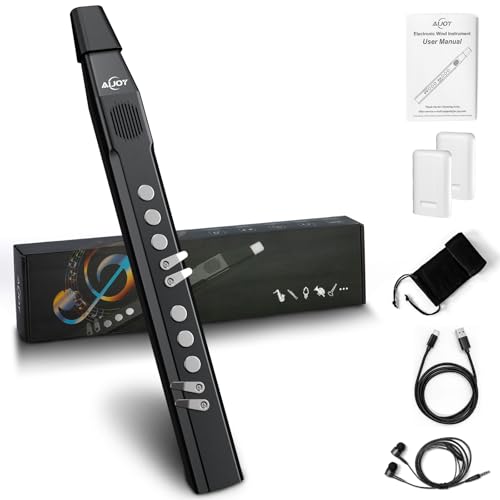
- 27 tones and 2 fingering modes
- Bluetooth plus wired MIDI support
- 3W speaker with headphone practice
Best For: Beginners who want the broadest feature set and practice flexibility
Compact MIDI-Ready Synth Wind
13-tone mini electronic wind instrument

- 13 tones with 12 backing tones
- 2W HiFi speaker and flat nozzle
- Bluetooth and wired MIDI support
Best For: Users who want a simple portable wind instrument with MIDI connectivity
Portable Practice Pick – Jiawu Digital Wind Instrument
If you want compact electronic wind instruments that are easy to carry and simple to start with, the Jiawu Digital Wind Instrument is built around portability and practice-friendly features. Its flute-like size, included storage bag, built-in speaker, and headphone jack make it practical for learning at home or taking on the go.
Best For: Beginners, younger players, and anyone who wants a lightweight practice instrument with MIDI support.
Pros:
- Compact, lightweight design with an included storage bag
- 10 instrument sounds plus MIDI controller capability
- Built-in speaker and 3.5mm headphone jack for silent practice
- 3 breath sensitivity levels and a removable silicone mouthpiece
Cons:
- Up to 3 hours of battery life may be limiting for longer sessions
- Sound library is smaller than some higher-end models
This model stands out as a straightforward, travel-friendly option for learning and casual play. If you value easy handling and flexible practice modes over advanced performance controls, it makes a solid entry point.
Kid-Friendly Carrier – Carry On Digital Wind Instrument White
Among compact electronic wind instruments, the Carry On Digital Wind Instrument is designed as a small, recorder-sized option that works well for practice on the move. It pairs 10 built-in voices with Bluetooth MIDI, a built-in speaker, and a headphone socket, so it can adapt to quiet practice or expanded music apps.
Best For: Kids, students, and families looking for an easy-to-carry digital wind instrument for learning and silent practice.
Pros:
- Compact, lightweight design with a tote sleeve carry case
- 3 breath sensitivity levels for different skill levels
- 10 built-in voices and Bluetooth MIDI support
- Built-in speaker plus 3.5mm headphone socket for quiet play
Cons:
- Designed mainly around learning and portability rather than advanced controls
- Up to 3 hours of battery life may require frequent charging
This is a practical pick if you want a simple, child-friendly digital wind instrument that can travel easily in a school bag. The washable silicone mouthpiece and MIDI connectivity add useful value for everyday practice.
Advanced Control Choice – AP 100 Electronic Wind Instrument
If you are comparing compact electronic wind instruments and want more performance control, the AP 100 adds features that go beyond basic practice use. It combines a lightweight travel-friendly design with programmable keys, expressive breath-sensitive voice control, and direct OTG connectivity for recording or production setups.
Best For: Players who want a portable electronic wind instrument with deeper customization and stage-ready controls.
Pros:
- Programmable function keys with customizable assignments
- Breath-sensitive voice control for expressive dynamics
- Built-in voice announcements for easier operation
- OTG support and dual timbres for recording and layered sounds
Cons:
- Custom key functions are disabled by default and require setup
- Feature set may feel more complex than simpler beginner models
The AP 100 is a strong fit if you want a compact instrument that can grow with your skills. Its OLED display, built-in tones, and customization options make it especially appealing for users who want more control in a small format.
Feature-Packed Performer – EX Electric Digital Wind Instrument
The EX Electric Digital Wind Instrument is a compact option for players who want a wider feature set in one portable package. With 12 tones, three fingering modes, a 3-octave range, and Bluetooth MIDI, it offers more ways to shape practice and performance than many basic compact electronic wind instruments.
Best For: Beginners and hobbyists who want a portable digital wind instrument with flexible fingering and expressive controls.
Pros:
- 12 tones and 3 fingering modes for flexible play
- 5 blow sensitivity levels plus automatic vibrato
- 3-octave range with transpose function for key changes
- Bluetooth MIDI, built-in speaker, headphones, and carrying case included
Cons:
- Feature-rich design may be more than some casual players need
- Control options can take time to learn
This model is a good choice if you want a compact instrument that feels ready for both practice and experimentation. The included accessory kit and broad tone selection make it especially convenient for getting started right away.
Portable Mini Digital EWI – Vangoa EWI-100 for Beginners
If you want one of the more compact electronic wind instruments for practice or casual performance, the Vangoa EWI-100 keeps things simple while still offering useful range. It includes 10 built-in tones, two fingering styles, adjustable blowing sensitivity, and both speaker and headphone output, so it can adapt to different practice setups without adding extra gear.
Best For: Kids, adults, and beginners who want a lightweight, rechargeable EWI with basic versatility and easy portability.
Pros:
- 10 onboard tones, including saxophone, clarinet, flute, trumpet, and more
- Two fingering styles plus 3 adjustable blowing sensitivity levels
- Built-in speaker and headphone jack for flexible practice
- Rechargeable 800 mAh battery with about 4 hours of play time
Cons:
- Only 10 tones, so sound variety is more limited than some rivals
- Battery life is practical, but not especially long for extended sessions
The EWI-100 is a straightforward pick if you value portability and easy learning over deeper sound editing. Its included accessories and washable mouthpieces make it feel ready to use right away.
Expressive Practice EWI – SUNRISE MELODY M1 White
Among compact electronic wind instruments, the SUNRISE MELODY M1 stands out for players who want more sound choices and more control. It offers 26 timbres, 5 octaves, 3 vibrato modes, and 4 fingering modes, plus a built-in speaker and USB-C rechargeable battery for easier practice at home or on the go.
Best For: Beginners and transitioning wind players who want a compact digital instrument with more tonal range and customization.
Pros:
- 26 timbres across 5 octaves for broader sound options
- 3 vibrato modes and 4 fingering modes for more playing flexibility
- Built-in speaker supports practice without extra equipment
- USB-C rechargeable 1600 mAh battery for extended sessions
Cons:
- More options may feel less simple than very basic beginner models
- At 386 g, it is still portable but not the lightest choice here
The M1 is a strong choice if you want a compact EWI that feels a bit more expressive and adaptable. It balances portability with a wider set of timbres and fingering options than entry-level models.
Budget Digital Wind Instrument – KONIX DC02 Pro Black
The KONIX DC02 Pro is a practical option if you are shopping compact electronic wind instruments for everyday practice or first-time use. It includes 10 tones, dual fingering styles, adjustable blowing sensitivity, speaker and headphone outputs, and MIDI connectivity for use with apps and DAWs to expand its sound possibilities.
Best For: Beginners who want a portable digital wind instrument with MIDI options and a simple, ready-to-play setup.
Pros:
- 10 built-in tones cover common wind and orchestral-style sounds
- MIDI connectivity works with Android, iOS, macOS, Windows, apps, and DAWs
- Two fingering styles and 3 blowing sensitivity settings improve playability
- Includes removable washable silicone nozzles, USB cable, cloth case, and headphone support
Cons:
- Sound library is smaller than models with more timbres
- 4-hour battery life may be limiting for long rehearsal days
This model makes sense if you want a compact EWI that can stay simple on its own but also connect into a larger digital setup. The included accessories and portability add value for players just getting started.
Starter-Friendly Mini Saxophone – Mini digital wind instrument with 10 tones
This compact electronic wind instrument is built for players who want a simple, portable way to explore multiple sounds. It offers 10 tones, touch-sensitive controls, three blowing sensitivities, and MIDI support, so it can cover casual practice, beginner learning, and basic performance use without taking up much space.
Best For: Students, teens, and adults who want a small, easy-to-carry wind instrument with built-in sounds.
Pros:
- 10 selectable tones, including saxophone, clarinet, flute, trumpet, and more
- Built-in 2W HiFi speaker lets you play without external gear
- 3 blowing sensitivities and touch buttons help with easier control
- 800mAh battery supports up to 4 hours of playtime
Cons:
- Battery life is limited compared with full-day practice needs
- Only 12 accompaniment types, so backing options are fairly basic
- Smaller feature set than more advanced MIDI wind instruments
As a compact electronic wind instrument, this model focuses on portability and straightforward use rather than deep customization. The detachable flat nozzle, headphone/speaker support, and MIDI connectivity make it versatile for practice, but its biggest strength is easy, grab-and-go playability.
Most Versatile Practice Pick – 27-tone portable digital wind instrument
If you want a compact electronic wind instrument with more sound variety and practice flexibility, this AIJOY model stands out. It includes 27 tones, 2 fingering modes, a 5-octave range, Bluetooth and wired MIDI, plus headphone support, making it a strong all-around option for learning and experimenting.
Best For: Beginners and hobbyists who want more tones, more control, and quiet practice options.
Pros:
- 27 built-in tones give you a wider sound palette
- 2 fingering modes make it easier to adapt for beginners
- Built-in 3W speaker plus headphone output for flexible practice
- Bluetooth and wired MIDI support add more connectivity options
Cons:
- Simplified fingering is not the same as a standard acoustic saxophone
- Battery life is listed at up to 4 hours, which is modest
- More features may be more than needed for very casual users
This compact electronic wind instrument is the most feature-rich option in the group, especially if you care about range, connection options, and quiet practice. The included mouthpieces, case, and earphones also make it easier to get started right away.
Compact MIDI-Ready Synth Wind – 13-tone mini electronic wind instrument
This mini electronic wind instrument leans into straightforward sound shaping and simple portability. With 13 tones, 12 backing tones, three blowing sensitivities, and MIDI connectivity, it gives players a compact way to experiment with digital wind sounds and basic accompaniment.
Best For: Players who want a lightweight synth-style wind instrument with built-in speaker playback.
Pros:
- 13 tone options with touch-sensitive buttons
- Built-in 2W HiFi speaker allows direct play without external speakers
- Supports both Bluetooth and wired MIDI connection
- 800mAh battery supports about 4 hours of playing time
Cons:
- Only 13 tones, so sound variety is lower than some rivals
- Backing tones are limited to 12 options
- Feature list is simpler than more advanced practice models
For buyers comparing compact electronic wind instruments, this one is a practical middle-ground choice with enough features for everyday experimentation. The removable flat nozzle and speaker-ready design make it easy to use, though it is best suited to players who do not need a huge preset library.
How We Picked These Compact Electronic Wind Instruments
We focused on portability, playability, sound variety, power options, and beginner-friendly controls. For Compact Electronic Wind Instruments, the best choices also balance lightweight design with responsive fingering, dependable charging, and enough tone options to stay useful as skills improve.
Quick Comparison: What Matters Most
Start by comparing fingering modes, tone count, octave range, battery life, and connectivity. If you plan to use software, look for MIDI support. If you want simple practice, a model with a clear speaker, easy controls, and fewer setup steps may be the better fit.
Key Buying Factors for Compact Electronic Wind Instruments
Portability and Build
Smaller bodies and lighter weight matter if you travel, commute, or want an instrument you can practice at home without taking up much space. Check whether the mouthpiece is removable and whether the layout feels comfortable for long sessions.
Sound Options and Range
More tones, vibrato modes, and octave coverage can make a compact instrument more versatile for different styles. Beginners may prefer simpler layouts, while more advanced players often value broader tone libraries and transpose features.
Connectivity and Power
MIDI, Bluetooth, USB-C, or built-in rechargeable batteries can improve flexibility. MIDI is especially useful for recording and music production, while rechargeable power is helpful for frequent practice and mobile use.
Learning-Friendly Controls
If you are new to electronic wind instruments, look for clear fingering modes, simple button layouts, and stable pitch response. Features like auto vibrato or backing tones can be useful, but they should not make the instrument harder to control.
Who Should Buy Which Compact Electronic Wind Instruments?
Beginners should prioritize ease of use, familiar fingering options, and a manageable tone set. Travelers and casual players may prefer the smallest, lightest models with rechargeable batteries. If you produce music or want to control virtual instruments, choose one of the Compact Electronic Wind Instruments with MIDI support and stronger connectivity. Players who want more expressive range should focus on octave span, tone variety, and performance features rather than the lowest price alone.
In short, the best choice is the one that fits your playing goals, space, and setup needs. A compact model should feel easy to carry, simple to learn, and flexible enough to grow with you.
