
Compact audio-over-IP interfaces are a smart way to move audio between computers, mobile devices, and networked workflows without bulky gear or complicated signal paths.
Whether you need a portable monitor feed, a streamer-friendly interface, or a simple bridge between USB and network audio, the right pick depends on your inputs, outputs, and connection standard.
Best 10 Compact Audio-Over-IP Interfaces Picks for 2026
Compact Dante Bridge
ToVi Dante USB to Network Audio Adapter

- 2-channel USB transceiver for Dante networks
- AES67 compliant for network interoperability
- 24-bit audio with 44.1/48kHz support
Best For: Simple USB-to-Dante bridging in studio, broadcast, or live sound
Dante Monitor Box
Focusrite RedNet AM2 Dante Headphone Amp

- Monitor-quality Dante conversion in a compact unit
- Drives high-impedance headphones well
- PoE or included power supply for flexible setup
Best For: Stage monitoring and line-out control in Dante systems
Stereo Stream Adapter

- Stereo RCA inputs for mixers and studio gear
- Loopback plus direct monitoring with headphone out
- Works with iPhone, iPad, Mac, PC, and many apps
Best For: Small streaming and recording setups that need stereo input
Compact Creator Audio Interface
M-AUDIO M-Track Duo USB Audio Interface
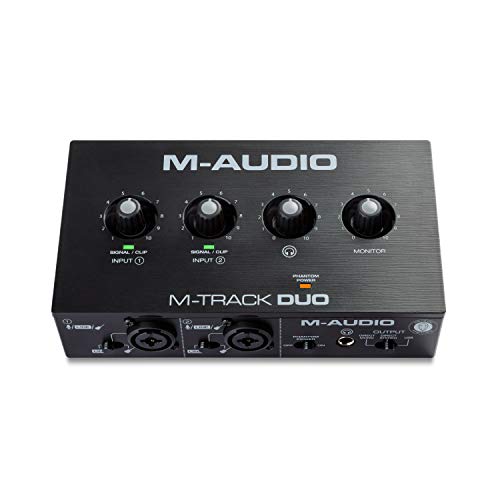
- 2 combo inputs with phantom power
- 48kHz recording and zero-latency monitoring
- Includes MPC Beats software
Best For: podcasts, streaming, and portable 2-channel recording
Portable High-Resolution Dock
Synido A20 Portable USB-C Audio Interface for Guitar & DJ Recording

- 24-bit/96kHz recording with adaptive gain
- USB-C mobile connectivity and loopback
- Pocket-sized body with wire storage
Best For: mobile recording, livestreaming, and guitar practice
High-Resolution Compact Interface
M-AUDIO M-Track Duo HD USB-C Audio Interface

- 24-bit/192kHz capture with zero-latency monitoring
- 2 combo inputs and independent headphone control
- Includes Ableton Live Lite, MPC Beats, and Splice
Best For: home studios, podcasters, and compact high-resolution recording
Hybrid Creator Interface
- Dual USB connectivity for computer and phone/iPad workflows
- Up to 70dB gain with -130dB EIN for cleaner mic recording
- Auto-Gain, loopback, and direct monitoring for streaming
Best For: Creators who want compact, flexible recording for streaming, guitar, and vocals
Starter 2x2 Interface

- Plug-and-play setup with no drivers required
- 24-bit/192kHz audio with up to 100 dB input gain
- 48V phantom power plus direct monitoring for basics
Best For: Beginners building a simple home recording setup
Compact Routing Interface

- 24-bit/192kHz recording with 106dB dynamic range
- 56 dB preamp, 48V phantom power, and instrument input
- ProStudio Routing Software with loopback and ASIO support
Best For: Creators who want a small interface for streaming, vocals, and guitar
Compact Dante Bridge – ToVi Dante USB to Network Audio Adapter
If you need a compact audio-over-IP interface to connect a USB device into a Dante environment, this ToVi adapter is built for that bridge. It works as a 2-channel USB transceiver with AES67 compliance, making it a straightforward choice for studio, broadcast, and live sound routing where low-latency digital audio matters.
Best For: Small Dante setups that need a simple USB bridge for two-channel input/output and AES67 compatibility.
Pros:
- 2-channel USB audio interface designed to bridge USB devices with Dante networks
- 24-bit support with 44.1kHz, 48kHz, and up to 96kHz sampling listed
- AES67 compliant for interoperability with existing Dante ecosystems
- Includes mic input and speaker output support for AV-style conversion
Cons:
- Limited to 2 channels
- Best suited to Dante/AES67 workflows rather than general-purpose recording
Overall, this is a focused interface for users who want a compact, plug-and-play bridge between USB audio and networked Dante systems. The feature set is narrow, but that makes it practical for simple, reliable deployments.
Dante Monitor Box – Focusrite RedNet AM2 Dante Headphone Amp
For compact audio-over-IP interfaces that handle monitoring rather than recording, the Focusrite RedNet AM2 is a purpose-built Dante headphone amp and line out box. It combines monitor-quality conversion with PoE power, giving you a clean way to feed headphones or a line output in installed or stage-based Dante systems.
Best For: Dante users who need a compact monitor box for headphone listening and line output on stage or in installs.
Pros:
- Monitor-quality digital conversion for Dante networks
- Drives high-impedance headphones at significant levels
- Independent headphone and line out level controls
- PoE support or included power supply for flexible placement
Cons:
- Focused on monitoring and line out, not multi-input recording
- Depends on Dante network infrastructure
This is a smart choice when the priority is reliable monitoring in a compact format. The mute switch and separate level controls make it especially useful where quick control over headphones and speaker feeds is important.
Compact Creator Interface – MAONO P2 Hybrid USB Audio Interface
If you want compact audio-over-IP interfaces for creator workflows, the MAONO P2 is more of a hybrid USB solution than a network box, but it is built for modern streaming and recording setups. Dual USB connectivity, loopback routing, and direct monitoring make it practical for people who record on a PC, phone, or tablet and want a streamlined desk-friendly interface.
Best For: Streamers, podcasters, and home creators who need a compact dual-XLR interface with phone and computer connectivity.
Pros:
- Dual USB ports with MFi-certified connectivity for computer and phone or iPad use
- 24-bit/192kHz recording with 56dB gain and -130dB EIN
- Loopback and ProStudio 2 routing for streaming and content creation
- Compact aluminum-alloy housing with direct monitoring and mute controls
Cons:
- Not a Dante or AES67 network interface
- Designed for creator recording rather than networked AV distribution
As a compact desktop interface, it stands out for flexible device support and creator-friendly routing. It is best viewed as a polished all-in-one recording and streaming tool rather than a network audio endpoint.
Stereo Stream Adapter – IK Multimedia iRig Stream
The IK Multimedia iRig Stream is a compact option for users who want a simple stereo audio interface for streaming, podcasting, or recording from mixers and studio gear. With RCA inputs, loopback, and direct monitoring, it fits practical mobile and desktop workflows where you need clean stereo capture without a bulky setup.
Best For: Mobile creators and streamers who need a small stereo interface for mixers, instruments, and app-based recording.
Pros:
- Stereo RCA inputs for connecting mixers, keyboards, and players
- 24-bit support with up to 96kHz recording listed in the notes
- Loopback and direct monitoring with headphone output
- Works with iPhone, iPad, Mac, and PC across many apps
Cons:
- Primarily a stereo interface, not a full multi-input mixer replacement
- RCA input format may not suit every modern source directly
This interface makes sense if your priority is compact stereo capture and easy monitoring across different devices. It keeps the workflow simple while still covering the essentials for live streaming and recording.
Compact Creator Audio Interface – M-AUDIO M-Track Duo USB Audio Interface
If you want one of the more compact audio-over-IP interfaces in spirit for a simple recording, podcasting, or live-streaming setup, the M-AUDIO M-Track Duo keeps things straightforward. It offers two combo XLR/line/instrument inputs, 48kHz audio resolution, and zero-latency monitoring, so it fits users who need a small interface that still covers the basics well.
Best For: Podcasters, streamers, and home-recording beginners who want a portable 2-channel interface with simple monitoring.
Pros:
- Two combo XLR/line/instrument inputs with phantom power for mics and instruments
- USB/direct monitoring switch for zero-latency monitoring
- Crystal preamps are designed to deliver transparent mic capture
- Includes MPC Beats software for getting started with production
Cons:
- Maxes out at 48kHz, which is lower than newer high-resolution models
- Best suited to simple 2-channel recording rather than larger setups
This is a practical pick if you value portability, direct monitoring, and easy compatibility with Mac or PC. It’s not the most advanced option here, but it covers podcasting, recording, and streaming without adding complexity.
Portable High-Resolution Dock – Synido A20 Portable USB-C Audio Interface for Guitar & DJ Recording
The Synido A20 is a compact audio-over-IP interfaces-style choice for creators who want a pocket-sized USB-C interface with higher-resolution capture and mobile-friendly features. Its 24-bit/96kHz recording, adaptive gain control, loopback/monitoring, and wireless backing track support make it a flexible option for practice, livestreaming, and mobile recording.
Best For: Mobile creators, guitarists, and livestreamers who want a tiny USB-C interface with 96kHz recording.
Pros:
- 24-bit/96kHz recording for detailed capture
- Adaptive gain control helps prevent distortion and overload
- USB-C connectivity works with phones or computers
- Built-in wire storage and pocket-sized design improve portability
Cons:
- Only 2 channels, so it is not built for larger recording rigs
- Device compatibility depends on your phone or camera supporting USB-C audio input
If you want a compact interface for quick capture and mobile use, the A20 is the most feature-packed of the three for travel and live content. It leans heavily into creator convenience rather than studio expansion.
High-Resolution Compact Interface – M-AUDIO M-Track Duo HD USB-C Audio Interface
The M-AUDIO M-Track Duo HD is a compact audio-over-IP interfaces-style pick for users who want a small USB-C interface with stronger resolution and more polished monitoring. With 24-bit/192kHz audio, two combo inputs, independent headphone level control, and a Direct/USB monitor switch, it is built for serious home recording without taking up much space.
Best For: Home studio users, podcasters, and musicians who want a compact 2-in/2-out USB-C interface with 192kHz support.
Pros:
- 24-bit/192kHz audio resolution for detailed recording
- Two combo inputs support mic, guitar, bass, or line-level sources
- Independent headphone level control plus Direct/USB monitoring
- Includes Ableton Live Lite, MPC Beats, and 2 months of Splice
Cons:
- Still limited to 2 inputs and 2 outputs
- Best value is tied to its software bundle and USB-C workflow
This model is the strongest fit if you want the most headroom and resolution in a small footprint. It keeps the M-Track Duo formula compact, but upgrades the audio spec and monitoring features for more demanding users.
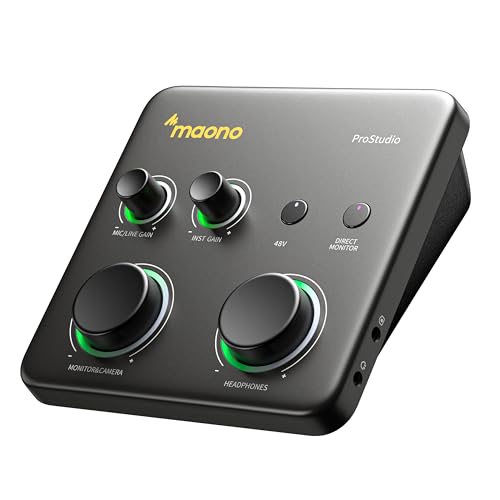
Hybrid Creator Interface – MAONO P1 USB Audio Interface
If you want compact audio-over-IP interfaces style flexibility for a creator desk, the MAONO P1 is built around simple routing, dual-device connectivity, and low-latency monitoring. It suits users who need to record guitar, vocals, and desktop audio without constantly reworking their setup.
Best For: Streamers, podcasters, and guitar creators who want a compact interface with hybrid USB/phone workflow options.
Pros:
- Dual USB ports with MFi-certified connectivity for computer plus phone or iPad use
- Up to 70dB gain and -130dB EIN for clean recording with demanding dynamic mics
- Auto-Gain, loopback, and independent mute controls simplify live streaming and tracking
- Direct monitoring and ProStudio2 routing help manage voice, instrument, and desktop audio
Cons:
- Routing software may be more than casual users need
- Best suited to creator workflows rather than multi-input studio tracking
The P1 stands out if your priority is workflow freedom in a small desk-friendly unit. Its mix of gain, routing features, and mobile compatibility makes it a practical pick for solo content creation.
Starter 2×2 Interface – CIXUN USB-C Audio Interface
This compact audio-over-IP interfaces pick is a straightforward 2×2 USB-C interface for beginners who want plug-and-play recording on Mac, PC, or mobile devices. It focuses on simple setup, solid gain, and the essentials for home recording.
Best For: Beginners who want a simple USB-C interface for vocals, guitar, and basic home recording.
Pros:
- Plug-and-play operation with no drivers required
- 24-bit/192kHz conversion and up to 100 dB input gain
- 2-in/2-out layout with dual XLR/TS inputs and dual stereo outputs
- 48V phantom power and direct monitoring for condenser mics and real-time tracking
Cons:
- Feature set is more basic than creator-focused interfaces with advanced routing
- Designed mainly for straightforward recording rather than complex production setups
The CIXUN interface makes sense if you want an easy entry point without extra setup hurdles. It covers the fundamentals well and adds phantom power, monitoring, and adapter support for a flexible starter rig.
Compact Routing Interface – MAONO PS22 Lite
For shoppers comparing compact audio-over-IP interfaces, the MAONO PS22 Lite is aimed at creators who want a small, easy-to-manage interface with useful routing tools. It combines high-resolution recording, instrument input, and a streamlined control layout for voice, guitar, and streaming work.
Best For: Streamers, podcasters, and beginner musicians who want a compact interface with routing software and simple controls.
Pros:
- 24-bit/192kHz recording with 106dB dynamic range
- Handles condenser and dynamic microphones with 56 dB preamp gain and 48V phantom power
- Dedicated instrument input with impedance adjustment for guitar recording
- ProStudio Routing Software, loopback support, and ASIO compatibility for live use
Cons:
- Compact size may limit physical controls for users who want a larger desktop unit
- Routing software adds capability, but may still be more than a very casual user needs
The PS22 Lite is a strong fit if you want a palm-sized interface that still covers recording, broadcasting, and instrument use. It balances portability with enough routing and monitoring features to keep a small creator setup organized.
How We Picked the Best Compact Audio-Over-IP Interfaces
We focused on Compact Audio-Over-IP Interfaces that make sense for real-world setups: small footprints, straightforward connectivity, practical I/O, and features that help creators work faster. Priority went to models with clear use cases for streaming, mobile recording, headphone monitoring, desktop production, and network audio integration.
We also looked for value, power options, and compatibility with common devices and platforms. For this roundup, that means balancing AoIP-oriented products with compact USB and hybrid interfaces that serve similar space-saving needs for buyers comparing portable audio solutions.
Quick Comparison
The best choice depends on how you plan to use it. Networked adapters and PoE-powered units suit install-style or live monitoring tasks. Hybrid and USB-C interfaces are better for creators who need plug-and-play recording, vocals, instruments, or livestream audio on a laptop, phone, or tablet.
If you need low-friction portability, look for bus-powered or mobile-friendly designs. If you need reliable studio or stage routing, prioritize stable drivers, strong gain, and the right connector set for your gear.
Key Buying Factors for Compact Audio-Over-IP Interfaces
Connectivity and Standards
Check whether the unit supports Dante, AES67, USB, USB-C, Lightning, or hybrid routing. In Compact Audio-Over-IP Interfaces, connectivity is the biggest factor because it determines whether the device fits a networked workflow or a direct-device workflow.
Inputs, Outputs, and Monitoring
Match the interface to your sources: microphones, instruments, stereo line sources, or headphones. A model with the wrong I/O can be limited even if it looks versatile on paper.
Power and Portability
PoE, bus power, and mobile-device compatibility all matter if you travel, work on location, or want a tidy desk setup. Smaller power requirements usually mean simpler deployment.
Gain and Signal Handling
For mics and quiet sources, preamp gain can make or break usability. Higher-gain designs help with dynamic microphones and low-output signals, while cleaner line-level handling matters for streaming and stereo capture.
Who Should Buy Which Compact Audio-Over-IP Interfaces?
Buy a network-focused option if you need audio on Ethernet, distributed monitoring, or install-friendly routing. Choose a USB or USB-C hybrid interface if your priority is recording vocals, guitar, or desktop content creation with minimal setup.
For mobile users, creators, and streamers, the best Compact Audio-Over-IP Interfaces are the ones that reduce friction: the fewest adapters, the simplest power path, and enough I/O to cover your everyday workflow without excess bulk.
