
If you need a lens that can handle architecture, landscapes, interiors, events, or video run-and-gun work, wide-angle optics are often the smartest place to start.
This roundup focuses on commercial-grade wide-angle camera lenses chosen for real-world image quality, build, and system fit across Canon, Sony, and specialty platforms.
Best 10 Commercial-Grade Wide-Angle Camera Lenses Picks for 2026
Pro Ultra-Wide Zoom
Canon EF 11-24mm f/4L USM Lens

- 11-24mm zoom covers very wide framing
- Constant f/4 aperture and L-series optics
- Ring USM with inner focusing and manual override
Best For: Real estate, architecture, and interior photography
Raspberry Pi Wide-Angle Utility Lens
Arducam 6mm CS-Mount Wide-Angle Lens

- Built for the Raspberry Pi High Quality Camera
- 6mm focal length with 65-degree HFoV
- Manual focus plus adjustable aperture
Best For: Pi HQ Camera projects needing a simple wide-angle lens
Manual Ultra-Wide Prime
Rokinon 14mm F2.8 Ultra Wide for Canon
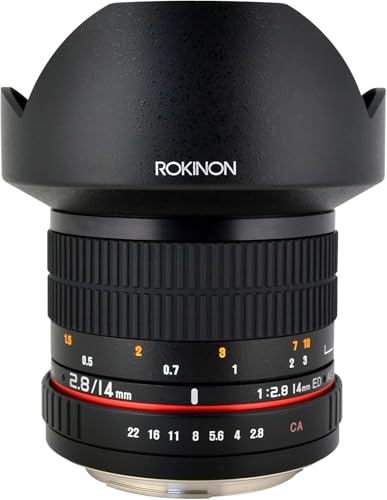
- 14mm prime with 115.7-degree angle of view
- Fast f/2.8 aperture for low-light work
- Manual focus with aspherical elements and hood
Best For: Landscape, real estate, and astro shooters who prefer manual focus
Travel-Friendly Wide-Angle Zoom
Sony E 10-18mm F4 OSS Wide-Angle Zoom Lens

- 10-18mm ultra-wide zoom for APS-C Sony E-mount bodies
- OSS stabilization supports steadier handheld shooting
- Constant F4 aperture and 0.25 m close focus
Best For: Sony APS-C shooters needing a stabilized ultra-wide zoom
Perspective-Control Specialist
Canon TS-E 17mm f/4L UD Aspherical Ultra Wide Tilt-Shift Lens

- 17mm ultra-wide tilt-shift lens for Canon EF bodies
- +/-6.5° tilt and +/-12mm shift for perspective control
- Aspherical and UD elements help reduce chromatic aberration
Best For: Canon EOS users needing precise tilt-shift control
Raspberry Pi Ultra-Wide Pick
Arducam 120 Degree Ultra Wide Angle CS Lens

- 120° horizontal field of view on Raspberry Pi HQ Camera
- 3.2mm prime lens with manual focus
- F/2.0 fixed iris and CS-mount compatibility
Best For: Pi HQ Camera builders needing a simple ultra-wide CS lens
Ultra-Wide Zoom Pro

- 14-35mm range starts at a dramatic 14mm ultra-wide view.
- Constant f/4 and L-series optics support reliable image quality.
- Compact 1.2 lb design is easier to carry than many wide zooms.
Best For: EOS R photographers needing a premium ultra-wide zoom for travel, landscapes, and interiors.
Classic Full-Frame Wide Zoom

- 17-40mm range covers a practical set of wide-angle compositions.
- Weather-resistant build suits outdoor and event work.
- Ring-type USM autofocus is fast and quiet.
Best For: Canon EF users wanting a durable wide-angle zoom for professional everyday shooting.
Compact Ultra-Wide Prime

- 16mm fixed focal length gives a clean ultra-wide perspective.
- f/2.8 aperture is brighter than the f/4 zoom options.
- Lightweight, compact build is ideal for travel and video.
Best For: EOS R creators who want a small, bright ultra-wide lens for video and portable shooting.
Pro Ultra-Wide Zoom – Canon EF 11-24mm f/4L USM Lens
If you need a commercial-grade wide-angle camera lens for Canon EF bodies, the Canon EF 11-24mm f/4L USM is built for maximum perspective control. Its 11mm starting point, f/4 constant aperture, and L-series optical design make it a strong choice when you want extreme width without sacrificing pro-level build and focusing behavior.
Best For: Real estate, architecture, interiors, and other jobs that benefit from an ultra-wide zoom range.
Pros:
- Extremely wide 11-24mm zoom range for expansive framing.
- Constant f/4 aperture keeps exposure consistent while zooming.
- Includes SWC and ASC coatings plus one Super UD and one UD element.
- Ring USM, inner focusing, and full-time manual focus support responsive handling.
Cons:
- Heavier at 1180 g, so it is not the lightest travel option.
- Max aperture of f/4 is less bright than faster prime alternatives.
- Designed for Canon EF mount only.
This lens stands out when the assignment calls for the widest possible view from a professional Canon zoom. It is a serious tool for controlled wide-angle work where optical refinement matters.
Compact APS-C Vlogging Prime – Sony E 11mm F1.8 APS-C Ultra-Wide Prime
For creators shopping for commercial-grade wide-angle camera lenses, the Sony E 11mm F1.8 is a compact APS-C prime that balances portability with strong low-light performance. The wide 11mm field of view, bright f/1.8 aperture, and fast linear-motor autofocus make it especially practical for stills, video, and handheld shooting.
Best For: Vlogging, content creation, and APS-C or Super35 shooters who want a small ultra-wide lens.
Pros:
- Very compact and lightweight for easy handheld or rigged use.
- Bright f/1.8 aperture helps in low light and creates background separation.
- Two linear motors deliver fast, precise, quiet autofocus.
- Refined internal focusing keeps lens length constant for better balance.
Cons:
- APS-C only, so it is not a full-frame option.
- Fixed 11mm focal length offers no zoom flexibility.
- Best fit is Sony E-mount cameras rather than a broad cross-system setup.
This is a smart pick when size, speed, and wide framing matter more than zoom range. It is especially appealing for video shooters who want a small lens that still feels capable and responsive.
Raspberry Pi Wide-Angle Utility Lens – Arducam 6mm CS-Mount Wide-Angle Lens
If your project needs commercial-grade wide-angle camera lenses for a Raspberry Pi High Quality Camera, this Arducam 6mm CS-mount lens is a practical, low-cost match. It offers a 65-degree horizontal field of view, manual focus, and an adjustable aperture, making it suited to experimentation and steady camera-module setups.
Best For: Raspberry Pi HQ Camera builds that need a simple wide-angle lens with manual control.
Pros:
- Designed and tested for the Raspberry Pi High Quality Camera.
- 6mm focal length with 65-degree horizontal field of view.
- Manual focus and adjustable aperture give useful setup control.
- Compact and lightweight at 53 g.
Cons:
- Does not include an IR filter.
- Manual focus only, so it is less convenient for fast capture.
- Made for a specific CS-mount camera ecosystem.
This lens makes sense when you want an affordable wide-angle option that is known to work with the Pi HQ Camera. It is more about practical compatibility than premium photographic versatility.
Manual Ultra-Wide Prime – Rokinon 14mm F2.8 Ultra Wide for Canon
The Rokinon FE14M-C is a straightforward choice for buyers seeking commercial-grade wide-angle camera lenses with a manual, no-frills shooting style. Its 14mm focal length, f/2.8 aperture, and 115.7-degree angle of view make it well suited to landscapes, real estate, and astrophotography where broad coverage and low-light capability matter.
Best For: Landscape, real estate, and astrophotography shooters who prefer manual focus control.
Pros:
- 14mm ultra-wide perspective with a 115.7-degree angle of view.
- Fast f/2.8 aperture supports low-light shooting.
- Includes aspherical elements to help reduce distortion and aberrations.
- Built-in petal-type lens hood adds practical protection.
Cons:
- Manual focus only, so it is less convenient for quick-action shooting.
- No image stabilization.
- Fixed 14mm design gives no zoom flexibility.
This lens is best for photographers who are comfortable setting focus manually and want a wide, bright prime. It delivers a strong feature set for its class, especially when edge-to-edge detail is a priority.
Travel-Friendly Wide-Angle Zoom – Sony E 10-18mm F4 OSS Wide-Angle Zoom Lens
If you want commercial-grade wide-angle camera lenses for a Sony E-mount APS-C setup, the Sony E 10-18mm F4 OSS is a practical ultra-wide zoom with real flexibility. Its 10-18mm range, 109° to 76° angle of view, and built-in OSS stabilization make it a solid pick for interiors, travel, and handheld shooting where composition changes fast.
Best For: Sony APS-C shooters who need an ultra-wide zoom with optical stabilization for video or stills.
Pros:
- 10-18mm zoom range gives you flexible ultra-wide framing.
- OSS image stabilization helps steady handheld shots.
- F4 constant aperture keeps exposure consistent across the zoom range.
- Minimum focus distance of 0.25 m adds useful close-up versatility.
Cons:
- Designed for Sony E-mount APS-C cameras, so compatibility is limited.
- Not water resistant.
For buyers comparing commercial-grade wide-angle camera lenses, this Sony stands out as the most adaptable option in the group. It is a straightforward choice when you need wide coverage, stabilization, and a compact zoom rather than specialty perspective control.
Perspective-Control Specialist – Canon TS-E 17mm f/4L UD Aspherical Ultra Wide Tilt-Shift Lens
Canon TS-E 17mm f/4L UD Aspherical Ultra Wide Tilt-Shift Lens for Canon Digital SLR Cameras
Check Price On AmazonAmong commercial-grade wide-angle camera lenses, the Canon TS-E 17mm f/4L is the most specialized tool here. Its 17mm ultra-wide prime design, plus +/- 6.5 degrees of tilt and +/-12mm of shift, is built for controlled perspective, low distortion, and high-resolution results in architectural or product-oriented work.
Best For: Canon EOS photographers who need tilt-shift control for architecture, interiors, or distortion-sensitive compositions.
Pros:
- Tilt and shift movements provide precise perspective control.
- Aspherical and UD elements are designed to minimize chromatic aberration.
- 17mm ultra-wide prime is well suited to architecture and interiors.
- Floating internal focus mechanism helps maintain image quality throughout the focus range.
Cons:
- Manual exposure control requires a more hands-on workflow.
- Fixed 17mm focal length offers no zoom flexibility.
- Not water resistant.
This lens makes sense when straight lines and composition control matter more than convenience. If your project depends on keeping verticals clean or managing distortion in-camera, it is the most purpose-built option in this roundup.
Raspberry Pi Ultra-Wide Pick – Arducam 120 Degree Ultra Wide Angle CS Lens
If you need commercial-grade wide-angle camera lenses for a Raspberry Pi HQ Camera project, the Arducam 3.2mm CS lens is a focused, budget-friendly option. It delivers a 120° horizontal field of view, manual focus, and an f/2.0 fixed iris, making it a practical match for monitoring, embedded vision, and other Pi-based builds where wide coverage matters.
Best For: Raspberry Pi HQ Camera users who want a wide 120° view in a simple CS-mount lens.
Pros:
- 120° horizontal field of view provides very wide coverage.
- Manual focus gives you control for fixed-installation setups.
- F/2.0 fixed iris suits low-light and general-purpose imaging.
- Tested on the Raspberry Pi HQ Camera for a straightforward fit.
Cons:
- Only works with compatible CS-mount Raspberry Pi HQ Camera setups.
- Prime 3.2mm design offers no zoom range.
- Manual focus may be less convenient for changing scenes.
For Pi-based applications, this lens is less about versatility and more about getting a wide, reliable image with minimal fuss. It is a smart choice when you want broad coverage from a compact CS-mount lens that has already been tested for the job.
Ultra-Wide Zoom Pro – Canon RF14-35mm F4 L IS USM
If you want commercial-grade wide-angle camera lenses for landscapes, interiors, or creative video framing, the Canon RF14-35mm F4 L IS USM gives you a very usable 14mm ultra-wide start plus a versatile 35mm end. The constant f/4 design, L-series optics, and compact build make it a strong option when portability still matters.
Best For: EOS R shooters who want a premium ultra-wide zoom with a compact, travel-friendly design.
Pros:
- 14mm to 35mm zoom range covers dramatic ultra-wide perspectives and everyday wide shots.
- Constant f/4 aperture and L-series optical construction support consistent performance.
- SWC and ASC coatings are included to help manage flare and ghosting.
- Close-focusing down to 7.9 inches at all focal lengths adds flexibility.
Cons:
- f/4 aperture is less bright than faster wide-angle options.
- Designed for Canon RF mount, so it is not a universal choice.
- Primary appeal is wide-angle work rather than general-purpose telephoto use.
Overall, this is a well-rounded premium wide zoom for users who need strong optics, a compact body, and true ultra-wide coverage in the EOS R system.
Classic Full-Frame Wide Zoom – Canon EF 17-40mm f/4L USM
The Canon EF 17-40mm f/4L USM remains a practical pick among commercial-grade wide-angle camera lenses when you need a dependable full-frame zoom with a familiar 17-40mm range. Its f/4 aperture, weather-resistant construction, and ring-type USM autofocus make it a solid workhorse for broad scenes, events, and general wide-angle shooting.
Best For: Canon EF shooters who want a weather-resistant full-frame wide-angle zoom for everyday professional use.
Pros:
- 17-40mm range offers useful wide-angle flexibility for multiple shooting situations.
- f/4 maximum aperture keeps exposure consistent across the zoom range.
- Weather-resistant construction helps it handle tougher conditions.
- Ring-type USM provides fast, silent autofocus.
Cons:
- Does not reach the extra-wide 14mm coverage of newer options.
- f/4 aperture may be limiting in low-light or shallow-depth-of-field work.
- It is an EF-mount lens, so it is built for Canon SLR systems rather than RF bodies.
This lens makes sense if you value proven optics, weather resistance, and a straightforward wide zoom over the newest features or the widest possible field of view.
Compact Ultra-Wide Prime – Canon RF16mm F2.8 STM
For buyers looking at commercial-grade wide-angle camera lenses in the smallest possible package, the Canon RF16mm F2.8 STM is a simple ultra-wide prime with a bright f/2.8 aperture. It is especially appealing when you want a lightweight full-frame RF lens for video, travel, or tight spaces.
Best For: EOS R users who want a tiny ultra-wide prime with a bright aperture for video and portable shooting.
Pros:
- 16mm ultra-wide fixed focal length is great for expansive framing.
- Bright f/2.8 aperture is useful for low light and subject separation.
- Stepping motor autofocus is smooth and quiet during video recording.
- Very lightweight and compact design makes it easy to carry.
Cons:
- Fixed focal length offers less framing flexibility than a zoom lens.
- Maximum magnification of 0.26x is modest for close-up work.
- Ultra-wide prime styling is specialized rather than all-purpose.
In practice, this lens is a strong pick when compact size and a bright ultra-wide view matter more than zoom versatility, especially for mirrorless creators who travel light.
How We Picked the Best Commercial-Grade Wide-Angle Camera Lenses
We prioritized optical performance, usable focal range, aperture speed, autofocus reliability, build quality, and platform relevance. For commercial work, consistency matters as much as sharpness, so we favored lenses that can deliver dependable results across repeated shoots.
We also considered whether each lens serves a clear pro use case: ultra-wide stills, flexible zoom coverage, low-light shooting, tilt-shift control, or specialized camera systems like Raspberry Pi HQ setups.
Quick Comparison
Ultra-wide prime lenses are the best choice when you want maximum sharpness, fast setup, and simpler handling. Wide-angle zooms offer more framing flexibility for mixed environments, while tilt-shift lenses are ideal when distortion control and perspective correction are critical. Specialty CS-mount options fill a different role for embedded, experimental, or machine-vision-style applications.
Key Buying Factors for Commercial-Grade Wide-Angle Camera Lenses
Mount Compatibility
Start with the camera body. EF, RF, E-mount, and CS-mount lenses are not interchangeable without the right camera support or adapter, and even then, autofocus and electronic communication may vary.
Focal Length and Field of View
Shorter focal lengths create a wider view, which helps in tight spaces and dramatic compositions. A 14mm or 16mm lens is very wide on full-frame cameras, while APS-C users should note the crop factor before comparing angles directly.
Aperture and Low-Light Needs
A wider maximum aperture can help in dim interiors and motion-heavy video, but many commercial users prefer f/4 zooms for their balance of speed, size, and consistency. If you shoot handheld indoors often, aperture matters more than it first appears.
Distortion Control and Specialty Features
Commercial real estate, product, and architectural work often benefits from strong edge-to-edge correction and, in some cases, tilt-shift capability. If straight lines must stay straight, standard ultra-wide lenses may not be enough.
Who Should Buy Which Commercial-Grade Wide-Angle Camera Lenses?
Choose a wide-angle prime if you want a compact, high-quality lens for everyday stills and video. Pick a zoom if your assignments vary and you need more framing flexibility without changing lenses constantly. Go with a tilt-shift option if you shoot architecture or interiors professionally and need perspective control.
If you work on Raspberry Pi HQ Camera projects, select one of the CS-mount lenses designed for that system rather than a traditional photo lens. For Canon and Sony mirrorless or DSLR users, match the lens family to your body first, then choose between the broad coverage of a zoom and the simplicity of a prime based on your workflow.
