
The right switch can improve network reliability, simplify management, and provide enough capacity for access points, phones, cameras, servers, and workstations. This roundup compares 10 commercial-grade network switches across several business networking scenarios.
Options range from quiet plug-and-play models to managed Layer 3 and multi-gig uplink switches. Use the buying guide below to narrow the list by port count, PoE requirements, uplink speed, management platform, and installation environment.
Best 10 Commercial-Grade Network Switches Picks for 2026
Best All-in-One PoE Switch

- 48 Gigabit PoE ports
- 370W Class 4 PoE budget
- Four 1G/10G SFP+ uplinks
Best For: Businesses needing high-density PoE and simple network management
Best for 10GbE Aggregation
Ubiquiti UniFi Pro Aggregation
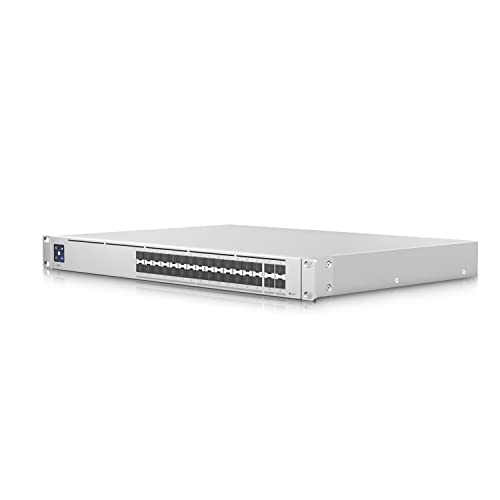
- Layer 3 switching
- 280Gbps listed transfer rate
- Fiber and rack-mount support
Best For: High-speed server, storage, and network aggregation
Best Flexible PoE Platform

- 24 PoE Gigabit ports
- Four 10Gbps SFP+ ports
- RouterOS or SwOS dual boot
Best For: Flexible PoE deployments with advanced configuration needs
Best Compact 10GbE Fiber Switch

- 16-port SFP+ layout
- 10Gbps data transfer
- Compact 1U rack design
Best For: Server, storage, and high-speed backbone connections
Managed PoE Powerhouse

- 24 gigabit Ethernet ports
- Managed Layer 2 switching
- Rack-mountable business design
Best For: Business and enterprise networks needing managed 24-port connectivity
PoE and SFP Flexibility

- 24 gigabit RJ45 ports
- Two 1 Gbps SFP ports
- 26 Gbps non-blocking throughput
Best For: Networks needing PoE+ and flexible SFP uplinks
Quiet Plug-and-Play Value
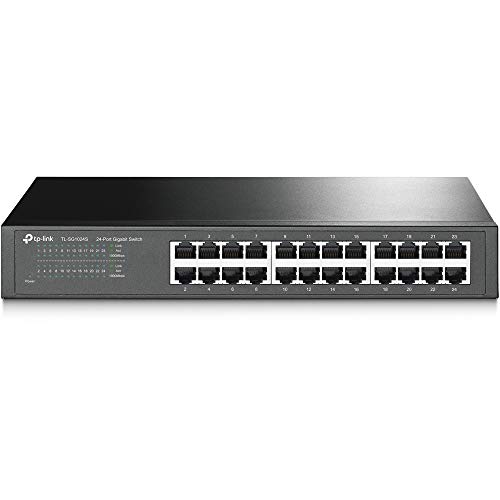
- 24 gigabit RJ45 ports
- Fanless metal chassis
- Desktop or rackmount installation
Best For: Quiet, uncomplicated wired network expansion
High-Capacity PoE Choice

- 48 Gigabit Ethernet ports
- 32 802.3at PoE+ ports
- Four 1G SFP uplink ports
Best For: Large UniFi-managed networks needing dense PoE+ connectivity
Flexible Layer 2++ Management

- Eight Gigabit Ethernet ports
- Dynamic PoE/PoE+ power control
- Web, cloud, software, router, and CLI management
Best For: Small business networks needing managed PoE+ and flexible administration
Compact UniFi PoE Switch

- 16-port managed Ethernet design
- Compact listed dimensions
- 6.17-pound listed weight
Best For: Small UniFi networks needing a moderately sized managed switch
Best All-in-One PoE Switch – HPE Instant On 1930 48-Port
For businesses needing broad device coverage, the HPE Instant On 1930 is a commercial-grade network switch with 48 Gigabit PoE ports, smart management, and four SFP/SFP+ uplinks. Its 370W PoE budget can support devices such as access points, IP phones, cameras, and door locks.
Best For: Businesses that need many PoE connections, straightforward management, and rack-ready fiber uplinks.
Pros:
- 48 Gigabit ports provide extensive wired connectivity.
- Class 4 PoE offers up to 370W for connected devices.
- Four dedicated 1G/10G SFP+ ports help reduce uplink bottlenecks.
- Web and mobile management tools support setup and troubleshooting.
Cons:
- Its 48-port chassis is relatively large and weighs 10.1 pounds.
- The maximum operating temperature is listed as 40 °C.
This is a practical choice when PoE density matters more than compact size. Security controls, smart management, and a metal rack-oriented design make it well suited to growing business networks.
Best for 10GbE Aggregation – Ubiquiti UniFi Pro Aggregation
The Ubiquiti UniFi Pro Aggregation is a commercial-grade network switch designed for high-speed aggregation. It provides Layer 3 capability, 28 ports, a listed 280Gbps transfer rate, and optical-fiber support for linking servers and network components.
Best For: Rack-mounted networks that need high-capacity aggregation, Layer 3 routing, and fiber connectivity.
Pros:
- Layer 3 functionality supports scalable network designs.
- Provides a listed 280Gbps data transfer rate.
- Supports optical fiber for longer-distance, high-speed links.
- Rack mounting helps organize and secure the installation.
Cons:
- It is intended for aggregation rather than powering endpoint devices.
- The supplied notes do not identify a PoE feature.
Choose this model when fast interconnection is the priority. Its Layer 3 features and fiber support make it a strong fit for consolidating high-bandwidth links in a professional rack environment.
Best Flexible PoE Platform – MikroTik CRS328-24P-4S+RM
The MikroTik CRS328-24P-4S+RM combines 24 Gigabit PoE ports with four 10Gbps SFP+ ports in a 1U rackmount chassis. This commercial-grade network switch supports multiple PoE output options and offers a choice between RouterOS and SwOS through its dual-boot design.
Best For: Networks needing flexible PoE standards, 10Gbps uplinks, and configurable MikroTik operating modes.
Pros:
- Supports passive PoE, low-voltage PoE, 802.3af, and 802.3at output.
- Four SFP+ ports provide up to 10Gbps connectivity.
- Up to 450W is guaranteed for PoE devices, with up to 30W per port.
- Dual boot enables a choice of RouterOS or SwOS.
Cons:
- SFP+ modules are not included.
- The broad configuration options may require more technical setup.
- No warranty is listed in the supplied details.
This switch stands out for adaptable power delivery and operating-system flexibility. It is especially compelling for technically managed deployments that need both PoE endpoint support and fast rack-level uplinks.
Best Compact 10GbE Fiber Switch – MikroTik CRS317
The MikroTik CRS317-1G-16S+RM is a compact, managed Layer 3 rack switch focused on high-speed SFP+ connectivity. With 16 ports, 10Gbps data transfer, and a 1U form factor, it suits commercial-grade network switch deployments connecting servers, storage, and core network equipment.
Best For: Compact rack environments requiring multiple 10Gbps SFP+ connections for servers and storage.
Pros:
- Sixteen ports support dense high-speed connectivity.
- 10Gbps data transfer is suited to server and storage links.
- Managed Layer 3 design supports controlled network deployments.
- Includes a rack-mount kit and uses a compact 1U chassis.
Cons:
- The supplied notes do not identify PoE support.
- Its listed interface information does not describe standard copper access ports.
- No warranty is listed in the supplied details.
This model is best viewed as a high-speed rack switch for infrastructure links rather than an endpoint-access switch. Its 16-port SFP+ layout is a strong match for server, storage, and backbone connections where 10Gbps capacity is important.
Managed PoE Powerhouse – FortiSwitch FS-124G-FPOE
The Fortinet FortiSwitch FS-124G-FPOE is a strong option for organizations comparing commercial-grade network switches for managed business networks. It provides 24 ports, Layer 2 support, gigabit Ethernet connectivity, and a rack-mountable design for structured installations.
Best For: Businesses and enterprise environments that need a managed 24-port switch with rack-mounting and Layer 2 capabilities.
Pros:
- 24 ports for connecting computers, printers, laptops, and other network devices
- Managed Layer 2 functionality supports greater network control
- Rack-mountable 1.7-inch-high form factor suits network cabinets
- Supports gigabit Ethernet and twisted-pair cabling up to 100 meters
Cons:
- Its 880-watt maximum power rating may be more than smaller installations need
- The supplied specifications do not identify color or built-in media details
Choose this FortiSwitch when centralized management and business-focused deployment matter more than a simple plug-and-play setup. Its 24-port layout and rack-ready design make it well suited to expanding wired networks.
PoE and SFP Flexibility – Ubiquiti EdgeSwitch 24 250W
Ubiquiti Networks EdgeSwitch 24 250W (ES-24-250W) Managed PoE+ Gigabit Switch with SFP,Black
Check Price On AmazonThe Ubiquiti EdgeSwitch 24 250W brings useful flexibility to commercial-grade network switches with 24 gigabit RJ45 ports, two 1 Gbps SFP ports, and PoE+ support. Its 26 Gbps non-blocking throughput is suited to busy wired networks with compatible powered devices.
Best For: Desktop and small-business networks that need 24 gigabit ports, PoE+ connectivity, and SFP uplink options.
Pros:
- Includes 24 10/100/1000 Mbps RJ45 Ethernet ports
- Two 1 Gbps SFP ports add uplink flexibility
- PoE+ support and a 250-watt maximum power specification suit powered devices
- Offers 26 Gbps of total non-blocking throughput
Cons:
- The supplied warranty detail is listed only as one year
- Its 8.16-pound weight and 19.1-inch width require suitable installation space
This EdgeSwitch is a practical middle ground for deployments that need both copper connectivity and SFP expansion. Consider it when PoE+ and uplink versatility are priorities.
Quiet Plug-and-Play Value – TP-Link TL-SG1024S
The TP-Link TL-SG1024S is a straightforward choice among commercial-grade network switches for expanding a wired network without configuration work. It offers 24 gigabit RJ45 ports, a fanless metal chassis, energy-efficient operation, and desktop or rackmount placement.
Best For: Offices and workspaces that want quiet, unmanaged gigabit expansion with simple installation.
Pros:
- 24 auto-negotiating 10/100/1000 Mbps RJ45 ports
- Unmanaged plug-and-play setup requires no software installation or configuration
- Fanless design provides quiet operation
- Metal case supports durability, heat dissipation, and EMI protection
Cons:
- Unmanaged operation does not provide advanced network management controls
- No PoE or SFP ports are listed in the supplied specifications
The TL-SG1024S makes the most sense when dependable port expansion and low operating noise are more important than VLAN or centralized management features. Its included rackmount kit also adds installation flexibility.
High-Capacity PoE Choice – UniFi USW-48-PoE
The Ubiquiti UniFi USW-48-PoE is a strong option for commercial-grade network switches when you need many wired connections and substantial PoE+ capacity. It provides 48 Gigabit Ethernet ports, including 32 802.3at PoE+ ports, plus four 1G SFP ports.
Best For: Larger offices, business networks, and UniFi-managed installations needing broad port capacity and PoE+ connectivity.
Pros:
- 48 Gigabit Ethernet ports support dense wired deployments.
- 32 ports provide 802.3at PoE+ connectivity.
- Four 1G SFP ports support fiber uplinks.
- UniFi Controller management and a 1.3-inch touch LCM are included.
Cons:
- Its 48-port design may be more capacity than smaller networks require.
- The listed upper temperature rating is 40 °C.
With a 240W power supply and high port count, this switch is suited to expanding commercial networks that already use, or plan to use, the UniFi management ecosystem.
Flexible Layer 2++ Management – Grandstream GWN7801P Pro
The Grandstream GWN7801P Pro is designed for commercial-grade network switches buyers who want managed Layer 2++ features in a compact 8-port Gigabit format. It combines PoE+ support, SFP+ connectivity, security controls, and multiple management options.
Best For: Small business networks needing managed Gigabit ports, PoE+ power control, and flexible local or cloud administration.
Pros:
- Offers eight Gigabit Ethernet ports with SFP or SFP+ connectivity.
- Smart power control supports dynamic PoE/PoE+ allocation.
- Includes ARP inspection, IP Source Guard, DoS protection, port security, and DHCP snooping.
- Can be managed through WebUI, GDMS Networking, GWN Manager, routers, or CLI.
Cons:
- Eight Gigabit Ethernet ports may limit expansion for larger deployments.
- The supplied notes identify PoE++ as available only on select models, so buyers should verify the exact requirement.
Its combination of security features, power management, and administration methods makes the GWN7801P Pro a versatile fit for smaller commercial installations that value configuration flexibility.
Compact UniFi PoE Switch – Ubiquiti USW-16-POE
The Ubiquiti USW-16-POE is a practical choice among commercial-grade network switches for installations that need managed Ethernet connectivity in a smaller footprint. Its 16-port design offers a middle ground between compact switching and higher-capacity business hardware.
Best For: Small offices, workgroups, and UniFi environments needing a 16-port managed Ethernet switch.
Pros:
- Provides 16 ports for moderate network expansion.
- Uses a managed Ethernet design for business-oriented network administration.
- Its listed dimensions support a relatively compact installation footprint.
- At 6.17 pounds, it is lighter than the 48-port option in this roundup.
Cons:
- The supplied notes do not specify the number of PoE ports or the power budget.
- Sixteen ports may be insufficient for larger commercial deployments.
The USW-16-POE is best considered when a smaller managed UniFi switch fits the installation, while buyers with significant PoE demands should confirm the detailed power and port specifications before purchasing.
How We Picked These Commercial-Grade Network Switches
We focused on switches suited to small businesses, branch offices, professional workspaces, surveillance deployments, and larger managed networks. The selection balances port density, PoE availability, uplink options, management depth, rack or desktop installation, and ecosystem compatibility.
Because these models serve different purposes, the list includes fully managed business switches, Layer 3-capable platforms, aggregation switches with high-speed SFP+ ports, and simpler unmanaged-style options. Buyers should confirm the exact hardware revision, firmware support, licensing requirements, and regional power specifications before ordering.
Quick Comparison
| Priority | Best fit | What to look for |
|---|---|---|
| Many wired devices | 24- or 48-port switch | Port count, switching capacity, and stacking or uplink options |
| Wireless access points, cameras, or phones | PoE or PoE+ model | Total PoE budget, per-port limits, and standards support |
| Server or core-network links | Aggregation or SFP+ switch | 10Gbps uplinks, fiber compatibility, and Layer 3 features |
| Quiet office installation | Fanless desktop or compact rack model | Noise level, heat dissipation, and mounting flexibility |
| Centralized administration | Managed ecosystem switch | Cloud or controller management, VLANs, alerts, and firmware tools |
Key Buying Factors for Commercial-Grade Network Switches
Port Count and Expansion
Choose enough ports for current devices plus realistic growth. A 16-port model may suit a small office, while 24- and 48-port switches provide more room for workstations, access points, cameras, and printers. Leave spare capacity rather than filling every port on day one.
PoE Budget
PoE switches deliver power and data over one Ethernet cable, but the total budget matters more than the number of PoE ports alone. Add the wattage of connected devices and maintain headroom for startup loads and future additions. Verify whether the switch supports the required PoE, PoE+, or other standard.
Uplinks and Switching Performance
Gigabit access ports are sufficient for many endpoints, but busy networks benefit from faster uplinks. SFP and SFP+ ports can connect fiber runs, servers, aggregation switches, or long-distance links. Check whether uplinks are shared with copper ports and review the switch’s total switching capacity.
Management and Security
Managed features such as VLANs, traffic prioritization, link aggregation, spanning tree, monitoring, and access controls help administrators segment and troubleshoot a network. Layer 3 capability can add routing features, but it may be unnecessary for a basic access switch. Also check controller or cloud requirements, subscription terms, and interoperability with existing equipment.
Installation, Noise, and Support
Rackmount switches are suitable for wiring closets, while fanless desktop designs can work better in quiet offices. Consider depth, heat, power draw, warranty coverage, firmware longevity, and the vendor’s support model before choosing a commercial deployment.
Who Should Buy Which Commercial-Grade Network Switches?
Choose a high-port-count PoE switch when you need to power multiple access points, cameras, or VoIP phones from a central wiring closet. Select a compact managed PoE model for a smaller office or branch location. Buyers building a faster backbone should prioritize SFP+ aggregation ports and Layer 3 features over a large number of basic copper ports.
For organizations already using a unified management platform, staying within that ecosystem can simplify provisioning, monitoring, and updates. A straightforward metal plug-and-play switch is often the better value for a small network that does not require VLANs, remote management, or PoE. Finally, confirm compatibility with your access points, transceivers, cabling, and power budget before purchasing.
