
The best commercial-grade ergonomic studio chairs combine reliable adjustability, supportive materials, and durable construction for demanding workdays. Whether you mix audio, edit video, design, or manage a hybrid studio, the right chair can improve comfort without distracting from your workflow.
This roundup compares 10 options across premium office seating, mesh task chairs, drafting chairs, big-and-tall designs, and models with footrests or advanced lumbar adjustment.
Best 10 Commercial-Grade Ergonomic Studio Chairs Picks for 2026
Best Overall

- 360-degree adjustable arms
- Three recline settings with back lock
- 400-pound maximum weight recommendation
Best For: Long work sessions and highly adjustable premium seating
Best for Creators
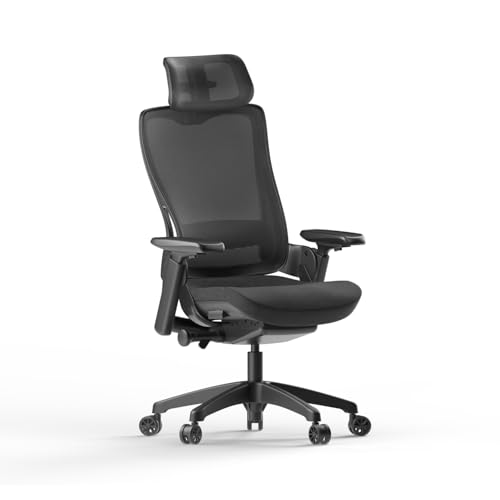
- Waterfall-edge sculpted seat
- 4D adjustable armrests
- Five-step recline with lock
Best For: Creators, gamers, and computer users
Best Adaptive Support

- Auto-following backrest
- 4D arms and 5D headrest
- Includes footrest and laptop table
Best For: Laptop users who change posture frequently
Best for Heavy-Duty Drafting

- 400-pound weight recommendation
- Double-layer seat cushion
- Adjustable foot ring and flip-up arms
Best For: Drafting stations, standing desks, and larger users
Best for Easy Setup
GABRYLLY Commercial Ergonomic Task Chair

- BIFMA 5.1-certified construction with a 300-pound capacity
- Adjustable lumbar support and versatile 3D armrests
- Breathable mesh, three-stage tilt, and quiet casters
Best For: Home offices, company workstations, and customizable desk comfort
Best for Standing Desks
Younger Ergonomic Drafting Chair

- 24.5- to 34.1-inch pneumatic seat-height range
- Adjustable foot ring, tilt, swivel, and flip-up arms
- BIFMA-standard accessories with padded faux-leather upholstery
Best For: Drafting tables, standing desks, and elevated workstations
Best for Extended Comfort

- Dynamic 3D lumbar system with extensive micro-adjustability
- 5D flip-up arms, headrest, recline, and footrest
- BIFMA-certified, 300-pound capacity, and five-year warranty
Best For: Long work sessions, gaming, and reclining comfort
Flexible Big-and-Tall Pick
GABRYLLY Ergonomic Mesh Office Chair

- Wide breathable mesh seat with 300-pound capacity
- Adjustable headrest, backrest, height, and flip-up arms
- Three-stage tilt lock with BIFMA-certified components
Best For: Roomy, adjustable mesh seating for long work sessions
Commercial-Grade Mesh Pick
ELABEST Ergonomic Mesh Office Chair

- BIFMA 5.1-certified commercial-grade construction
- 3D armrests and adjustable lumbar support
- Full-mesh seat with three-position synchro-tilt
Best For: Professional, multi-shift desk work and focused tasks
Best Overall – Steelcase Gesture
The Steelcase Gesture is a strong pick among commercial-grade ergonomic studio chairs for extended desk work. Its contoured back, 360-degree arms, recline settings, and broad fit range make it especially adaptable for changing work postures.
Best For: Long work sessions and users who want highly adjustable, premium office seating.
Pros:
- 360-degree arms and intuitive right-side adjustments support varied postures.
- Contoured back follows the spine’s natural shape.
- Three recline settings, upright back lock, and a 400-pound maximum weight recommendation.
- Designed for carpet floors and backed by a life-of-product manufacturer warranty.
Cons:
- At 70 pounds, it is relatively heavy to move.
- Assembly is required.
- Its premium feature set may be more than casual users need.
The Gesture stands out for precise adjustment and long-term support, making it a compelling choice when comfort and durability matter more than a low upfront price.
Best for Creators – Elgato Embrace
The Elgato Embrace is a practical option among commercial-grade ergonomic studio chairs for computer, gaming, and video-focused setups. Its mesh back, waterfall-edge seat, 4D armrests, and five-step recline are designed to support long sessions without excessive setup time.
Best For: Content creators, gamers, and computer users who need flexible arm and recline adjustments.
Pros:
- Waterfall-edge seat helps reduce pressure under the thighs.
- 4D armrests adjust up, down, forward, back, in, and out.
- Five-step recline with lock and adjustable tilt tension.
- Assembly uses four screws and the included Allen wrench.
Cons:
- Two-year manufacturer warranty is shorter than some premium chair warranties.
- Its 275-pound maximum weight recommendation is lower than several heavy-duty alternatives.
- The frame is plastic rather than aluminum or metal.
The Embrace balances useful ergonomic controls with a quick assembly process, making it a sensible studio chair for users who prioritize arm positioning and recline flexibility.
Best Adaptive Support – Newtral MagicH
The Newtral MagicH brings specialized posture support to the commercial-grade ergonomic studio chairs category. Its auto-following backrest, adjustable headrest, 4D armrests, recline range, footrest, and included laptop table target users who frequently shift positions while working.
Best For: Laptop users and sitters who want adaptive back support, head positioning, and a footrest.
Pros:
- Auto-following backrest adapts to changing postures.
- 4D armrests and a 5D adjustable headrest offer extensive positioning options.
- Backrest reclines and locks from 96 to 136 degrees.
- Includes a footrest and laptop table configuration.
Cons:
- The feature-rich design may require more adjustment to dial in.
- Its 14.96-inch listed seat depth may feel compact for some users.
- The supplied notes do not specify a maximum weight recommendation.
The MagicH is most distinctive for its moving backrest and workstation-oriented accessories, making it worth considering when conventional fixed lumbar support is not enough.
Best for Heavy-Duty Drafting – BOLISS 2818HD
The BOLISS 2818HD is a heavy-duty choice among commercial-grade ergonomic studio chairs, especially for drafting stations and standing desks. It combines a 400-pound capacity with a high back, double-layer cushion, adjustable foot ring, and flip-up arms.
Best For: Drafting, standing-desk work, and larger users who need a supportive elevated seat.
Pros:
- Reinforced metal base and Class 4 gas lift support up to 400 pounds.
- Double-layer cushion is designed for extended drafting or work sessions.
- Adjustable foot ring helps support the legs at drafting height.
- Flip-up arms allow the chair to slide under a desk or clear the arms for movement.
Cons:
- It offers one listed reclining position, fewer than several competing ergonomic chairs.
- Assembly is required.
- It is intended for hard floors, so it may not be ideal for carpeted studios.
The BOLISS emphasizes capacity, seat cushioning, and drafting-height functionality rather than extensive recline controls, making it a practical fit for elevated work surfaces.
Best for Easy Setup – GABRYLLY Commercial Ergonomic Task Chair
For buyers seeking commercial-grade ergonomic studio chairs with dependable adjustability, the GABRYLLY combines BIFMA 5.1 certification, adjustable lumbar support, 3D armrests, and a durable mesh design. Its 300-pound capacity and three-stage tilt make it a practical choice for extended desk work.
Best For: Home offices, company workstations, and users who prioritize adjustable back and arm support.
Pros:
- Adjustable padded lumbar support helps personalize lower-back positioning.
- 3D armrests adjust in multiple directions for typing, gaming, and varied desk heights.
- BIFMA 5.1-certified construction, a steel chassis, and a 300-pound capacity support demanding use.
- Breathable mesh, a waterfall seat edge, three-stage tilt, and quiet casters add everyday comfort.
Cons:
- Its many adjustment options may take time to configure.
- The mid-back design may provide less upper-body coverage than a high-back chair.
Overall, this is a strong all-purpose option when commercial-grade stability and detailed ergonomic adjustment matter more than a built-in footrest or headrest.
Best for Standing Desks – Younger Ergonomic Drafting Chair
This faux-leather drafting chair brings commercial-grade ergonomic studio chairs into taller work areas. Its 24.5- to 34.1-inch seat-height range suits standing desks, drafting tables, counters, and other elevated workstations, while the foot ring and contoured seat support longer sessions.
Best For: Drafting tables, standing desks, craft stations, laboratories, and dental clinics.
Pros:
- Wide pneumatic height range accommodates standard-to-counter-height work surfaces.
- Flip-up, height-adjustable arms can provide support or move out of the way.
- Adjustable foot ring, 360-degree swivel, tilt function, and rolling casters improve flexibility.
- BIFMA-standard accessories and a sturdy metal base support everyday indoor use.
Cons:
- The 12-month warranty is shorter than those offered by some competing chairs.
- Its faux-leather upholstery may feel warmer than ventilated mesh.
- The tall format is less suitable for a conventional fixed-height desk.
Choose this model when workstation height is the main challenge. It offers useful drafting-chair features, but its value depends on needing the elevated seat range.
Best for Extended Comfort – ELABEST X100 Mesh Chair
The ELABEST X100 is a feature-rich choice among commercial-grade ergonomic studio chairs, pairing dynamic lumbar tracking with a headrest, footrest, and highly adjustable arms. Its BIFMA-certified construction, 300-pound capacity, and breathable mesh suit users who alternate between focused work and relaxation.
Best For: Long home-office sessions, gaming, creative work, and users who want a footrest.
Pros:
- Dynamic 3D lumbar support adjusts for height, depth, rotation, and spinal movement.
- 5D flip-up arms offer extensive positioning and tuck beneath desks when not needed.
- Three-stage recline, an 18-inch footrest, and an adjustable headrest support breaks and relaxation.
- BIFMA-certified construction, a 300-pound capacity, and a five-year warranty provide useful reassurance.
Cons:
- The extensive adjustment system may be more than casual users need.
- Its larger feature set can require more setup and desk clearance than a basic task chair.
For buyers who want one chair to cover work, gaming, and reclining, the X100 offers the broadest comfort package here. It is best suited to users who will actively use its many adjustments.
Executive Comfort Pick – Serta Bryce Executive Office Chair
For shoppers comparing commercial-grade ergonomic studio chairs, the Serta Bryce emphasizes cushioned executive comfort with dynamic lumbar support, memory foam body pillows, and a bonded-leather finish. Its adjustable height, tilt tension, reclining function, and 275-pound capacity suit extended desk work in an executive or home-office setting.
Best For: Users who prefer a padded executive chair with built-in lumbar movement and head support.
Pros:
- Patented AIR Lumbar Technology pivots with your body to provide continuous lower-back support.
- Layered memory foam pillows and pocket coils add full-body cushioning.
- Perforated bonded leather and mesh surrounds help promote airflow.
- Heavy-duty swivel base, dual-wheel casters, adjustable height, and tilt tension provide flexible positioning.
Cons:
- Bonded leather may feel warmer than an all-mesh chair during extended use.
- Its 275-pound maximum capacity is lower than some big-and-tall alternatives.
- Assembly is required, and two-person assembly is recommended.
The Bryce is a strong choice when plush support and a polished executive appearance matter more than maximum breathability. Its one-year limited warranty and included instructions add practical buying reassurance.
Flexible Big-and-Tall Pick – GABRYLLY Ergonomic Mesh Office Chair
The GABRYLLY is a practical option among commercial-grade ergonomic studio chairs for users wanting a wide, breathable mesh seat and broad adjustability. Its headrest, flip-up arms, 90-to-120-degree recline, BIFMA certification, and 300-pound capacity make it suitable for long work sessions across office environments.
Best For: Users seeking a roomy mesh chair with folding arms and support for a wider range of body sizes.
Pros:
- Adjustable seat height, headrest, backrest, and flip-up armrests support personalized positioning.
- Wide mesh seat and breathable mesh back promote airflow during extended sitting.
- Three-stage tilt lock enables upright or reclined working positions.
- BIFMA-certified design, class-4 gas lift, and 300-pound capacity support workplace use.
Cons:
- The manufacturer recommends users approximately 5 feet 2 inches to 6 feet 1 inch tall.
- Mesh upholstery provides less plush cushioning than a padded executive chair.
- Assembly is required, even though setup is estimated at about 15 to 20 minutes.
Choose the GABRYLLY when breathable materials, a generous seat, and space-saving flip-up arms are priorities. Its three-year warranty noted in the product bullets and commercial-oriented certifications strengthen its appeal for shared or professional spaces.
Commercial-Grade Mesh Pick – ELABEST Ergonomic Mesh Office Chair
The ELABEST stands out among commercial-grade ergonomic studio chairs because its notes specifically cite BIFMA 5.1 certification and daily multi-shift durability. It combines an adjustable lumbar system, synchro-tilt mechanism, 3D armrests, and a full-mesh seat for users who spend long hours typing, coding, or handling focused desk work.
Best For: Professionals wanting commercial-grade certification, extensive arm adjustment, and breathable all-day mesh support.
Pros:
- Bionic-curve backrest and adjustable lumbar support are designed for prolonged sitting.
- Three lockable synchro-tilt positions and adjustable tension allow controlled reclining.
- 3D armrests adjust for height, width, and angle to suit different desk tasks.
- BIFMA 5.1 commercial-grade construction includes a heavy-duty base and rolling casters.
Cons:
- The seat is 17.7 inches deep, which may not suit every body type.
- The listed hard-floor surface recommendation may require extra care on other flooring.
- Users needing a different seat-height range must contact the manufacturer about customization.
The ELABEST is the most directly workplace-focused choice in this group, pairing commercial certification with highly adjustable upper-body support. Its full-mesh construction also makes it a sensible alternative to foam or bonded-leather chairs for heat-sensitive users.
How We Picked the Best Commercial-Grade Ergonomic Studio Chairs
We focused on chairs suited to frequent, extended use rather than occasional seating. Key considerations included adjustment range, lumbar and upper-back support, armrest flexibility, seat construction, recline function, weight capacity, and materials likely to withstand a busy studio environment. We also noted commercial-oriented signals such as BIFMA 5.1 certification where listed, while recognizing that certification alone does not determine comfort or fit.
The selection includes premium models such as the Steelcase Gesture, mesh chairs with breathable backs, drafting chairs for elevated work surfaces, and wider or higher-capacity options. Features such as headrests, footrests, flip-up arms, and multi-function controls can be useful, but they should support your actual workstation rather than add complexity you will not use.
Quick Comparison
- Best premium all-around option: Steelcase Gesture, with extensive adjustability and a durable office-chair design.
- Best for breathable support: Elgato Embrace and the selected GABRYLLY and ELABEST mesh models.
- Best for drafting or standing desks: The tall drafting chairs with foot rings and elevated seat heights.
- Best for larger users: The BOLISS and big-and-tall ELABEST and GABRYLLY models.
- Best for reclining or recovery breaks: Newtral, ELABEST X100, and Serta Bryce options with recline or footrest features.
Key Buying Factors for Commercial-Grade Ergonomic Studio Chairs
Fit and Adjustability
Seat height should let your feet rest flat while your knees remain roughly level with your hips. Look for a seat depth that supports your thighs without pressing behind your knees. Adjustable lumbar support, backrest tension, and recline limits help accommodate different body shapes and working positions.
Armrests and Desk Alignment
Adjustable arms are valuable for keyboard, mouse, controller, and instrument work. Four-dimensional or multi-function arms provide more positioning options, while flip-up arms can clear a desk or guitar. Ensure the chair can fit under your work surface with the arms at a comfortable height.
Materials, Ventilation, and Durability
Mesh backs promote airflow during long sessions, while padded or faux-leather seats may provide a softer executive feel. Check the base, casters, cylinder, warranty, and stated weight capacity. A chair with a durable frame and replaceable parts can be a better long-term studio investment than one with more features but weaker construction.
Recline, Headrests, and Footrests
Recline is useful for listening, reading, or taking short breaks, but it should lock securely and maintain lumbar contact. Headrests and footrests are preference-based: they can improve relaxed support, yet may interfere with an upright mixing or editing posture.
Who Should Buy Which Commercial-Grade Ergonomic Studio Chairs?
Choose a premium, highly adjustable chair if you spend most of the day in the studio and want refined controls and long-term build quality. Choose a mesh task chair if ventilation and easy upright positioning matter most. Drafting models are better for counter-height desks, keyboard stands, and elevated workstations. Big-and-tall chairs make sense when you need a wider seat or higher weight rating, while footrest-equipped models suit users who regularly recline between focused tasks.
Before buying, measure your desk height, available floor space, and preferred seat height. Confirm the return policy as well: even well-designed Commercial-Grade Ergonomic Studio Chairs can feel different depending on your proportions, posture, and workstation setup.
