
Choosing a navigation computer for demanding cycling use is about more than getting turn-by-turn directions. The best units combine accurate GPS, readable displays, dependable battery life, and rider-friendly controls that hold up on long, fast, and unpredictable routes.
This roundup of commercial-grade bike navigation computers focuses on models that are built for serious road, gravel, endurance, and adventure riding. Whether you want advanced training tools, vivid mapping, or simple route guidance, the right computer can make every ride safer and easier to manage.
Best 10 Commercial-Grade Bike Navigation Computers Picks for 2026
Premium Race-Ready Navigator

- Vivid touchscreen with on-device course creation
- Up to 20 hours battery, or 60 hours in saver mode
- Advanced training tools, alerts, and smart ride connectivity
Best For: Riders who want a premium all-in-one computer for navigation and training
Endurance Distance Specialist
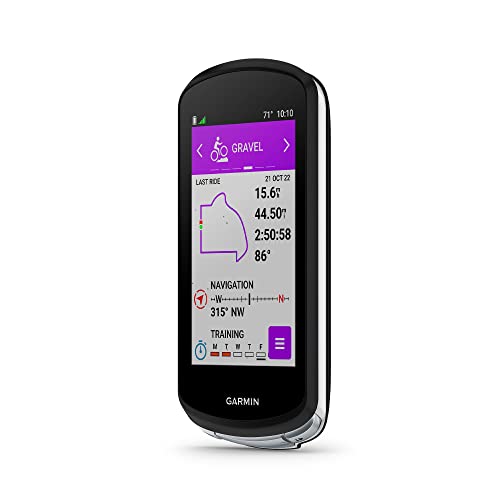
- Solar charging for extremely long battery life
- Multi-band GNSS for improved positioning accuracy
- Power guide, stamina insights, and smart training prompts
Best For: Endurance riders who want long battery life and accurate navigation
Connected Adventure Computer

- Intuitive interface for managing ride data and maps
- Multi-band GNSS for accurate tracking
- Works with SRAM AXS, e-bikes, and ANT+ lights
Best For: Cyclists who want a responsive navigation-first computer with strong connectivity
Easy Route Companion

- 3-inch touchscreen built for sunlight, gloves, and rain
- Simple setup with ready-to-use activity profiles
- Maps, LiveTrack, GroupTrack, and Varia compatibility
Best For: Riders who want an easy navigator for road, off-road, and eBike use
Adventure-Ready GPS Navigator

- 3.5-inch color touchscreen with buttons
- 50-hour battery for long rides
- Offline maps and turn-by-turn routing
Best For: Long-distance riders who need offline navigation and maximum battery life
Compact Training Navigator
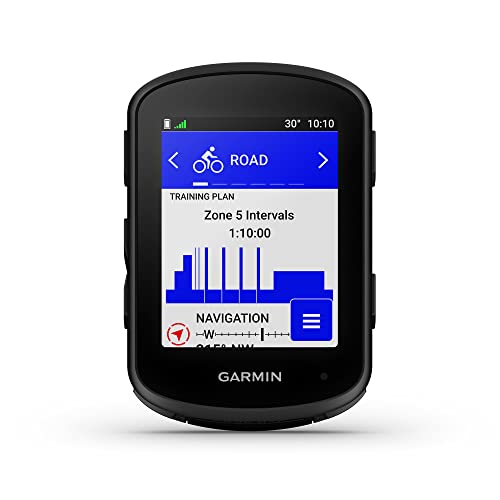
- Touchscreen and button control
- Multi-band GNSS for better accuracy
- Training tools like ClimbPro and stamina
Best For: Performance riders who want compact navigation with advanced coaching features
Premium Ride Command Center

- Vivid 3.5-inch color touchscreen
- Advanced training and stamina insights
- GroupRide, live sharing, and Garmin Pay
Best For: Serious cyclists who want a premium screen and advanced connected ride features
Elite Navigation & Training Focus
Garmin Edge 540 Compact GPS Cycling Computer

- Multi-band GNSS for improved positioning accuracy
- Up to 26 hours battery, 42 hours in saver mode
- ClimbPro, power guide, and stamina insights
Best For: Riders who want a button-driven GPS computer with strong navigation and training tools
Touchscreen Smart Ride Command
Garmin Edge 850 Compact GPS Cycling Computer
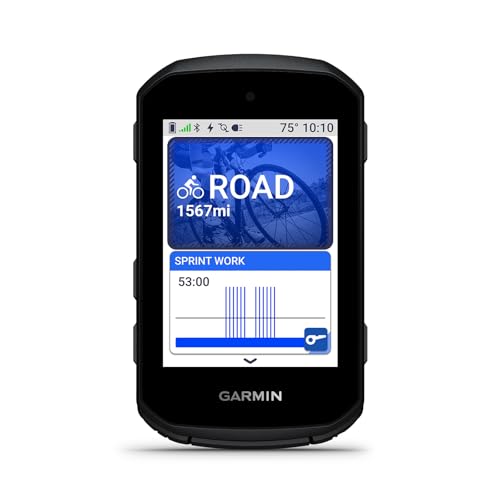
- Vivid color touchscreen with button controls
- Trailforks maps, Forksight, and course creation
- Smart fueling alerts plus speaker and bike bell
Best For: Cyclists who want a premium touchscreen computer with advanced navigation and connected features
Value-Focused Ride Tracker
Garmin Edge 550 Compact GPS Cycling Computer
- Button controls with vivid color navigation
- Trailforks maps, Forksight, and hazard reports
- Garmin Coach and fueling alerts for training
Best For: Riders who want a capable button-based GPS computer with strong mapping and coaching
Premium Race-Ready Navigator – Garmin Edge 1050
If you want a top-tier commercial-grade bike navigation computer, the Garmin Edge 1050 is built for riders who value advanced navigation, deep training tools, and smart ride features in one device. Its vivid color touchscreen, course creation tools, road-surface awareness, and real-time climbing data make it especially useful for structured training and demanding rides.
Best For: Riders who want a premium all-in-one computer for navigation, performance tracking, and smart ride connectivity.
Pros:
- Vivid color touchscreen with on-device course creation and clear map viewing.
- Up to 20 hours of battery life, or up to 60 hours in battery saver mode.
- Live ride features include in-ride messaging, live locations, incident detection, and leaderboards when paired with a smartphone.
- Training tools include personalized coaching, ClimbPro ascent planning, and power guide adjustments with real-time stamina and wind.
Cons:
- Best features depend on pairing with a compatible smartphone, power meter, or heart rate monitor.
- Premium feature set may be more than casual riders need.
Overall, the Edge 1050 is the most feature-packed option here, combining navigation, awareness, and performance tools in a polished package. It stands out for riders who want a high-end computer that can handle both serious training and complex route management.
Endurance Distance Specialist – Garmin Edge 1040 Solar
The Garmin Edge 1040 Solar is a strong pick if you need a commercial-grade bike navigation computer with long battery life and dependable positioning. Its solar charging lens, multi-band GNSS, and ride type-specific maps make it well suited to long rides, route planning, and training-focused use.
Best For: Endurance riders who want long battery life, accurate navigation, and training tools for big days on the bike.
Pros:
- Solar charging extends battery life to up to 100 hours in battery saver mode.
- Multi-band GNSS improves positioning accuracy in challenging environments.
- Ride type-specific maps highlight popular roads, trails, and searchable points of interest.
- Training features include power guide, stamina insights, missed workout prompts, and fitness-to-course comparison.
Cons:
- Many advanced features require compatible sensors.
- Solar gains depend on daylight conditions.
For riders who prioritize endurance and navigation accuracy, the Edge 1040 Solar offers a balanced mix of battery life and performance tools. It is especially appealing if you want a computer that can stay useful on long, demanding rides.
Connected Adventure Computer – Hammerhead Karoo
The Hammerhead Karoo is aimed at riders who want a commercial-grade bike navigation computer with a clean interface and fast map handling. Its intuitive hardware and software, expanded memory, and multi-band GNSS are built to help you manage ride data and navigate accurately without slowing you down.
Best For: Cyclists who want a responsive, navigation-first computer with strong ecosystem connectivity.
Pros:
- Intuitive hardware and software help reduce distractions while riding.
- Extended battery life and ample memory support longer rides and faster map rendering.
- Multi-band GNSS improves tracking accuracy across city streets and trails.
- Works with SRAM AXS products, e-bikes, ANT+ lights, and more for added customization.
Cons:
- Feature notes focus more on navigation and connectivity than on detailed training metrics.
- Best value depends on whether you use compatible ecosystem accessories.
The Karoo is a compelling choice if your priority is smooth navigation, quick map response, and straightforward ride management. It fits riders who want modern hardware and strong compatibility without a cluttered interface.
Easy Route Companion – Garmin Edge Explore 2
The Garmin Edge Explore 2 is a practical commercial-grade bike navigation computer for riders who want simple setup and clear route guidance. With a bright 3-inch touchscreen, preloaded activity profiles, and ride-type maps, it focuses on making everyday cycling navigation easy to use right away.
Best For: Riders who want an easy-to-use navigator for road, off-road, indoor, and eBike rides.
Pros:
- 3-inch touchscreen is glove- and rain-friendly, and stays visible in sunlight.
- Simple setup with preloaded road, off-road, and indoor activity profiles.
- Improved maps include roads, trails, searchable POIs, and eBike routing.
- Supports LiveTrack, GroupTrack, incident detection, and compatible Varia devices.
Cons:
- Compatible sensors are sold separately for deeper performance tracking.
- Best for navigation simplicity rather than advanced training features.
Edge Explore 2 is a smart option if you want a dependable navigator without a steep learning curve. It delivers the core mapping and safety features most riders need, while keeping the setup straightforward.
Adventure-Ready GPS Navigator – Bryton Rider S810
If you want a commercial-grade bike navigation computer for long rides, the Bryton Rider S810 is built around endurance, offline routing, and easy-to-read controls. Its 3.5-inch color touchscreen, physical buttons, and 50-hour battery life make it a practical pick for gravel, bikepacking, and all-day route following.
Best For: Long-distance riders, gravel cyclists, and bikepackers who need offline navigation and serious battery life.
Pros:
- Large 3.5-inch touchscreen with adaptive light sensor for better visibility outdoors
- 50-hour battery life suits century rides, multi-day trips, and remote exploration
- Offline maps and turn-by-turn guidance work without cell service or phone data
- Supports ANT+ sensors, radar, and smart trainer integration
Cons:
- Device-only package does not include extra sensor hardware
- Interface is geared more toward route and training functions than simple casual use
The Rider S810 stands out when dependable navigation matters more than flashy extras. For riders who spend time off the grid or simply hate charging often, it offers a strong balance of screen size, battery endurance, and navigation tools.
Compact Training Navigator – Garmin Edge 840
The Garmin Edge 840 is a strong commercial-grade bike navigation computer for riders who want compact hardware with serious training and routing tools. It combines touchscreen and button control, multi-band GNSS positioning, and detailed ride guidance in a small unit that still covers advanced performance needs.
Best For: Performance-focused cyclists who want reliable navigation plus adaptive training features in a compact unit.
Pros:
- Touchscreen plus button control gives flexible operation in varied conditions
- Multi-band GNSS improves positioning accuracy in challenging environments
- ClimbPro, power guide, stamina insights, and daily workout prompts support training
- Ride type-specific maps and searchable points of interest help with route planning
Cons:
- 2.6-inch screen is smaller than larger premium cycling computers
- Battery life is solid, but shorter than some endurance-focused competitors
The Edge 840 is a balanced choice if you want navigation and training intelligence in a compact form. It makes the most sense for riders who care about accurate positioning, climb data, and structured coaching on the bike.
Premium Ride Command Center – Garmin Edge 1050
The Garmin Edge 1050 is aimed at riders who want a premium commercial-grade bike navigation computer with a large vivid display and deep ride intelligence. It adds high-end mapping, adaptive training, and connected safety features, making it a strong choice for demanding cyclists who expect more than basic turn-by-turn directions.
Best For: Serious cyclists who want a premium display, advanced training insights, and connected ride features.
Pros:
- High-resolution 3.5-inch vivid color touchscreen improves map and data visibility
- Up to 60 hours in battery saver mode supports very long outings
- Adaptive training, real-time stamina tracking, ClimbPro, and power guidance add depth
- GroupRide messaging, live location sharing, incident detection, and Garmin Pay increase convenience
Cons:
- Premium feature set may be more than casual riders need
- Battery life in demanding use is lower than endurance-first alternatives
The Edge 1050 is the most feature-rich option here and clearly targets riders who want a top-tier cockpit experience. If you value a vivid screen, advanced ride guidance, and connected tools, it is built to deliver.
Elite Navigation & Training Focus – Garmin Edge 540 Compact GPS Cycling Computer
If you want a commercial-grade bike navigation computer that leans hard into training and route execution, the Garmin Edge 540 is built for that job. It combines button controls, multi-band GNSS accuracy, ride-specific maps, ClimbPro ascent data, and structured training prompts in a compact unit that stays practical on long, demanding rides.
Best For: Riders who want a button-driven GPS computer with strong navigation, climbing tools, and adaptive training support.
Pros:
- Multi-band GNSS improves positioning accuracy in challenging environments.
- Up to 26 hours of battery life in demanding use cases, or 42 hours in battery saver mode.
- ClimbPro, power guide, stamina insights, and suggested workouts add useful training depth.
- Ride-type maps highlight popular roads, trails, and searchable points of interest.
Cons:
- Button-only control may be less convenient than touchscreen navigation for some riders.
- Advanced coaching and effort tools depend on compatible power meter and heart rate monitor pairing.
Overall, the Edge 540 is a strong pick if you value reliability, battery life, and performance guidance more than touchscreen convenience. It feels especially well suited to riders who want a serious navigation computer that can also support structured training.
Touchscreen Smart Ride Command – Garmin Edge 850 Compact GPS Cycling Computer
The Garmin Edge 850 is aimed at riders who want a commercial-grade bike navigation computer with a vivid color touchscreen and deeper in-ride awareness. Along with preloaded road, gravel, and Trailforks maps, it adds smart fueling alerts, weather overlays, a built-in speaker, and multi-band GPS with 5 Hz recording for precise ride tracking.
Best For: Cyclists who want a premium touchscreen computer with advanced navigation, alerts, and connected ride features.
Pros:
- Vivid color touchscreen plus button controls make the interface flexible.
- Trailforks maps, Forksight mode, and on-device course creation help with route planning.
- Smart fueling alerts, radar and wind overlays, and road hazard reports improve ride decisions.
- Built-in speaker, bike bell, Garmin Pay, and group ride messaging add practical convenience.
Cons:
- Battery life is shorter than the button-only models at up to 12 hours in demanding use cases.
- Many connected features require a compatible smartphone and the Garmin Connect app.
In practice, the Edge 850 stands out as the most feature-rich option in this group for riders who want a modern, interactive interface. It balances navigation, training, and connectivity well, especially if you ride where live alerts and on-device convenience matter.
Value-Focused Ride Tracker – Garmin Edge 550 Compact GPS Cycling Computer
The Garmin Edge 550 is a practical commercial-grade bike navigation computer for riders who want premium map and training features without a touchscreen. It offers vivid color navigation, Trailforks maps, smart fueling alerts, multi-band GPS with 5 Hz recording, and Garmin Coach plans in a button-controlled design that keeps operation straightforward on the bike.
Best For: Riders who want a capable button-based GPS computer with strong mapping, safety, and coaching features.
Pros:
- Preloaded road, gravel, and trail maps include Trailforks and Forksight support.
- Multi-band GPS with automatic 5 Hz recording improves accuracy on fast descents.
- Smart fueling alerts, weather overlays, and road hazard reports add real-world ride utility.
- Garmin Coach plans adapt to training load, recovery, and course demands when paired with compatible sensors.
Cons:
- No touchscreen, so interaction is limited to button controls.
- Battery life is rated at up to 12 hours in demanding use cases, which is modest for very long rides.
The Edge 550 is a strong fit if you want Garmin’s newer navigation and training tools in a simpler interface. It delivers a lot of the same ride intelligence as more expensive models, but in a button-first format that may appeal to riders who prefer reliability over touchscreen extras.
How We Picked These Commercial-Grade Bike Navigation Computers
We prioritized navigation performance first: GPS accuracy, mapping quality, route recalculation, and screen readability in real-world riding conditions. We also weighed battery life, durability, interface speed, sensor support, and the kinds of features serious riders actually use, such as climb data, structured workouts, and offline maps.
Because these are Commercial-Grade Bike Navigation Computers, we looked for models suitable for frequent use, long-distance rides, and mixed terrain—not just casual weekend outings.
Quick Comparison
Some buyers will want the most advanced display and feature set, while others may prefer compact size, longer battery life, or simpler navigation. In general, Garmin’s premium Edge models lean toward deep training integration and polished ecosystem support, Hammerhead emphasizes a modern touchscreen experience, and Bryton often appeals to riders who want strong endurance and navigation value.
Key Buying Factors for Commercial-Grade Bike Navigation Computers
Battery Life and Charging
For endurance riding, look for a computer that can comfortably outlast your longest planned ride with navigation active. Solar charging, power-save modes, and efficient display settings can matter more than headline battery numbers.
Display and Usability
A bright, legible screen is critical in sunlight, rain, and rough riding. Touchscreens are convenient for map interaction, while button controls can be easier with gloves or wet conditions. Consider what feels safest and most reliable for your riding style.
Navigation and Mapping
Offline maps, rerouting, climb alerts, and POI support are especially valuable on unfamiliar roads and remote routes. If you ride mixed surfaces or travel often, choose a unit with strong route planning and dependable map detail.
Training and Sensor Support
If you use power meters, heart-rate straps, radar, or smart trainers, confirm broad sensor compatibility. More advanced riders may also want structured workouts, performance metrics, and integration with training platforms.
Ruggedness and Ecosystem
Durability, water resistance, mounting options, and software support all matter in daily use. The best Commercial-Grade Bike Navigation Computers are not just feature-rich; they’re easy to trust ride after ride.
Who Should Buy Which Commercial-Grade Bike Navigation Computers?
Choose a flagship model if you want the best screen, fastest interface, and the broadest feature set for training and navigation. Pick a compact Edge if you prefer a lighter setup with strong core performance. Go with a battery-focused option if you ride long events, bikepack, or spend hours off the grid. If your priority is simple, reliable route guidance, a more approachable navigator may be the better fit.
In short, match the computer to your riding demands, not just the spec sheet. The right unit should make navigation effortless, reduce mid-ride stress, and stay dependable when conditions get tough.
