
Stable water chemistry is essential for healthy fish, corals, and aquaculture systems. The best commercial-grade aquarium monitoring systems make it easier to track key readings, spot changes early, and respond before problems become costly.
This roundup compares handheld testers, connected multi-parameter monitors, controller displays, and app-enabled systems for saltwater, freshwater, reef, and aquaculture setups.
Best 10 Commercial-Grade Aquarium Monitoring Systems Picks for 2026
Best Multi-Parameter Kit
Exact iDip 570 Marine Aquarium Test Kit
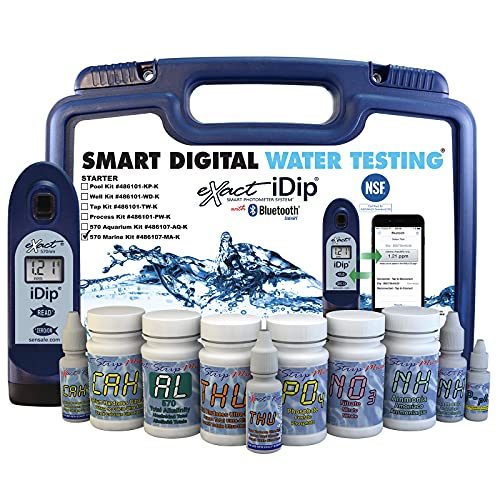
- Digital Bluetooth photometer with app support
- Tests seven key marine-water parameters
- Includes case and 25 tests per parameter
Best For: Marine aquariums, reef tanks, and aquaculture testing
Best for Oxygen Monitoring
GIDIGI Digital Dissolved Oxygen Meter
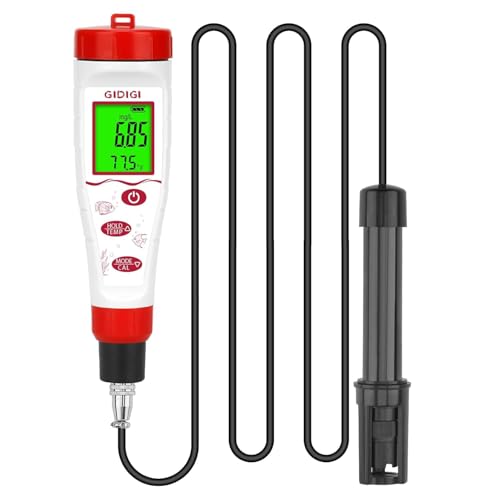
- Measures oxygen in mg/L and saturation modes
- Includes ATC and app-based compensation
- Uses a long 3-meter electrode cable
Best For: Aquaculture, marine fish systems, ponds, and oxygen checks
Best Smart Real-Time Monitor
7-in-1 Aquarium Water Quality Monitor

- Tracks seven parameters continuously
- Provides Tuya app alerts over 2.4GHz Wi-Fi
- Includes a replaceable platinum probe
Best For: Connected monitoring of freshwater, reef, saltwater, and pond systems
Best Environmental Display
AvidAqua Insight Pro Apex Display

- Designed for Neptune Apex controller systems
- Tracks room temperature and humidity
- Monitors CO2 and VOC levels
Best For: Apex users monitoring aquarium-room conditions
Smart Multi-Parameter Pick
WiFi 8-in-1 Water Quality Tester

- Measures pH, EC, TDS, salinity, ORP, SG, and temperature
- Tuya app enables alerts, trends, and remote monitoring
- Includes calibration supplies and mounting accessories
Best For: Remote, broad-spectrum aquarium water monitoring
Dedicated Display Pick
Insight Standard Aquarium Controller Display

- Shows Apex data on a 4-inch touchscreen
- Wireless Apex Local connectivity over Wi-Fi
- Customizable widgets and table or magnetic mounting options
Best For: Apex owners wanting an always-on aquarium dashboard
Wall-Mount Reporting Pick

- Measures eight aquarium and water-quality parameters
- Three LCD screens show readings locally
- Exports logged reports through the Tuya app
Best For: Fixed monitoring stations needing visible data and reports
Connected Precision Pick
WiFi pH, EC & Temperature Monitor

- Tracks pH, EC, and temperature in real time
- Offers app alerts, trends, and data export
- Adds a relay socket for automatic regulator control
Best For: App-connected pH monitoring with basic automation
Saltwater Coverage Pick
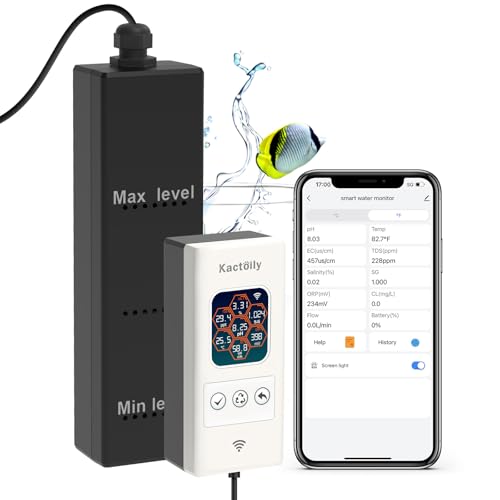
- Measures seven parameters for freshwater and saltwater
- Sends customizable app, phone, and SMS alerts
- Includes pH and ORP calibration supplies
Best For: Broad remote monitoring across freshwater and saltwater tanks
Broad-Spec Accuracy Pick

- Tracks eight water-quality measurements
- Offers Tuya app access to readings and trends
- Includes a replaceable probe and stated accuracy ranges
Best For: Broad monitoring with published sensor specifications
Best Multi-Parameter Kit – Exact iDip 570 Marine Aquarium Test Kit
For aquarists comparing commercial-grade aquarium monitoring systems, the Exact iDip 570 is a strong choice when you need portable, multi-parameter testing rather than continuous monitoring. Its Bluetooth photometer and app provide digital readings without color matching across seven marine-water parameters.
Best For: Reef tanks, marine aquariums, and aquaculture setups needing broad, app-assisted water testing.
Pros:
- Tests calcium hardness, nitrate, alkalinity, ammonia, total hardness, phosphate, and pH.
- Digital photometer readings reduce the guesswork of color comparison.
- Includes a carrying case, accessories, and 25 tests for each included parameter.
- Quality-controlled components and U.S. manufacturing support repeatable testing.
Cons:
- This is a manual test kit, not a real-time tank monitor.
- Replacement reagent strips are needed as the included tests are used.
- Its marine-focused test ranges may be more than needed for simple freshwater testing.
The Exact iDip 570 stands out for parameter coverage and organized field use. Choose it when detailed periodic testing matters more than unattended alerts or continuous readings.
Best for Oxygen Monitoring – GIDIGI Digital Dissolved Oxygen Meter
Among commercial-grade aquarium monitoring systems, this dissolved oxygen meter is designed for users who need a focused way to measure oxygen in tanks, ponds, and aquaculture systems. It provides mg/L and saturation readings, with temperature, salinity, and altitude compensation options.
Best For: Marine fish keepers, aquaculture operators, ponds, and other systems where dissolved oxygen is a priority.
Pros:
- Displays dissolved oxygen in both mg/L and saturation-percentage modes.
- Automatic temperature compensation helps stabilize readings.
- Bluetooth app support allows salinity and barometric-pressure compensation plus data management.
- A 3-meter electrode cable helps reach deeper water.
Cons:
- It focuses on dissolved oxygen rather than broad water chemistry.
- The electrode requires calibration and periodic membrane or electrolyte maintenance.
- Salinity and altitude compensation require app-based adjustment.
This meter is a practical specialist tool for oxygen-sensitive aquatic environments. It complements, rather than replaces, a broader pH, ammonia, nitrate, or alkalinity testing routine.
Best Smart Real-Time Monitor – 7-in-1 Aquarium Water Quality Monitor
This 7-in-1 unit fits shoppers seeking commercial-grade aquarium monitoring systems with continuous, app-connected visibility. It tracks pH, temperature, TDS, conductivity, salinity, specific gravity, and ORP through a replaceable probe and 2.4GHz Wi-Fi connection.
Best For: Freshwater, saltwater, reef, planted, and pond setups where remote alerts and real-time trends are useful.
Pros:
- Monitors seven water-quality readings in real time.
- Tuya Smart App support provides remote monitoring and alerts.
- Offers a color display, three-point pH calibration, and automatic temperature compensation.
- Replaceable platinum probe includes installation accessories such as suction cups and floater rings.
Cons:
- Requires 2.4GHz Wi-Fi for its connected features.
- Probe calibration and maintenance remain part of ongoing use.
- It does not list ammonia, nitrate, phosphate, or alkalinity monitoring.
For hands-off visibility across several basic water metrics, this is the most connected option in the group. Confirm that its selected parameters match your testing plan, especially for reef systems requiring additional chemistry checks.
Best Environmental Display – AvidAqua Insight Pro Apex Display
The AvidAqua Insight Pro takes a different approach to commercial-grade aquarium monitoring systems by presenting environmental information for a Neptune Apex setup. It monitors surrounding temperature, humidity, CO2, and volatile organic compounds, making it useful for tracking the room conditions around an aquarium.
Best For: Neptune Apex users who want a dedicated high-contrast display for room and air-quality data.
Pros:
- Designed as a display for Neptune Apex controller systems.
- Tracks ambient room temperature and humidity.
- Monitors CO2 and volatile organic compounds.
- High-contrast presentation is suited to at-a-glance viewing.
Cons:
- It is an environmental display, not a complete aquarium-water test system.
- The supplied information does not list direct pH, nutrient, salinity, or dissolved-oxygen testing.
- Its usefulness depends on having a compatible Neptune Apex setup.
This display is best treated as an environmental companion to aquarium control hardware. It can add useful context about the room around the tank, but it should not be the only monitoring device for water chemistry.
Smart Multi-Parameter Pick – WiFi 8-in-1 Water Quality Tester
For aquarists comparing commercial-grade aquarium monitoring systems, this WiFi-enabled tester combines broad parameter coverage with remote Tuya app access. It measures pH, EC, TDS, salinity, ORP, specific gravity, and temperature, making it useful when a single probe is preferred over several separate tools.
Best For: Aquarium keepers who want remote monitoring and multi-parameter readings for freshwater or saltwater systems.
Pros:
- Tracks eight water-quality metrics, including pH, salinity, ORP, and temperature.
- Tuya app support provides real-time data, alerts, historical trends, and remote access.
- Includes automatic temperature compensation and stated pH accuracy of ±0.05.
- Comes with calibration powder, a protective cap, floater ring, and mounting hardware.
Cons:
- Calibration is still recommended every four to six months.
- The broad feature set may be more than needed for users who only monitor pH and temperature.
This is a versatile choice for monitoring several aquarium parameters from one connected instrument. Its app features and included accessories add convenience, while regular calibration remains part of maintaining accuracy.
Dedicated Display Pick – Insight Standard Aquarium Controller Display
AvidAqua Insight Standard Aquarium Controller Display | Neptune Apex, Hydros Monitoring Screen
Check Price On AmazonAmong commercial-grade aquarium monitoring systems, the Insight Standard stands out as an always-on display for existing Neptune Systems Apex setups. Its 4-inch touchscreen keeps controller data visible without requiring repeated phone checks or a cable back to the Apex head unit.
Best For: Apex users who want a convenient standalone screen for frequently viewed aquarium parameters.
Pros:
- Displays real-time pH, temperature, salinity, ORP, and Trident-controlled parameters.
- Connects over existing Wi-Fi through Apex Local.
- Customizable dashboard widgets keep selected data readily visible.
- Includes a table stand and supports optional magnetic mounting.
Cons:
- Designed exclusively for Neptune Systems Apex controllers.
- Advanced room CO2, ambient temperature, humidity, and VOC monitoring requires the Pro model.
This is less a standalone water tester than a dedicated visual interface for an Apex system. It makes routine observation easier, but its compatibility limitation is important to confirm before buying.
Wall-Mount Reporting Pick – Tuya 8-in-1 Water Monitor
This wall-mount tester offers a practical format for commercial-grade aquarium monitoring systems when visible readings and logged reports matter. It measures pH, specific gravity, EC, salt, ORP, TDS, CF, and temperature, while its Tuya connection supports ongoing tracking from a phone.
Best For: Fish tanks, hydroponic setups, and lab or educational applications needing wall-mounted readings and exportable water-quality records.
Pros:
- Monitors eight parameters with stated precision figures for pH, ORP, temperature, and conductivity-related readings.
- Three LCD screens provide simultaneous at-a-glance information.
- Tuya Wi-Fi enables 24/7 updates, data logs, and daily, weekly, or monthly report exports.
- Includes accessories for wall installation.
Cons:
- The tester is not waterproof and must be protected from water and moisture.
- Wall mounting may be less convenient than a portable handheld meter for occasional testing.
- Its reporting and connection features may require more setup than a basic test tool.
This model is well suited to fixed installations where operators want both local screens and historical records. Plan the mounting location carefully because the unit should not be exposed to water.
Connected Precision Pick – WiFi pH, EC & Temperature Monitor
For buyers comparing commercial-grade aquarium monitoring systems, this 3-in-1 unit emphasizes fast pH, EC, and temperature readings with WiFi access and automatic alerts. Its BNC probe, backlit display, data export, and relay socket make it useful for ongoing monitoring and basic automated correction.
Best For: Aquarium keepers who want app-based alerts, trend tracking, and relay-assisted pH control.
Pros:
- Displays pH, EC, and temperature data through a mobile app in real time.
- Provides high/low alerts, history export, and 24-hour water-quality trends.
- Includes a large backlit LCD, corrosion-resistant BNC probe, and relay socket for automatic regulator control.
Cons:
- Measures fewer parameters than the all-in-one 7-in-1 and 8-in-1 alternatives.
- The supplied notes do not specify app subscription details, probe replacement intervals, or relay compatibility.
This is a practical choice when pH control and remote visibility matter more than tracking a broad range of aquarium chemistry metrics. The relay feature is especially notable for users seeking less hands-on adjustment.
Saltwater Coverage Pick – 7-in-1 Smart Aquarium Monitor
Among commercial-grade aquarium monitoring systems, this WiFi monitor stands out for combining seven measurements in one device. It covers pH, ORP, salinity, specific gravity, TDS, EC, and temperature, with customizable Tuya Smart alerts for freshwater, saltwater, and hydroponic setups.
Best For: Freshwater or saltwater aquariums needing broad parameter coverage and remote threshold notifications.
Pros:
- Measures seven key parameters, including ORP, salinity, specific gravity, TDS, EC, pH, and temperature.
- Supports 24/7 WiFi monitoring with app, phone, or SMS notifications.
- Includes pH three-point calibration powders and ORP calibration powder.
Cons:
- EC calibration solution is not included and must be purchased separately.
- Probe placement requires care, particularly in saltwater and near protein separators.
- The supplied notes do not state sensor accuracy figures.
This model is a strong fit for aquarists who want extensive saltwater and freshwater tracking in one system. Its calibration supplies and customizable alerts add useful support, though buyers should budget for separate EC solution.
Broad-Spec Accuracy Pick – 8-in-1 App Water Monitor
This 8-in-1 device is a versatile option for commercial-grade aquarium monitoring systems, covering pH, temperature, TDS, EC, salinity, specific gravity, and ORP. Tuya app connectivity provides remote readings and trends, while the replaceable probe and stated accuracy specifications support routine monitoring across aquarium and water-treatment applications.
Best For: Users who want broad measurement coverage, published accuracy ranges, and a replaceable probe.
Pros:
- Monitors eight water-quality values, including pH, temperature, TDS, EC, salinity, specific gravity, and ORP.
- Provides remote readings and water-quality trends through the Tuya app.
- Lists measurement accuracy figures and includes a replaceable probe with a calibration reminder.
Cons:
- The supplied notes do not mention automatic dosing or relay-based control.
- Calibration is recommended every four to six months, adding routine maintenance.
- The notes do not specify whether calibration solutions are included.
Choose this model when measurement breadth and published sensor tolerances are priorities. It is suited to mixed aquarium, hydroponic, pond, and laboratory use, but it focuses on monitoring rather than automatic water adjustment.
How We Picked These Commercial-Grade Aquarium Monitoring Systems
We prioritized measurement range, probe design, connectivity, display quality, alert support, and suitability for demanding aquarium environments. The selection includes systems for one-time testing as well as continuously connected monitoring. We also considered whether each unit supports saltwater use, data logging, mobile alerts, calibration, and practical installation.
“Commercial-grade” does not always mean laboratory-certified accuracy. For critical systems, look for published accuracy specifications, replaceable probes, calibration instructions, and a clear maintenance schedule.
Quick Comparison
| System type | Best for | Key strengths |
|---|---|---|
| Bluetooth test kit | Portable testing | Guided readings and wireless data access |
| Dissolved oxygen meter | Aquaculture and oxygen-sensitive systems | Dedicated DO measurement with temperature compensation |
| 7-in-1 or 8-in-1 monitor | Broad water-quality tracking | pH, temperature, salinity, TDS, EC, ORP, and specific gravity in one device |
| Controller display | Existing aquarium controllers | At-a-glance status and centralized viewing |
| Wi-Fi smart monitor | Remote supervision | App alerts, live readings, and data history |
Key Buying Factors for Commercial-Grade Aquarium Monitoring Systems
Parameters and Measurement Range
Choose measurements that match the system’s risks. Reef aquariums commonly need pH, temperature, salinity or specific gravity, and ORP. Aquaculture operations may place greater emphasis on dissolved oxygen, temperature, pH, and conductivity. TDS and EC can be useful for freshwater, hydroponic, and source-water checks but should not be treated as substitutes for every aquarium test.
Accuracy, Calibration, and Probe Maintenance
Check stated accuracy, resolution, calibration points, and replacement-probe availability. pH and ORP probes require regular calibration and should not be allowed to dry out unless the manufacturer specifically permits it. Temperature compensation and salt compensation can improve readings, but they do not eliminate the need for routine verification with reference solutions or independent tests.
Alerts and Connectivity
App control is valuable when livestock cannot be checked in person. Confirm whether alerts are sent through Wi-Fi, Bluetooth, or a local controller, and whether the system continues recording during an internet outage. A bright local display is useful for quick checks, while cloud history helps identify gradual drift.
Installation and Operating Environment
Look for waterproof construction where appropriate, secure probe mounts, suitable cable lengths, and compatibility with the aquarium’s power setup. Wall-mounted monitors and controller displays should be positioned where readings are visible without exposing electronics to splashes or salt spray.
Who Should Buy Which Commercial-Grade Aquarium Monitoring Systems?
Choose a Bluetooth test kit if you need portable, guided testing without permanent installation. A dedicated dissolved oxygen meter is the better choice for aquaculture, breeding, transport, or heavily stocked systems where oxygen changes matter most.
For reef keepers and operators who want broad coverage, a 7-in-1 or 8-in-1 smart monitor can consolidate several routine readings. Select a Wi-Fi model if remote alerts and data exports are priorities. If you already use a Neptune Apex or another controller ecosystem, a compatible display may provide the cleanest at-a-glance experience without replacing your existing hardware.
Regardless of the system selected, use monitoring as part of a broader testing routine. Confirm unusual readings, maintain probes on schedule, and configure alert thresholds around the safe ranges for your specific livestock.
