
A well-designed enclosure can make a 3D printing workspace cleaner, quieter, and easier to control. The right setup may also help manage fumes, dust, heat, and ambient temperature around demanding FDM, resin, or large-format printers.
This roundup compares 10 enclosure options, from acrylic printer-specific kits to insulated tents and cabinet-style systems with ventilation, lighting, humidity monitoring, or filament storage.
Best 10 Commercial-Grade 3D Printer Enclosures Picks for 2026
Large-Format Professional Pick

- Purpose-built for the Original Prusa XL
- Includes all enclosure components
- Lifetime assistance and 24-hour support
Best For: Original Prusa XL owners wanting an integrated enclosure
Resin Workspace Ventilation Pick
SKOUPHY Double Space Enclosure
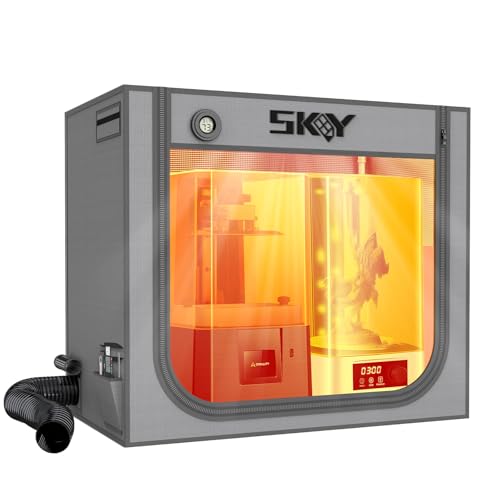
- Room for a printer and curing box
- Ventilation fan and activated carbon box
- LED light and thermo-hygrometer included
Best For: Resin printing setups needing space and odor control
Extra-Large Insulated Pick

- Fits large or multiple machines
- Insulated interior supports temperature stability
- Folds flat with tool-free setup
Best For: Large-format printers and flexible workshop setups
Large-Format Fume-Containment Pick
Oversized Ventilated Enclosure

- Fits a large printer or multiple smaller machines
- Sealed fabric design with two exhaust ports
- Ventilation kit sold separately
Best For: Large-format printers and multi-printer workspaces
Organized Cabinet Pick
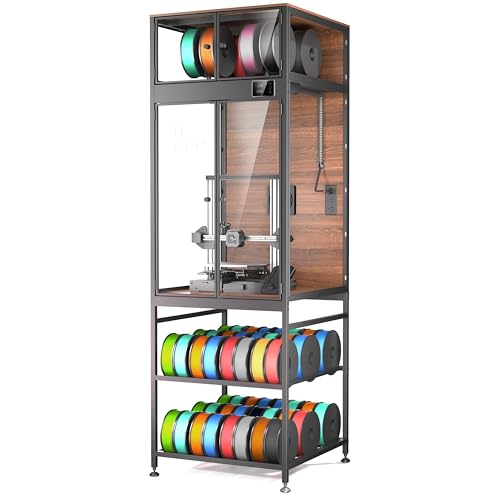
- Stores up to 48 filament spools
- Steel frame supports a stable, enclosed setup
- Includes LED lighting and manual fan control
Best For: Multi-color workflows and organized print rooms
Custom-Build Pick
Prusa XL Acrylic Enclosure Kit
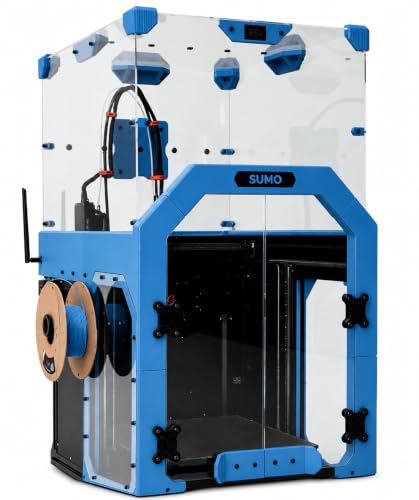
- Clear panels protect against dust and preserve visibility
- Includes hygrometer and core assembly hardware
- Printed parts are required but not included
Best For: Prusa XL owners who prefer a modular DIY build
Best Ventilated Resin Enclosure
Multifunctional UV-Blocking Tent

- UV-blocking viewing window
- Adjustable fan and three-layer filter
- Fire-resistant fabric with stainless steel frame
Best For: Small compatible LCD and resin printers
Best A1 Combo Fit
TOPCUBE Enclosure With Exhaust Kit
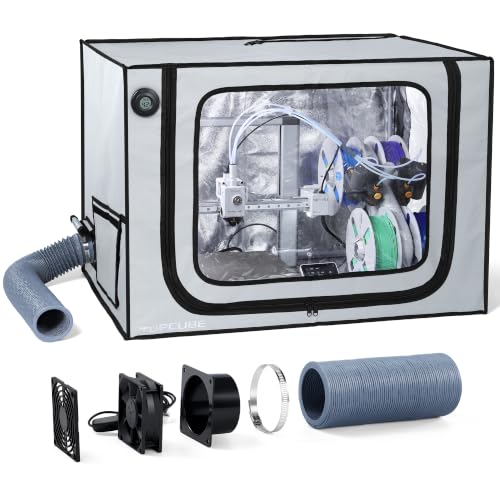
- Designed for A1 Combo with AMS Lite
- Adjustable exhaust and dedicated routing openings
- LED-lit viewing window and reinforced frame
Best For: Bambu Lab A1 Combo owners
Best Large Resin Setup

- Fits two resin printers or a curing machine
- Carbon filtration with exhaust ventilation
- Large window and insulated enclosed interior
Best For: Expanded resin-printing workstations
Large-Format Professional Pick – Prusa XL Enclosure
For users seeking commercial-grade 3D printer enclosures for a large-format machine, the Original Prusa XL Enclosure is designed for seamless integration with the XL printer. Its included kit components simplify setup while supporting printing with certain materials.
Best For: Original Prusa XL owners who want an integrated enclosure solution.
Pros:
- Designed specifically for seamless integration with the Original Prusa XL.
- Can make printing from certain materials easier.
- Includes all package components, including plastic parts, so nothing needs to be printed separately.
- Backed by lifetime technical assistance and 24-hour professional customer service.
Cons:
- Ships disassembled as a kit, so assembly is required.
- Designed for the Prusa XL rather than broad printer compatibility.
The Prusa XL Enclosure is a focused choice for XL users who value a purpose-built fit and ongoing manufacturer support more than universal compatibility.
Resin Workspace Ventilation Pick – SKOUPHY Double Space Enclosure
The SKOUPHY Double Space enclosure is a practical option among commercial-grade 3D printer enclosures for resin setups that need room for both a printer and curing box. Its ventilation kit, activated carbon box, lighting, and temperature-humidity monitoring add useful workspace functionality.
Best For: Resin users who need a roomy, ventilated workspace for printing and curing equipment.
Pros:
- Offers a 31.5 x 18.1 x 28.3-inch internal space for a printer and curing box.
- Includes a ventilation duct kit with a fan rated up to 4500 RPM and an activated carbon box.
- Built-in LED lighting improves visibility during monitoring.
- Provides a thermo-hygrometer with Fahrenheit and Celsius switching.
Cons:
- Users should measure their printer and curing machine before ordering.
- Its 7.6-pound construction may be less substantial than a rigid enclosure.
With generous workspace and odor-focused ventilation, this enclosure is well suited to resin workflows, provided the internal dimensions match your equipment.
Extra-Large Insulated Pick – Phrozen Enclosure Mega
The Phrozen Enclosure Mega stands out among commercial-grade 3D printer enclosures for its extra-large footprint and foldable design. Aluminum-lined insulation helps regulate the interior temperature, while the enclosed structure supports dust, odor, and noise reduction for larger printers or multiple machines.
Best For: Large-format printers, resin equipment, or multi-machine workspaces in studios and workshops.
Pros:
- Large 39.4 x 27.6 x 35.4-inch dimensions fit many large-format printers or curing stations.
- Aluminum-lined insulation helps minimize warping, cracking, and failed prints in cold environments.
- UV-filtering viewing window allows monitoring while helping prevent premature resin curing.
- Tool-free hook-and-loop assembly folds flat for storage or transport.
Cons:
- The large footprint may require considerable floor or workbench space.
- Its foldable tent-style construction may not provide the rigidity of a hard enclosure.
The Enclosure Mega is a versatile choice when capacity and temperature management matter most, especially for users who need an enclosure that can be stored or transported.
Ender-Compatible Everyday Pick – YOOPAI Large Enclosure
The YOOPAI Large Enclosure is a practical option among commercial-grade 3D printer enclosures for compatible Ender, ELEGOO, and other supported machines. It combines built-in LED lighting with a temperature-stable, dustproof, fireproof structure designed to reduce noise and protect prints from accidental contact.
Best For: Owners of compatible large Ender or ELEGOO printers seeking lighting, protection, and easier monitoring.
Pros:
- Built-in LED strip improves visibility for spotting print issues.
- Helps maintain a consistent temperature during printing.
- Fire-resistant, dustproof structure helps protect the printer and limit accidental touches.
- Five-minute installation and disassembly support convenient setup or moving.
Cons:
- Compatibility depends on the printer and spool-holder dimensions.
- Not compatible with CR-10 MAX, CR-10 S4, or CR-10 S5 according to the supplied notes.
- The listed product dimensions are 45 x 25 x 80 inches, so available space should be checked carefully.
For compatible machines, the YOOPAI offers a feature-rich enclosure with lighting, temperature control, and noise isolation, but careful dimension checking is essential before purchase.
Large-Format Fume-Containment Pick – Oversized Ventilated Enclosure
If you need a commercial-grade 3D printer enclosures solution for oversized equipment or several machines, this enclosure emphasizes capacity, sealed construction, and flexible exhaust routing. Its 800 × 1000 × 1200 mm footprint can accommodate a large-format printer or multiple smaller FDM and resin machines, but you will need adequate workspace and a separately purchased ventilation kit.
Best For: Large-format printers, multiple compact printers, and users who need enclosed resin-fume management.
Pros:
- Very large interior supports a large printer or 2–4 smaller machines.
- Sealed openings and airtight zippers help contain plastic and resin odors.
- Warming layer may help reduce warping, layer cracking, and nozzle-clogging issues in cooler conditions.
- Includes a lighting bar, viewing window, and two exhaust ports for flexible setup.
Cons:
- The ventilation kit is not included and must be ordered separately.
- Its 47.2-inch height and 800 × 1200 mm required countertop make it unsuitable for tight spaces.
- Assembly is easier with a second person.
This is a strong capacity-first choice when enclosure volume and adaptable ventilation matter most. Confirm your available room and budget for the separate exhaust kit before ordering.
Organized Cabinet Pick – 48-Spool 3D Printer Cabinet
For a more permanent commercial-grade 3D printer enclosures setup, this steel-framed cabinet combines printer protection, filament organization, lighting, and manually controlled ventilation. Its interior is designed for printers up to 21.6 × 22 × 28.7 inches, so measuring your machine is essential before purchase.
Best For: Makers who want a stable cabinet with substantial filament storage and room for multi-color workflows.
Pros:
- Heavy-duty carbon steel frame and rigid composite walls provide a stable foundation.
- Storage areas hold up to 48 standard spools, including an upper compartment for up to eight spools.
- Feed-through ports support routing up to four filaments to the printer.
- LED lighting, PET panels, a thermo-hygrometer, and a controllable fan support monitoring and ventilation.
Cons:
- The cabinet weighs 66 pounds and measures 23 × 23 × 70 inches, requiring a sturdy, spacious location.
- Ventilation is manually controlled rather than fully automatic.
- Printer compatibility depends on staying within the listed interior dimensions.
This cabinet is especially compelling for organized, high-volume filament users. Its storage capacity and rigid construction come at the cost of considerable size and weight, so verify both printer clearance and placement space.
Custom-Build Pick – Prusa XL Acrylic Enclosure Kit
This kit offers a compact, customizable approach to commercial-grade 3D printer enclosures for Prusa XL owners. It supplies the major hardware and clear acrylic panels, but it is a build-it-yourself package: printed connectors and accessories are not included and must be produced separately.
Best For: Prusa XL users who want a space-efficient enclosure and are comfortable printing parts and assembling a customized setup.
Pros:
- Clear acrylic panels provide visibility while adding dust protection.
- Includes magnets, fasteners, hex rods, and a hygrometer for monitoring enclosure conditions.
- Designed to fit around the Prusa XL without significantly expanding its footprint.
- Removable upper chamber supports maintenance and printer access.
Cons:
- Printed parts are not included, so assembly requires additional printed components.
- It is specifically designed as a Prusa XL enclosure rather than a broadly compatible cabinet.
- Customization and setup require more hands-on work than a ready-to-use enclosure.
This is a practical route for Prusa XL owners who value modularity and a tidy footprint. It is less suitable if you want a complete enclosure that can be assembled without printing additional parts.
Best Ventilated Resin Enclosure – Multifunctional UV-Blocking Tent
For shoppers comparing commercial-grade 3D printer enclosures for resin machines, this tent focuses on ventilation, filtration, and UV protection. Its fire-resistant fabric, UV-blocking viewing window, adjustable-speed fan, and three-layer filter system make it a practical option for compatible small LCD and resin printers.
Best For: Small LCD or resin printers and wash machines, including compatible Photon, Mars, Saturn, and Halot series setups.
Pros:
- UV-blocking window supports safer monitoring of resin prints.
- Adjustable 12V ventilation kit helps manage smoke and fumes.
- Three-layer filter is designed to capture larger particles and harmful gases.
- Stainless steel frame components are lighter and intended for longer service life.
Cons:
- Printer compatibility depends on measuring the complete printer dimensions first.
- Replacing the steel fan bracket requires printing a plastic adapter.
- Not water resistant, and the printer itself is not included.
This enclosure is strongest for resin-printing workstations where odor control and UV shielding matter. Verify the available space and be prepared for the adapter-printing step before ordering.
Best A1 Combo Fit – TOPCUBE Enclosure With Exhaust Kit
This TOPCUBE model is a targeted choice among commercial-grade 3D printer enclosures for the Bambu Lab A1 Combo with AMS Lite. It combines an adjustable exhaust fan, enclosed printing space, cable and filament openings, LED lighting, and a reinforced frame for a more organized daily setup.
Best For: Bambu Lab A1 Combo owners using the AMS Lite who want dedicated routing openings and a spacious enclosure.
Pros:
- Built-in adjustable exhaust kit provides flexible airflow control.
- Enclosed design helps reduce drafts and temperature fluctuations.
- Large transparent window and LED light improve print visibility.
- Oxford fabric and reinforced stainless steel frame offer everyday protection.
Cons:
- Designed specifically for the A1 Combo with AMS Lite, so broader compatibility is not established.
- Its 9.57-pound weight and 33-by-19.49-by-23-inch footprint require dedicated space.
Choose this enclosure when the A1 Combo is the center of your workspace and organized routing is important. Its large footprint is worthwhile for the intended setup but should be checked against your available room.
Best Large Resin Setup – YOOPAI Dual-Printer Enclosure
For users seeking commercial-grade 3D printer enclosures with room for more than one resin workstation, the YOOPAI offers a wide, fully enclosed interior. It is designed to accommodate two resin printers or a printer and curing machine, while combining carbon filtration, exhaust fans, expandable pipes, LED lighting, and a large observation window.
Best For: Resin-printing setups that need space for two printers or a printer plus curing machine.
Pros:
- Large 30-by-19.7-by-28.3-inch interior accommodates two resin devices.
- Carbon filter sheet, exhaust fans, and expandable pipes target odors and emissions.
- Six-sided enclosure helps limit dust and resin splashes.
- Insulated interior is designed to support a more consistent temperature.
Cons:
- Users must measure both machines before ordering.
- Activated carbon can slow airflow, so ventilation may need time before opening.
- Additional exhaust piping on both sides may be needed to increase airflow.
The YOOPAI stands out when capacity is the priority, especially for a combined printing and curing station. Its filtration system is useful for odor management, but plan the exhaust layout carefully for the airflow you need.
How We Picked These Commercial-Grade 3D Printer Enclosures
We focused on enclosure designs that offer more than a simple fabric cover. Our evaluation criteria included printer compatibility, usable interior space, ventilation provisions, material quality, access to the build area, temperature management, dust protection, and practical workspace features.
The selection includes enclosed systems for large-format FDM printers, compact Creality and Bambu Lab machines, resin printers, and mixed-use workspaces. Because “commercial-grade” can describe very different products, buyers should verify the enclosure’s actual construction, ventilation hardware, and load capacity rather than relying on the label alone.
Quick Comparison
| Best suited for | Look for | Typical enclosure style |
|---|---|---|
| Large-format FDM printing | Generous dimensions, rigid panels, cable access | Full-size tent or acrylic enclosure |
| Resin printing | Odor control, sealed access, compatible extraction | Ventilated resin enclosure |
| Filament organization | Spool capacity, humidity monitoring, shelving | Cabinet-style enclosure |
| Compact desktop printers | Exact printer fit, front access, LED lighting | Printer-specific enclosure |
Key Buying Factors for Commercial-Grade 3D Printer Enclosures
Fit and Usable Workspace
Measure the printer, moving gantry, spool holder, exhaust duct, power cables, and any accessories. Leave clearance for maintenance and ventilation. A nominal exterior size does not always indicate the available interior volume.
Ventilation and Filtration
For resin and filament printing, look for a powered exhaust fan, duct connection, replaceable filtration, and sealed or well-overlapped panels. Ventilation should discharge safely outdoors or through a suitable filtration system. An enclosure alone does not eliminate emissions.
Temperature and Material Construction
Insulated walls can reduce drafts and help stabilize printing conditions, while acrylic panels provide visibility and rigidity. Check heat resistance, zipper or door quality, frame strength, and whether the enclosure is appropriate for the temperatures your printer produces.
Access, Lighting, and Monitoring
Large viewing windows, front doors, LED lights, cable ports, hygrometers, and thermo-hygrometers improve daily usability. Magnetic panels or removable sections can make nozzle changes, resin handling, and troubleshooting easier.
Safety and Workspace Requirements
Place the enclosure on a stable, nonflammable surface and avoid blocking air intakes or electrical connections. Confirm that the fan, lighting, and printer power requirements match your workspace, and never use an enclosure as a substitute for manufacturer safety guidance.
Who Should Buy Which Commercial-Grade 3D Printer Enclosures?
Choose a rigid acrylic or printer-specific kit if you want visibility, a cleaner appearance, and a close fit around a known machine. Select an insulated tent when you need flexible sizing, draft control, or a lower-cost solution for a large printer.
Resin users should prioritize sealed access and effective exhaust compatibility over storage features. Buyers running several spools or managing a production workspace may prefer a cabinet-style enclosure with shelving, humidity monitoring, and integrated lighting.
For the best result, match the enclosure to your printer’s dimensions and printing materials first; then compare ventilation, monitoring, access, and storage features within that suitable size range.
