
The right camera crane can turn a basic tripod shot into a polished reveal, overhead move, or sweeping establishing shot. However, the best setup depends on your camera’s weight, the movement you need, and how much portability matters.
This roundup compares full-size jib arms, compact mini cranes, motorized pan-tilt heads, and gimbal-based stabilization systems so you can choose equipment that fits your camera kit and shooting style.
Best 10 Camera Cranes Picks for 2026
Best Compact Jib
IFOOTAGE M1 III 85" Mini Jib Crane

- 33-pound maximum load
- 85-inch extendable carbon-fiber arm
- Flexible low-angle and accessory mounting
Best For: Portable jib setups requiring reach and versatility
Best Motorized Head
PROAIM SR 2-Axis Pan-Tilt Head
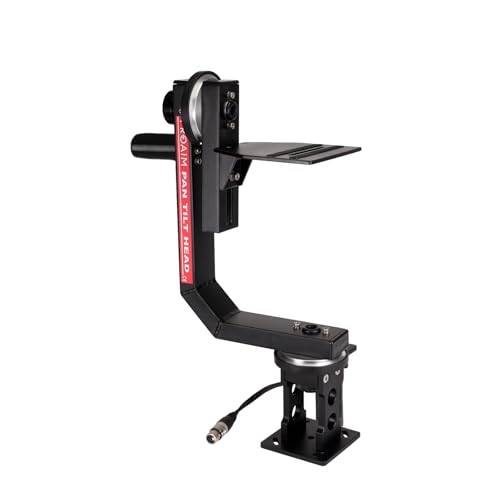
- 360-degree pan and tilt
- 6–51 degrees per second speed range
- AC or 12V battery operation
Best For: Remote, controlled movements on compatible jibs and cranes
Best Heavy-Duty Jib
KONOVA S1200 SUNJIB Camera Jib
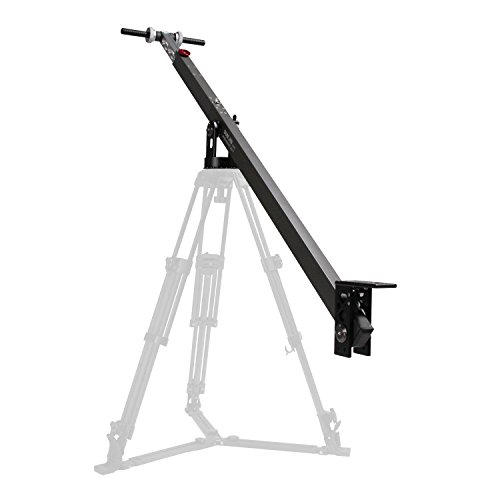
- 20-kilogram maximum load
- Hidden internal balancing system
- Flat-base and ball-head compatibility
Best For: Heavy camera packages and stability-focused production setups
Best Handheld Alternative

- Three-axis camera stabilization
- Landscape and portrait shooting modes
- Built-in 10W adjustable fill light
Best For: Solo shooters wanting portable stabilized movement
Best Full-Size Reach

- 5.2- to 7.2-foot telescopic reach
- Supports up to 33 pounds
- Folds to 2.5 feet for transport
Best For: Elevated, underslung, and overslung shots with heavier camera rigs
Best for Body-Worn Support

- Supports listed DJI and Zhiyun gimbals
- Spring arms dampen vertical movement
- Disassembles for travel
Best For: Extended moving shots in events, documentaries, and tight spaces
Best Compact Stabilizer

- Native horizontal and vertical shooting
- Up to 12-hour battery life
- Supports cameras up to 2.4 kg
Best For: Solo creators and small crews shooting stabilized DSLR or mirrorless video
Best for Extended Gimbal Sessions

- Redistributes gimbal weight to the waist and back
- Spring arms reduce walking-related vertical shake
- Supports compatible rigs from 5.5 to 19.8 pounds
Best For: Long wedding, documentary, and event shoots
Best for Full-Frame Versatility

- Handles DSLR and compact cinema camera setups
- Switches quickly between landscape and portrait
- Includes a 10W fill light and up to 12-hour runtime
Best For: Feature-rich full-frame and cinema-camera stabilization
Best for Lightweight Camera Cranes

- Weighs just 705 g for travel-friendly operation
- Works with compatible cameras, phones, and action cams
- Includes phone clip, tripod, backpack, and control cables
Best For: Portable shooting with lightweight camera setups
Best Compact Jib – IFOOTAGE M1 III 85" Mini Jib Crane
For filmmakers seeking portable camera cranes, the IFOOTAGE M1 III combines an 85-inch reach with a carbon-fiber arm and a 33-pound maximum load. Its adjustable platform and multiple mounting options make it suitable for varied camera movement setups.
Best For: Shooters who want a foldable, versatile jib for smooth vertical, horizontal, low-angle, and overhead movements.
Pros:
- 20-layer carbon-fiber square tube provides rigidity and supports up to 33 pounds.
- 85-inch extendable reach with adjustable platform tilt.
- Supports low-angle and upside-down mounting with the included adapter options.
- Multiple 1/4-inch and 3/8-inch threads accommodate monitors, lights, and support arms.
Cons:
- At 13.2 pounds, it is not the lightest compact jib option.
- Its folded length is approximately 38.2 inches, so transport still requires some space.
The M1 III is a strong all-around choice when reach, payload, and mounting flexibility matter more than minimum weight. The included water bag and quick-release plates also help simplify setup in the field.
Best Motorized Head – PROAIM SR 2-Axis Pan-Tilt Head
The PROAIM SR adds powered movement to compatible camera cranes, jibs, tripods, and underslung setups. It supports up to 16.5 pounds and provides 360-degree pan and tilt control through a wired joystick.
Best For: Production teams that need remotely controlled, repeatable pan-and-tilt movements on a jib or crane.
Pros:
- 360-degree movement on both pan and tilt axes.
- Variable speed from 6 to 51 degrees per second.
- Joystick includes damping control and direction reversal.
- Can run from AC power or a 12V battery, with a 15-meter control cable.
Cons:
- Its 7.5-kilogram payload is lower than some dedicated jib arms.
- The head is not water resistant.
- Powered operation requires cables and a suitable AC or 12V setup.
Rather than being a complete camera crane, the SR is a specialized motion-control head. It makes the most sense for crews already using a compatible support system and looking for controlled, variable-speed camera movement.
Best Heavy-Duty Jib – KONOVA S1200 SUNJIB Camera Jib
KONOVA S1200 SUNJIB Camera Jib Arm Mini Crane Single Arm Pocket Jib DSLR RED Plate Bowl Compatible
Check Price On AmazonThe KONOVA S1200 SUNJIB is a substantial camera jib designed for DSLR and cinema-style setups. Its concealed balancing system, compatibility with flat bases and ball heads, and claimed 20-kilogram load rating make it a useful option for demanding camera cranes installations.
Best For: Crews prioritizing high payload capacity and a rigid, vibration-minimized jib design.
Pros:
- Maximum recommended load is listed at 20 kilograms.
- Internal balancing system keeps the balance bar hidden.
- Compatible with both flat-base and ball-head setups.
- Designed for one-touch assembly and disassembly in about four minutes.
Cons:
- At 18 pounds, it is relatively heavy to transport and position.
- The supplied notes do not specify motorized movement or remote control.
- Its larger, more specialized design may be excessive for lightweight cameras.
The S1200 stands out for payload and structural stability rather than minimal portability. It is a better fit for controlled production environments where a robust jib is more important than a lightweight travel setup.
Best Handheld Alternative – ZHIYUN CRANE 4 Camera Gimbal
Although it is a handheld gimbal rather than a traditional jib, the ZHIYUN CRANE 4 offers a compact alternative to larger camera cranes for stabilized camera movement. It supports cameras up to 2,000 grams and adds landscape-to-portrait switching, a fill light, and Bluetooth controls.
Best For: Solo creators and mobile crews needing stabilized handheld movement with quick orientation changes.
Pros:
- Three-axis stabilization supports landscape and portrait shooting modes.
- Adjustable sling grip and wrist rest help with handling comfort.
- Built-in 10W fill light offers 2700K–5500K color temperature adjustment.
- Color touchscreen and Bluetooth shutter control support camera operation.
Cons:
- Its 2,000-gram payload is far below that of a full-size jib arm.
- It does not provide the elevated reach or sweeping arm movement of traditional camera cranes.
- The product is listed as not water resistant.
The CRANE 4 is best viewed as a practical substitute for compact, operator-led shots rather than a direct replacement for a crane. Choose it when portability, stabilization, and fast shooting-mode changes are more important than height and reach.
Best Full-Size Reach – Proaim Wave Fold Camera Jib
For production crews comparing camera cranes, the Proaim Wave Fold offers adjustable reach and substantial payload capacity in a rig designed for location work. Its telescopic arm extends from 5.2 to 7.2 feet, supports cameras or gimbals up to 33 pounds on a 100mm bowl, and folds for transport.
Best For: Narrative, event, and commercial crews needing smooth elevated or low-angle jib movements with a heavier camera setup.
Pros:
- Adjustable 5.2- to 7.2-foot reach supports varied framing needs.
- 33-pound capacity accommodates cameras and gimbals on a 100mm mount.
- Quickly switches between overslung and underslung configurations.
- Folds to 2.5 feet for easier transport and storage.
Cons:
- At 53 pounds, it is a substantial rig to move between locations.
- Its 100mm bowl setup may require compatible support equipment.
- It is not water resistant.
The Wave Fold is the strongest choice here for traditional crane-style camera movement and higher payloads. Its folding design improves portability, but the weight makes it better suited to planned setups than fast-moving handheld production.
Best for Body-Worn Support – Thanos SE Gimbal Vest System
Although it is a vest-based stabilizer rather than a traditional arm crane, the Thanos SE is a practical camera-crane alternative for operators who need smoother movement while walking or working in tight spaces. Its spring-loaded arms support compatible gimbals and help transfer equipment weight from the arms to the body.
Best For: Wedding, documentary, and event videographers using compatible gimbals for extended moving shots.
Pros:
- Designed for DJI and Zhiyun gimbals across the listed model ranges.
- Dual spring-loaded arms provide Z-axis damping to reduce vertical bobbing.
- Adjustable straps and a modular design support a customized fit.
- Disassembles into two parts and includes a portable handbag.
Cons:
- It is a body-worn gimbal support system, not a stationary camera crane.
- The supplied specifications list a maximum weight recommendation of 4.4 pounds, so payload details should be checked carefully.
- It is not water resistant.
The Thanos SE makes the most sense when mobility, fatigue reduction, and maneuverability matter more than sweeping jib movements. Confirm your gimbal and camera weight against the product specifications before buying.
Best Compact Stabilizer – ZHIYUN Crane 4E Camera Gimbal
The ZHIYUN Crane 4E is a compact three-axis camera gimbal for DSLR and mirrorless setups, making it a useful alternative for creators who need stabilized movement rather than a large jib arm. It supports native horizontal and vertical shooting, Bluetooth shutter control, and up to 12 hours of operation.
Best For: Solo creators, vloggers, and small crews shooting stabilized 4K video with compatible cameras.
Pros:
- Integrated quick-release design enables horizontal-to-vertical switching without extra accessories.
- Bluetooth shutter control helps trigger camera functions without a cable.
- 2600mAh battery provides up to 12 hours of operation and supports use while charging.
- Wave wheel offers quick access to shutter, aperture, and ISO adjustments.
Cons:
- Its 2.4 kg maximum recommendation is lower than a full-size jib crane’s capacity.
- It is intended for compatible DSLR and mirrorless cameras rather than large cinema rigs.
- It is not water resistant.
The Crane 4E is the most portable option in this group for stabilized camera movement and quick orientation changes. Choose it when handheld mobility and camera control are more important than the sweeping reach of a conventional crane.
Best for Extended Gimbal Sessions – Thanos Pro Support Vest
For camera cranes and handheld gimbal work that lasts all day, the DF DIGITALFOTO Thanos Pro focuses on reducing operator fatigue while smoothing movement. Its vest transfers much of the rig’s weight to the waist and back, while spring-loaded arms help dampen vertical bobbing during walking shots.
Best For: Wedding videographers, documentary crews, and event filmmakers using compatible gimbals with rigs weighing about 5.5 to 19.8 pounds.
Pros:
- Redistributes heavy gimbal weight away from the hands for longer filming sessions.
- Dual spring-loaded arms help reduce z-axis movement and walking-related bobbing.
- Supports compatible DJI, Zhiyun, Moza, and FeiyuTech gimbals with adjustable spring tension.
- Adjustable vest design accommodates a range of body sizes and heights.
Cons:
- At approximately 4 kg, the support system adds substantial equipment weight.
- It is not water resistant.
- Compatibility is aimed at supported single-handle motorized gimbals rather than every camera-crane setup.
This is a support system rather than a standalone camera crane, but it can make compatible gimbal rigs more manageable for extended, mobile shooting. Confirm your camera, gimbal, and total payload before buying.
Best for Full-Frame Versatility – ZHIYUN Crane 4 Gimbal
The ZHIYUN Crane 4 is a strong option for camera cranes and stabilized camera movement when you need support for a DSLR or compact cinema camera. It combines 3-axis motorized stabilization with landscape-to-portrait switching, a built-in fill light, camera controls, and a long rated runtime.
Best For: DSLR and mirrorless filmmakers who want a feature-rich gimbal for landscape, portrait, and creative shooting modes.
Pros:
- Longer arms, stronger motors, and an extended quick-release plate accommodate larger camera setups.
- Quick-release structures simplify switching between landscape and portrait orientation.
- Built-in 10W fill light offers up to 3200 lux, CRI 95+, and 2700K–5500K color temperature.
- PD fast charging takes about 1 hour 50 minutes, with up to 12 hours of runtime.
Cons:
- Its 1.5 kg body adds weight before adding a camera and lens.
- It is not water resistant.
- Bluetooth shutter control and other camera functions may depend on camera compatibility.
With a stated maximum recommendation of 10 kg, the Crane 4 is suited to more substantial camera packages than compact gimbals. Its built-in light and touchscreen also reduce the need for extra accessories, though you should verify balance and control compatibility with your specific camera.
Best for Lightweight Camera Cranes – ZHIYUN Crane-M3S Combo
For compact camera cranes and travel-friendly stabilized shots, the ZHIYUN Crane-M3S Combo prioritizes low weight and a flexible all-in-one kit. It supports compatible mirrorless cameras, smartphones, and action cameras, and includes a phone clip, tripod, backpack, and control cables.
Best For: Travelers and creators using lightweight cameras, phones, or action cameras who want a portable gimbal kit.
Pros:
- Lightweight 705 g design is easy to carry for mobile shooting.
- Bluetooth shutter control enables wireless zoom and recording functions.
- Quick-release system helps simplify camera installation and repeated balancing.
- Built-in light reaches up to 1000 lux, with 2700K–5500K color temperature.
Cons:
- The 705 g maximum recommendation limits it to lighter camera setups.
- Listed video capture resolution is 1080p rather than 4K.
- It is not water resistant.
The Crane-M3S is the most portable choice in this group, especially when a backpack, tripod, and phone support are useful. Its payload limit makes it less appropriate for heavier DSLR or cinema-camera rigs, so check your fully assembled camera weight before purchase.
How We Picked These Camera Cranes
We selected these 10 options by comparing their movement capabilities, payload suitability, mounting compatibility, portability, control systems, and intended use. The list includes traditional jib arms for elevated and sweeping movements, motorized heads for remote control, and handheld gimbals or support systems for stabilized camera operation.
Because these products serve different roles, we did not treat a compact gimbal as a direct replacement for a long jib arm. Instead, we considered how effectively each type solves a specific production need and whether its features justify the space, setup time, and supporting equipment it requires.
Quick Comparison
| Best For | Recommended Type | What to Prioritize |
|---|---|---|
| Overhead and high-angle shots | Traditional jib arm | Reach, payload, counterbalance, and mounting stability |
| Compact travel production | Mini jib or handheld gimbal | Folded size, weight, setup speed, and camera compatibility |
| Remote-controlled camera movement | Motorized pan-tilt head | Control range, power requirements, payload, and motion precision |
| Long handheld takes | Gimbal support vest | Weight distribution, arm adjustment, and camera rig compatibility |
Key Buying Factors for Camera Cranes
Payload and Balance
Start with the fully built camera weight, including the lens, battery, monitor, cage, follow-focus motor, and other accessories. Stay within the manufacturer’s rated capacity, and check whether the listed limit assumes a balanced load. A crane or gimbal that is technically compatible but overloaded will be harder to control and may produce uneven movement.
Reach and Movement Range
Longer arms provide more dramatic elevation changes and wider arcs, but they also need more counterweight, floor space, and careful setup. Compact jibs are easier to transport and better suited to small crews, while larger models are more useful for controlled productions with dedicated operating space.
Control and Stabilization
A basic jib may rely on manual movement, while a motorized head can add repeatable pan and tilt control. Gimbals use electronic stabilization rather than a crane arm, making them better for walking, tracking, and low-to-high handheld transitions. Confirm the supported camera dimensions, control method, battery system, and required accessories before buying.
Mounting and Compatibility
Check whether the system uses a bowl mount, standard plate, quick-release system, or a brand-specific interface. Also verify compatibility with your tripod, fluid head, camera cage, and gimbal accessories. A support vest or adapter arm may be necessary for heavier rigs.
Who Should Buy Which Camera Cranes?
Choose a traditional jib arm if your priority is elevated, sweeping, or reveal-style camera movement. A compact mini crane is a better fit for travel, small studios, events, and creators who need a faster setup. Add a motorized pan-tilt head when repeatable remote operation matters more than simplicity.
For walking shots and mobile filmmaking, choose a three-axis gimbal. If your camera rig becomes tiring during long takes, pair a compatible gimbal with a support vest and arm system. Before ordering, compare the complete rig weight and mounting requirements rather than relying only on the product name or maximum advertised capacity.
