
Choosing among camera cranes for beginners can be confusing because the category includes full-size jib arms, compact mini cranes, overhead desk mounts, and motorized gimbals. The right option depends on your camera weight, available space, and the type of movement you want to create.
This roundup compares 10 practical choices for learning camera movement, from lightweight tabletop setups to larger production-oriented crane systems. Use the guide below to match the equipment to your camera, workspace, and shooting style.
Best 10 Camera Cranes for Beginners Picks for 2026
Long-Reach Pick

- Supports rigs up to 8 kg/17.6 lb
- Adjusts between 14 and 10 feet
- Includes monitor mount and carry bags
Best For: Large-scale overhead and sweeping crane moves
Beginner-Friendly Tripod
K&F Concept 76in Overhead Tripod

- Folds to 15.3 inches and weighs 1.65 kg
- Includes a rotating extension boom
- Supports up to 8 kg/17.6 lb
Best For: Portable overhead, panorama, and multi-device shooting
Compact Jib Pick

- Compact reach for studios and tight spaces
- Supports up to 8 kg/17 lb
- Designed to reduce vibration during moves
Best For: Learning jib techniques in controlled, smaller setups
Tabletop Starter

- Clamps to desks and counters
- Adjusts from 14.76 to 41.14 inches
- Uses a universal 1/4-inch screw
Best For: Tabletop overhead videos, streaming, and product demos
Best Lightweight Pick
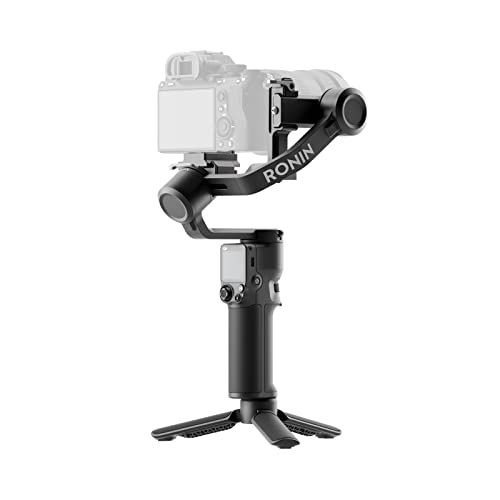
- 795g portable 3-axis gimbal
- Supports payloads up to 2kg
- Native vertical shooting and Bluetooth control
Best For: Traveling beginners using compatible cameras
Best Desktop Option

- C-clamp secures the mount to a tabletop
- Adjustable arm and 360-degree ball head
- Supports cameras up to 4.4 pounds
Best For: Overhead product videos and tabletop photography
Best Full-Size Gimbal

- Supports DSLR and mirrorless cameras up to 2kg
- Switches between landscape and portrait modes
- Includes sling grip and 10W fill light
Best For: Creators using larger cameras and versatile handheld setups
Best Desk-Mounted Pick
K&F CONCEPT 22" Magic Arm Clamp Kit
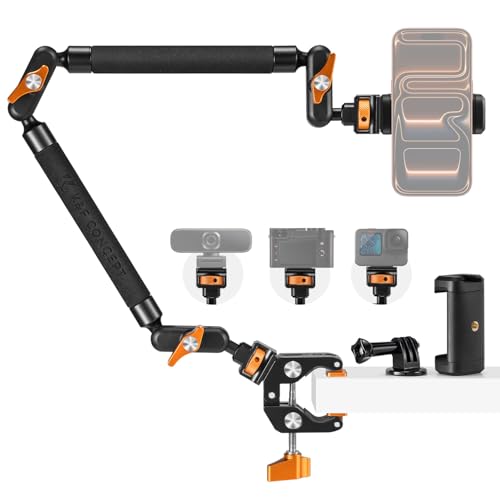
- 22-inch arm supports up to 1 kg
- Three 360° ball heads for flexible angles
- Clamps to desks and cylindrical surfaces
Best For: Static overhead desk filming and livestream setups
Best Full-Size Jib
IFOOTAGE M1 III 85" Carbon Fiber Mini Jib

- 85-inch reach for sweeping jib movements
- 33-lb maximum load capacity
- Supports pan, tilt, low-angle, and inverted shots
Best For: Learning full-size jib techniques with heavier cameras
Best Compact Beginner Kit

- 22-inch arm with independently adjustable joints
- Clamp opens to 63.5 mm for desks and tubes
- Includes phone holder and thread adapter
Best For: Lightweight overhead filming and webcam setups
Long-Reach Pick – Proaim 14ft Camera Crane Jib
For beginners exploring camera cranes for beginners, the Proaim 14ft Camera Crane Jib offers substantial reach and payload capacity for learning sweeping, elevated, and overhead movements. Its modular design can be configured at 14 or 10 feet, although its 16 kg weight and larger setup make it better suited to planned shoots than quick tabletop work.
Best For: Beginners who need long reach for outdoor productions, crowd-overhead shots, or larger DSLR and mirrorless rigs.
Pros:
- Supports camera rigs up to 8 kg/17.6 lb, including gimbals and pan-tilt heads.
- Configures to either 14 or 10 feet for more flexibility in different spaces.
- Offers a 270-degree camera-platform tilt range and included LCD mounting arm.
- Two-arm construction and thrust roller bearings are designed to reduce wobble and jerky movement.
Cons:
- At 16 kg, it is considerably less portable than compact beginner jib options.
- Its extended dimensions and 5-foot stand requirement demand substantial setup space.
- The supplied notes do not indicate that a stand is included.
This is an ambitious choice for a beginner who wants professional-style reach and expects to grow into more complex crane moves. Its modular length and strong payload are useful, but the weight and support requirements make it less forgiving for casual solo shooting.
Beginner-Friendly Tripod – K&F Concept 76in Overhead Tripod
The K&F Concept 76in Overhead Camera Tripod is a practical entry point for camera cranes for beginners, combining a familiar tripod base with a removable extension boom. Its lightweight 1.65 kg design, quick leg locks, and broad height range make it easier to position than a full-size jib.
Best For: Beginners who want a portable overhead and panning setup for cameras, smartphones, projectors, or tabletop-style shooting.
Pros:
- Height adjusts from 17.3 to 76.7 inches and folds to 15.3 inches.
- Removable boom rotates from 0 to 180 degrees and horizontally through 360 degrees.
- 8 kg/17.6 lb stated weight limit provides useful capacity for its size.
- Includes a 360-degree ball head, quick flip leg locks, and carrying bag.
Cons:
- Its 76-inch maximum height and compact boom are not a substitute for a long-reach jib.
- The aluminum tripod is not water resistant.
- More advanced crane movements may require a dedicated jib with greater reach and control.
For beginners, this tripod-style design offers a gentler learning curve than a large crane while still allowing overhead angles and panoramic movement. It is especially appealing when portability and fast setup matter more than dramatic reach.
Compact Jib Pick – Proaim Vega 4ft Crane
The Proaim Vega 4ft Jib is a manageable option for beginners learning camera cranes for beginners in studios, confined locations, or smaller outdoor setups. Its compact 4-foot reach and 5.6 kg weight are easier to handle than a long jib, while its 8 kg payload accommodates many DSLR, mirrorless, gimbal, and pan-tilt configurations.
Best For: Beginners practicing smooth jib moves in studios, small production spaces, and controlled outdoor locations.
Pros:
- Compact 4-foot design suits confined studios and smaller shooting areas.
- Supports payloads up to 8 kg/17 lb, including pan-tilt heads and 3-axis gimbals.
- CNC aluminum construction is designed for durability.
- Central fork is intended to reduce hand-induced vibration during pan and tilt moves.
Cons:
- Its 4-foot reach is limited compared with longer camera cranes.
- At 5.6 kg, it is portable but not especially lightweight for a compact jib.
- A suitable tripod stand or jib stand is required, and the supplied notes do not say one is included.
The Vega 4ft strikes a useful balance between capability and manageability. It gives new operators a dedicated jib experience without the footprint of a 14-foot system, provided they already have compatible support equipment.
Tabletop Starter – JEBUTU Overhead Desk Mount
The JEBUTU Overhead Camera Desk Mount is a low-cost, space-conscious way for beginners to practice overhead camera positioning before moving to full camera cranes for beginners. Its clamp-on base and three detachable extension poles provide adjustable reach for streaming, tutorials, product shots, and desk-based video.
Best For: Beginners creating overhead tabletop, streaming, podcast, cooking, or product-demo footage with compact equipment.
Pros:
- Three detachable sections adjust the extension from 14.76 to 41.14 inches.
- Sections rotate for up to 360 degrees of overall angle adjustment.
- Universal 1/4-inch screw fits many cameras, webcams, lights, projectors, and phone holders.
- Weighs 2.2 lb and uses a clamp with a rubber protective pad.
Cons:
- Its tabletop clamp format cannot provide the height or sweeping reach of a floor-standing jib.
- The stated nearly 6.6 lb capacity is best matched to compact equipment and careful positioning.
- It is intended for desk and light-stand use rather than large camera rigs.
This mount is best viewed as an accessible overhead camera support rather than a true cinematic crane. It is a sensible first step for learning composition and angle changes at a desk, especially when portability and storage space are priorities.
Best Lightweight Pick – DJI RS 3 Mini
For beginners researching camera cranes for beginners, the DJI RS 3 Mini is a compact handheld alternative for creating smooth camera movement. Its 795g weight, 2kg payload, and native vertical shooting make it practical for travel and social content.
Best For: Beginners who want portable, stabilized handheld footage with supported mirrorless or DSLR setups.
Pros:
- Lightweight 795g design is easier to hold during extended shoots.
- Supports camera and lens combinations up to 2kg.
- Offers 3-axis stabilization, Bluetooth shutter control, and native vertical shooting.
- Includes a 1.4-inch full-color touchscreen and RS Mini tripod.
Cons:
- It is a handheld gimbal rather than a true camera crane.
- DJI Ronin app activation and full functionality require downloading the app outside Google Play.
- Not water resistant.
The RS 3 Mini is a sensible starting point if portability and ease of use matter more than crane-style reach. Check camera, lens, and app compatibility before buying.
Best Desktop Option – JEBUTU Overhead Camera Mount
For camera cranes for beginners who mainly shoot overhead videos, product photos, or livestreams, this C-clamp desktop mount offers a fixed tabletop setup. Its adjustable arm and 360-degree ball head provide flexible positioning without taking up a large desk footprint.
Best For: Beginners creating overhead tabletop content with cameras, phones, lights, or microphones.
Pros:
- C-clamp mounting helps keep the setup stable and reduces tipping risk.
- Arm and ball head support multiple shooting angles.
- Height adjusts from 12 to 22.4 inches, with a 14.5-inch overhead arm.
- Includes 1/4-inch mounting hardware and a phone holder with cold shoe mount.
Cons:
- Camera load capacity is limited to 4.4 pounds, while the overhead phone arm supports 0.5 to 1kg depending on angle.
- It is designed for tabletop overhead work, not long camera movements across a set.
- Users should hold the device while adjusting the arm.
This mount is a practical entry point for overhead shooting rather than a conventional floor-standing crane. Confirm the load and carefully follow the connector instructions during setup.
Best Full-Size Gimbal – ZHIYUN Crane 4 Combo
For beginners comparing camera cranes for beginners with more capable handheld stabilization, the ZHIYUN CRANE 4 provides stronger support for full-frame DSLR, mirrorless, and compact cinema cameras. Its sling grip, portrait and landscape modes, and built-in fill light add flexibility for longer shoots.
Best For: Beginners and growing creators using larger camera bodies who want advanced handheld control and lighting in one setup.
Pros:
- Supports cameras up to 2,000g and is designed for DSLR and mirrorless systems.
- Quick-release design enables landscape-to-portrait shooting changes.
- Adjustable sling grip and wrist rest can reduce shooting fatigue.
- Built-in 10W fill light offers 3200 lux, CRI 95+, and 2700K-5500K color adjustment.
Cons:
- At 2,000g, it is substantially heavier than an ultra-compact beginner gimbal.
- It is a handheld gimbal, not a true camera crane with extended arm reach.
- Not water resistant.
The CRANE 4 makes sense when your camera setup needs stronger motors and your shooting benefits from a sling grip or integrated light. Verify camera compatibility and total rig weight before purchasing.
Best Desk-Mounted Pick – K&F CONCEPT 22" Magic Arm Clamp Kit
For beginners researching camera cranes for beginners, the K&F CONCEPT Magic Arm Clamp Kit is a practical desk-mounted option for static overhead and multi-angle shots. Its 22-inch arm supports cameras, phones, action cameras, lights, and microphones up to 1 kg.
Best For: Overhead desk filming, livestreaming, product photography, and other static indoor setups.
Pros:
- Supports up to 1 kg / 2.2 lb.
- Three 360° ball heads enable flexible positioning.
- Clamp grips flat surfaces up to 50 mm and cylindrical objects from 20–60 mm.
- Includes phone and action-camera adapters plus 1/4-inch and 3/8-inch threaded holes.
Cons:
- Designed for static scenes rather than dynamic outdoor activity.
- It is a clamp-mounted arm, not a long-reach jib crane for sweeping camera movements.
Choose this model if you want a sturdy, adaptable starting point for tabletop or desk-based camera work. Its all-metal construction and safety-focused padding add reassurance, while the clamp format keeps setup straightforward.
Best Full-Size Jib – IFOOTAGE M1 III 85" Carbon Fiber Mini Jib
Among camera cranes for beginners, the IFOOTAGE M1 III is the most capable choice for learning true jib-style camera movement. Its carbon-fiber arm reaches 85 inches and supports loads up to 33 lb, making it suitable for larger cameras and more ambitious video work.
Best For: Beginners ready to practice longer jib movements, low-angle shots, and professional-style camera positioning.
Pros:
- 85-inch reach with a rigid 20-layer carbon-fiber square tube.
- Supports up to 33 lb / 14.97 kg.
- Offers pan, tilt, vertical, horizontal, low-angle, and upside-down mounting options.
- Includes quick-release plates and connections for 60 mm and 75 mm fluid ball heads.
Cons:
- At 13.2 lb, it is substantially heavier and more involved than a desk-mounted arm.
- Its 38.2-inch folded length requires more storage and transport space.
- A suitable tripod or support system is needed for operation.
This is the strongest fit for a beginner who wants room to grow beyond tabletop work. The extensive adjustment range and high load rating are impressive, but the size, weight, and support requirements make it less convenient for casual setups.
Best Compact Beginner Kit – SMALLRIG 22" Magic Arm Clamp
The SMALLRIG 22-inch Magic Arm Clamp is a compact entry point for camera cranes for beginners who mainly shoot from a desk. It combines a flexible arm, crab clamp, phone holder, and thread adapter for overhead filming, webcams, lights, microphones, and action cameras.
Best For: Vlogging, POV filming, video conferencing, stop motion, and lightweight overhead rigs.
Pros:
- 22-inch arm provides useful reach for desktop shooting.
- Double-ball joints allow independent angle adjustments.
- Clamp opens up to 63.5 mm and works with desks and round tubes.
- Includes phone holder, two 1/4-inch screws, and a 1/4-to-3/8-inch adapter.
Cons:
- Recommended capacity is limited to 600 g / 21 oz; product details also specify a 250 g maximum recommendation.
- Longer or heavier phones can cause ball-head slippage if the arm is not positioned carefully.
- It is intended for lightweight, static setups rather than moving camera crane shots.
For lightweight gear, this kit offers a beginner-friendly mix of flexibility and portability. Keep the supported device well within its stated limits and position the arm to minimize leverage for the most secure results.
How We Picked the Best Camera Cranes for Beginners
We evaluated these options by focusing on the factors that matter most to new creators: setup complexity, payload support, movement control, mounting flexibility, portability, and likely use case. The list includes traditional jib arms, overhead desk mounts, magic-arm systems, and handheld gimbals because each solves a different camera-movement problem.
We also considered whether a product can work with common DSLR, mirrorless, action-camera, phone, or webcam setups. A beginner-friendly crane should be predictable and secure, with adjustments that do not require extensive production experience.
Quick Comparison
| Type | Best For | Key Advantage | Watch For |
|---|---|---|---|
| Full-size jib crane | Studio and film production | Large vertical and sweeping movements | Requires a sturdy base and counterbalancing |
| Mini jib | Small crews and portable filming | More compact than a full crane | Limited payload and reach |
| Overhead desk mount | Product videos, tutorials, and streaming | Convenient tabletop positioning | Needs a stable, compatible desk |
| Magic arm clamp | Phones, lights, and compact cameras | Low cost and flexible placement | Not ideal for heavy camera rigs |
| Motorized gimbal | Walking and moving shots | Electronic stabilization | Requires balancing and battery management |
Key Buying Factors for Camera Cranes for Beginners
Payload and Balance
Check the complete weight of your camera, lens, cage, monitor, microphone, and accessories—not just the camera body. A crane rated close to its maximum can feel difficult to control, while a mount overloaded beyond its rating may become unsafe.
Reach and Movement Range
Longer arms create more dramatic sweeps and height changes but need more room, stronger support, and careful balancing. For a desk or small studio, a compact arm or overhead mount is usually easier to operate than a large jib.
Support and Mounting Security
A crane is only as stable as its base. Look for a robust tripod, secure clamp, or properly weighted support. Desk-mounted products should be attached to a solid surface, and every locking knob should be tightened before recording.
Camera Compatibility
Confirm the mounting thread, included adapters, and whether the system supports your camera’s dimensions. Gimbals also require compatibility checks for camera control, lens clearance, and payload balance.
Portability and Learning Curve
If you film alone or travel often, prioritize low weight, quick setup, and simple adjustments. Larger production jibs deliver broader movement but may require counterweights, additional stands, and a second operator.
Who Should Buy Which Camera Cranes for Beginners?
Choose a full-size jib if you need cinematic rises, sweeping reveals, or production-scale movement and have room for a stable support system. Choose a mini jib for a more portable version of that workflow.
Choose an overhead desk mount for tutorials, unboxings, cooking videos, product photography, or streaming from a fixed workspace. Choose a magic arm clamp when you need an affordable way to position a lightweight camera, phone, light, or webcam.
Choose a motorized gimbal if your priority is smooth handheld movement, walking shots, or fast repositioning rather than elevated crane-style motion. Before buying, match the product’s capacity and mounting requirements to your complete setup, then select the simplest system that delivers the shots you actually plan to record.
