
In 2026, the right broadcast microphone can make or break your streaming experience. With advancements in technology, today’s top models offer unparalleled sound quality and flexibility. Whether you’re podcasting, gaming, or creating music, choosing the right mic is essential. From USB convenience to XLR reliability, the options are vast. Curious about which microphones stand out this year? Let’s explore the top ten that could elevate your audio game markedly.
Logitech Blue Yeti USB Microphone for PC and Mac

If you’re looking for a versatile microphone that excels in streaming, podcasting, and gaming, the Logitech Blue Yeti USB Microphone is an excellent choice. This microphone features a custom three-capsule array, ensuring broadcast-quality sound for all your audio needs. With four pickup patterns—cardioid, omni, bidirectional, and stereo—you can easily customize your recording experience. The onboard audio controls let you adjust headphone volume, select patterns, mute instantly, and manage mic gain. Plus, its plug-and-play functionality makes setup a breeze on both PC and Mac. Elevate your audio game with the Logitech Blue Yeti and enjoy professional-quality sound.
Best For: Content creators, streamers, and podcasters seeking high-quality audio performance with versatility in recording options.
Pros:
- Versatile Recording Options: Offers four pickup patterns to suit different recording environments and needs.
- User-Friendly Controls: Onboard audio controls allow for quick adjustments to volume, pattern selection, and mic gain.
- High-Quality Sound: Custom three-capsule array delivers clear, broadcast-quality audio perfect for professional use.
Cons:
- Bulky Design: Weighing 3.31 pounds, it may be less portable compared to smaller microphones.
- Limited Compatibility: Primarily designed for USB connectivity, which may not suit all users’ setups.
- Price Point: Higher cost compared to basic microphones, which might be a consideration for budget-conscious buyers.
Elgato Wave:3 USB Condenser Microphone for Streaming and Gaming

The Elgato Wave:3 USB Condenser Microphone stands out as an exceptional choice for streamers and gamers who demand professional audio quality without the complexity of traditional setups. With its 17 mm electret capsule and cardioid polar pattern, you’ll capture clear sound while minimizing background noise. The 24-bit resolution and 48/96 kHz sample rates guarantee your audio is crisp and detailed. Plus, the plug-and-play setup and Wave Link app let you effortlessly manage multiple audio sources. Enjoy features like Clipguard technology to prevent distortion, zero-latency monitoring, and customizable sound effects to elevate your streaming experience.
Best For: Streamers, podcasters, and gamers who seek high-quality audio with an easy-to-use setup.
Pros:
- Plug and Play functionality simplifies the setup process.
- Clipguard technology helps prevent audio distortion at high volumes.
- Wave Link app allows for easy management of multiple audio sources and customizable mixes.
Cons:
- Limited to USB-C connectivity, which may require adapters for some setups.
- The cardioid polar pattern may not capture sound from multiple directions effectively.
- Some users may find the price point higher compared to basic USB microphones.
Audio-Technica AT2020 Cardioid Condenser Microphone
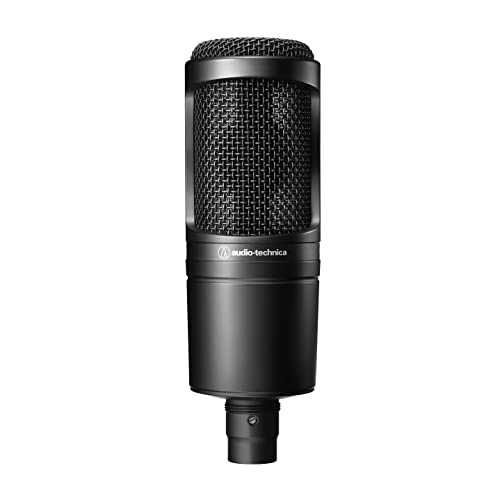
For streamers and podcasters seeking professional-quality audio, the Audio-Technica AT2020 Cardioid Condenser Microphone stands out as an exceptional choice. Its cardioid polar pattern effectively isolates your voice, minimizing background noise for clear recordings. With a frequency response of 20 Hz to 20 kHz and a sensitivity of 37 dB, you’ll capture every nuance of your sound. This rugged microphone connects via an XLR cable, requiring phantom power for peak performance. Weighing just 0.6 kilograms, it’s easy to position in your studio. Plus, with a stellar customer rating of 4.7 stars, you can trust its reliability for your streaming needs.
Best For: Streamers and podcasters seeking professional-quality audio with effective sound isolation.
Pros:
- Excellent cardioid polar pattern minimizes background noise and enhances voice clarity.
- Wide frequency response (20 Hz – 20 kHz) captures every detail of sound.
- Rugged construction ensures durability for regular use in studio settings.
Cons:
- Requires phantom power, which may necessitate additional equipment.
- Wired connectivity may limit mobility compared to wireless options.
- Slightly heavier than some other microphones in its class, potentially affecting positioning.
RØDE PodMic Cardioid Dynamic Broadcast Microphone

Optimized for podcasters, streamers, and gamers, the RØDE PodMic Cardioid Dynamic Broadcast Microphone delivers rich, balanced sound that enhances your audio experience. Its integrated swing mount and internal pop filter guarantee clean recordings, while the unidirectional polar pattern minimizes background noise. With a frequency response of 20 Hz to 20 kHz and a signal-to-noise ratio of 78 dB, it captures every detail of your voice. Weighing 937 grams, it’s sturdy yet easy to handle. Compatible with the RODECaster Pro, the PodMic is perfect for anyone looking to elevate their audio game. Plus, it boasts an impressive 4.8-star rating from users!
Best For: Podcasters, streamers, and gamers looking for high-quality audio performance.
Pros:
- Rich, balanced sound that enhances audio quality for professional results.
- Integrated swing mount and internal pop filter for clean recordings and ease of use.
- High compatibility with RODECaster Pro and other quality microphone interfaces.
Cons:
- Corded electric power source may limit mobility compared to battery-powered options.
- Weight of 937 grams might be cumbersome for some users during extended use.
- XLR connectivity requires additional equipment for users without compatible interfaces.
Shure SM7B Dynamic Studio Microphone
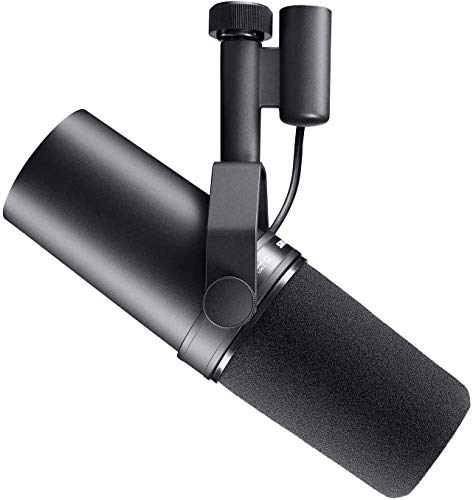
Engineered for professionals and enthusiasts alike, the Shure SM7B Dynamic Studio Microphone excels in delivering high-quality audio for streaming, podcasting, and vocal recording. With its wide frequency range of 50 Hz to 20,000 Hz, it captures every nuance of your voice, guaranteeing clarity and warmth. The precise cardioid pickup pattern minimizes background noise, making your vocals the focal point. Plus, built-in pop filtering and a detachable windscreen enhance audio quality by reducing unwanted plosives. Its rugged design guarantees durability, while professional XLR output allows seamless connectivity. This microphone is a reliable choice for anyone serious about audio excellence.
Best For: The Shure SM7B Dynamic Studio Microphone is best for podcasters, streamers, and vocalists seeking professional-quality audio in a durable design.
Pros:
- Exceptional audio clarity with a wide frequency range of 50 Hz to 20,000 Hz.
- Minimized background noise thanks to its precise cardioid pickup pattern.
- Rugged and durable construction designed to withstand demanding studio environments.
Cons:
- Requires a minimum of 60dB gain, which may necessitate a high-quality preamp.
- Does not support phantom power, limiting compatibility with some audio interfaces.
- Relatively heavy at 2.7 pounds, which may require sturdy mounting solutions.
Logitech G Yeti Studio Broadcast Microphone for Gaming

The Logitech G Yeti Studio Active Dynamic XLR Broadcast Microphone stands out as an exceptional choice for gamers and streamers seeking high-quality audio. With its dynamic XLR design and dual-diaphragm capsule, it captures smooth low-end and exceptional detail. The supercardioid pickup pattern minimizes background noise, ensuring your voice shines through. Plus, the ClearAmp Active Preamp provides a +25dB gain boost for clarity. Its sleek design, interchangeable windscreens, and 290-degree swivel mount make it easy to position. Designed specifically for your gaming and streaming needs, the Yeti Studio offers custom EQ settings for professional sound tailored to your style.
Best For: Gamers and streamers looking for high-quality audio with professional sound customization.
Pros:
- Exceptional Audio Quality: Dual-diaphragm capsule and ClearAmp Active Preamp provide superior sound detail and clarity.
- User-Friendly Design: Features a sleek aesthetic, interchangeable windscreens, and a flexible 290-degree swivel mount for easy positioning.
- Customizable Sound: Four EQ settings allow for tailored audio profiles to match individual preferences.
Cons:
- XLR Connection Requirement: Requires additional audio interfaces or mixers for connectivity, which may add to setup complexity.
- Limited Built-in Features: Lacks USB connectivity, limiting its use to professional audio setups.
- Weight and Portability: Being a handheld microphone may make it less portable compared to lighter options designed for on-the-go use.
FIFINE USB/XLR Dynamic Microphone for Podcast Recording

For podcasters and streamers seeking a versatile microphone, the FIFINE USB/XLR Dynamic Microphone (Model AM8) stands out with its dual connectivity options. You can easily plug it into your computer via USB for quick setup or switch to XLR for a more professional audio interface. With a frequency response of 50Hz-16KHz and a cardioid pattern, it captures your voice clearly while minimizing background noise. The RGB lighting adds a fun aesthetic, and the built-in mute button and headphone jack enhance usability. Weighing just 600 grams, it’s lightweight and portable, making it a solid choice for any streaming setup.
Best For: Podcasters and streamers looking for a versatile microphone with both USB and XLR connectivity options.
Pros:
- Dual connectivity: Easily switch between USB for plug-and-play convenience and XLR for professional audio setups.
- Clear audio capture: Directional cardioid pattern and frequency response of 50Hz-16KHz minimize background noise and enhance vocal clarity.
- RGB lighting: Customizable RGB ring adds an aesthetic appeal to your streaming setup.
Cons:
- XLR limitations: RGB features and function keys are inactive when using the XLR connection.
- No included XLR cable: Requires a separate purchase for XLR connectivity, which may be inconvenient for some users.
- Weight: While lightweight, some users may prefer a more compact option for travel.
FIFINE XLR/USB Gaming Microphone Set for Streaming and Podcasting

Looking to elevate your streaming or podcasting experience? The FIFINE XLR/USB Gaming Microphone Set is a fantastic choice. This dynamic mic offers both USB and XLR connectivity, making it versatile for any setup. With an impressive sensitivity of -50dB and cardioid polar pattern, it minimizes background noise. The customizable RGB lighting adds flair to your gaming rig. Plus, features like a mute button and gain knob enhance control. Its sturdy boom arm stand guarantees stability, while the anti-scratch desk clamp provides a secure fit. With a 4.6-star rating from over 5,000 reviews, it’s a top contender for creators like you!
Best For: Content creators, streamers, and podcasters looking for a versatile microphone that offers high-quality audio and customizable features.
Pros:
- Versatile connectivity with both USB and XLR options for different setups.
- Excellent noise cancellation with a cardioid polar pattern and -50dB sensitivity.
- Customizable RGB lighting to enhance the look of your gaming or recording space.
Cons:
- Limited frequency response range compared to some higher-end microphones.
- Boom arm stand may require adjustment for optimal positioning, which can be cumbersome.
- USB connectivity may not support all audio interfaces, limiting some advanced users.
AKG C104 Professional Cardioid Condenser Microphone for Studio Use
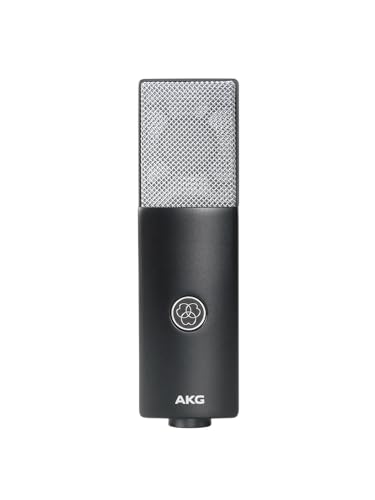
With its pristine sound capture and ultra-low noise floor, the AKG C104 Professional Cardioid Condenser Microphone is an ideal choice for podcasters and streamers seeking exceptional audio quality. This XLR studio mic handles sound pressure levels of up to 143 dB, making it perfect for both loud vocals and subtle speech. Its cardioid polar pattern guarantees focused audio pickup while minimizing background noise. Plus, with a frequency response of up to 20,000 Hz and a signal-to-noise ratio of 80 dB, your recordings will be clean and detailed. Constructed from recycled materials, it’s also an eco-friendly option for your studio.
Best For: Podcasters, streamers, and musicians looking for high-quality audio capture in a sustainable microphone.
Pros:
- Pristine sound quality with ultra-low noise floor for detailed recordings.
- Handles high sound pressure levels up to 143 dB, suitable for various vocal types.
- Eco-friendly construction using 100% recycled materials and fully recyclable packaging.
Cons:
- Requires XLR connection, which may necessitate additional equipment for some users.
- Weight of 375 grams may be heavier than some portable options.
- Limited to cardioid polar pattern, which may not suit all recording environments or needs.
Sennheiser Professional Profile USB Microphone Streaming Set

The Sennheiser Professional Profile USB Microphone Streaming Set is perfect for both budding podcasters and seasoned streamers who seek high-quality audio without the hassle. This set includes a boom arm, a 3 m USB-C cable, and a mic pouch, making it user-friendly for everyone. The award-winning cardioid condenser microphone capsule captures a natural, warm sound that enhances your voice’s presence. With plug-and-play simplicity, you can easily set up your podcast or live stream. Plus, the immediate sound control dial lets you adjust levels on the fly, ensuring excellent audio quality for your audience.
Best For: The Sennheiser Professional Profile USB Microphone Streaming Set is best for beginners and professionals seeking high-quality audio for podcasts and live streams.
Pros:
- Easy plug-and-play setup for quick use.
- High-quality cardioid condenser microphone enhances voice presence.
- Immediate sound control dial allows for real-time adjustments.
Cons:
- May require additional accessories for optimal use in certain environments.
- The boom arm may not be suitable for all desk setups.
- USB-C connection may necessitate an adapter for older devices.
Factors to Consider When Choosing Broadcast Microphones for Streaming Studios
When choosing a broadcast microphone for your streaming studio, you’ll want to take into account several key factors. Audio quality, connectivity options, and polar patterns can greatly influence your recordings. Additionally, pay attention to build quality and user control features to guarantee you get the best performance for your needs.
Audio Quality Standards
Choosing the right broadcast microphone for your streaming studio can greatly enhance the audio quality of your content. Aim for a frequency response range of at least 20 Hz to 20 kHz to capture the full spectrum of human speech and music. A signal-to-noise ratio (SNR) of 70 dB or higher is crucial for minimizing background noise, guaranteeing your voice comes through clearly. Opt for microphones with a cardioid polar pattern to isolate your sound source effectively. Sensitivity ratings around -25 dBFS to -40 dBFS allow you to capture quiet sounds without distortion. Additionally, a maximum sound pressure level (SPL) of 120 dB or higher guarantees your mic can handle loud performances, giving you the versatility needed for diverse content types.
Connectivity Options Available
Audio quality is just one piece of the puzzle; connectivity options play a significant role in your microphone selection for a streaming studio. You’ll typically encounter USB and XLR microphones. USB mics offer a plug-and-play experience, making them user-friendly, especially for beginners. You can connect them directly to your computer without any extra gear. On the other hand, XLR microphones provide superior audio quality and flexibility, ideal for professional settings where control over sound is essential. Some models even feature both USB and XLR connections, allowing you to adapt to different setups. When choosing, consider your recording needs and whether you might want to upgrade your audio equipment in the future.
Polar Patterns Explained
Understanding polar patterns is essential for selecting the right microphone for your streaming studio, as they dictate how sound is captured from various angles. The cardioid pattern is the most common choice for broadcast applications, primarily picking up sound from the front while rejecting noise from the sides and rear. If you’re recording group discussions or ambient sounds, consider an omnidirectional pattern, which captures sound equally from all directions. For interviews with two speakers facing each other, a bidirectional microphone is ideal, capturing audio from both the front and back. Finally, stereo patterns use two channels to create a sense of space and depth, making them perfect for music production and immersive audio experiences. Choose wisely based on your needs!
Build Quality and Durability
When it comes to selecting the right broadcast microphone for your streaming studio, build quality and durability are paramount. You want a microphone that can withstand frequent use and environmental stressors. Opt for models with metal housing, as they’re generally more durable than plastic ones, providing better protection against impacts. Look for internal shock mounting and pop filters, which minimize handling noise and enhance durability during intense recording sessions. Don’t overlook the weight of the microphone; heavier models often signify robust materials that contribute to longevity. Finally, choose microphones designed for professional use, as they typically undergo rigorous testing to guarantee they can handle high sound pressure levels and maintain performance in demanding studio environments.
User Control Features
Choosing the right broadcast microphone for your streaming studio means paying close attention to user control features that can greatly enhance your recording experience. Look for input gain dials that let you adjust microphone sensitivity in real-time, ensuring ideal audio levels. Capacitive mute sensors are a game changer, allowing you to silence the mic quickly without fumbling with cables. Zero-latency headphone monitoring helps you hear your voice instantly, so you can adjust your performance and avoid feedback. If you want even more control, consider microphones with software integration for managing multiple audio sources. Customizable EQ settings and sound effect plugins can help tailor your audio output to fit your specific needs, enhancing your overall streaming quality.
Price and Warranty Considerations
Price and warranty considerations play an essential role in your decision-making process for selecting a broadcast microphone in your streaming studio. With a wide price range, you’ll find options from budget-friendly to high-end professional models, impacting your overall investment. Look for microphones that offer a warranty period, typically one to two years, to protect against defects. A solid return policy, like a 30-day guarantee, allows you to test the microphone in your setup and return it if it doesn’t meet your expectations. Don’t forget to factor in the cost of additional accessories, such as boom arms or audio interfaces. Finally, evaluating customer reviews can provide valuable insight into the microphone’s performance and durability, justifying its price.
