
Choosing the right bike computer can make road rides easier to navigate, easier to train with, and more enjoyable overall. The best models balance accurate GPS, readable displays, long battery life, and ride data you’ll actually use.
This roundup of the best bike GPS computers for road cycling focuses on practical features that matter on pavement, from route guidance to connectivity and ease of use.
Best 10 Bike GPS Computers for Road Cycling Picks for 2026
Advanced Training GPS

- Multi-band GNSS for improved positioning accuracy
- Training tools include ClimbPro, stamina insights, and power guide
- Up to 26 hours of battery life in demanding use cases
Best For: Road cyclists who want advanced training metrics and dependable navigation
Touchscreen Route Navigator

- 3.3-inch touchscreen with both touch and button control
- Dual-band, 5-satellite positioning for better accuracy
- Voice navigation plus climb planning and route imports
Best For: Riders who want a large touchscreen and flexible navigation tools
Easy Setup Cycling Navigator

- 3-inch touchscreen works in sunlight and with gloves or rain
- Preloaded profiles make setup fast and simple
- Includes LiveTrack, GroupTrack, and incident detection support
Best For: Cyclists who want simple navigation and connected safety features
Budget Route Tracker

- Imports routes from iGPSPORT, Strava, Ride with GPS, and Komoot
- 2.4-inch sunlight-friendly color screen
- Up to 25 hours of battery life with IPX7 waterproofing
Best For: Road cyclists who want an affordable compact GPS computer with core navigation
Premium Flagship Pick
Garmin Edge 1050 Premium Cycling Computer

- Vivid color touchscreen with course creation
- Road hazard alerts and smart connectivity
- ClimbPro, power guide, and coaching tools
Best For: Road cyclists wanting a premium all-in-one computer
Budget Navigation Pick
GEOID CC600 Color Screen Bike Computer

- Color route navigation with automatic rerouting
- Bluetooth, ANT+, WiFi, and AGNSS support
- Works with sensors, smart trainers, and FIT export
Best For: Budget-minded riders who want navigation and device support
Compact Smart Ride Pick
Garmin Edge 850 Compact GPS Cycling Computer
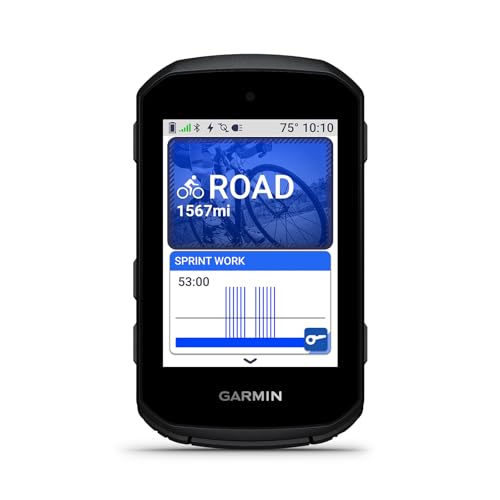
- Compact unit with touchscreen and buttons
- Multi-band GPS with 5 Hz recording
- Smart fueling, hazard, and group ride features
Best For: Riders wanting a smaller premium cycling computer
Budget GPS All-Rounder
COOSPO GPS Wireless Cycling Computer

- ANT+ support for common ride sensors
- App sync, route loading, and Strava export
- 2.4" screen with auto backlight and IP67
Best For: Road cyclists wanting a simple GPS computer with sensor support
Navigation-First Touchscreen
GEOID CC700 Pro Color Bike Computer

- 2.8" color touchscreen with buttons
- Offline maps and re-route planning
- WiFi sync plus Strava and TrainingPeaks support
Best For: Cyclists who want guided navigation and a touchscreen interface
Long-Ride Value Pick
iGPSPORT BSC100S GPS Bike Computer

- Five-satellite GPS positioning
- 40+ data fields and app syncing
- Up to 40 hours battery life
Best For: Endurance riders who want long battery life and detailed ride data
Advanced Training GPS – Garmin Edge 540
If you want a bike GPS computer for road cycling that leans hard into training and navigation, the Garmin Edge 540 is built for serious riders. It combines button controls, multi-band GNSS positioning, climb data, and structured coaching features in a compact unit that’s meant to support demanding rides and longer training plans.
Best For: Road cyclists who want advanced training metrics, reliable navigation, and long battery life in a compact button-controlled computer.
Pros:
- Multi-band GNSS helps improve positioning accuracy in challenging environments.
- ClimbPro, power guide, stamina insights, and daily suggested workouts support structured training.
- Battery life reaches up to 26 hours in demanding use cases, or 42 hours in battery saver mode.
- Ride type-specific maps highlight popular roads and trails with searchable points of interest.
Cons:
- Many of the most advanced training features require compatible power meter and heart rate monitor use.
- Button-only controls may be less convenient than a touchscreen for some riders.
- More feature-rich than a simple ride logger, so casual users may not need everything it offers.
Overall, the Edge 540 is a strong pick if you want one of the more capable bike GPS computers for road cycling and value training depth as much as route guidance. It’s especially appealing for riders who want data-driven planning without giving up dependable navigation.
Touchscreen Route Navigator – iGPSPORT BSC500
The iGPSPORT BSC500 is a feature-packed option for bike GPS computers for road cycling if you want a larger touchscreen and voice guidance. It combines route navigation, dual-band positioning, climb planning, and training analysis in a unit that’s designed to be easy to read and simple to operate on the move.
Best For: Riders who want a large touchscreen, voice navigation, and flexible route handling for everyday road cycling.
Pros:
- 3.3-inch touchscreen supports both touch and button operation for easier use.
- Dual-band, 5-satellite positioning improves navigation accuracy and anti-interference capability.
- Voice navigation and turn reminders reduce the need to constantly look down.
- Route imports from the iGPSPORT app and third-party platforms like Strava and Komoot add flexibility.
Cons:
- At 107 g, it is not the lightest computer in this group.
- Battery life is listed at 25 hours, which is good but not class-leading.
- Some advanced features are tied to the iGPSPORT ecosystem and app workflow.
For riders who want a modern interface and guided navigation, the BSC500 offers a practical balance of screen size, routing tools, and training features. It’s a solid fit if you prefer easier route-following over a more minimal ride computer.
Easy Setup Cycling Navigator – Garmin Edge Explore 2
If you want bike GPS computers for road cycling that prioritize ease of use, the Garmin Edge Explore 2 is a straightforward navigator with a glove- and rain-friendly touchscreen. It comes ready with road, off-road, and indoor profiles, plus ride-type maps and smart riding features that make it easy to get rolling quickly.
Best For: Cyclists who want a simple, easy-to-read GPS navigator with smart routing and connected safety features.
Pros:
- 3-inch high-resolution touchscreen is designed to work in sunlight and with gloves or rain.
- Preloaded activity profiles make setup quick and simple.
- Ride-type maps, POIs, and eBike routing help with route planning.
- Supports LiveTrack, GroupTrack, smart notifications, and incident detection when paired with a smartphone.
Cons:
- It is more focused on navigation and convenience than advanced training metrics.
- Sensors for heart rate, speed, and cadence are sold separately.
- Some connected features require pairing with a smartphone or compatible eBike.
The Edge Explore 2 makes sense if you want a friendly, no-fuss cycling navigator rather than a training-heavy computer. It still offers strong route guidance and safety features, which makes it a practical pick for road riders who value simplicity.
Budget Route Tracker – iGPSPORT BSC200S
The iGPSPORT BSC200S is a compact bike GPS computer for road cycling that focuses on navigation basics, ride data, and dependable battery life. With route import support, turn reminders, and a clear 2.4-inch display, it offers a practical feature set for riders who want guidance without a more expensive or complex unit.
Best For: Road cyclists who want an affordable, compact GPS computer with route navigation and core ride data.
Pros:
- Supports route creation and imports from iGPSPORT, Strava, Ride with GPS, and Komoot.
- Turn reminders, yaw guidance, and back-to-start navigation help keep rides on track.
- 2.4-inch semi-transparent, semi-reflective color screen is easier to read in sunlight.
- Up to 25 hours of battery life and IPX7 waterproofing add everyday practicality.
Cons:
- Smaller screen may be less convenient for riders who want a larger display.
- Button-only input is less flexible than touch-and-button models.
- Best suited to core navigation and data tracking rather than advanced training depth.
For riders who mainly want a reliable route companion, the BSC200S covers the essentials well. It stands out as a compact, value-oriented option among bike GPS computers for road cycling, especially if you prefer simple controls and a lighter unit.
Premium Flagship Pick – Garmin Edge 1050 Premium Cycling Computer
If you want one of the most fully featured bike GPS computers for road cycling, the Garmin Edge 1050 focuses on navigation, training, and ride awareness in a single premium unit. It combines a vivid color touchscreen, on-device course creation, road surface details on the map, and a strong set of connectivity and safety tools for solo or group rides.
Best For: Road cyclists who want a top-tier computer with advanced navigation, training guidance, and smart ride features.
Pros:
- Vivid color touchscreen with responsive on-device course creation
- Road hazard alerts, incident detection, and live location features when paired with a compatible smartphone
- Built-in speaker for workout prompts, navigation prompts, and bike bell alerts
- ClimbPro, power guide, and personalized coaching features for structured riding
Cons:
- Battery life drops to up to 20 hours in demanding use cases
- Many advanced functions depend on compatible sensors and a smartphone
- Premium feature set may be more than casual riders need
Overall, the Edge 1050 is the most feature-rich option here and suits riders who want navigation, performance tracking, and connectivity in one high-end road cycling computer.
Budget Navigation Pick – GEOID CC600 Color Screen Bike Computer
The GEOID CC600 is a practical choice if you want bike GPS computers for road cycling without paying for a premium flagship model. It gives you color route navigation, rerouting, fast satellite positioning, and broad sensor support, while keeping the interface simple with buttons and a compact 2.4-inch display.
Best For: Riders who want affordable navigation, basic training support, and wide device compatibility.
Pros:
- Color navigation with turn reminders, zooming, and automatic rerouting
- Supports GPS, BEIDOU, GLONASS, QZSS, and GALILEO with AGNSS-assisted 5-second positioning
- Works with Bluetooth and ANT+ devices, including power meters, heart rate monitors, and smart trainers
- WiFi sync, firmware updates, and FIT export with STRAVA and TrainingPeaks support
Cons:
- Button-based interface is less advanced than touchscreen units
- Battery life is listed at 24 hours, but features are more basic than premium models
- No built-in maps beyond GPX and satellite navigation support
The CC600 is a solid value pick for riders who mainly want dependable navigation, sensor connectivity, and a straightforward screen for everyday road rides.
Compact Smart Ride Pick – Garmin Edge 850 Compact GPS Cycling Computer
The Garmin Edge 850 is a compact option for road cyclists who want advanced features in a smaller package. It pairs a vivid color display with touchscreen and button controls, preloaded maps, multi-band GPS, and practical ride tools like smart fueling alerts, radar and wind overlays, and group ride messaging.
Best For: Road cyclists who want a smaller computer with premium navigation and smart ride features.
Pros:
- Compact design with both touchscreen and button controls
- Multi-band GPS with automatic 5 Hz recording for accurate tracking
- Preloaded maps with Trailforks and Forksight mode, plus road surface details
- Smart fueling alerts, hazard alerts, live location sharing, and incident detection when paired with a compatible smartphone
Cons:
- Battery life is only up to 12 hours in demanding use cases
- Several smart features require a compatible smartphone and Garmin Connect
- Smaller size may mean less on-screen space than larger units
For riders who want high-end navigation and connected features without moving to the largest computer in the lineup, the Edge 850 is a strong compact alternative.
Budget GPS All-Rounder – COOSPO GPS Wireless Cycling Computer
If you want one of the more affordable bike GPS computers for road cycling, the COOSPO BC107 keeps the basics covered with accurate global GPS positioning, ANT+ sensor support, and app-based ride syncing. It focuses on practical ride data and simple setup rather than advanced navigation, which makes it a solid fit for riders who mainly want dependable tracking.
Best For: Road cyclists who want a straightforward GPS head unit with sensor support and Strava syncing.
Pros:
- Supports ANT+ heart rate, speed, cadence, and power meter sensors.
- Works with the CoospoRide app for setup, route loading, ride analysis, and firmware updates.
- Can sync .fit activity files to Strava through the app.
- 2.4-inch sunlight-readable screen with auto backlight and IP67 protection.
Cons:
- First GPS lock can take 3-5 minutes and requires being outdoors.
- Out-front mount is not included.
- Sensors are not included with the single unit.
Overall, this is a practical pick if you want essential cycling computer features without paying for a color touchscreen or full navigation suite. It’s best suited to riders who value clear ride data, app connectivity, and weather resistance over premium extras.
Navigation-First Touchscreen – GEOID CC700 Pro Color Bike Computer
The GEOID CC700 Pro stands out among bike GPS computers for road cycling if you care about navigation and a modern interface. Its 2.8-inch color touchscreen, offline map support, and re-route planning make it better suited to riders who follow routes, explore new roads, or want a more guided ride experience.
Best For: Road cyclists who want touchscreen navigation, map guidance, and fast syncing.
Pros:
- 2.8-inch color touchscreen with three-button control for easier operation.
- Supports offline map downloads with turn prompts, street names, zoom, and dual-perspective views.
- Re-routes when off course while connected to the app.
- WiFi, ANT+, and Bluetooth support with FIT export and Strava/TrainingPeaks auto-sync.
Cons:
- Re-route planning depends on remaining connected to the designated app.
- DJI camera control works only with Action 4 and Action 5 Pro.
- Touchscreen units can be less simple than button-only models for some riders.
This is the most feature-rich option in the group for riders who want map navigation to be a major part of the computer. It also adds useful extras like indoor trainer support and WiFi syncing, so it suits cyclists who want a more connected setup.
Long-Ride Value Pick – iGPSPORT BSC100S GPS Bike Computer
The iGPSPORT BSC100S is a strong value option if you want bike GPS computers for road cycling with long battery life and clear ride data. It combines 5-satellite positioning, a 2.6-inch anti-glare screen, and broad app compatibility, making it a useful fit for riders who log long training days and want easy post-ride analysis.
Best For: Road cyclists who want long battery life, clear data display, and app syncing.
Pros:
- Supports five satellite systems for more accurate positioning.
- Shows 40+ riding data fields, including speed, distance, grade, cadence, and temperature.
- Up to 40 hours of battery life with USB-C charging.
- Works with the iGPSPORT app and can share data to Strava and Komoot.
Cons:
- Uses a basic LCD-style display rather than a color touchscreen.
- Does not include advanced map navigation features in the supplied notes.
- Like many units in this class, sensor connections are optional rather than built in.
For riders who mainly want dependable ride tracking, strong battery life, and easy data sharing, this model is easy to justify. It is less focused on navigation than some pricier units, but it covers the essentials well for road training and endurance riding.
How We Picked the Best Bike GPS Computers for Road Cycling
We focused on Bike GPS Computers for Road Cycling that offer dependable positioning, clear screens, useful navigation tools, solid battery life, and compatibility with common sensors and training accessories. We also considered how easy each unit is to set up and use during real rides.
Quick Comparison
In this category, the biggest differences are usually navigation style, display quality, and training depth. Some units are built for simple ride tracking and route prompts, while others add full mapping, rerouting, touchscreen controls, Wi-Fi syncing, and advanced workout metrics.
Key Buying Factors for Bike GPS Computers for Road Cycling
Navigation and Routing
If you follow planned routes often, look for turn-by-turn directions, rerouting, and map detail that is easy to read at speed. Basic breadcrumb navigation is fine for familiar loops, but full mapping is better for longer or more complex rides.
Display and Usability
A screen that stays readable in bright daylight matters more on the road than flashy features. Touchscreens can be convenient, but physical buttons are often easier to use in wet conditions or while wearing gloves.
Battery Life
Road cyclists who do endurance rides should prioritize battery capacity over extra features they may never use. Longer battery life helps reduce charging anxiety on all-day rides and during travel.
Training Features and Connectivity
For structured training, check for ANT+ and Bluetooth sensor support, plus compatibility with heart-rate monitors, power meters, and cadence sensors. If you use a training platform, wireless syncing can save time and reduce manual uploads.
Durability and Mounting
Water resistance, secure mounting, and a compact shape all matter when riding in varied weather or over rough pavement. A stable mount helps keep the unit visible and reduces vibration.
Who Should Buy Which Bike GPS Computers for Road Cycling?
Choose a simpler model if you want reliable ride data, basic navigation, and a lower price. Pick a midrange option if you want better maps, a stronger display, and sensor support for training. Go premium if you want the most polished experience, advanced navigation, and the best overall interface for frequent road use.
For most riders, the best Bike GPS Computers for Road Cycling are the ones that make it easy to start riding, stay on route, and review your data afterward without extra hassle.
