
Mountain biking demands more from a bike computer than road riding does. You need dependable GPS, readable screens, rugged construction, and trail-friendly features that work when the terrain gets rough.
This roundup of the best bike GPS computers for mountain biking in 2026 focuses on practical choices for navigation, training, and ride data without overcomplicating your cockpit.
Best 10 Bike GPS Computers for Mountain Biking Picks for 2026
Mountain-Bike Specialist
Garmin Edge MTB, Rugged GPS Bike Computer

- Rugged MTB-focused design with button controls
- Multi-band GPS and 5 Hz recording for descents
- Trailforks, Forksight, and MTB performance metrics
Best For: Aggressive trail riders, enduro, and downhill
Touchscreen Trail Navigator
iGPSPORT BSC500 GPS Bike Computer

- 3.3-inch touchscreen with button backup
- Dual-band positioning and voice navigation
- Route import plus iClimb 2.0 climb planning
Best For: Riders who want map guidance and a bigger screen
Performance Training Pick
Garmin Edge 540 Compact GPS Cycling Computer

- Multi-band GNSS for tough riding conditions
- ClimbPro and ride-type maps for trail use
- Training prompts and adaptive coaching support
Best For: Riders who want training metrics plus trail navigation
Simple Budget Tracker
Wireless GPS Bike Computer 2.4" Screen

- Built-in GPS with essential ride stats
- Sensor-free setup with auto start/stop
- 28-hour battery life and IPX7 waterproofing
Best For: Budget-minded riders who only need core ride data
Premium Navigation Pick
iGPSPORT BSC300T Wireless Bike Computer GPS
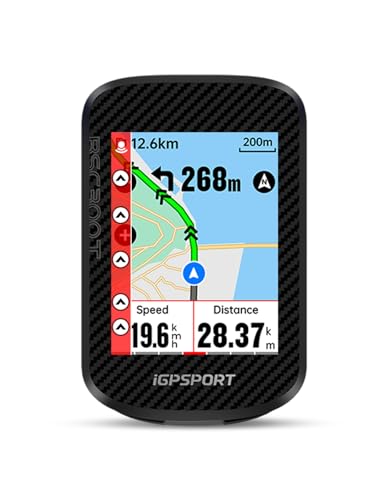
- Offline map downloads with route preview and turn prompts
- 5-satellite positioning plus off-course warnings
- 130+ riding data points and ANT+/Bluetooth 5.0 support
Best For: Trail riders who want offline navigation and deep ride data
Budget GPS Basics
COOSPO Bike Computer GPS Wireless

- 2.4-inch sunlight-readable screen with auto backlight
- ANT+ sensor support and CoospoRide app syncing
- IP67 waterproof protection for wet rides
Best For: Budget-minded riders who want basic GPS and sensor support
Color Screen Route Runner

- Color route navigation with rerouting and turn reminders
- 5-second positioning with five satellite systems
- WiFi/Bluetooth syncing plus indoor training support
Best For: Trail riders who want rerouting and a color display
Budget All-Rounder
iGPSPORT BSC100S GPS Bike Computer

- 5-satellite positioning for quicker fixes
- 2.6-inch anti-glare screen
- Up to 40 hours of battery life
Best For: Riders who want a straightforward, long-lasting GPS computer with broad sensor support.
Navigation-Ready Touchscreen
COOSPO CS600 Color GPS Bike Computer

- 2.4-inch color touchscreen with auto-backlight
- Built-in route navigation and breadcrumb trail
- 36-hour battery life with Type-C charging
Best For: Riders who want touchscreen navigation and route-following features for trail adventures.
Trail Navigation Pick
iGPSPORT BSC200S GPS Bike Computer

- Route navigation with app and third-party imports
- One-touch navigation and turn reminders
- 100+ riding data fields with app customization
Best For: Trail riders who want route navigation, ride continuity, and smart notifications.
Mountain-Bike Specialist – Garmin Edge MTB, Rugged GPS Bike Computer
If you want bike GPS computers for mountain biking that are built around trail riding, the Garmin Edge MTB is designed for rough, technical use. It combines a rugged body, button controls, and mountain-bike-specific metrics so you can focus on the descent, timing, and trail details instead of fiddling with settings.
Best For: Riders who want a rugged, MTB-focused computer for enduro, downhill, and trail performance tracking.
Pros:
- Purpose-built MTB profiles including enduro and downhill
- Multi-band GPS with automatic 5 Hz recording for better descending accuracy
- Trailforks maps, Forksight trail previews, and TopoActive bike maps
- Grit, Flow, jump speed, and hang time metrics for MTB analysis
Cons:
- Battery life drops to 14 hours in demanding use cases
- Requires a compatible smartphone for some alerts and sharing features
- Advanced training metrics need compatible heart rate and power sensors
This is the strongest pick if your rides are heavily trail-centered and you want deeper MTB data than a generic cycling computer usually provides. The rugged design and trail-specific navigation tools make it especially well matched to aggressive mountain biking.
Touchscreen Trail Navigator – iGPSPORT BSC500 GPS Bike Computer
The iGPSPORT BSC500 is a practical option among bike GPS computers for mountain biking if you want a larger display, route guidance, and voice navigation. It combines touchscreen and button control with dual-band positioning, making it useful for riders who want map visibility and easier on-ride directions.
Best For: MTB riders who want a larger touchscreen, route navigation, and hill-climb guidance.
Pros:
- 3.3-inch touchscreen with button support and up to 12 data fields per page
- Dual-band L1/L5 positioning with GPS, Beidou, GLONASS, Galileo, and QZSS
- Smart map navigation, turn reminders, and voice alerts for key cues
- iClimb 2.0 climbing planning plus route import from apps like Strava and Komoot
Cons:
- Heavier than compact head units at 107 g
- Touchscreen may be less ideal than buttons for rough, muddy conditions
- Advanced training features are more basic than premium performance-first units
For riders who value navigation and visibility over ultra-minimal hardware, the BSC500 offers a solid mix of mapping, climb planning, and convenience. It’s especially appealing if you regularly follow routes or want spoken prompts while riding unfamiliar trails.
Performance Training Pick – Garmin Edge 540 Compact GPS Cycling Computer
For bike GPS computers for mountain biking that also support structured training, the Garmin Edge 540 is a compact option with strong navigation and performance features. It adds advanced positioning, climb tools, and coaching prompts, making it a good fit for riders who want more than basic ride tracking.
Best For: Mountain bikers who want a compact unit with navigation, climb data, and training support.
Pros:
- Multi-band GNSS for improved positioning in challenging environments
- ClimbPro shows remaining ascent and grade on every ride
- Daily suggested workouts and adaptive coaching with compatible sensors
- Ride type-specific maps with roads, trails, and searchable points of interest
Cons:
- Best training features require compatible power meter and heart rate monitor
- Button-only controls may feel less modern than touchscreen units
- Less MTB-specialized than a purpose-built downhill/enduro computer
The Edge 540 is a strong middle ground if you want mountain-bike-friendly navigation but also care about structured training and recovery. It is less trail-specialized than the Edge MTB, but it brings more all-around coaching tools to the ride.
Simple Budget Tracker – Wireless GPS Bike Computer 2.4" Screen
If you want straightforward bike GPS computers for mountain biking without extra setup, this wireless GPS unit keeps things simple. It focuses on core ride stats, automatic start and stop, and a clear backlit display, which makes it a practical choice for riders who mainly want to track the basics.
Best For: Riders who want an easy, sensor-free GPS computer for basic MTB ride tracking.
Pros:
- Built-in GPS tracks speed, distance, time, altitude, gradient, and ascent
- Sensor-free setup with no wheel magnets or complicated cables
- Automatic backlight improves visibility in low-light conditions
- Up to 28 hours of battery life with IPX7 waterproofing
Cons:
- 2.4-inch display is smaller than larger navigation-focused units
- Lacks advanced mapping and route guidance features
- Fewer performance and training tools than premium models
This model is best when you want a clean, affordable-feeling setup and don’t need detailed trail navigation. It covers the essentials well, but riders who depend on maps or advanced MTB metrics will likely want a more capable unit.
Premium Navigation Pick – iGPSPORT BSC300T Wireless Bike Computer GPS
If you want bike GPS computers for mountain biking that can handle route guidance, off-course alerts, and a broad data view, the iGPSPORT BSC300T is built for that kind of riding. Its 2.4-inch touchscreen, six-button control, and offline map support make it practical for trail riders who want a mix of simple operation and advanced navigation.
Best For: Riders who want offline map navigation, real-time tracking, and lots of ride metrics in one unit.
Pros:
- Supports global offline map downloads, route preview, turn prompts, and off-course warnings.
- Uses 5-satellite positioning for broader coverage and more accurate ride data.
- Tracks 130+ riding data points, including speed, grade, cadence, temperature, and more.
- Connects through ANT+ and Bluetooth 5.0 for sensors, ebikes, trainers, and other devices.
Cons:
- The feature set is broad, so setup may be more involved than a basic cycle computer.
- Navigation and data tools may be more than casual riders need.
Overall, this is a strong choice if your mountain biking often takes you onto new trails and you value turn-by-turn guidance plus detailed performance tracking. It combines navigation flexibility with wide device support, which makes it especially appealing for riders who want one computer to do a lot.
Budget GPS Basics – COOSPO Bike Computer GPS Wireless
For buyers comparing bike GPS computers for mountain biking, the COOSPO GPS Wireless keeps things focused on the essentials: accurate positioning, sensor compatibility, and easy app syncing. The 2.4-inch sunlight-readable screen and auto backlight make it a practical pick for mixed light conditions on the trail.
Best For: Riders who want a straightforward GPS computer with solid app syncing and sensor support.
Pros:
- Global GPS positioning is designed for accurate ride data, with first lock taking 3-5 minutes outdoors.
- Supports ANT+ heart rate, speed, cadence, and power meter connections.
- CoospoRide app lets you configure the device, load route maps, and analyze rides.
- IP67 waterproof protection helps it keep working in rainy conditions.
Cons:
- Out-front bike mount is not included.
- Sensors are sold separately unless you choose a kit option.
- Initial GPS acquisition can take a few minutes on first use.
This is a sensible option if you want reliable core GPS features without paying for extras you may not use. It covers the basics well for mountain biking, especially if you already use ANT+ sensors and want simple app-based ride management.
Color Screen Route Runner – GEOID CC600 Cycling Computer
The GEOID CC600 stands out among bike GPS computers for mountain biking if you want colorful navigation, quick positioning, and more advanced display customization. Its 2.4-inch color screen, reroute planning, and support for GPX uploads make it a useful tool for trail riders who regularly follow routes or explore new areas.
Best For: Riders who want a color display with rerouting, quick GPS lock, and strong training features.
Pros:
- Color route navigation includes turn reminders, zooming, notifications, and automatic rerouting when off track.
- Supports WiFi and Bluetooth for fast syncing, firmware updates, and AGNSS data refreshes.
- Offers 5-second positioning with GPS, BEIDOU, GLONASS, QZSS, and GALILEO support.
- Works with indoor training, smart trainers, and a wide range of sensors and electronic shifting systems.
Cons:
- Best navigation performance depends on keeping AGNSS data current.
- Its many display layouts and data options may take time to customize.
For riders who want a modern, feature-rich computer with a color screen and practical reroute tools, the CC600 is a compelling choice. It balances trail navigation, training flexibility, and broad connectivity in a compact package.
Budget All-Rounder – iGPSPORT BSC100S GPS Bike Computer
If you want bike GPS computers for mountain biking without overcomplicating your setup, the iGPSPORT BSC100S is a practical pick. It focuses on the essentials: fast multi-satellite positioning, a large anti-glare screen, and long battery life, so you can track rides confidently on rough trails and longer days out.
Best For: Riders who want a straightforward, long-lasting GPS computer with broad sensor support.
Pros:
- Supports 5 satellite systems for faster positioning and more accurate ride data.
- 2.6-inch anti-glare display is easier to read while riding.
- Up to 40 hours of battery life for long trail rides.
- ANT+ and Bluetooth 5.0 support lets it pair with speed, cadence, heart rate sensors, and smart watches.
Cons:
- No color touchscreen or built-in route navigation.
- Type-C cable is not included in the box.
Overall, the BSC100S is a sensible entry-level choice for riders who mainly want reliable ride recording and sensor connectivity. It skips the advanced navigation extras, but delivers solid value for everyday mountain biking use.
Navigation-Ready Touchscreen – COOSPO CS600 Color GPS Bike Computer
For mountain bikers who want more guidance from their bike GPS computers, the COOSPO CS600 brings a color touchscreen, route navigation, and customizable data views. Its auto-backlight and clear mapping make it a strong option for exploring new trails or following planned routes in changing light.
Best For: Riders who want touchscreen navigation and route-following features for trail adventures.
Pros:
- 2.4-inch color touchscreen with auto-backlight for clearer visibility.
- Built-in route navigation with breadcrumb trail and uploaded routes.
- 36-hour battery life and 2-hour Type-C charging support.
- Supports Bluetooth and ANT+, plus app syncing to Strava and TrainingPeaks.
Cons:
- No extra sensors are included in the box.
- Some advanced tracking accessories must be purchased separately.
The CS600 stands out if you want route guidance and a more interactive display during rides. It is less focused on simplicity and more on navigation, data customization, and ecosystem pairing.
Trail Navigation Pick – iGPSPORT BSC200S GPS Bike Computer
The iGPSPORT BSC200S is a useful option in bike GPS computers for mountain biking if you want route navigation, smart alerts, and a compact color screen. It supports route creation and imports from popular platforms, while also adding trail-friendly features like turn reminders and back-to-start navigation.
Best For: Trail riders who want route navigation, ride continuity, and smart notifications.
Pros:
- Route navigation supports the iGPSPORT app plus imported routes from Strava, Ride with GPS, and Komoot.
- One-touch navigation, back-to-start, and riding record navigation add flexibility on trails.
- Over 100 riding data fields with customizable page layouts in the app.
- Compact color display, IPX7 waterproofing, and up to 25 hours of battery life.
Cons:
- Battery life is shorter than some longer-endurance competitors.
- Type-C cable is not included.
Compared with simpler GPS units, the BSC200S adds more navigation and notification tools for riders who like to explore. It is a strong middle-ground pick for mountain bikers who want useful guidance without moving to a full touchscreen model.
How We Picked the Best Bike GPS Computers for Mountain Biking
We focused on Bike GPS Computers for Mountain Biking that balance durability, navigation, battery life, and ease of use. Trail riding adds vibration, dust, mud, and frequent course changes, so we prioritized devices with reliable GPS lock, waterproofing, clear displays, and off-course guidance where available.
We also looked at whether each unit is easy to mount, supports key sensors or app sync, and offers useful climbing or route features without demanding constant menu diving on the trail.
Quick Comparison
For aggressive riders, rugged models with strong trail metrics and compact builds are usually the best fit. If navigation matters most, choose a unit with map support, rerouting, and a bright display. If you want a simpler setup, basic wireless computers can still cover speed, distance, and time with less cost and fewer distractions.
Key Buying Factors for Bike GPS Computers for Mountain Biking
Durability and Waterproofing
Look for IPX7 or similar protection, secure mounting, and a shell that can handle dust, rain, and repeated trail impacts. Mountain biking exposes gear to more abuse than most cycling styles.
Navigation and Course Tools
Offline maps, turn prompts, rerouting, and off-course alerts are especially valuable on unfamiliar trails. Even if you know your local network, navigation helps when detours or trail closures force a change.
Display Readability
A bright screen with clear contrast matters in changing light under trees or on exposed ridgelines. Touchscreens can be convenient, but physical-button control may be easier with gloves or wet hands.
Battery Life
Long rides and all-day trail sessions call for dependable battery life. Consider how much navigation, backlight use, and sensor connectivity will affect runtime in real-world conditions.
Data and Climb Features
Mountain bikers often benefit from elevation, climb, gradient, and lap data more than cadence-heavy road metrics. Choose features that help you pace effort and study trail performance after the ride.
Who Should Buy Which Bike GPS Computers for Mountain Biking?
If you ride technical trails and want premium ruggedness, a purpose-built option is usually worth it. If your priority is route guidance for new terrain, pick one with maps and rerouting. If you mainly want core ride stats at a lower price, a simpler wireless GPS computer can be enough.
In short, the best Bike GPS Computers for Mountain Biking are the ones that match your terrain, your navigation needs, and how much data you actually use on the trail.
