
If you’re looking to enhance your workstation’s network performance, choosing the right 25GbE NIC is essential. With several options available, it can be overwhelming to find the best fit for your needs. In this discussion, we’ll explore three standout contenders that promise efficiency and reliability. By understanding their features, you can make a more informed decision that could greatly affect your workflow. Let’s take a closer look at what these NICs have to offer.
Vogzone 25Gb PCI-E Network Card with Dual SFP28 Ports

If you’re looking to supercharge your workstation’s networking capabilities, the Vogzone 25Gb PCI-E Network Card with Dual SFP28 Ports is an excellent choice. With its Broadcom BCM57414B controller, this card supports speeds of 1GbE, 10GbE, and 25GbE, ensuring stable performance. Its PCIe v3.0 interface allows for quick data transfer, while intelligent offloads optimize your network efficiency. Installation is typically plug-and-play, although some users have encountered driver issues on older systems. Overall, you’ll appreciate the significant speed improvements, making it ideal for data centers, home networking, and enhancing older PCs.
Best For: Users looking to enhance their networking capabilities in data centers, home networking setups, or older PCs needing improved Ethernet performance.
Pros:
- High-speed support for 1GbE, 10GbE, and 25GbE ensures stable and efficient network performance.
- Plug-and-play installation simplifies setup for most users, making it easy to integrate into various systems.
- Intelligent offloads optimize network efficiency, reducing CPU load and improving overall system performance.
Cons:
- Some users may experience driver issues on older systems, complicating installation.
- Limited warranty information available, which may concern potential buyers.
- Compatibility may vary with certain operating systems, leading to potential installation challenges.
25GbE NIC Network Card with Mellanox ConnectX-4 Chipset
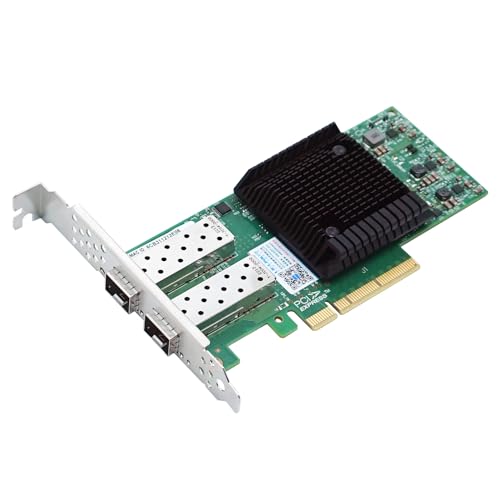
For professionals seeking high-performance networking solutions, the 25GbE NIC Network Card with Mellanox ConnectX-4 Chipset stands out with its support for 1/10/25G connections, making it ideal for virtualization applications. This dual-SFP28 ports PCI Express 3.0 X8 adapter guarantees seamless integration with various operating systems, including Windows, Linux, and VMware. You’ll benefit from features like Ethernet stateless uninstallation engine, iPXE, and RDMA support. Installation is straightforward with included drivers, and you can choose between low-profile or full-height stands. Plus, enjoy 24/7 customer service, a 30-day free return policy, and a 3-year warranty for peace of mind.
Best For: Professionals and organizations seeking high-performance networking solutions for virtualization applications.
Pros:
- Supports multiple connection speeds (1G, 10G, and 25G) for flexible networking options.
- Easy installation with included driver CD and compatibility with various operating systems.
- Comprehensive customer support, including 24/7 service and a 3-year warranty.
Cons:
- Requires compatible hardware and operating systems, which may limit use in certain environments.
- Potentially high cost compared to standard NICs for users with basic networking needs.
- May need additional configuration for advanced features like RDMA and Jumbo Frames.
25GbE NIC Network Card with Mellanox ConnectX-4 Chipset

The 25GbE NIC Network Card with the Mellanox ConnectX-4 chipset stands out as the ultimate choice for data center professionals and IT administrators seeking superior performance and flexibility. With dual SFP28 ports and PCI Express 3.0 X8 connectivity, this card handles 1, 10, and 25 Gbps connections effortlessly. It enhances server utilization while supporting advanced features like iPXE, DPDK, and RDMA. You’ll appreciate reduced costs and cabling complexity, optimizing your virtualization applications. Plus, with 24/7 customer service, a 30-day return policy, and a one-year warranty, you can count on reliable support throughout your network’s lifecycle.
Best For: Data center professionals and IT administrators looking for high-performance networking solutions with flexibility and advanced features.
Pros:
- Supports multiple speeds (1, 10, and 25 Gbps) for versatile connectivity options.
- Reduces cabling complexity and associated costs, optimizing network infrastructure.
- Offers 24/7 customer service and a one-year warranty for reliable ongoing support.
Cons:
- Requires PCI Express 3.0 X8 slot, which may limit compatibility with older systems.
- Dual SFP28 ports may necessitate additional investment in compatible transceivers.
- Advanced features like RDMA may require specific configuration and expertise for optimal performance.
Factors to Consider When Choosing 25GBE NICs for Workstations
When you’re picking a 25GbE NIC for your workstation, several key factors come into play. You’ll want to evaluate compatibility with your operating system, port configuration options, and data rate support. Additionally, think about the installation complexity and performance features to guarantee you choose the best fit for your needs.
Compatibility With Operating Systems
Choosing the right 25GbE NIC for your workstation hinges on its compatibility with your operating system, as some cards only work with specific versions of Windows, Linux distributions, or virtualization platforms like VMware ESX/ESXi. Before making a purchase, check the manufacturer’s specifications to guarantee support for your OS, such as Windows 10, Windows Server 2019, or Red Hat Enterprise Linux. Some NICs may require certain kernel versions or updates, especially for Linux, where compatibility often depends on kernel version 3.10.x or later. Additionally, if you’re using virtualization technologies, look for NICs that explicitly state support for compatible hypervisors and necessary features like iSCSI, DPDK, or RDMA for ideal network performance.
Port Configuration Options
Selecting a 25GbE NIC for your workstation often revolves around port configuration options, and having the right number of ports can make a significant difference in your networking setup. You’ll typically find single or dual SFP28 ports, with dual-port configurations offering redundancy and increased bandwidth. This setup allows for load balancing or failover, which is essential in case of a connection failure. Make sure to check compatibility with your existing cabling, as SFP28 ports need specific fiber optic cables. Additionally, consider NICs that support backward compatibility with 1GbE and 10GbE connections if you’re working in a mixed environment. Features like RDMA or iSCSI support can also optimize port usage and enhance performance for data-intensive applications.
Data Rate Support
Understanding data rate support is essential for optimizing your workstation’s performance with a 25GbE NIC. When you choose a NIC, make sure it supports multiple data rates like 1GbE, 10GbE, and 25GbE. This flexibility accommodates various network configurations and future scalability. Look for a NIC with PCIe v3.0 support at 8GT/s on an x8 or x16 lane, as this maximizes data throughput and minimizes bottlenecks. Advanced offload capabilities, like TCP/UDP/IP checksum offloads, can enhance performance and reduce CPU load during high data transfers. Also, confirm compatibility with different operating systems and support for virtualization technologies, as these factors greatly impact performance in virtualized workloads and overall workstation efficiency.
Installation Complexity
While evaluating 25GbE NICs for your workstation, be aware that installation complexity can vary widely among different models. Some cards offer plug-and-play capabilities, making setup a breeze, while others may require manual driver installation and configuration. If you’re considering NICs with Broadcom or Mellanox chipsets, check for included driver CDs or downloadable drivers, as this can affect ease of setup depending on your operating system. Older systems might face challenges with driver compatibility, complicating the installation process. Additionally, if your workstation has specific form factors, look for NICs that include both low-profile and full-height brackets to simplify installation. Finally, verify the NIC supports your operating system to avoid potential installation headaches.
Performance Features
When it comes to 25GbE NICs, performance features play a significant role in determining which card best suits your workstation’s needs. First, consider the supported data rates; you might need options for 1GbE, 10GbE, or 25GbE connections depending on your performance requirements. Look for Ethernet stateless offload engines and direct connection technology to enhance virtualization and network efficiency. Guarantee the NIC supports advanced protocols like RDMA (RoCE v1 and RoCE v2) and Jumbo Frames to improve data transfer rates and reduce CPU load. Compatibility with virtualization applications and the ability to manage VM traffic through encapsulated logical tunnels (NVGRE, VXLAN) are essential. Finally, choose a NIC that can scale performance to meet increasing network demands without sacrificing speed or stability.
Warranty and Support
Choosing the right warranty and support options for your 25GbE NIC can greatly impact your workstation’s reliability and performance. Look for NICs with a warranty period of one to three years, and consider those that offer lifetime technical support for peace of mind. Make sure the manufacturer provides 24/7 customer service to help you tackle any installation or operational issues. Many products also come with a 30-day free return policy, allowing you to evaluate performance and compatibility risk-free. Access to technical support features, like driver downloads and installation guides, is essential for overcoming setup challenges. Finally, check for extensive support across various operating systems and applications to guarantee smooth integration into your existing network environment.
Cost Efficiency
Understanding cost efficiency is vital for selecting the right 25GbE NIC for your workstation. You’ll want to evaluate not just the purchase price but also long-term operational costs, such as power consumption and maintenance. Look for NICs with virtualization support and efficient offloading features, as these can boost performance and reduce CPU load, saving you money in the long run. Additionally, consider warranty and customer support; a longer warranty can help minimize costs from failures. Guarantee compatibility with your existing infrastructure, since needing extensive upgrades can negate initial savings. Finally, factor in the total cost of ownership by reviewing installation ease and potential driver issues, which can greatly impact your overall investment.
