
Thermal imaging cameras can reveal overheating components, electrical resistance, HVAC problems, and visibility issues that ordinary cameras cannot detect. The right model depends on whether you need a dedicated automotive camera, a handheld scanner, or a compact smartphone attachment.
We compared 10 options across resolution, temperature range, refresh rate, portability, connectivity, and ease of use to help you choose a practical tool for vehicle diagnostics and inspection.
Best 10 Thermal Imaging Cameras for Cars Picks for 2026
Best Automotive AI Pick

- 656-foot claimed thermal detection range
- AI alerts for vehicles, pedestrians, and animals
- App customization with lifetime OTA updates
Best For: Nighttime drivers seeking long-range thermal hazard alerts
Best Portable Inspection Camera

- 240×240 effective resolution with TISR
- Measures temperatures up to 842°F
- 15-hour runtime and compact rugged design
Best For: Portable automotive, electrical, and mechanical inspections
Best Long-Range Driving System

- 328-yard claimed forward vision
- Thermal, visible, and fusion display modes
- AI collision alerts with voice control
Best For: Vehicles needing dedicated long-range night-vision assistance
Best for Automotive Diagnostics

- Measures temperatures up to 1022°F
- Windows tools support detailed thermal analysis
- Stores over 20,000 images and videos
Best For: Engine, electrical, and mechanical troubleshooting
Detailed Diagnostic Pick
VEVOR 240x180 Thermal Imaging Camera

- 240x180 IR resolution and <0.04°C sensitivity
- -4°F to 662°F measurement range
- Up to 9 hours of battery life with SD storage
Best For: Standalone automotive and mechanical troubleshooting
Phone-Based Pick
FLIR ONE Pro USB-C Thermal Camera
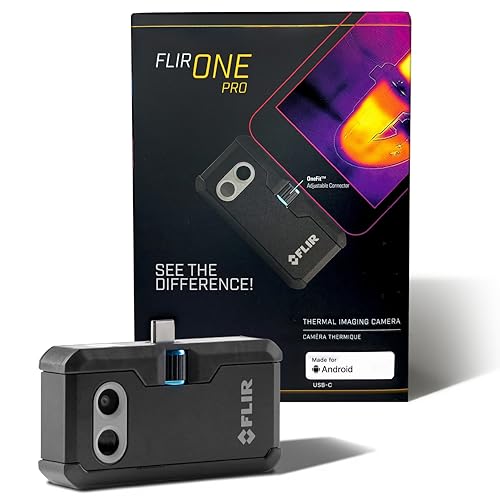
- Connects directly to USB-C Android phones
- 480x360 super-resolution imagery with MSX
- Ultra-lightweight 1.38-ounce design
Best For: Android users wanting portable inspection capability
Connected Workshop Pick
Klein Tools TI290 Thermal Imager

- Over 76,800 pixels for detailed images
- Wi-Fi transfer through the Klein Tools app
- Temperature alarms from -40°F to 752°F
Best For: Technicians who share thermal diagnostic images
Best Phone-Compatible Pick
FLIR ONE Thermal Imaging Camera

- USB-C connection for iPhone 15 and newer
- 240x180 Vivid IR with MSX image enhancement
- Compact and rated for a 1.5-meter drop
Best For: iPhone users building a portable automotive inspection kit
Best Standalone Option
FLIR C3-X Compact Thermal Camera
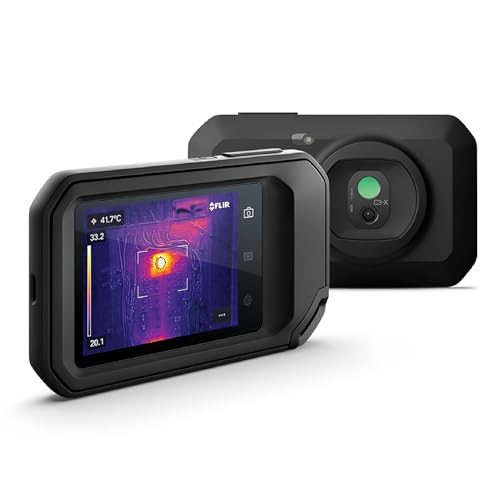
- 128x96 true thermal imaging
- Measures from -20°C to 300°C
- Wi-Fi and Ignite support reports and sharing
Best For: Technicians who want a dedicated handheld inspection camera
Best Detail for DIY Diagnostics
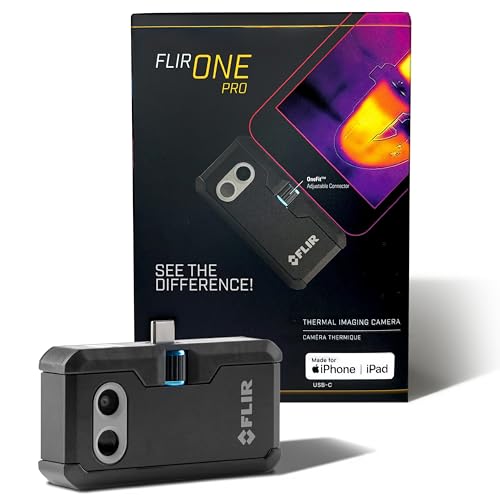
- 480x360 Vivid IR from 160x120 native IR
- MSX combines thermal and visual details
- Compact USB-C accessory for newer iPhones
Best For: iPhone users who want maximum listed image detail
Best Automotive AI Pick – Robofinity InsightDrive
For drivers comparing thermal imaging cameras for cars, the Robofinity InsightDrive combines long-range thermal detection with AI-assisted alerts. It is designed to identify vehicles, pedestrians, and animals in darkness and challenging weather, with a front-mounted setup intended for everyday driving and off-road use.
Best For: Drivers who want an automotive thermal camera with app customization, AI recognition, and a claimed 656-foot detection range.
Pros:
- Detects hazards up to 656 feet away, according to the supplied specifications.
- Designed to work in darkness, rain, snow, fog, and glare.
- Includes AI recognition for vehicles, pedestrians, and animals, plus real-time alerts.
- Plug-and-play installation, iOS/Android app support, and lifetime OTA updates.
Cons:
- Its 40-degree field of view is narrower than some handheld inspection cameras.
- Installation uses a hood-mount or front-grille-center position, so placement requires planning.
- Video capture resolution is listed as 720p rather than a higher-resolution dashcam format.
The InsightDrive is a focused choice for road-safety assistance rather than general-purpose temperature inspections. Its long claimed range, weather-oriented thermal imaging, and customizable alerts make it particularly relevant for nighttime drivers who prioritize early hazard awareness.
Best Portable Inspection Camera – TOPDON TC004 Mini
Although it is not vehicle-mounted, the TOPDON TC004 Mini is worth considering alongside thermal imaging cameras for cars when the goal is diagnosing automotive components. Its handheld design, temperature measurement range, photo storage, and automatic alerts suit engine, electrical, and mechanical inspections.
Best For: DIYers and technicians who need a compact thermal camera for checking automotive systems and other household or electrical equipment.
Pros:
- TISR enhances the 128×128 thermal image to an effective 240×240 resolution.
- Measures from -4°F to 842°F with listed accuracy of ±3.6°F/2%.
- Automatic high, low, and central temperature points plus preset over-temperature alerts.
- Offers 15-hour runtime, 512MB storage for up to 8,000 photos, IP54 protection, and 2-meter drop resistance.
Cons:
- It is a handheld inspection tool, not a forward-facing driving aid or dashcam.
- A charging cable is included, but a charging head is not.
- The paper manual is omitted; the electronic manual must be downloaded.
The TC004 Mini makes more sense for finding hotspots, leaks, or abnormal temperatures after pulling over than for monitoring the road while driving. Its long battery life and compact form are useful for maintenance kits, especially when image documentation matters.
Best Long-Range Driving System – Thermal Master NV300 Max
The Thermal Master NV300 Max is one of the more purpose-built thermal imaging cameras for cars, pairing a vehicle-mounted night-vision system with a built-in display and AI collision warnings. Its thermal, visible-light, and fusion modes are designed to improve visibility around pedestrians, animals, vehicles, and other obstacles.
Best For: Drivers of cars, trucks, RVs, or buses who want a long-range automotive night-vision system with multiple viewing modes and voice control.
Pros:
- Claims visibility up to 328 yards or 300 meters ahead.
- AI warnings use green, yellow, and red visual and audible alerts.
- Three display modes include visible light, infrared thermal, and fusion views.
- Includes a 6.4-inch floating display, magnetic 3D adjustment, voice control, and a 2-year warranty.
Cons:
- The listed 25-degree field of view is relatively narrow for a forward-facing system.
- Roof mounting and the larger dimensions may require more involved installation than a handheld unit.
- The supplied notes do not specify temperature measurement functions for inspection work.
The NV300 Max is best evaluated as a dedicated driving-assistance system rather than a general thermal diagnostic camera. Its standout strengths are the claimed 300-meter range, multi-mode display, and AI warning system, while the mounting format may be less convenient for casual users.
Best for Automotive Diagnostics – FOXWELL RT280 Thermal Camera
The FOXWELL RT280 is a handheld option for shoppers comparing thermal imaging cameras for cars with a focus on diagnostics rather than driving assistance. It is suited to engine inspections, electrical checks, and mechanical troubleshooting, with PC analysis tools for reviewing and reporting thermal findings.
Best For: Automotive technicians, mechanics, and serious DIY users who need stored images, temperature analysis, and detailed inspection features.
Pros:
- TISR enhances thermal image resolution to an effective 240×180.
- Measures from -4°F to 1022°F with listed accuracy of ±3.6°F/2%.
- Windows software supports point, line, area, 2D/3D analysis, and automatic reports.
- Stores over 20,000 images and videos, with nine palettes, laser targeting, LED light, IP54 protection, and 6.6-foot drop resistance.
Cons:
- PC analysis software is listed as Windows-only and is not compatible with Mac.
- It is not a vehicle-mounted night-vision camera for monitoring the road.
- The supplied details list a 4.3-inch screen in one specification and a 2.8-inch LCD in the product title, so buyers should verify the display information.
The RT280 is a strong fit when thermal imaging is part of a repair workflow. Its broad temperature range, onboard storage, and Windows reporting software provide more diagnostic depth than a driving-oriented camera, though it requires carrying and aiming the unit manually.
Detailed Diagnostic Pick – VEVOR 240×180 Thermal Imaging Camera
For shoppers comparing thermal imaging cameras for cars, the VEVOR SC240 offers a dedicated handheld design with a 240×180 infrared resolution, broad temperature range, and useful features for locating hot or cold spots in mechanical and electrical systems. Its automatic temperature tracking can help identify the highest and lowest readings during inspections.
Best For: DIYers and technicians who want a rugged, standalone camera for automotive, electrical, HVAC, or general inspection work.
Pros:
- 240×180 IR resolution with thermal sensitivity below 0.04°C.
- Measures from -4°F to 662°F and offers adjustable emissivity.
- Includes a 16GB SD card, rechargeable battery rated for up to 9 hours, LED work light, and audio alarm.
- IP54 protection and a 6.6-foot drop-resistance design support demanding work environments.
Cons:
- Its 2.4-pound weight is less pocket-friendly than a phone-connected camera.
- It provides four color palettes, but no Wi-Fi transfer is listed in the supplied specifications.
The VEVOR is a strong choice when image detail, long operating time, and standalone storage matter more than minimal size. It is particularly practical for repeated troubleshooting sessions where a durable handheld tool is preferable.
Phone-Based Pick – FLIR ONE Pro USB-C Thermal Camera
The FLIR ONE Pro is a compact option for shoppers seeking thermal imaging cameras for cars that connect directly to a phone. It plugs into compatible USB-C Android devices and uses the FLIR ONE app to combine thermal and visual information for easier interpretation during inspections.
Best For: Android users who want a lightweight thermal camera for occasional automotive checks, home inspections, and maintenance troubleshooting.
Pros:
- Works with USB-C Android devices including Samsung Galaxy and Google Pixel models.
- Super resolution upscales the image to 480×360 from 160×120, while MSX overlays visual details.
- The companion app includes step-by-step inspection guidance.
- Weighs just 1.38 ounces and is designed to withstand a 1.5-meter drop.
Cons:
- Compatibility is limited to USB-C Android devices listed by the product notes.
- Temperature accuracy is specified as ±3°C or ±5% under stated operating conditions.
- It relies on a connected phone rather than functioning as a standalone handheld camera.
The FLIR ONE Pro makes the most sense for buyers who value portability and phone-based reporting. Its visual-thermal overlay and inspection guide can make readings easier to understand, though device compatibility should be checked before purchase.
Connected Workshop Pick – Klein Tools TI290 Thermal Imager
The Klein Tools TI290 combines high-resolution thermal imaging with Wi-Fi transfer, making it a practical choice among thermal imaging cameras for cars when you want to capture and share diagnostic images. Its adjustable emissivity and selectable temperature alarms support more controlled troubleshooting of hot and cold spots.
Best For: Automotive technicians and maintenance professionals who need shareable thermal images and a wide temperature-alarm range.
Pros:
- Provides over 76,800 pixels for detailed thermal images.
- Wi-Fi works with Klein Tools’ free app for capturing, storing, and sharing images.
- Selectable high and low temperature alarms cover -40°F to 752°F.
- Offers adjustable emissivity from 0.01 to 0.99 and three color palettes.
Cons:
- Only three color palettes are listed.
- The integrated battery is non-removable, though it recharges through USB-C.
- Temperature accuracy is rated at ±2°C or 2%, whichever is greater.
The TI290 is well suited to organized diagnostic work where images need to move from the camera to a mobile device. Its high pixel count, Wi-Fi capability, and configurable alarms make it a capable workshop-oriented option.
Best Phone-Compatible Pick – FLIR ONE Thermal Imaging Camera
For iPhone 15 and newer users, the FLIR ONE is a compact way to add thermal imaging to a vehicle inspection kit. It connects through USB-C and combines 80×60 native infrared imaging with Vivid IR super resolution upscaled to 240×180, while MSX overlays visual details for easier interpretation.
Best For: Drivers, DIYers, and home mechanics who want a lightweight thermal imaging camera for cars and other inspection tasks.
Pros:
- Plugs directly into compatible USB-C iPhones.
- MSX and 240×180 super resolution make thermal patterns easier to understand.
- Built-in app guides support step-by-step inspections.
- Compact, 1.28-ounce design with a 1.5-meter drop rating.
Cons:
- Compatibility is limited to iPhone 15 and newer USB-C models.
- Native infrared resolution is 80×60.
This is a practical entry point for automotive checks when portability and phone integration matter most. Its automotive use case, guided app, and rugged construction make it useful for occasional troubleshooting, though the phone requirement should be confirmed before buying.
Best Standalone Option – FLIR C3-X Compact Thermal Camera
The FLIR C3-X is a standalone choice for people who prefer a dedicated device rather than a smartphone attachment. Its 128×96 true thermal resolution, MSX image enhancement, and temperature range of -20°C to 300°C suit a range of automotive troubleshooting and maintenance checks.
Best For: DIY mechanics, technicians, and users who need a handheld thermal imaging camera for cars with image sharing and reporting features.
Pros:
- Dedicated handheld design with infrared, visual, MSX, and picture-in-picture modes.
- 128×96 true thermal imaging provides 12,288 pixels.
- Measures temperatures from -20°C to 300°C.
- Wi-Fi and FLIR Ignite support image uploads and professional reports.
Cons:
- Heavier than the smartphone-connected FLIR models at 6.72 ounces.
- Uses fixed focus.
- Does not offer the higher stated super-resolution output of the FLIR ONE Pro.
Choose the C3-X when an independent camera and documentation workflow are more important than the smallest possible form factor. Its broad measurement range and reporting tools make it especially suitable for repeat inspections or sharing findings with customers.
Best Detail for DIY Diagnostics – FLIR ONE Pro Thermal Camera
The FLIR ONE Pro brings the highest listed image detail in this group to compatible iPhones. Its 160×120 native infrared sensor is upscaled to 480×360 with Vivid IR, and MSX combines thermal and visual information to help reveal patterns during automotive inspections.
Best For: iPhone 15 and newer owners who prioritize clearer thermal detail in a compact car-diagnostic accessory.
Pros:
- 480×360 super-resolution output from 160×120 native IR.
- MSX technology adds visual context to thermal images.
- Connects directly to USB-C iPhones and works with guided inspection tools.
- 1.29-ounce body is rated to withstand a 1.5-meter drop.
Cons:
- Limited to iPhone 15 and newer models with USB-C.
- Temperature accuracy is specified as ±3°C or ±5% under stated conditions.
Among these phone-connected thermal imaging cameras for cars, the ONE Pro is the strongest fit when image clarity is the priority. It retains the portability of a phone accessory while offering substantially higher stated super-resolution output than the standard FLIR ONE.
How We Picked the Best Thermal Imaging Cameras for Cars
We focused on features that matter during real automotive inspections rather than treating resolution as the only measure of quality. The lineup includes dedicated car cameras, handheld thermal imagers, and phone-connected devices. We considered infrared resolution, enhanced or super-resolution modes, refresh rate, temperature range, display design, image storage, wireless transfer, battery operation, and connector compatibility.
We also looked at usability. A camera that starts quickly, clearly identifies hot and cold spots, and offers adjustable emissivity can be more useful in a garage than a higher-resolution model with a complicated workflow. Smartphone attachments can be convenient and compact, while standalone cameras generally offer better durability and independence from a phone.
Quick Comparison
- Best for in-car monitoring: Robofinity InsightDrive, with a dashcam-style design and IR night-vision focus.
- Best compact handheld options: TOPDON TC004 Mini and Thermal Master NV300 Max.
- Best for a built-in display: FOXWELL RT280, VEVOR, or Klein Tools TI290.
- Best smartphone attachments: FLIR One Pro models for Android USB-C or iPhone USB-C.
- Best compact standalone FLIR option: FLIR C3-X, with Wi-Fi connectivity and MSX image enhancement.
Key Buying Factors for Thermal Imaging Cameras for Cars
Resolution and Image Enhancement
Higher native infrared resolution helps distinguish nearby components, wiring, connectors, and narrow heat patterns. Super-resolution and MSX processing can make images easier to interpret, but they do not replace native sensor detail. For basic checks, 80×60 or 96×96-class sensors may be sufficient; frequent diagnostics benefit from 160×120, 240×180, or 320×240 and higher.
Temperature Range and Accuracy
Check that the camera covers your intended jobs. Cooling systems, brakes, bearings, exhaust components, and electrical connections can produce very different temperatures. A broad range is useful, but measurement accuracy, emissivity adjustment, reflected-temperature compensation, and a clear temperature spot meter are equally important.
Refresh Rate, Focus, and Viewing
A higher refresh rate makes it easier to scan moving vehicles, follow changing temperatures, or inspect a running engine. Fixed-focus cameras are simpler and quicker for close work, while adjustable focus can produce sharper images at varying distances. A built-in LCD is helpful when you do not want to handle a phone near an engine bay.
Connectivity, Battery, and Storage
Phone-based cameras are small and convenient, but verify USB-C compatibility, operating-system support, app requirements, and phone-case clearance. Standalone models should offer adequate battery life, internal storage or a memory card, and an easy way to export images. Wi-Fi can simplify reporting, though it may be unnecessary for occasional home diagnostics.
Who Should Buy Which Thermal Imaging Cameras for Cars?
Choose a dashcam-style thermal camera if your priority is night visibility or continuous in-vehicle monitoring. Pick a handheld model with its own screen for routine garage work, fleet checks, brake comparisons, cooling-system inspections, and electrical troubleshooting. A smartphone attachment is best for portability, quick documentation, and users who already work from a mobile app. For professional or frequent use, prioritize higher native resolution, dependable measurement controls, a broad temperature range, and a rugged standalone design.
Remember that thermal cameras show surface temperature patterns, not definitive mechanical diagnoses. Use them to locate anomalies, then confirm the cause with conventional inspection and appropriate automotive test equipment.
