
The best network video recorders make it easier to power, manage, record, and review footage from compatible IP security cameras. The right model depends on camera count, resolution, storage needs, and how much room you want for future expansion.
We’ve selected 10 network video recorders spanning compact home systems, expandable PoE setups, and feature-rich platforms from Reolink, Ubiquiti, ANNKE, Hiseeu, and OOSSXX. Use the guide below to narrow your options by installation size and surveillance priorities.
Best 10 Network Video Recorders Picks for 2026
High-Capacity Pick

- Manages up to 36 Reolink IP cameras
- Supports up to 48TB across three HDD bays
- Requires external PoE switches; HDDs not included
Best For: Large Reolink systems needing expandable storage
UniFi Expansion Pick
Ubiquiti UniFi Protect NVR Pro

- Works with the UniFi Protect application
- Can add up to 60 cameras
- Stores footage locally instead of on a cloud server
Best For: Expanding UniFi Protect camera systems
Plug-and-Play Pick

- Supports up to eight Reolink cameras
- Built-in PoE uses one cable for power and data
- Includes a 2TB HDD for 24/7 recording
Best For: Small Reolink systems needing simple PoE setup
Compact UniFi Option

- Supports IP video input for camera recording
- Lists Ethernet and USB connectivity
- Designed around a four-channel specification
Best For: Small compatible UniFi Protect installations
Best Reolink NVR
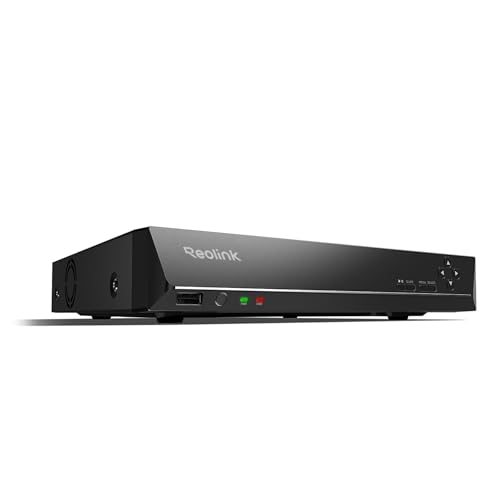
- Supports up to 16 Reolink cameras
- Includes a preinstalled 4TB HDD
- Free local and remote viewing
Best For: Larger Reolink-based surveillance systems
Best ANNKE NVR

- Supports compatible ANNKE cameras up to 12MP
- Uses H.265+ compression for efficient storage
- Eight PoE ports simplify installation
Best For: ANNKE camera systems needing flexible storage
Best Expandable NVR

- Eight built-in PoE ports
- Expandable from 8 to 16 channels
- Supports up to 4K/8MP cameras
Best For: Staged systems that may grow to 16 cameras
Best Reolink 8-Channel Pick
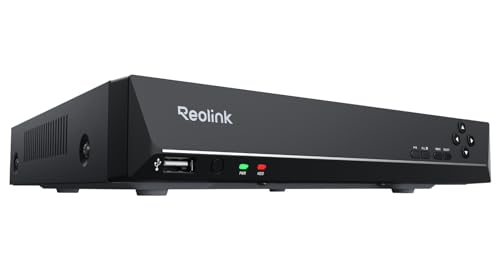
- Eight-channel simultaneous recording
- PoE setup with up to 330-foot cable runs
- Supports up to 16TB across internal and eSATA storage
Best For: All-Reolink PoE home security systems
Best 4K Value Bundle

- 4K recording for detailed footage
- Eight built-in PoE ports
- Includes a 3TB HDD and free remote access
Best For: Multi-camera 4K systems needing included storage
Best Compact Reolink Recorder

- Supports four PoE cameras plus two Wi-Fi cameras
- Local AI search for people, vehicles, and events
- Up to 8TB HDD storage without subscriptions
Best For: Smaller professional and small-business security systems
High-Capacity Pick – Reolink RLN36 36CH NVR
For larger Reolink deployments, this network video recorder manages up to 36 compatible IP cameras and supports up to 48TB across three hard-drive bays. It is a capable centralized recorder, but it requires external PoE switches because it has no built-in PoE ports.
Best For: Large Reolink camera systems that need expandable storage and centralized management.
Pros:
- Supports up to 36 Reolink IP cameras.
- Three HDD bays support up to 16TB each, for 48TB total.
- Includes USB 3.0 for faster footage backups and supports camera-based smart detection playback.
Cons:
- Works only with Reolink IP cameras.
- Has no PoE ports; external PoE switches are required and not included.
- Hard drives are not included.
The RLN36 is best suited to buyers planning a substantial Reolink installation rather than a simple plug-and-play setup. Its high channel count and storage capacity are useful for long-term expansion, provided you budget for compatible drives and PoE switches.
UniFi Expansion Pick – Ubiquiti UniFi Protect NVR Pro
This Ubiquiti network video recorder is designed for UniFi Protect systems, with local footage storage and remote access to camera streams and recordings. It can add up to 60 cameras, making it a strong option for expanding a compatible UniFi installation.
Best For: UniFi Protect users who want local recording and room to grow.
Pros:
- Works with the UniFi Protect application.
- Supports adding up to 60 cameras.
- Stores footage locally rather than on a cloud server.
Cons:
- Designed for compatible UniFi cameras and the UniFi Protect ecosystem.
- Supplied details list 8TB of storage, so capacity should be checked against your recording needs.
- The listed specifications identify 15 channels, despite the stated ability to add up to 60 cameras.
The UNVR-Pro makes the most sense when your cameras already use UniFi Protect. Its local-storage approach and stated expansion capability suit users who want centralized recording without relying on a cloud server.
Plug-and-Play Pick – Reolink RLN8-410 8CH NVR
The RLN8-410 is a straightforward network video recorder for smaller Reolink systems. Its eight PoE ports can send power and data over one Ethernet cable to compatible Reolink cameras, while the preinstalled 2TB hard drive supports continuous recording.
Best For: Smaller Reolink installations where simple PoE setup matters.
Pros:
- Manages up to eight Reolink cameras.
- Built-in PoE supports one-cable power and data connections up to 330 feet.
- Includes a 2TB HDD and supports an additional drive through eSATA, up to the stated 8TB expansion.
- Offers local and remote access through free Reolink apps and desktop clients.
Cons:
- Does not support third-party cameras.
- Capacity is limited to eight camera channels.
- Expansion storage requires an additional drive.
For a modest Reolink setup, this model combines built-in PoE, included storage, and 24/7 recording in a compact package. It is less appropriate if you need third-party camera compatibility or more than eight channels.
Compact UniFi Option – Ubiquiti UniFi Protect NVR
This compact Ubiquiti network video recorder is intended for camera use within the UniFi Protect ecosystem. The supplied specifications list Ethernet and USB connectivity, IP video input, and support for four channels, making it a fit for a smaller compatible setup.
Best For: Small UniFi Protect camera installations with modest channel requirements.
Pros:
- Designed for camera recording with IP video input.
- Supports Ethernet and USB connectivity.
- Compact listed weight of 2 pounds.
Cons:
- The supplied specifications list support for only four channels.
- Storage capacity is not provided in the supplied details.
- Camera compatibility is listed generally, so UniFi Protect compatibility should be confirmed before purchase.
This model is worth considering when you need a small recorder for a compatible UniFi Protect setup and do not require many camera channels. Verify storage details and ecosystem compatibility before committing.
Best Reolink NVR – 16-Channel PoE Recorder
If you want a dedicated system for Reolink cameras, this 16-channel network video recorder combines plug-and-play PoE setup with a preinstalled 4TB hard drive. It supports simultaneous recording from up to 16 compatible cameras and offers local or remote access without monthly fees.
Best For: Reolink camera owners building a larger 24/7 surveillance system.
Pros:
- Supports up to 16 Reolink PoE cameras, with one Ethernet cable carrying power and data.
- Includes a 4TB hard drive for 24/7 recording and supports adding up to 8TB more storage.
- Works with Reolink detection features, including human, vehicle, and pet detection from compatible cameras.
- Free Reolink apps and desktop clients provide local and remote viewing without subscription fees.
Cons:
- Only works with Reolink IP cameras.
- Additional storage and compatible cameras may be needed for a full system.
This is a strong choice when you are committed to the Reolink ecosystem and need plentiful channel capacity. Its included storage and straightforward PoE design make it more ready to deploy than many bare NVR units.
Best ANNKE NVR – 12MP 8-Channel PoE Recorder
This ANNKE network video recorder is designed for compatible ANNKE IP cameras and supports up to 12MP recording across eight channels. It uses H.265+ compression for more efficient storage and includes PoE connectivity, but you will need to supply your own hard drive.
Best For: ANNKE users who want AI-camera compatibility and flexible storage installation.
Pros:
- Supports compatible ANNKE cameras up to 12MP, including selected C500, C800, and C1200 models.
- H.265+ compression can save up to 75% of storage space compared with H.264 while preserving image quality.
- Eight PoE ports provide power and data over one cable, with up to 30W of output power.
- Free ANNKE Vision apps support remote live viewing and playback without monthly fees.
Cons:
- No hard drive is included, so recording requires a separately purchased drive.
- Compatibility with third-party cameras is not guaranteed.
- The NVR itself does not have built-in AI; AI features depend on compatible ANNKE cameras.
Choose this model if you already use ANNKE cameras or are planning an ANNKE-centered installation. The lack of an included HDD lowers the out-of-box readiness, but it gives you flexibility to choose supported 2.5-inch or 3.5-inch storage.
Best Expandable NVR – Hiseeu 4K 8-Port PoE Recorder
For buyers who need a compact starting point with room to expand, this Hiseeu network video recorder has eight built-in PoE ports and can reach 16 channels through an additional PoE switch. It supports up to 4K/8MP cameras, but it ships without a hard drive.
Best For: Users who want an eight-camera PoE system with the option to expand later.
Pros:
- Built-in eight PoE ports can power eight cameras directly over Ethernet.
- Supports expansion to 16 channels through a separately purchased PoE switch.
- Supports up to 4K/8MP cameras and H.265+ compression for more efficient storage use.
- Free Guard Live and Guard Station software enable remote viewing without monthly fees.
Cons:
- No hard drive is included, and recording playback requires adding one.
- Third-party camera setup is not fully plug-and-play and may require Virtual Host and IP-address changes.
- A PoE switch is required to expand beyond the eight built-in ports.
This model offers useful expansion potential for a staged installation, especially if you plan to begin with eight cameras. Factor in the separate HDD, PoE switch, and possible compatibility work before choosing it for a mixed-camera setup.
Best Reolink 8-Channel Pick – RLN8-410 PoE NVR
For shoppers comparing network video recorders for a Reolink PoE camera system, the RLN8-410 offers eight-channel recording, straightforward PoE installation, and flexible local storage options. It can run independently for local viewing and recording, while Reolink’s apps support remote access without monthly fees.
Best For: Home users building or expanding an all-Reolink PoE security system with up to eight cameras.
Pros:
- Supports up to eight cameras recording simultaneously.
- PoE carries power and data over one Ethernet cable, with runs up to 330 feet.
- Supports one internal HDD up to 8TB plus an external eSATA HDD up to 8TB.
- Integrates Reolink human, vehicle, and animal detection features.
Cons:
- Internal and external hard drives are not included.
- Works only with specified compatible Reolink IP cameras, not general-purpose camera systems.
This is a practical choice when you want a Reolink-centered recorder with room for eight PoE cameras and substantial expandable storage. Confirm camera compatibility and update the firmware before setup.
Best 4K Value Bundle – OOSSXX 8-Channel PoE NVR
The OOSSXX is one of the more complete network video recorders for buyers who want 4K recording and an included hard drive. Its eight built-in PoE ports simplify installation, while ONVIF support can help users integrate compatible third-party IP cameras after manual protocol setup.
Best For: Home, office, warehouse, and business users seeking an eight-channel 4K PoE recorder with included storage.
Pros:
- Records up to 8MP/4K video for detailed surveillance footage.
- Eight built-in PoE ports provide power and data through one cable.
- Includes a 3TB HDD for local 24/7 recording.
- Offers ONVIF compatibility and free remote viewing without monthly fees.
Cons:
- Third-party ONVIF cameras require manual protocol setup.
- Storage expansion is listed as supporting up to 8TB, so capacity beyond the included 3TB may require an upgrade.
With 4K support, eight PoE ports, and a 3TB drive in the box, this OOSSXX model is a convenient starting point for a multi-camera system. Its ONVIF support adds flexibility, but compatibility may require configuration.
Best Compact Reolink Recorder – RLN4E 4-Channel PoE NVR
The Reolink RLN4E is a focused option among network video recorders for smaller wired security installations. It supports four PoE cameras, local continuous recording, and local AI video search, while also allowing two additional DC or battery Wi-Fi cameras for a total of up to six supported cameras.
Best For: Small businesses and professional users who need a compact four-channel Reolink PoE recorder with local search features.
Pros:
- Supports 24/7 local recording with a compatible internal HDD up to 8TB.
- Built-in local AI search can help find people, vehicles, or events in recorded footage.
- Supports remote access, simultaneous multi-user viewing, and permission management.
- Can support up to six cameras: four PoE plus two DC or battery Wi-Fi cameras.
Cons:
- HDD and microSD card are not included.
- microSD storage up to 512GB is limited to motion-triggered recording.
- Works only with Reolink IP cameras.
The RLN4E makes sense for smaller deployments that prioritize stable wired connections, privacy-focused local processing, and searchable recordings. Its four PoE ports limit expansion compared with eight-channel models, but the added Wi-Fi camera support provides some flexibility.
How We Picked the Best Network Video Recorders
We focused on practical differences that affect everyday surveillance: supported camera capacity, built-in PoE ports, recording resolution, storage configuration, remote viewing, compatibility, and expansion potential. We also considered whether a recorder is designed as part of a broader camera ecosystem or works well as a straightforward standalone NVR.
Because listed configurations can vary by seller, verify the exact hard drive, camera-support limits, warranty, and included accessories before ordering. A model described as expandable may still require additional PoE hardware, drives, or licenses for a complete installation.
Quick Comparison
| Best For | What to Prioritize | Recommended Capacity |
|---|---|---|
| Small home system | Simple setup, built-in PoE, mobile access | 4–8 channels |
| Larger home or small business | More camera inputs and longer retention | 8–16 channels |
| Growing surveillance installation | Expansion, higher throughput, flexible networking | 16–36 channels |
| Unified smart-camera ecosystem | App experience, centralized management, compatibility | Based on platform limits |
Key Buying Factors for Network Video Recorders
Channel Count and PoE Capacity
Choose a recorder with more channels than you currently need if you expect to add cameras. Built-in Power over Ethernet simplifies installation by carrying power and data over one cable, but check whether every camera can connect directly to the recorder or whether a separate PoE switch is required.
Resolution, Compression, and Recording Performance
Higher-resolution cameras produce clearer evidence but consume more bandwidth and storage. Confirm that the NVR supports the cameras’ resolution and frame rate, and look for efficient video compression when long retention is important.
Storage and Retention
Storage capacity determines how many days of footage remain available. A 3TB drive may suit a modest system, while larger installations often need multiple drives or scheduled recording. Check whether a hard drive is included, what drive sizes are supported, and whether the recorder supports motion-based recording.
Remote Access and Compatibility
Reliable mobile and desktop apps make recorded footage easier to review away from home. Proprietary systems may offer a smoother experience with matching cameras, while more flexible NVRs can be useful when combining equipment from different manufacturers. Confirm ONVIF or other compatibility claims before mixing brands.
Who Should Buy Which Network Video Recorders?
For a small home installation: Choose a 4- or 8-channel PoE model with an included drive or an easy storage upgrade. It should provide simple app access and enough capacity for your current cameras.
For a larger property: A 16-channel recorder provides useful headroom for additional entrances, driveways, interior rooms, or outbuildings. Prioritize storage expansion and network throughput as much as raw channel count.
For a growing business or complex site: Consider a 16- to 36-channel unit or an expandable platform. Confirm rack, drive, switch, and camera requirements before installation, particularly if the system will record continuously.
For users already invested in one camera ecosystem: Staying within the same platform can simplify setup, notifications, permissions, and firmware management. If flexibility matters more, compare third-party compatibility and network requirements carefully.
