
Choosing a network video recorder can feel complicated when you are comparing camera limits, PoE ports, storage, resolution, and app support. The right NVR should make recording and reviewing footage straightforward—not add another layer of technical work.
We compare 10 network video recorders for beginners, from compact four-channel units to expandable systems for larger properties. Use the guide below to match capacity, compatibility, storage, and ease of setup to your security plans.
Best 10 Network Video Recorders for Beginners Picks for 2026
Best Plug-and-Play Pick
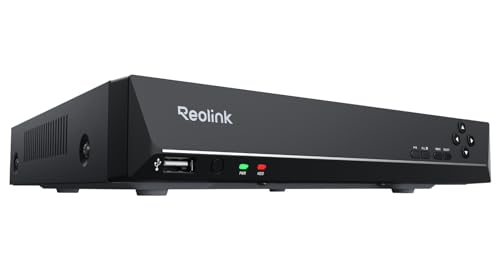
- Eight-channel Reolink PoE recording
- One-cable power and data setup
- Supports up to 16TB across two drives
Best For: Beginners building a Reolink PoE system
Best Expandable Starter

- Eight built-in PoE ports
- Expandable from 8 to 16 channels
- Supports up to 12TB HDD
Best For: Beginners planning a growing 4K camera system
Best UniFi Ecosystem Option
UniFi Protect Network Video Recorder

- Ethernet and USB connectivity
- Designed for UniFi Protect
- Listed four-channel capacity
Best For: Existing UniFi users needing a dedicated recorder
Best for Large Systems

- Manages up to 36 Reolink cameras
- Three bays support up to 48TB
- Requires external PoE switches
Best For: Large Reolink deployments needing centralized storage
Flexible Wireless Starter
Hiseeu 10-Channel Wireless NVR

- Records up to 10 channels at up to 5MP
- Built-in Wi-Fi router for compatible cameras
- Supports up to 6TB internal storage; HDD not included
Best For: Beginners using compatible Hiseeu wireless cameras
Plug-and-Play PoE Pick

- Eight PoE ports carry power and data over one cable
- Supports up to 12MP recording and 4K HDMI output
- Accepts up to a 10TB SATA HDD; HDD not included
Best For: Beginners installing a wired system with up to eight cameras
Large-Capacity Reolink System
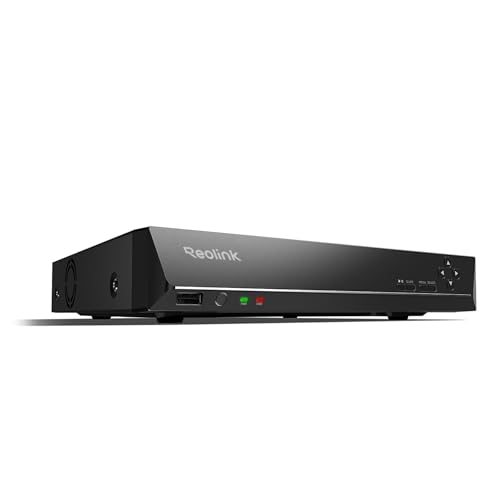
- Supports up to 16 Reolink IP cameras
- Includes a pre-installed 4TB hard drive
- Plug-and-play PoE with free local and remote apps
Best For: Beginners building a larger Reolink-only camera system
Best ANNKE Starter NVR

- Simple one-cable PoE installation
- Supports up to eight ANNKE cameras
- Remote viewing with no monthly fees
Best For: ANNKE-based home or small-business systems
Best Plug-and-Play NVR
Reolink 4-Channel PoE Recorder

- One-cable PoE setup for Reolink cameras
- Local recording with up to 8TB HDD support
- Local AI search and offline recording
Best For: Small Reolink systems needing simple wired setup
Best Flexible Budget NVR

- Supports four cameras up to 8MP/4K
- ONVIF support broadens camera choices
- Accepts up to a 10TB HDD
Best For: Beginners wanting a flexible four-camera system
Best Plug-and-Play Pick – Reolink RLN8-410 8CH NVR
For beginners choosing network video recorders for beginners, the REOLINK RLN8-410 is a straightforward option for building a compatible Reolink PoE camera system. It supports up to eight cameras, uses one Ethernet cable for power and data, and can operate independently with its built-in DHCP function.
Best For: Beginners creating an eight-camera Reolink PoE system with local and remote viewing.
Pros:
- Plug-and-play PoE setup with cable runs up to 330 feet.
- Supports simultaneous recording from up to eight Reolink cameras.
- Works with an internal HDD up to 8TB plus an external eSATA HDD up to 8TB.
- Free Reolink apps and client software provide remote access without monthly fees.
Cons:
- Hard drive is not included.
- Designed for Reolink cameras rather than broad third-party compatibility.
- Firmware and camera compatibility should be checked before use.
The RLN8-410 keeps installation and everyday access simple, making it a practical starting point for a Reolink-based home security system. Just budget for storage and confirm that your cameras are supported.
Best Expandable Starter – Hiseeu 4K 8-Port PoE NVR
The Hiseeu 4K PoE NVR is a useful choice for beginners who want built-in PoE ports now and room to expand later. It powers up to eight cameras directly and can manage up to 16 channels when paired with an additional PoE switch.
Best For: Beginners who want 4K support, remote access, and a system that can grow beyond eight cameras.
Pros:
- Eight built-in PoE ports can power cameras over Ethernet.
- Expandable to 16 channels with a separate PoE switch.
- Supports cameras up to 4K/8MP and uses H.265+ compression to help conserve storage.
- Free Guard Live and Guard Station software enables remote viewing without monthly fees.
Cons:
- Hard drive is not included, and recording playback requires one.
- Third-party camera setup is not fully plug-and-play and may require Virtual Host and IP changes.
- An expansion PoE switch must be purchased separately.
This Hiseeu model offers a clear upgrade path, but it is easiest to use with compatible cameras. Beginners should plan the storage purchase and verify camera networking requirements before installation.
Best UniFi Ecosystem Option – UniFi Protect Network Video Recorder
For buyers considering network video recorders for beginners within the UniFi ecosystem, the Ubiquiti UniFi Protect Network Video Recorder provides an Ethernet-based recording unit with support for IP cameras. Its supplied details identify a compact, two-pound device with USB connectivity.
Best For: Users who already use compatible UniFi networking or camera equipment and want a dedicated Protect recorder.
Pros:
- Uses Ethernet connectivity for IP camera systems.
- Includes USB connectivity in addition to Ethernet.
- Purpose-built for the UniFi Protect platform.
Cons:
- Supplied specifications list four channels, so capacity is more limited than the other options here.
- The notes do not provide storage capacity or included hard-drive information.
- Camera compatibility should be confirmed within the UniFi Protect platform before purchase.
This is best approached as an ecosystem-specific recorder rather than a universal beginner NVR. Confirm channel capacity, storage details, and camera compatibility so the unit matches your existing setup.
Best for Large Systems – Reolink RLN36 36CH NVR
The REOLINK RLN36 is aimed at buyers who have outgrown entry-level network video recorders for beginners. It manages up to 36 Reolink IP cameras and provides three HDD bays, but it requires external PoE switches because the recorder has no built-in PoE ports.
Best For: Larger Reolink installations that need centralized management and substantial local storage.
Pros:
- Manages up to 36 compatible Reolink IP cameras.
- Three HDD bays support up to 48TB total storage.
- USB 3.0 supports faster backup to a portable hard drive.
- Integrates supported Reolink detection, playback, and two-way talk features.
Cons:
- No PoE ports or PoE functionality are built in.
- Requires external PoE switches, which are not included.
- Hard drives are not included and the unit works with Reolink IP cameras.
The RLN36 offers impressive capacity for a growing property or business, but its networking demands make it less beginner-friendly than an all-in-one PoE NVR. Plan for switches, cabling, and storage before buying.
Flexible Wireless Starter – Hiseeu 10-Channel Wireless NVR
For beginners comparing network video recorders for beginners, this Hiseeu model is a practical choice for compatible Hiseeu wireless cameras. It records up to 10 channels and includes an internal Wi-Fi router, while leaving the hard-drive choice to you.
Best For: Beginners building or expanding a Hiseeu wireless camera system.
Pros:
- Supports up to 10 channels and recording resolutions up to 5MP.
- Built-in Wi-Fi router handles camera traffic independently from your home router.
- Accepts a 2.5- or 3.5-inch internal hard drive up to 6TB.
- Includes an HDMI cable, network cable, power supply, and wired mouse.
Cons:
- Hard drive and cameras are not included.
- Works with Hiseeu 3MP/5MP wireless cameras rather than serving as a broadly compatible camera recorder.
- Remote viewing requires a network connection, and the NVR itself has no audio output.
This is a straightforward entry point if you already use Hiseeu wireless cameras. Remember to budget for a compatible hard drive and confirm the included power requirements before setup.
Plug-and-Play PoE Pick – VIKYLIN 8-Channel 4K PoE NVR
For network video recorders for beginners, this VIKYLIN unit simplifies wired installation by supplying power and network connectivity through one Ethernet cable per camera. It supports up to eight IP cameras, high-resolution recording, and app-based remote access.
Best For: Beginners who want a wired PoE system for a home, office, or small shop.
Pros:
- Eight independent PoE ports enable plug-and-play camera connections.
- Supports recording up to 12MP and 4K HDMI output.
- Includes human detection and other alarm options to help reduce false alerts.
- Supports one SATA hard drive up to 10TB and includes HDMI and VGA outputs.
Cons:
- Hard drive is not included.
- PoE cabling is required for the simplest camera setup.
- Advanced smart-search features depend on compatible AI cameras.
This NVR offers a beginner-friendly balance of simple wiring and advanced recording capability. Its eight-camera limit suits smaller installations, while the 10TB storage ceiling gives room to extend recording time.
Large-Capacity Reolink System – RLN16-410 16-Channel PoE NVR
For beginners evaluating network video recorders for beginners, the Reolink RLN16-410 provides a clear plug-and-play path for Reolink PoE cameras. It supports up to 16 cameras, includes a 4TB hard drive, and can operate as an independent local system.
Best For: Beginners who want a larger Reolink-only PoE setup with built-in storage.
Pros:
- Manages up to 16 Reolink IP cameras simultaneously.
- PoE setup uses one Ethernet cable for power and data, with cable runs up to 330 feet.
- Comes with a pre-installed 4TB hard drive for 24/7 recording.
- Supports free Reolink apps and remote access without monthly fees.
Cons:
- Works only with Reolink IP cameras.
- Additional storage requires adding an extra hard drive, up to 8TB.
- The 16-channel capacity may be more than needed for a small installation.
This is a strong choice when you are committed to the Reolink ecosystem and expect to add cameras over time. The included storage makes it easier to begin recording without purchasing a separate drive.
Best ANNKE Starter NVR – 8-Channel 12MP PoE Recorder
For beginners choosing network video recorders for beginners, the ANNKE 12MP 8CH NVR offers a straightforward PoE setup and room for up to eight compatible ANNKE IP cameras. It records continuously with H.265+ compression, but note that a hard drive is not included.
Best For: Home or small-business users building an ANNKE-based camera system with multiple wired cameras.
Pros:
- One PoE Ethernet cable carries both power and data for simpler installation.
- Supports up to eight channels and ANNKE cameras up to 12MP, depending on compatibility.
- H.265+ can reduce storage use, while the ANNKE Vision app provides remote viewing without monthly fees.
- Supports 2.5- and 3.5-inch hard drives.
Cons:
- Hard drive is not included.
- It is designed primarily for ANNKE cameras; third-party compatibility should be confirmed with support.
- The NVR itself does not provide built-in AI functions; AI features come from compatible ANNKE cameras.
This is a beginner-friendly choice if you want a larger eight-camera system and are comfortable staying within the ANNKE ecosystem. Factor in the additional cost of a compatible surveillance hard drive before buying.
Best Plug-and-Play NVR – Reolink 4-Channel PoE Recorder
The Reolink RLN4E is one of the more approachable network video recorders for beginners because its PoE connections combine camera power and data over one cable. It supports continuous local recording, remote access, and local AI video search, but requires Reolink cameras and a separately purchased hard drive for 24/7 recording.
Best For: Beginners who want a compact Reolink system with local recording and straightforward PoE installation.
Pros:
- Plug-and-play PoE setup works with Reolink PoE cameras.
- Supports up to 8TB of internal HDD storage, with no subscription required for local recording.
- Local AI search can help find people, vehicles, or events without manually reviewing the entire timeline.
- Recording can continue locally even when internet access is unavailable.
Cons:
- HDD and microSD card are not included.
- The NVR is intended for Reolink IP cameras.
- It has four PoE channels, though it can support up to six cameras when two compatible Wi-Fi cameras are added.
The RLN4E makes sense for a small, wired Reolink installation where local storage and stable connections matter. Its four PoE ports keep the initial setup manageable, while the separate storage purchase lets you choose the recording capacity.
Best Flexible Budget NVR – Tenda 4K 4-Channel Recorder
The Tenda N3L-4H is a practical option for beginners comparing network video recorders for beginners across different camera brands. It supports four network cameras, 4K inputs, automatic camera discovery, and ONVIF compatibility, giving you more flexibility than a recorder limited to one camera ecosystem. Storage must be added separately.
Best For: Home users who want a four-camera recorder with ONVIF support and flexible hard-drive capacity.
Pros:
- Supports up to four 8MP/4K network camera inputs.
- Automatic camera search can simplify initial setup.
- ONVIF support allows compatibility with supported cameras from other brands.
- H.265+ compression and support for up to a 10TB HDD help manage storage needs.
Cons:
- Hard drive is not included.
- It supports four camera channels, making it less suitable for larger installations.
- Cloud storage is an optional service after the stated three-month free trial.
The N3L-4H is a sensible starting point when camera-brand flexibility matters. Its ONVIF support and automatic discovery can make setup easier, but verify that your specific cameras support ONVIF and plan for a separate HDD.
How We Picked the Best Network Video Recorders for Beginners
We focused on the practical features that matter most to first-time buyers: supported camera resolution, channel capacity, built-in PoE ports, storage expandability, playback tools, remote access, and compatibility with common IP-camera standards such as ONVIF. We also included a range of designs, from simple four-channel recorders for small homes to expandable NVRs suited to larger installations.
Channel counts describe how many cameras an NVR can manage, while PoE ports can simplify installation by carrying power and data over one Ethernet cable. Compatibility still varies by camera brand, so confirm support for your specific cameras before ordering.
Quick Comparison
| Best for | What to prioritize | Typical choice |
|---|---|---|
| Small home or apartment | 4 channels, simple app, compact design | Four-channel NVR |
| Typical family home | 8 channels, PoE, expandable storage | Eight-channel NVR |
| Larger property | 16 or more channels, extra hard-drive capacity | Expandable NVR |
| High-resolution cameras | 4K or 12MP recording support and sufficient bandwidth | High-resolution PoE NVR |
Key Buying Factors for Network Video Recorders for Beginners
Channel Capacity and Future Expansion
Buy for the cameras you expect to install within the next few years, not only for today’s setup. A four-channel recorder may suit a doorbell, driveway, and two exterior cameras, while an eight- or 16-channel model leaves room for additional coverage.
PoE Ports and Camera Compatibility
Integrated PoE ports make wired systems easier to install, but port count and total power budget matter. Check whether the NVR supports your cameras’ resolution, encoding format, frame rate, and features such as audio or motion detection. ONVIF support can help with cross-brand compatibility, although it does not guarantee every smart feature will work.
Storage and Recording Settings
Many NVRs are sold without a hard drive, so budget for a surveillance-rated HDD if necessary. Higher-resolution cameras and continuous recording use storage quickly. Look for scheduled recording, motion-based recording, overwrite settings, and a stated maximum drive capacity. For important footage, consider backup options rather than relying on one internal disk.
Viewing, Playback, and Network Access
A beginner-friendly system should offer clear menus, responsive playback, useful search filters, and a reliable mobile or desktop app. Remote viewing may require internet access and account setup; review privacy settings, firmware support, and whether the recorder can operate locally if cloud access is unavailable.
Who Should Buy Which Network Video Recorders for Beginners?
Choose a four-channel model for a small, fixed installation with no near-term expansion. An eight-channel PoE recorder is the most flexible starting point for many homes because it supports several cameras while leaving spare capacity. Select a 16-channel or larger unit for a large house, business, outbuildings, or a phased installation. If image detail is the priority, choose a recorder rated for the resolution of your cameras and verify that its recording bandwidth can handle all channels at once.
