
Adding a network switch is one of the simplest ways to connect more wired devices without replacing your router. The right model can provide dependable Gigabit speeds for computers, TVs, game consoles, access points, and other Ethernet-enabled equipment.
These beginner-friendly picks range from compact plug-and-play switches to easy smart models with practical controls such as VLAN and QoS support. Use the guide below to match port count, management features, and placement options to your network.
Best 10 Network Switches for Beginners Picks for 2026
Simple Starter Pick
NETGEAR GS305 5-Port Gigabit Switch

- Five auto-negotiating Gigabit ports
- Plug-and-play, software-free setup
- Fanless metal design for desktop or wall mounting
Best For: Small home networks and first-time switch buyers
Feature-Rich Learning Pick
TP-Link TL-SG108E 8-Port Smart Switch
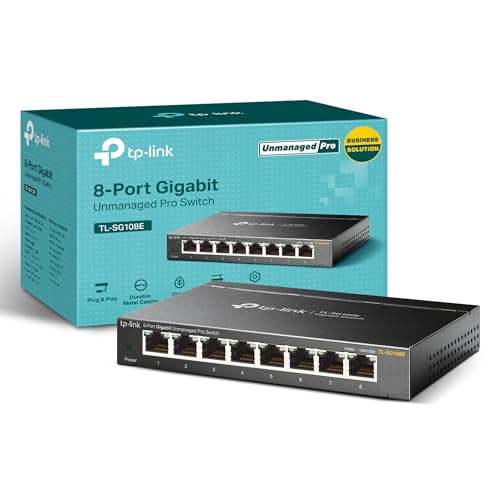
- Eight Gigabit Ethernet ports
- Supports VLAN, QoS, and network monitoring
- Metal body with desktop or wall mounting
Best For: Growing home or small-office networks
Room-to-Grow Choice
NETGEAR GS108 8-Port Gigabit Switch

- Eight auto-negotiating Gigabit ports
- No software or configuration required
- Quiet fanless metal design
Best For: Beginners needing several additional wired connections
Compact Smart Starter
TP-Link TL-SG105E 5-Port Switch

- Five Gigabit ports for basic expansion
- Plug-and-play with optional smart management
- Compact metal body with shielded ports
Best For: Small desks and beginners wanting room to learn network controls
Best Budget Starter
TP-Link LS1005G 5-Port Gigabit Switch

- Five automatic Gigabit Ethernet ports
- Plug-and-play, fanless operation
- Compact and energy-efficient design
Best For: Beginners expanding a basic home wired network
Best for Smart Controls
NETGEAR GS305E Easy Smart Switch

- Five Gigabit Ethernet ports
- Supports VLAN, QoS, monitoring, and security controls
- Metal, wall-mountable, and fanless
Best For: Small offices and homes needing basic network management
Best for Media and Gaming
D-Link DGS-105 5-Port Gigabit Switch

- Five plug-and-play Gigabit ports
- QoS and IGMP snooping support
- Fanless metal housing with wall mounting
Best For: Gaming, streaming, NAS, and home-office setups
Simple Network Expansion

- Five automatic 10/100/1000Mbps ports
- Plug-and-play, unmanaged operation
- Fanless design with wall-mount option
Best For: Beginners adding a few quiet wired connections at home or in a small office
Streaming-Friendly Choice

- Five auto-sensing Gigabit ports
- QoS prioritizes video and audio traffic
- Power-saving mode detects unused ports
Best For: Small networks where simple setup and streaming support are priorities
Room to Grow
TP-Link TL-SG108 8-Port Switch

- Eight automatic Gigabit Ethernet ports
- Plug-and-play unmanaged setup
- Metal, shielded, fanless construction
Best For: Beginners who need extra ports for a growing home office or small network
Simple Starter Pick – NETGEAR GS305 5-Port Gigabit Switch
For beginners looking for network switches, the NETGEAR GS305 keeps wired-network expansion straightforward. Its five auto-negotiating Gigabit Ethernet ports support existing Cat5e or Cat6 cables, with no software or configuration required.
Best For: Small home networks, desktops, and users who want a compact plug-and-play switch.
Pros:
- Five 1Gbps RJ45 ports provide fast wired connectivity.
- Fanless operation is quiet, and IEEE 802.3az helps reduce power use.
- Metal housing supports desktop or wall-mount placement.
Cons:
- Only five ports are available, leaving less room for expansion.
- As an unmanaged switch, it does not provide VLAN or traffic-management features.
- The supplied notes specify U.S. and Canada compatibility.
The GS305 is a practical entry point when you simply need more Gigabit Ethernet connections without learning network management. Its small port count suits basic setups, while the silent metal design makes it easy to place in a living space or office.
Feature-Rich Learning Pick – TP-Link TL-SG108E 8-Port Smart Switch
Among network switches for beginners, the TP-Link TL-SG108E is a good choice if you want simple basic setup now and room to learn more later. It offers eight Gigabit ports plus web or software management for VLANs, QoS, monitoring, and other Layer 2 features.
Best For: Beginners building a larger home or small-office network who want optional management features.
Pros:
- Eight 10/100/1000Mbps ports provide useful capacity for multiple devices.
- VLAN, QoS, IGMP snooping, port mirroring, loop prevention, and cable diagnostics add flexibility.
- Sturdy metal construction, shielded ports, and desktop or wall-mount installation suit varied setups.
Cons:
- Management features may be more complexity than a beginner needs for basic expansion.
- It requires configuration through a web interface or free software to use its smart features.
- The supplied details list a 40°C upper temperature rating.
The TL-SG108E bridges the gap between a basic unmanaged switch and more advanced networking hardware. You can use it as a plug-and-play switch initially, then introduce segmentation or traffic controls as your network needs grow.
Room-to-Grow Choice – NETGEAR GS108 8-Port Gigabit Switch
NETGEAR 8-Port Gigabit Ethernet Unmanaged Network Switch (GS108) | Desktop or Wall Mount
Check Price On AmazonThe NETGEAR GS108 is one of the more approachable network switches for beginners who need extra wired connections without software or configuration. Its eight auto-negotiating Gigabit ports work with Cat5e or Cat6 cables and provide more capacity than a five-port starter model.
Best For: Home users, small offices, and beginners who expect to connect several wired devices.
Pros:
- Eight 1Gbps ports accommodate PCs, Macs, and other wired devices.
- Plug-and-play operation requires no software or configuration.
- Fanless, energy-efficient design supports quiet operation and desktop or wall mounting.
Cons:
- It is unmanaged, so it lacks configurable VLAN and QoS controls.
- Its listed dimensions and 1.7-pound weight make it less compact than some entry-level alternatives.
- The supplied notes specify U.S. and Canada compatibility.
Choose the GS108 when port count matters more than advanced controls. It keeps setup simple while offering eight Gigabit connections, making it a sensible long-term basic switch for a growing wired network.
Compact Smart Starter – TP-Link TL-SG105E 5-Port Switch
The TP-Link TL-SG105E combines beginner-friendly plug-and-play use with optional smart controls. Its five 10/100/1000Mbps ports cover basic home expansion, while VLAN, QoS, IGMP snooping, and port mirroring are available through its web-based management interface.
Best For: Small workspaces where a compact five-port switch may eventually need basic network management.
Pros:
- Five Gigabit RJ45 ports support fast wired connectivity.
- Basic use requires no configuration, while smart features are available when needed.
- Compact metal housing and shielded ports support desktop use and improved interference protection.
Cons:
- Five ports provide limited capacity for larger networks.
- Advanced features require learning and using the web-based interface.
- The supplied details contain an inconsistent number-of-ports field, although the product description identifies five ports.
The TL-SG105E is a useful middle ground for beginners who want an easy start without giving up future flexibility. Its compact footprint fits small desks, and its management features can become useful as the network becomes more involved.
Best Budget Starter – TP-Link LS1005G 5-Port Gigabit Switch
If you are looking for network switches for beginners, the TP-Link LS1005G is a straightforward way to add wired connections without learning network settings. Its five Gigabit ports, auto-negotiation, and plug-and-play setup make it suitable for basic home expansions.
Best For: Beginners who need a compact, quiet switch for laptops, consoles, printers, or other wired devices.
Pros:
- Five 10/100/1000Mbps RJ45 ports with automatic configuration
- Plug-and-play operation requires no software or setup
- Compact, lightweight, and fanless for quiet placement
- Energy-efficient design helps reduce power consumption
Cons:
- Unmanaged design does not provide VLAN, QoS, or monitoring controls
- Plastic housing may be less rugged than metal alternatives
The LS1005G is a sensible entry-level choice when your priority is adding reliable Gigabit Ethernet ports with minimal effort. Choose a managed model instead if you need advanced traffic or network controls.
Best for Smart Controls – NETGEAR GS305E Easy Smart Switch
Among network switches for beginners, the NETGEAR GS305E is a useful step up for users who want simple management features. It provides five Gigabit ports plus an interface for configuring VLANs, prioritizing traffic with QoS, monitoring ports, and managing network security.
Best For: Small offices or advanced home users who want beginner-friendly control over traffic and network segmentation.
Pros:
- Five auto-negotiating 1Gbps Ethernet ports
- Supports VLAN configuration, QoS, port monitoring, and security management
- Compact metal enclosure supports desktop or wall mounting
- Fanless, energy-efficient operation
Cons:
- More setup and configuration than a fully unmanaged switch
- Regional compatibility is listed as U.S. and Canada only
The GS305E fits buyers who have outgrown basic plug-and-play switching but do not need a larger business switch. Its smart features add flexibility while the five-port layout keeps installation approachable.
Best for Media and Gaming – D-Link DGS-105 5-Port Gigabit Switch
For shoppers comparing network switches for beginners, the D-Link DGS-105 offers easy installation with features that also suit busy media and gaming setups. Its five auto-negotiating Gigabit ports, traffic prioritization, and IGMP snooping support help connect consoles, PCs, NAS devices, printers, cameras, and streaming equipment.
Best For: Home offices, gaming areas, and media networks needing a durable, quiet switch with traffic-handling features.
Pros:
- Five auto-negotiating Gigabit ports support common Ethernet cable types
- 802.1p QoS helps prioritize voice, video, and gaming traffic
- IGMP snooping supports IPTV and multicast streaming
- Fanless metal housing offers desktop or wall-mount placement
Cons:
- Unmanaged design limits configuration options compared with smart switches
- Metal construction makes it heavier than compact plastic alternatives
The DGS-105 is a strong fit when simple plug-and-play installation matters but your network also handles streaming, gaming, or larger file transfers. Its sturdy enclosure and long stated coverage add practical appeal for long-term use.
Simple Network Expansion – UGREEN 5-Port Gigabit Switch
For beginners looking at network switches for beginners, the UGREEN 5-Port Gigabit Switch keeps wired network expansion straightforward. Its unmanaged, plug-and-play design supports 10/100/1000Mbps connections without drivers or configuration, while the compact fanless housing fits on a desk or wall.
Best For: Homes, small offices, schools, and security-monitoring setups that need a quiet way to connect several wired devices.
Pros:
- Five RJ45 ports support automatic 10/100/1000Mbps speed adjustment.
- Plug-and-play operation works with Windows, macOS, Linux, Android, and iOS environments.
- Fanless design provides quiet operation, with desktop placement or wall mounting.
- Supports full- and half-duplex modes plus automatic MDI/MDIX.
Cons:
- It is unmanaged, so there are no advanced configuration controls.
- PoE is not supported.
- Five ports may be limiting for larger wired setups.
The UGREEN is a practical first switch when ease of use, quiet operation, and flexible placement matter more than advanced networking features. It is especially suitable for adding a few wired connections to an existing router.
Streaming-Friendly Choice – Linksys SE3005 5-Port Switch
The Linksys SE3005 is a beginner-friendly option for network switches for beginners who want simple wired connectivity with a few traffic-management features. Its five auto-sensing Gigabit ports require no manual cable detection, while QoS support can prioritize video and audio applications.
Best For: Desktops and small home networks where reliable Gigabit connections, streaming prioritization, and automatic power saving are useful.
Pros:
- Five ports support 10/100/1000Mbps data rates.
- Auto-sensing ports and auto MDI/MDI-X simplify setup.
- IEEE 802.1p QoS can prioritize video and audio applications.
- Power-saving mode detects unused ports.
Cons:
- The supplied notes identify it as a five-port model, which may not suit growing networks.
- It is intended as a simple switch rather than a fully managed networking device.
- The listed upper temperature rating is 40°C.
Choose the SE3005 if you want a straightforward five-port switch with traffic prioritization and power-saving features. Its automatic port sensing makes it approachable for a first wired network upgrade.
Room to Grow – TP-Link TL-SG108 8-Port Switch
For beginners considering network switches for beginners, the TP-Link TL-SG108 offers extra capacity without adding setup complexity. This unmanaged switch has eight Gigabit ports, a sturdy metal housing, shielded ports, and a fanless design for quiet operation.
Best For: Home offices, bedrooms, and small networks with multiple computers, printers, gaming consoles, or other Ethernet devices.
Pros:
- Eight RJ45 ports support 10/100/1000Mbps connections.
- Plug-and-play operation requires no configuration.
- Metal construction and shielded ports support durability, heat dissipation, and interference protection.
- Fanless operation and link-based power adjustment help keep it quiet and efficient.
Cons:
- It is unmanaged, so advanced network controls are not included.
- It has more physical capacity than a five-port switch, which may be unnecessary for very small setups.
- PoE functionality is not listed in the supplied specifications.
The TL-SG108 is a strong beginner pick when you want simple installation but expect to connect more than a handful of wired devices. Its eight-port layout and metal, fanless design give it useful flexibility for expanding home networks.
How We Picked the Best Network Switches for Beginners
We focused on switches that are straightforward to install, widely useful, and suitable for typical home offices, entertainment setups, and small workspaces. Every option supports Gigabit Ethernet, giving compatible devices up to 1,000 Mbps over wired connections when the cabling, router, and internet service also support those speeds.
We also considered port count, unmanaged versus smart management, enclosure quality, mounting flexibility, fan noise, and the practical value of features such as QoS and VLAN support. Because beginners often want a reliable solution without complex configuration, plug-and-play usability received particular emphasis.
Quick Comparison
| Best For | Recommended Type | Typical Port Count | Management |
|---|---|---|---|
| Small desk or media setup | Compact Gigabit switch | 5 | Unmanaged |
| Several wired devices | Full-size Gigabit switch | 8 | Unmanaged |
| Basic network control | Easy smart switch | 5 or 8 | Web-managed |
| Quiet home or office use | Fanless metal switch | 5 or 8 | Unmanaged or smart |
Key Buying Factors for Network Switches for Beginners
Port Count and Expansion
Count the Ethernet devices you plan to connect, then leave at least one or two ports available for future additions. A five-port switch works well for a router plus a few devices, while an eight-port model provides more room for a desktop, printer, console, streaming box, access point, or security camera.
Unmanaged or Easy Smart
Unmanaged switches are the simplest choice: connect the power and Ethernet cables, and the switch handles traffic automatically. Choose an easy smart model if you need VLANs, QoS, monitoring, or more control over traffic. These features are useful, but they add configuration steps.
Speed, Cabling, and Placement
Gigabit ports are the sensible baseline for modern wired networks. Use Cat5e or better Ethernet cables, and remember that a switch cannot increase an internet connection beyond the speed supplied by your router and service. A fanless design is preferable near desks, bedrooms, and media equipment. Metal housings can improve durability, while wall-mount support helps keep cables organized.
Power and Traffic Features
Look for automatic speed and duplex negotiation, energy-saving operation, and reliable traffic handling. QoS can help prioritize latency-sensitive traffic, but it matters most when the switch actually supports configurable QoS rather than simply advertising automatic optimization.
Who Should Buy Which Network Switches for Beginners?
Choose a five-port unmanaged switch for a small home office, television cabinet, gaming setup, or desk where easy installation matters most. An eight-port unmanaged model is better when several rooms or devices need wired connections and you want extra capacity without learning network administration.
Pick a five- or eight-port easy smart switch if you are comfortable opening a browser-based control panel and want VLAN or QoS options. It is a practical middle ground for a home lab, small business, or network with separate guest, work, or media devices.
For most first-time buyers, an unmanaged Gigabit switch is the safest starting point: it is affordable, quiet, and nearly impossible to overcomplicate. Before ordering, verify the number of available router ports, the switch’s dimensions, and whether you need wall mounting or a metal enclosure.
