
The best hard drive docking stations make it easier to access bare internal drives, clone disks, and expand storage without installing drives in an enclosure. The right model can also simplify backups and recovery work.
We selected 10 options covering dual-bay, four-bay, USB-C, USB 3.0, SATA, and NVMe use cases. Use the guide below to match capacity, speed, cloning features, and connectivity to your setup.
Best 10 Hard Drive Docking Stations Picks for 2026
Versatile Cloning Pick
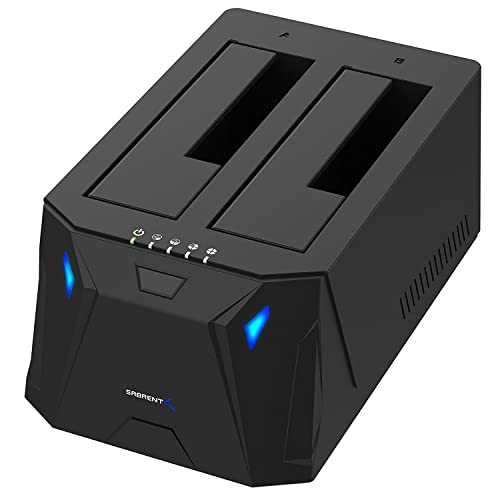
- Supports 2.5/3.5-inch SATA HDDs and SSDs
- Offline cloning without a computer
- USB 3.0 speeds up to 5Gbps
Best For: Simple two-drive access and cloning
Multi-Drive Management Pick

- Holds up to four SATA HDDs or SSDs
- Trayless, tool-free drive insertion
- Offline cloning with progress LEDs
Best For: Managing several drives from one dock
Hub-Enhanced Cloning Pick

- Supports up to 48TB across two bays
- Offline cloning with progress indicators
- Adds three USB 3.0 hub ports
Best For: Cloning plus extra USB connectivity
Best Dual-Bay Cloning Value

- Works with two SATA HDDs or SSDs simultaneously
- Offline cloning requires no computer
- USB-C with UASP and dedicated dual-bay power
Best For: Drive migration, duplication, and two-drive file work
Best USB-C Offline Cloner

- Clones SATA drives without a computer
- Reads and writes two drives simultaneously
- Includes USB-C cable and supports hot swapping
Best For: Computer-free cloning and dual-drive SATA access
Simple SATA Pick
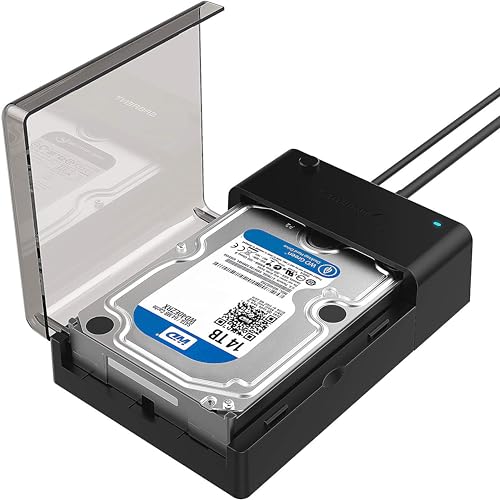
- Reads 2.5-inch and 3.5-inch SATA drives
- Tool-free hot-swap design
- Includes 12V adapter for 3.5-inch drives
Best For: Single-drive SATA access on USB-A computers
Flexible Dual-Bay Choice

- Holds two SATA drives up to 22TB each
- Supports offline cloning
- Includes USB-A/USB-C host cable
Best For: Two-drive access and offline SATA cloning
Advanced Cloning Pick

- Supports NVMe and 2.5/3.5-inch SATA drives
- Three independent bays for multi-drive workflows
- 10Gbps USB 3.2 Gen 2 and one-touch cloning
Best For: Mixed-drive access and versatile offline cloning
Versatile Cloning Pick – SABRENT Dual-Bay Dock
The SABRENT EC-HD2B is a practical choice among hard drive docking stations for accessing or duplicating two standard 2.5-inch or 3.5-inch SATA HDDs and SSDs. It connects over USB 3.0, requires no drivers, and supports offline cloning without a computer.
Best For: Home users, technicians, and anyone needing a straightforward dual-drive dock with offline cloning.
Pros:
- Supports both 2.5-inch and 3.5-inch SATA HDDs and SSDs.
- Handles drives up to 10TB, with 20TB total storage capacity listed.
- Offers USB 3.0 transfer speeds up to 5Gbps and offline cloning.
- Plug-and-play setup with no drivers required.
Cons:
- Supports SATA drives only, not IDE or SAS drives.
- Offline cloning is rated at up to 60Mbps, slower than its USB transfer rating.
With two bays, broad SATA drive support, and a simple plug-and-play design, this SABRENT dock is a balanced option for routine backups, drive access, and occasional disk duplication.
High-Capacity Single-Bay Pick – ORICO USB 3.0 SATA Dock
The ORICO DD18 is a single-bay option among hard drive docking stations, designed for quick access to 2.5-inch and 3.5-inch SATA HDDs or SSDs. Its tool-less, hot-swappable design, UASP support, and compatibility with computers, smart TVs, routers, and other platforms make it flexible for everyday transfers.
Best For: Users who need a compact, high-capacity SATA dock for file transfers, backups, or drive imaging.
Pros:
- Supports SATA I/II/III 2.5-inch and 3.5-inch drives up to 22TB.
- UASP and USB 3.0 support provide transfer speeds up to 5Gbps.
- Tool-less hot-swapping simplifies drive changes.
- Works with Windows, macOS, Linux, iPadOS via Thunderbolt, and Raspberry Pi systems.
Cons:
- Single-bay design cannot duplicate drives directly.
- Does not support IDE or SAS interfaces.
- New or unallocated drives must be initialized and formatted in Disk Management.
The ORICO dock emphasizes capacity and broad device compatibility rather than multi-drive cloning. Its automatic sleep mode, dust-resistant design, and included power supply add convenience for regular desktop use.
Multi-Drive Management Pick – SABRENT 4-Bay Dock
The SABRENT DS-U3B4 stands out among hard drive docking stations when four drives need to be accessed from one setup. Its trayless bays accept 2.5-inch or 3.5-inch SATA HDDs and SSDs, while USB 3.0 provides a computer connection and the offline clone function enables direct drive-to-drive copying.
Best For: Technicians, power users, and offices managing several SATA drives at once.
Pros:
- Holds up to four 2.5-inch or 3.5-inch SATA drives.
- Trayless design allows direct drive insertion without tools.
- Supports USB 3.0 transfers up to 5Gbps and backward compatibility with USB 2.0.
- Offline cloning works without a computer and includes progress indicators.
Cons:
- Designed for SATA drives and does not list support for other interfaces.
- Its four-bay footprint is larger than a basic single- or dual-bay dock.
- Offline cloning may be less convenient when managing more than the source and target drives.
This model is best when capacity and simultaneous drive access matter more than minimal size. The external power adapter helps support operation with multiple installed drives.
Hub-Enhanced Cloning Pick – MAIWO Dual-Bay Dock
The MAIWO K3082H combines dual-drive access with extra connectivity, making it a versatile choice among hard drive docking stations. It supports 2.5-inch and 3.5-inch SATA HDDs and SSDs, offers offline cloning, and adds three USB 3.0 Type-A ports for peripherals or flash drives.
Best For: Users who want a dual-bay SATA cloner plus USB hub functionality in one desktop accessory.
Pros:
- Supports two 2.5-inch or 3.5-inch SATA drives, with up to 24TB per port.
- Offline cloning requires no computer or drivers.
- USB 3.0 provides bandwidth up to 5Gbps and is backward compatible with USB 2.0 and 1.1.
- Includes three USB 3.0 Type-A hub ports, including one with 2.4A charging support.
Cons:
- Supports SATA drives rather than IDE or other listed interfaces.
- Cloning is limited to the supported two-bay workflow.
- Its extra hub features and 12V 3A power supply may be more than needed for basic drive reading.
The MAIWO is a strong fit for a workstation that needs both drive duplication and additional USB ports. LED indicators show clone progress at 25%, 50%, 75%, and 100%.
Best Single-Bay Value – SABRENT USB 3.0 SATA Dock
If you need a straightforward option among hard drive docking stations, the SABRENT EC-UBLB provides one drive bay for standard 2.5-inch or 3.5-inch SATA HDDs and SSDs. It supports USB 3.0 with UASP and includes the required AC adapter, but it does not support SAS or M.2 NVMe drives.
Best For: Users who need simple access to one bare SATA drive for file transfers, backups, or drive setup.
Pros:
- Accepts both 2.5-inch and 3.5-inch SATA drives up to 20TB.
- USB 3.0 with UASP supports transfer rates up to 5Gbps.
- Includes the power adapter and USB cable, with LED activity indicators.
Cons:
- Only one drive can be used at a time.
- Requires AC power rather than USB bus power.
- New or blank drives must be initialized in Windows Disk Management or macOS Disk Utility.
The EC-UBLB is a practical single-drive dock for SATA storage. Its auto-sleep feature can help reduce idle activity, while the clear compatibility limits make it best suited to conventional SATA drives rather than newer NVMe hardware.
Best Dual-Bay Cloning Value – BENFEI Dual-Bay USB-C Dock
The BENFEI dual-bay model is one of the more versatile hard drive docking stations for working with two SATA drives at once. It supports simultaneous reading and writing, uses USB-C connectivity with UASP, and can clone a source drive to a target without a computer.
Best For: Users migrating, duplicating, or managing two 2.5-inch or 3.5-inch SATA HDDs or SSDs.
Pros:
- Two bays let you access and transfer between two drives simultaneously.
- One-button offline cloning works without a connected PC.
- A dedicated 12V/2.5A adapter supplies power to both bays.
- Includes an 18-month warranty and customer support.
Cons:
- The target drive must be equal to or larger than the source for cloning.
- Requires turning off the power switch before connecting or disconnecting drives.
- Its supplied interface is USB 3.1 Type-C, so computer port compatibility matters.
With two bays and offline cloning, the BENFEI offers more workflow flexibility than a basic single-drive dock. It is particularly useful for drive replacement and duplication, provided the destination drive has sufficient capacity.
Best USB-C Offline Cloner – SABRENT Dual-Bay Dock
For shoppers comparing hard drive docking stations with cloning features, the SABRENT EC-CH2B combines two SATA bays with USB-C connectivity and offline duplication. Both installed drives appear separately when connected to a computer, while the standalone cloner can copy a source drive to an equal-size or larger target.
Best For: Users who need dual-drive access and occasional computer-free cloning of bare SATA drives.
Pros:
- Supports two 2.5-inch or 3.5-inch SATA HDDs or SSDs at once.
- Offline cloning works without a computer and reaches up to 60MBps.
- Tool-free, hot-swappable bays include separate drive-access LEDs.
- USB-C connectivity supports up to 5Gbps and requires no drivers on Windows or Mac.
Cons:
- Does not support IDE/PATA, Molex-powered, M.2, or NVMe drives.
- The included cable is USB-C on the dock end; computers without USB-C need a separate cable or adapter.
- Drives are not included, and actual file-transfer speed depends on the installed drives.
The EC-CH2B is a strong fit when offline cloning and dual-drive access are more important than broad drive compatibility. Its SATA-only design keeps setup simple, but buyers should verify both their drive type and computer port before ordering.
Simple SATA Pick – Single-Bay SATA Dock
If you need a straightforward way to read or swap a bare SATA hard drive, this single-bay hard drive docking station keeps the setup simple. It accepts 2.5-inch and 3.5-inch SATA HDDs and SSDs, connects through USB 3.0 Type-A, and requires no tools or drivers on Windows 10/11, macOS, or Linux.
Best For: Users with a USB-A computer who need an affordable, tool-free dock for one bare SATA drive.
Pros:
- Supports SATA I/II/III 2.5-inch and 3.5-inch drives.
- Tool-free, plug-and-play design with hot-swapping and an activity LED.
- Includes the required 12V/2A adapter for stable 3.5-inch drive operation.
Cons:
- Does not support IDE/PATA, M.2, SAS, or drives already inside USB enclosures.
- Uses USB Type-A rather than USB-C, so USB-C-only computers need an adapter.
- It is a single-bay dock and does not pass S.M.A.R.T. diagnostics through the USB bridge.
This SABRENT model is a practical choice when compatibility with SATA drives and simple access matter more than multi-drive features. Confirm your computer has USB-A and your drive has a bare SATA connector before ordering.
Flexible Dual-Bay Choice – USB-C Dual-Bay Dock
For managing two drives at once, the RSHTECH dual-bay hard drive docking station adds broad host compatibility and offline cloning. It supports 2.5-inch and 3.5-inch SATA HDDs and SSDs up to 22TB per drive, with a detachable cable that connects to USB-A, USB-C, or Thunderbolt host ports.
Best For: Users who regularly access two SATA drives, migrate data offline, or switch between USB-A and USB-C computers.
Pros:
- Dual bays support two 2.5-inch or 3.5-inch SATA drives up to 22TB each.
- Offline cloning works without connecting the dock to a computer.
- Includes a USB-A/USB-C cable, UASP support, aluminum housing, and a 36W power adapter.
Cons:
- Supports SATA drives only, not M.2 or IDE/PATA storage.
- Maximum transfer performance depends on UASP support from the host device.
- Offline cloning is designed for compatible source and target drives, so drive layout and capacity should be checked beforehand.
With two bays and both USB connector options, this RSHTECH dock is more versatile than a basic single-drive reader. Its offline clone function is especially useful for drive upgrades, while the included power supply supports stable operation with larger 3.5-inch disks.
Advanced Cloning Pick – Triple-Bay NVMe/SATA Dock
When your storage mix includes NVMe and SATA drives, the ICY BOX triple-bay hard drive docking station offers the broadest format support in this roundup. Its three independent slots accommodate M.2 PCIe NVMe SSDs along with 2.5-inch and 3.5-inch SATA drives, while USB 3.2 Gen 2 provides up to 10Gbps interface bandwidth.
Best For: Professionals and enthusiasts who need multi-drive access and one-touch offline cloning across NVMe and SATA storage.
Pros:
- Three independent bays support M.2 PCIe NVMe, 2.5-inch SATA, and 3.5-inch SATA drives.
- Supports offline cloning between NVMe and SATA drive types without software installation.
- Includes USB-C/USB-A combo connectivity, a power adapter, and a two-year warranty.
Cons:
- Its advanced multi-bay design is more than needed for simple single-drive access.
- Up to 10Gbps performance depends on the host computer, cable, and connected storage.
- The enclosure is plastic rather than aluminum.
This ICY BOX model is the most capable option here for mixed storage workflows and repeated cloning tasks. Choose it if you need NVMe support and three simultaneous drive positions; otherwise, a simpler SATA dock may be easier and more economical to use.
How We Picked the Best Hard Drive Docking Stations
We focused on practical features that affect everyday storage work: drive compatibility, bay count, interface speed, offline cloning, power delivery, build quality, and ease of use. The selection includes compact single-drive docks, dual-bay cloners, four-bay storage tools, and a triple-bay model that also supports M.2 NVMe SSDs.
Because specifications can vary by drive type and host computer, verify the manufacturer’s compatibility information before buying. Offline cloning generally requires matching source and target capacities, and it copies data directly between inserted drives without computer software.
Quick Comparison
| Best For | Look For | Typical Configuration |
|---|---|---|
| Basic drive access | Single-bay SATA support | 2.5- and 3.5-inch HDD/SSD |
| Disk cloning | Offline clone button and dual bays | Source and target SATA drives |
| Multiple active drives | Three or four bays | Backup, archiving, and testing |
| Modern laptops | USB-C host connection | USB-C dock with SATA support |
| High-speed SSD work | 10Gbps USB and NVMe support | M.2 NVMe plus SATA bays |
Key Buying Factors for Hard Drive Docking Stations
Drive Type and Size
Most docks support 2.5-inch and 3.5-inch SATA drives, but not every model handles M.2 NVMe SSDs. Confirm whether your drive uses SATA or NVMe; the connectors and protocols are different. A 3.5-inch HDD also needs adequate external power, while a 2.5-inch drive may use less.
Bay Count and Cloning
A single-bay dock is suitable for occasional drive access. Choose a dual-bay or larger model if you regularly clone disks, compare drives, or keep several storage devices connected. Offline cloning is convenient, but it typically erases the destination drive, so check the source and target carefully.
USB Speed and Connector
USB 3.0 or 5Gbps connections are sufficient for many SATA HDDs and SSDs. USB-C may describe the physical connector rather than a faster protocol, so check the actual speed rating. A 10Gbps model can better serve SATA SSDs and supported NVMe drives, although real-world results depend on the drive and computer.
Power, Cooling, and Extras
Look for a stable power adapter, tool-free insertion, clear status indicators, and useful safeguards such as overcurrent or short-circuit protection. Built-in USB hubs can add convenience, but they may share bandwidth with connected drives.
Who Should Buy Which Hard Drive Docking Stations?
Choose a single-bay SATA dock for occasional backups, data recovery, or quick access to one bare drive. Choose a dual-bay cloner if you frequently migrate to larger drives or duplicate storage without using cloning software. Choose a four-bay dock for managing several SATA drives, archives, or rotating backups. Choose USB-C when your laptop has limited USB-A ports or you want a cleaner modern connection. Finally, choose an NVMe-compatible model only if you need to work with M.2 NVMe SSDs; SATA-only docks cannot read them.
