
The best compact network video recorders make it easier to centralize camera footage without sacrificing resolution, storage flexibility, or remote access. This roundup compares 10 options for small homes, larger properties, and growing security systems.
We focus on channel capacity, PoE connectivity, camera compatibility, recording quality, storage, and setup requirements so you can choose an NVR that fits your current cameras and future expansion plans.
Best 10 Compact Network Video Recorders Picks for 2026
Compact AI PoE Pick
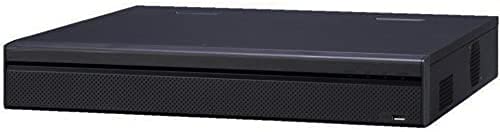
- Four built-in PoE channels
- 4K recording with Smart Codec
- Camera-based analytics support
Best For: Small four-camera PoE installations
Wireless Expansion Choice

- Supports up to 10 XMARTO WiFi 6 cameras
- Dual WiFi modules
- 4K H.265+ recording
Best For: XMARTO wireless camera installations
Plug-and-Play Home Pick
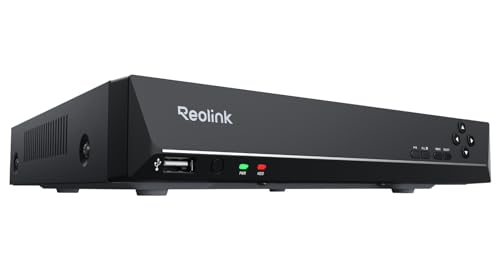
- Eight-camera simultaneous recording
- Internal and eSATA storage support
- PoE setup with remote apps
Best For: Reolink PoE home security systems
Expandable PoE Value

- Eight built-in PoE ports
- Expandable to 16 channels
- Supports 4K/8MP cameras
Best For: Growing wired systems with hands-on installation
Best Integrated PoE Option

- Built-in six-port PoE switch
- Supports up to six 4K cameras
- Includes HDMI viewing and 3.5-inch HDD support
Best For: Ubiquiti camera systems needing integrated PoE
Best Four-Camera Value

- Supports four 8MP/4K camera inputs
- Accepts up to a 10TB HDD
- Includes ONVIF support and remote viewing
Best For: Smaller home systems with up to four cameras
Best Plug-and-Play ANNKE System

- Supports eight channels up to 12MP
- PoE carries power and data together
- Works with ANNKE Vision remote viewing
Best For: ANNKE camera systems needing eight-channel PoE recording
Best Compact 4-Channel Pick

- Supports up to four PoE cameras
- Up to 8TB local HDD storage
- Local AI search and no subscription required
Best For: Small wired security systems and compact professional installations
Best High-Capacity Option
REOLINK RLN16-410 16-Channel NVR
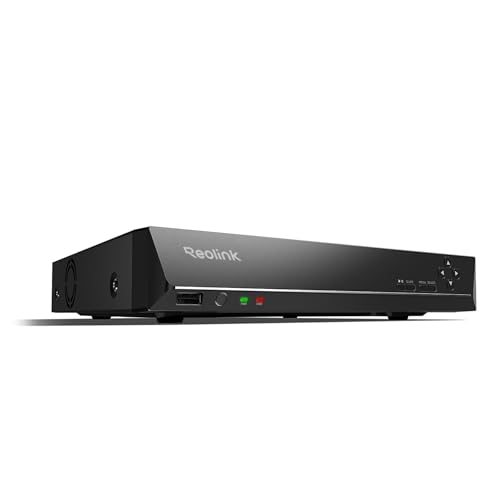
- Manages up to 16 Reolink cameras
- Includes a 4TB HDD
- Supports an additional 8TB HDD
Best For: Expanding Reolink camera systems for larger properties or businesses
Best Balanced Choice
REOLINK RLN8-410 8-Channel NVR

- Supports up to eight Reolink cameras
- Includes a 2TB HDD
- Expands with an additional 8TB HDD via eSATA
Best For: Medium-sized Reolink systems in homes and small businesses
Compact AI PoE Pick – 4-Channel 4K Lite NVR
For smaller installations, this compact network video recorder combines four PoE camera connections with 4K support and several camera-based analytics features. It is a practical choice when you want a compact 1U recorder, but remember that the hard drive is not included.
Best For: Small security systems using up to four compatible PoE cameras and needing local recording with smart detection features.
Pros:
- Four built-in PoE channels simplify camera connectivity.
- Supports 4K recording and Smart Codec compression for more efficient storage.
- Camera-based features include perimeter protection, face detection, SMD Plus, and people counting.
- DMSS support can help transfer camera SD-card footage after a network interruption.
Cons:
- HDD is not included, so storage must be added separately.
- Only four channels are available.
- Advanced analytics depend on compatible cameras.
This model stands out among compact network video recorders for its combination of a small four-channel format and camera-assisted analytics. It is best suited to focused, smaller deployments rather than expandable multi-camera systems.
Wireless Expansion Choice – 10-Channel WiFi 6 NVR
This compact network video recorder is designed for cable-free camera deployments, with dual WiFi modules, 10-channel capacity, and 4K H.265+ recording. Its main limitation is compatibility: it works with XMARTO WiFi 6 cameras only.
Best For: XMARTO WiFi 6 camera systems where long-range wireless connections and flexible local storage are priorities.
Pros:
- Supports up to 10 XMARTO WiFi 6 cameras from 720p through 4K.
- Dual WiFi modules separate camera traffic from home internet access.
- H.265+ compression is specified to reduce bitrate by 50% compared with H.264.
- Supports a 1TB to 6TB SATA hard drive and optional cloud backup.
Cons:
- Works only with XMARTO WiFi 6 cameras.
- HDD is not included.
- Wireless stability depends on camera placement and obstructions.
Choose this recorder when avoiding Ethernet runs matters more than broad camera compatibility. Positioning the NVR near the geometric center of the camera coverage area can help maintain more stable connections.
Plug-and-Play Home Pick – Reolink 8-Channel PoE NVR
This compact network video recorder is a straightforward option for Reolink PoE camera owners. It supports eight simultaneous camera recordings, 24/7 recording, and both internal and external storage expansion, though it is intended for compatible Reolink cameras.
Best For: Home security systems built around Reolink PoE cameras and requiring continuous local recording.
Pros:
- Supports up to eight Reolink cameras recording simultaneously.
- PoE carries power and data over one Ethernet cable, with cable runs up to 330 feet.
- Supports one internal HDD up to 8TB plus an eSATA drive up to 8TB.
- Reolink apps and clients provide local and remote viewing without monthly fees.
Cons:
- Designed for Reolink-compatible cameras rather than general third-party use.
- HDD is not included.
- Firmware updates may be needed for camera compatibility.
For an existing Reolink ecosystem, this model offers a simple route to 24/7 recording and remote access. Its expandable storage is useful for households that expect to retain more footage over time.
Expandable PoE Value – 16-Channel 4K NVR
This compact network video recorder offers eight built-in PoE ports and can expand to 16 channels with a separate PoE switch. It supports up to 4K/8MP cameras and H.265+ compression, but third-party camera setup may require manual configuration.
Best For: Buyers planning an expandable PoE system with up to 16 cameras and willing to configure compatible third-party devices.
Pros:
- Eight integrated PoE ports can power cameras over Ethernet.
- Expandable to 16 channels through an additional PoE switch.
- Supports up to 4K/8MP cameras and H.265+ storage-saving compression.
- Offers free remote access through the Guard Live app and Guard Station software.
Cons:
- HDD is not included and is required for recording and playback.
- Third-party cameras are not fully plug-and-play and may require Virtual Host and IP changes.
- A PoE switch is needed for expansion beyond the eight built-in ports.
This is a sensible choice for a growing wired installation that starts with eight cameras but may eventually need 16 channels. It provides useful capacity and storage support, although its compatibility notes make it better for hands-on installers than beginners.
Best Integrated PoE Option – Ubiquiti UNVR-Instant
The Ubiquiti UNVR-Instant is a compact network video recorder for setups that benefit from built-in connectivity. It accepts a 3.5-inch HDD, includes a six-port PoE switch, and provides an HDMI viewing port for local monitoring. It can support up to six 4K cameras or fifteen Full HD cameras, but it must link to a Gateway or Layer 3 switch.
Best For: Ubiquiti users who want integrated PoE and local HDMI viewing in a compact NVR.
Pros:
- Built-in six-port PoE switch simplifies camera connections.
- Supports up to six 4K or fifteen Full HD cameras.
- Includes 3.5-inch HDD compatibility and an HDMI view port.
Cons:
- Requires a Gateway or Layer 3 switch to link into the network.
- HDD is not specified as included.
The UNVR-Instant is a strong fit when integrated PoE and Ubiquiti networking are priorities. Confirm the required network equipment and storage arrangement before buying.
Best Four-Camera Value – Tenda N3L-4H 4K NVR
The Tenda N3L-4H is a practical compact network video recorder for smaller home security systems. It handles up to four 8MP/4K network camera inputs, supports up to a 10TB HDD, and uses H.265+ compression to help reduce storage demands. Automatic camera discovery, ONVIF compatibility, remote viewing, and USB backup add flexibility.
Best For: Home users building a four-camera system with broad ONVIF compatibility and remote access.
Pros:
- Supports four 8MP/4K camera inputs and up to 10TB of storage.
- Works with Tenda cameras and other ONVIF-compatible cameras.
- Offers H.265+ compression, USB backup, mobile viewing, and alerts.
- Provides simultaneous HDMI and VGA output up to 1080p.
Cons:
- Hard drive is not included.
- Limited to four camera channels.
- Cloud storage is listed as a paid option after a three-month free trial.
With its four-channel design and generous storage support, the N3L-4H suits modest surveillance installations. It is especially appealing if you want ONVIF flexibility and app-based remote viewing without committing to a larger recorder.
Best Plug-and-Play ANNKE System – ANNKE 12MP 8CH PoE NVR
The ANNKE 12MP 8CH PoE NVR is a compact network video recorder designed primarily for ANNKE IP cameras. It supports up to eight channels, 12MP recording, H.265+ compression, and 2.5- or 3.5-inch hard drives. Its PoE ports carry power and data over one cable, while the ANNKE Vision app enables remote viewing without monthly fees.
Best For: ANNKE camera owners who want an eight-channel PoE recorder with remote access and 24/7 recording support.
Pros:
- Supports up to eight ANNKE IP camera channels and resolutions up to 12MP.
- PoE simplifies installation by combining power and data in one cable.
- H.265+ can reduce storage use while preserving image quality.
- Supports remote viewing on iOS, Android, Windows, and Mac without monthly fees.
Cons:
- Designed primarily for ANNKE cameras and third-party compatibility should be confirmed.
- No hard drive is included.
- The NVR itself has no built-in AI functions; AI features depend on compatible cameras.
This ANNKE recorder offers useful capacity for expanding home or business surveillance, especially when paired with compatible ANNKE AI cameras. Check camera compatibility and budget separately for a hard drive before installation.
Best Compact 4-Channel Pick – REOLINK RLN4E PoE NVR
For shoppers comparing compact network video recorders, the REOLINK RLN4E is a practical choice for smaller security systems. It supports up to four PoE cameras, local recording without a subscription, and optional expansion with a surveillance-grade HDD.
Best For: Small businesses and professional setups needing a compact, wired four-camera recorder with local storage.
Pros:
- Supports 24/7 recording with an installed compatible HDD, with up to 8TB of local storage.
- PoE carries power and data over one Ethernet cable for straightforward installation.
- Local AI search can help find people, vehicles, and events without manually scrubbing footage.
- Can operate locally without internet access and supports remote viewing and multi-user access.
Cons:
- HDD and microSD card are not included.
- Works only with Reolink IP cameras.
- The microSD card supports motion-triggered recording only.
The RLN4E stands out when space, wired reliability, and private local storage matter more than broad camera-brand compatibility. Its four-channel limit keeps it focused on smaller installations.
Best High-Capacity Option – REOLINK RLN16-410 16-Channel NVR
If you need compact network video recorders for a larger camera deployment, the REOLINK RLN16-410 provides 16 channels in a low-profile enclosure. It includes a 4TB HDD for 24/7 recording and supports adding another 8TB HDD for more capacity.
Best For: Larger Reolink-based properties or businesses that need room for up to 16 cameras.
Pros:
- Manages up to 16 Reolink cameras simultaneously.
- Includes a 4TB HDD for 24/7 recording and supports an additional 8TB HDD.
- PoE setup uses one Ethernet cable for power and data, with a stated range of up to 330 feet.
- Supports local and remote viewing through Reolink apps and computer clients without monthly fees.
Cons:
- Compatible only with Reolink IP cameras.
- Larger and heavier than the smaller Reolink NVR options.
- Its 16-channel capacity may be unnecessary for a small installation.
The RLN16-410 is the strongest fit here for expansion-minded buyers. Its included storage and 16-camera capacity reduce the need to replace the recorder as a system grows, provided you are committed to Reolink cameras.
Best Balanced Choice – REOLINK RLN8-410 8-Channel NVR
The REOLINK RLN8-410 offers a middle ground for buyers comparing compact network video recorders. Its eight-channel design supports a moderate-sized Reolink system, while the included 2TB HDD provides 24/7 recording and an eSATA port allows storage expansion.
Best For: Homes and small businesses that need more capacity than a four-channel recorder without moving to a 16-channel system.
Pros:
- Supports up to eight Reolink cameras recording simultaneously.
- Includes a 2TB HDD for 24/7 recording.
- Supports an additional 8TB HDD through the eSATA port.
- Offers plug-and-play PoE installation plus local and remote access through Reolink apps and clients.
Cons:
- Does not support third-party cameras.
- The included 2TB drive provides less starting capacity than the 16-channel model’s 4TB drive.
- Firmware and camera compatibility should be checked before use.
For many residential and small commercial installations, the RLN8-410 provides a sensible balance of channel count, included storage, and expansion potential. It is a particularly practical choice when eight cameras are enough and Reolink compatibility is acceptable.
How We Picked These Compact Network Video Recorders
We selected models across several common surveillance setups, from four-channel home systems to 16-channel installations. Our comparison considers camera capacity, built-in PoE ports, support for 4K or higher-resolution recording, storage configuration, compression technology, remote viewing, and compatibility with ONVIF or proprietary camera ecosystems.
We also included both compact units and expandable recorders because the smallest chassis is not always the best long-term value. A recorder should match your camera brand and network design rather than simply offer the highest channel count.
Quick Comparison
| Best For | What to Prioritize |
|---|---|
| Small home systems | 4 channels, integrated PoE, simple mobile access |
| Growing installations | 8 to 16 channels, extra network capacity, larger storage support |
| Wireless camera setups | Reliable Wi-Fi performance and compatible wireless cameras |
| High-resolution surveillance | 4K or higher decoding, sufficient recording bandwidth |
| Mixed-brand systems | ONVIF support and clear compatibility specifications |
Key Buying Factors for Compact Network Video Recorders
Channel Count and Expansion
Choose more channels than you currently need if you expect to add cameras. A four-channel recorder suits a basic installation, while an eight- or 16-channel NVR provides room for entrances, driveways, interior areas, and additional coverage.
PoE and Camera Compatibility
Built-in Power over Ethernet ports simplify installation by carrying power and video over one Ethernet cable. Check whether the NVR supports your camera brand, resolution, frame rate, and features such as audio, motion detection, or person detection. ONVIF support can help with mixed-brand systems, but feature compatibility may still vary.
Resolution, Bandwidth, and Compression
A recorder advertised as 4K may decode high-resolution video without recording every connected stream at maximum quality. Review total incoming bandwidth, supported camera resolution, and simultaneous playback limits. H.265 compression can reduce storage and network demands compared with older codecs.
Storage and Retention
Many NVRs ship without a hard drive, so budget for a surveillance-rated HDD. Required capacity depends on camera count, resolution, frame rate, motion activity, and retention goals. Confirm the supported drive size and whether the recorder offers scheduled, continuous, or motion-based recording.
Remote Access and Network Setup
Look for a well-supported mobile or desktop app, secure account controls, firmware updates, and straightforward remote access. If reliability matters, connect the NVR to your router or switch with Ethernet and use a UPS to protect recording during brief power interruptions.
Who Should Buy Which Compact Network Video Recorders?
Choose a four-channel PoE NVR for a compact home system with a few wired cameras. An eight-channel model is a practical middle ground for most homes and small businesses. Select a 16-channel recorder if you are covering a larger property or want substantial expansion room. Wireless-focused buyers should prioritize a recorder designed for their camera ecosystem, while mixed-brand installations should verify ONVIF and feature support before purchasing. Finally, buyers who want the simplest setup should choose a recorder with integrated PoE; those building a flexible network may prefer a unit that works with a separate PoE switch.
